
You're standing in an Australian bottle shop with a roast planned for dinner, scanning a wall of Cabernet Sauvignon. Coonawarra promises structure, Margaret River offers polish, and McLaren Vale is often associated with generous Shiraz. The label in front of you says McLaren Vale Cabernet Sauvignon, but the useful question isn't whether the region is famous. It's whether this bottle comes from a site and vintage capable of giving Cabernet the balance you want.
McLaren Vale rewards that extra question. Its maritime influence, varied vineyard positions and dry Mediterranean conditions can produce wines that range from supple and dark-fruited to firm, savoury and built for the cellar. Recent vintage conditions have also made yield, availability and price more relevant to buying decisions. A good bottle is still about pleasure, but choosing well means looking beyond the regional name.
Why McLaren Vale Cabernet Sauvignon Deserves Your Attention
Pour a glass beside a familiar Australian Cabernet and the difference may appear quickly. A well-made McLaren Vale Cabernet Sauvignon can show blackcurrant, fresh acidity, leafy detail and shaping tannin without feeling severe. Its warmth and generosity are balanced by a clear structural frame, giving the wine both immediate appeal and room to develop.
Cabernet also has a firmly established place in the region. Cabernet Sauvignon is McLaren Vale's second most planted variety, covering 1,295 hectares, or 17.54% of grapevine plantings. It represented 16% of crushed tonnage, so the variety is more than a small alternative to Shiraz. It is one of McLaren Vale's commercial foundations.
A long relationship with the grape
McLaren Vale's wine history reaches back to 1838. By the early 1860s, pioneer John Reynell was already making wines mainly from Cabernet Sauvignon, according to the region's history of McLaren Vale wine. Cabernet therefore feels rooted in the area, rather than added recently because of changing fashion.
As the region developed, Cabernet, Shiraz and Grenache became defining styles. Their personalities differ. Shiraz may lead with plush dark fruit and spice, while Cabernet brings cassis, leafy savouriness, firm tannin and length. Maritime conditions and dry vintage pressure can make site and harvest conditions more informative than the regional name alone. A vineyard with cooling influence may preserve freshness, while a dry, lower-yielding vintage can produce a more concentrated, structured wine.
A useful first impression: McLaren Vale Cabernet is often generous in fruit, yet its best examples still show shape, freshness and savoury detail.
That distinction helps at the bottle shop. Read the producer, vineyard information and vintage together, rather than assuming every regional Cabernet will taste alike. For earlier drinking, a wine described as supple or approachable may suit better. For cellaring, look for concentration, firmer tannin and freshness. The right bottle also depends on what is on your plate, a question best considered alongside the dedicated food-pairing advice later.
The Climate and Soils Behind the Flavour
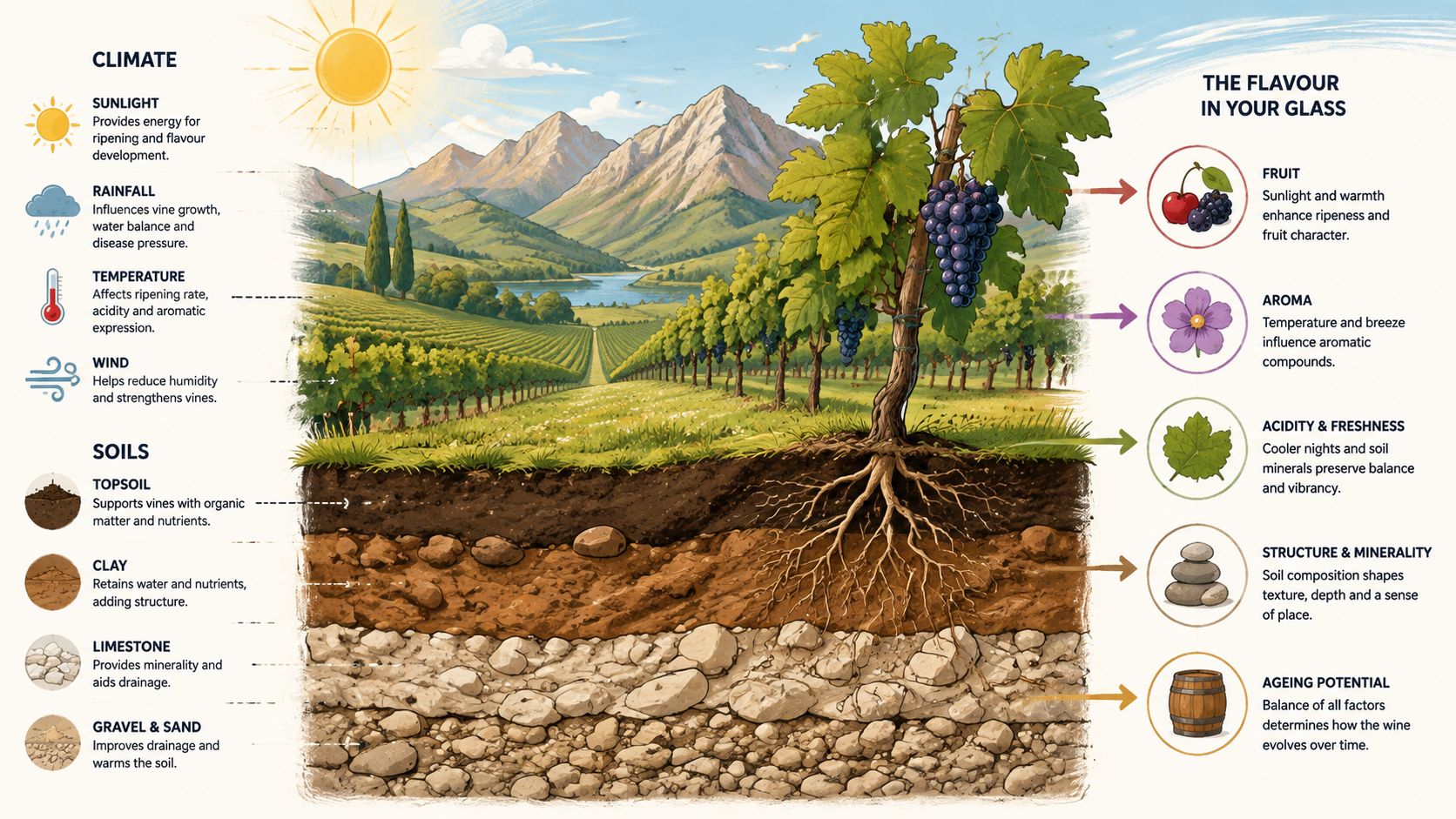
Choose two McLaren Vale Cabernets from different vineyards, and the contrast may begin before the first sip. The region covers 433 km² as a Geographical Indication and has 7,438 hectares of vineyards. Wine Australia's regional description describes a warm Mediterranean climate moderated by cooling ocean breezes. Warm summers, winter-dominated rainfall, low humidity and relatively high evaporation shape both vineyard decisions and the resulting wine.
The growing season is comparatively dry, with 180–200 mm of rainfall, according to McLaren Vale's climate and viticulture information. Vines therefore rely on moisture stored in the soil and, where needed, carefully managed irrigation. Deep roots can reach that reserve, while growers must still protect leaves and bunches from heat stress. In a recent dry vintage, lower yields can bring greater concentration, but water pressure may also interrupt ripening. Vintage conditions matter as much as the regional reputation.
Why maritime influence matters
Ocean breezes can moderate temperatures and slow the journey from flowering to harvest. Cabernet benefits from that extra time, developing ripe skins and seeds while holding on to freshness. A cooler site may give a wine more lift and savoury detail. A warmer inland position can bring deeper fruit and a broader texture.
These differences are not a simple coastal-versus-inland ranking. Growers balance water availability, exposure, canopy density and picking date for each vineyard. Lower rainfall can reduce disease pressure and support concentration, yet poorly matched soils or irrigation can make dry conditions harder on the vines and less consistent for yields.
Soil as a practical buying clue
Soils range from sandy loams to heavier clay-rich ground and ironstone-influenced profiles. Soil names do not guarantee quality. Deeper, moisture-retentive ground can support Cabernet through dry periods, while free-draining sites may produce smaller crops and concentrated fruit when water is managed carefully.
The connection between geology and style is explained in this guide to McLaren Vale's ancient soils. For shoppers, the takeaway is practical: site selection matters more than a generic “McLaren Vale” label. Look for a named vineyard, sub-region or clear vineyard practice, then assess whether the wine offers freshness alongside power. That evidence is especially useful when choosing between bottles from a hot, dry vintage and a more moderate season.
Tasting Notes and Winemaking Styles
A first pour can seem generous and fruit-driven, yet the finish reveals whether the wine has real balance. In the glass, look for blackcurrant, blackberry and dark cherry, then give the wine time to show dried herbs, bay leaf, cocoa or a gentle eucalyptus lift. Warmer sites and dry vintages may produce denser, sweeter-fruited Cabernet, while cooler maritime influences can preserve leafy detail and savoury spice.
The palate works like a three-part frame. Fruit supplies appeal, acidity keeps the middle lively, and tannin gives the wine shape and length. Oak may contribute cedar, toast, chocolate and spice, but varietal character should remain clear. A powerful wine is not automatically a balanced one.
Reading the structure in your glass
Taste in this order:
- Fruit: Look for blackcurrant and dark berries, not only jammy sweetness.
- Freshness: Notice whether the wine stays energetic through the middle of the palate.
- Tannin: Press your tongue lightly against your gums. Fine tannin feels grainy and supportive; harsh tannin feels drying and angular.
- Finish: A persistent savoury or herbal note often indicates complexity beyond fruit weight.
A named vineyard or sub-region can help explain why two McLaren Vale Cabernets taste different, even when they share the same regional label. One may be elegant and medium-bodied, with lifted acidity and fine tannin. Another may be rich and full-bodied, with darker fruit and a broader texture. Picking date, extraction, fermentation vessel, maceration length, oak selection and blending all influence that result.
Oak, blending and price level
Entry-level Cabernet generally aims for earlier drinking, with accessible fruit, modest oak and softer tannin. Premium bottlings may offer greater depth, concentration and integration, although price alone cannot predict whether the style will suit you. Choose polished, plush fruit if that is your preference, or seek cedar, leafy detail and a firmer finish when you want more savoury character.
Blending can bring together parcels with different exposure, soil moisture and ripening patterns. The winemaker is combining separate pieces of the vineyard like sections of an orchestra, so the final wine can sound more harmonious than any single parcel.
Tasting shortcut: If the aroma impresses but the finish feels hot, sweet or aggressively woody, the wine may have volume without balance. Let it sit, then reassess the finish.
Serve Cabernet slightly below typical indoor room temperature, particularly in warm Australian conditions. Use a large glass and allow a short period of air before judging it. Heavily structured wines may benefit from decanting, but taste first. Decant only when air improves the fruit and tannin rather than just making the wine seem softer.
Food Pairings That Bring Out the Best
McLaren Vale Cabernet works best when the food meets its structure. Tannin can feel severe beside delicate dishes, but fat and protein soften that sensation. Acidity refreshes the palate between bites, while herbal or savoury notes can echo seasoning in the dish.
Start with the main ingredient
For slow-roasted lamb, use rosemary, garlic and pan juices to bring out Cabernet's dried-herb and dark-fruit character. The lamb's richness gives the tannins something to grip, while the wine's acidity prevents each mouthful from feeling heavy.
With grilled steak, keep the preparation direct. A charred sirloin, rib-eye or rump with cracked pepper and a restrained sauce lets the wine's fruit and oak sit alongside the meat rather than competing with it. If you're using a creamy peppercorn sauce, choose a Cabernet with enough freshness to cut through the sauce.
Other reliable matches include:
- Herb-crusted beef: The crust mirrors Cabernet's savoury and leafy notes, particularly in a wine with noticeable herbal detail.
- Mushroom and lentil dishes: Earthy mushrooms and umami-rich lentils give a medium-bodied Cabernet depth without requiring red meat.
- Slow-cooked beef cheeks: The soft texture and concentrated sauce suit a fuller, more tannic bottle.
- Aged cheddar or hard sheep's cheese: Salt and fat soften tannin, while the cheese's nutty flavour complements oak and mature fruit.
Adjust the dish to the bottle
A lighter Cabernet needs lighter treatment. Try roast mushrooms, grilled vegetables with lentils or a lightly seasoned lamb cutlet. A richer wine can handle braised beef, smoky barbecue flavours and intensely reduced sauces.
Avoid pairing a strongly tannic Cabernet with chilli-heavy food. Alcohol and spice can amplify heat, making the wine seem harder and the dish more aggressive. If the menu includes strong spice, choose a softer, fruit-driven expression and serve it with a protein or sauce that adds richness.
Restaurant rule: Order the food first if you can. Then choose a Cabernet whose body and tannin match the dish, rather than selecting the most expensive red by default.
For serving, open the bottle before the meal and taste a small pour. If the wine feels tight, give it air. If it already feels open and silky, leave it in the bottle and focus on the food.
Cellaring and Aging Your Bottles
Cabernet Sauvignon has the structure to age, but not every McLaren Vale bottle is intended for a long stay in the cellar. The deciding factors are tannin quality, acidity, fruit concentration, alcohol balance and winemaking style. A wine with ripe tannin and plenty of fruit can develop savoury complexity. A wine with simple fruit and limited structure may merely lose freshness.
A practical starting point is to divide bottles into three groups. Drink fresh, approachable wines while their fruit is lively. Hold structured regional or single-vineyard bottlings for medium-term development. Reserve the most concentrated, balanced wines for longer ageing if the producer gives clear cellaring guidance.
How to store Cabernet properly
Keep bottles in a dark, stable environment away from vibration and strong odours. Temperature stability matters more than chasing a perfect number. Avoid kitchens, garages and rooms that heat sharply during the day, because repeated temperature swings can push wine through its development too quickly.
For bottles sealed with cork, horizontal storage keeps the closure from drying. Screwcap wines don't require that same position, although storing all bottles consistently makes cellar organisation easier. Record the producer, vintage, purchase date and your preferred drinking window in a notebook or cellar app.
A useful resource for planning that window is this guide to storing Cabernet Sauvignon. Treat any recommended timeframe as a guide, not a promise. Storage conditions and the individual bottle matter.
Knowing when to open it
Open one bottle early if you've bought several. That test tells you whether the wine is already generous, still firm or beginning to develop. Look for a shift from primary berry fruit towards cedar, tobacco, dried herbs and savoury complexity.
Signs of maturity include smoother tannin, a longer integrated finish and less obvious oak. Signs of decline include faded fruit, flatness, vinegar-like sharpness or aromas dominated by oxidation. A mature Cabernet doesn't need to taste loud. It should feel layered and alive.
Cellar habit: Don't save every bottle for a vague future occasion. Taste one, write down what you notice, then use that experience to choose the next opening date.
Smart Buying Strategies and Value Picks
Recent conditions make buying McLaren Vale Cabernet more nuanced than choosing a famous label. The 2025 McLaren Vale regional crush summary reports a total regional crush of 36,104 tonnes, up 28% year on year, while Cabernet Sauvignon prices rose 9% to $1,647 per tonne after declining since 2020. The same summary records below-average Cabernet yields in that vintage context.
Those figures don't tell you which bottle will taste best, but they do explain why supply and shelf pricing may feel uneven. A low-yield premium wine can become expensive because fruit is scarce, while a larger blended release may offer better value from the same broad region.
Compare the format with your purpose
| Format | Best For | Value Consideration |
|---|---|---|
| Single bottle | First-time tasting or a gift | Lowest commitment, useful when you don't know the producer's style |
| Half-case bundle | Stocking a favourite without buying a full dozen | Can reduce the per-bottle cost while keeping the purchase focused |
| Mixed dozen | Exploring several producers or styles | Spreads risk across vintages, price levels and winemaking approaches |
| Curated sample pack | New drinkers or guided comparison | Helps you learn your preferences before committing to larger quantities |
A single bottle is sensible when the label is unfamiliar. Once you know you enjoy the style, a half-case or mixed dozen can make more sense, particularly if you want bottles for both dinner and future drinking. Sample packs suit curious buyers who want contrast rather than volume.
Read beyond the front label
Check the vintage report for rainfall, heat and yield comments. The 2025 vintage summary for McLaren Vale describes the season as the driest since 2003, with 203 mm of rainfall from July 2024 to March 2025, January mean temperature of 21.8°C, and below-average Cabernet yields. Those conditions make producer choices, vineyard position and harvest timing especially important.
The smartest value pick isn't necessarily the cheapest bottle. Look for clean fruit, balanced tannin, restrained oak and enough freshness to suit the food you'll serve. This practical guide to buying wine on a budget can help you compare bottle prices with pack formats and intended use.
For shoppers comparing regional selections, McLaren Vale Cellars offers Cabernet Sauvignon bottles, mixed packs and tasting resources that make it possible to assess style before committing to a larger purchase. Treat retailer notes as a starting point, then match the bottle to your meal, cellar space and tolerance for tannin.
Common Misconceptions and Overlooked Factors
The biggest misconception is that every McLaren Vale Cabernet tastes warm, broad and powerful. The region has a Mediterranean climate, but ocean influence, vineyard elevation, soil moisture and exposure can create meaningful differences between sites. A coastal-influenced vineyard may preserve a more lifted, savoury profile, while a warmer inland site may produce darker fruit and a broader palate.
Another mistake is assuming a recognised producer will make the same wine every year. Vintage conditions can alter crop size, ripening speed and tannin texture, even when the label stays familiar. The 2025 regional material describes an exceptionally dry season and below-average Cabernet yields, so buyers should expect producers to respond differently according to vineyard position and water management.
Ask a better question: Don't ask only whether McLaren Vale Cabernet is good. Ask whether this producer, site and vintage suit the style you want to drink.
Winemaking philosophy matters as much as grape source. One producer may favour ripe fruit, generous oak and a rounded palate. Another may pick earlier, use less obvious oak and preserve herbal freshness. Neither approach is automatically superior. The useful test is balance, clarity and whether the wine works at the table.
Read the back label, retailer description and vintage information together. If the wine gives a vineyard or sub-region, note it. If it explains serving or cellaring, use that guidance. And if you're choosing between an expensive low-yield premium bottle and a better-value regional blend, decide whether you're paying for depth, rarity, ageing potential or a familiar name.
McLaren Vale Cellars offers McLaren Vale Cabernet Sauvignon selections alongside mixed packs, curated discovery options and wine education for buyers comparing site, vintage and style. Visit McLaren Vale Cellars to explore the range, read the tasting guidance and choose a bottle or pack that suits your next meal or cellar plan.
Comments (0)
There are no comments for this article. Be the first one to leave a message!