
I first tasted Man O' War after a run of familiar Australian reds, and the contrast was immediate. The wine had the depth you want from a serious coastal red, but it carried itself with a salty freshness that made me stop and look twice at the label.
An Introduction to a New Zealand Icon
A lot of Australian drinkers meet New Zealand wine through Marlborough Sauvignon Blanc, then stop there. Man O' War usually changes that impression in one glass. It shows another side of New Zealand wine. More coastal, more textural, and more grounded in place.
The name itself comes from Waiheke's maritime history, tied to the sheltered bay at Man O' War and the area's long connection to ships, timber, and exposed coastline. That old seafaring identity still suits the estate. Everything about the winery feels shaped by salt air, steep country, and the practical reality of farming a remote island site.
For Australians, the easiest comparison is this. Man O' War has the site-driven seriousness you might admire in a good vineyard estate from McLaren Vale, Margaret River, or the Mornington Peninsula, but it expresses it through Waiheke's own light, breeze, and coastal tension. The wines are not solely rich or solely fresh. They often carry both at once, which is part of their appeal.
That matters if you are buying, not just reading. Plenty of Waiheke coverage focuses on the scenery and cellar door experience. Australian enthusiasts usually want to know something more useful. Which bottles are worth chasing here, what style should you start with, and whether the wines are realistic to find back home.
If you want a broader sense of where Man O' War sits within the country's better-known styles, our guide to New Zealand Sauvignon Blanc and Pinot Noir gives helpful context before you branch into producers like this one.
Man O' War rewards curiosity. It is a New Zealand name Australians can buy with confidence, pour with the right food, and understand more clearly once you see how the place shapes the bottle.
Forged by Land and Sea The Man O' War Story
The best estates often begin with a farming problem, not a marketing idea. Man O' War makes more sense once you see it that way. On the far eastern end of Waiheke, the family behind the property worked with a large, broken-up coastal farm and turned that rugged ground into a vineyard estate built block by block, slope by slope, variety by variety.

That detail matters because Man O' War was never going to be a neat, flat, single-site vineyard. It works more like a patchwork of small vineyard rooms, each with its own light, wind exposure, drainage, and soil behaviour. If you've stood in McLaren Vale and noticed how a rise, a gully, or a strip of clay can change a wine's shape, the logic here feels very familiar.
Why the hillside blocks matter
A big estate can produce ordinary wine if everything is blended into sameness. Man O' War's interest comes from the opposite approach. The site is divided into many separate hillside parcels, and those differences give the winemaking team options at every stage, from planting to picking to blending.
One block may suit Syrah because it keeps fragrance and pepper in the fruit. Another may be better for Bordeaux varieties that need structure and depth. Chardonnay, which can look broad or flat in the wrong place, benefits from sites that hold enough sun for flavour but still keep tension from the maritime climate.
For Australian drinkers, it helps to compare this to a grower working a mixed estate in Margaret River or the Adelaide Hills. You are not tasting one generic property signature. You are tasting a series of small site decisions assembled into a finished wine.
Sea influence is the backbone
Plenty of wineries mention the ocean. At Man O' War, the sea is part of the growing system. Breezes slow the rush to over-ripeness, exposed sites can sharpen the structure of the fruit, and the overall feel of the wines often lands in that attractive zone between generosity and energy.
That balance is a big reason the wines connect so well with Australians. We know the difference coastal influence can make. Compare an inland red that pushes straight into weight and sweetness with a maritime red that keeps shape, savoury detail, and freshness. Man O' War usually sits in the second camp.
If Waiheke sounds abstract from this side of the Tasman, treat it like a climate cue. The island setting helps explain why the wines can carry flavour concentration without feeling heavy.
How the range reflects the place
The portfolio follows the estate's geography. The more approachable white label wines are usually the clearest entry point for understanding the house style. The black label wines, including names such as Dreadnought Syrah and Ironclad, show more scale and concentration. At the top end, the gold label Kulta wines focus on rarer, more collectible expressions.
That tiering is practical, not decorative. It gives Australian buyers a way to choose with confidence. If you are ordering a first bottle through a specialist retailer, start with the estate range. If you already know you enjoy serious Syrah or structured Bordeaux blends, the flagship wines make more sense.
The variety mix also tells you something important. This is not a one-grape estate trying to force every site into the same mould. The breadth of plantings suggests a property with enough variation to suit different styles, which is usually a healthy sign for long-term wine quality.
Why Australians should pay attention
Man O' War deserves attention because it solves a question many imported wines do not. Why should an Australian buyer chase this bottle rather than stick with a strong local option? The answer is that it offers a style we recognise, but with a Waiheke accent. You get the vineyard seriousness and food-friendly structure that many of us value, yet the flavour profile comes through a different climate and a different coastline.
That makes it more than a travel wine or a cellar door memory. It is a producer worth learning, buying, and comparing at home.
If you are scanning a shelf or an online listing in Australia, read the label with the site in mind. Estate tier for orientation. Flagships for depth. Kulta for special occasions and cellaring. Once you understand that framework, the winery's story stops being romantic background and starts becoming useful buying knowledge.
Decoding the Man O' War Wine Portfolio
Buying from Man O' War gets much easier once you stop hunting for a single "best" bottle and start reading the range like a map. Australian drinkers already do this with good local producers. You might reach for an estate Shiraz on a weeknight, then save the flagship for a winter roast or the cellar. Man O' War works the same way.
Start with the estate wines
The estate range is the most practical entry point for Australian buyers, especially if you are ordering blind from a retailer rather than tasting on Waiheke first. These wines give you the clearest read on the winery's style without asking you to commit flagship money straight away.
If Chardonnay is your usual starting point, the estate bottling is a smart place to begin. A German retailer's detailed winery page notes that Man O' War Winery manages 60 hectares of vines across 76 individual hillside blocks, and describes the 2023 Estate Chardonnay with citrus zest, orchard fruit, fresh bread, and creamy hazelnut notes, shaped by full-solids fermentation in 500L puncheons and lees ageing without stirring. It also notes a typical 13-14% ABV range for this Waiheke style and offers serving and cellaring guidance in this Man O' War winery profile.
The practical takeaway is clear. Expect Chardonnay with texture and savoury detail, not a light, simple white for the esky. For Australians used to modern Adelaide Hills or Yarra examples, it sits in familiar territory, but with a maritime edge that keeps it taut.
The flagships carry more weight and detail
The bottles many Australian red drinkers will search for first are Dreadnought Syrah and Ironclad. These sit at the more serious end of the range and show why Waiheke has earned a reputation for structured, age-worthy reds.
Verified estate material states that the flagship Ironclad Bordeaux blend and Dreadnought Syrah are prime examples of the estate's power. It also notes that Dreadnought is co-fermented with a small amount of Viognier for aromatic lift, and that the wine is typically aged for 18-24 months in French oak, as described on the Man O' War product material.
That Viognier detail matters because it gives Australian readers a useful reference point. If you enjoy Shiraz Viognier from producers in places like Canberra District or the cooler reaches of South Australia, you already know the effect. The white grape does not make the wine taste overtly floral or soft. It helps build perfume, definition, and a more lifted nose over dense fruit.
A quick comparison for buyers
| Feature | Dreadnought Syrah | Ironclad Bordeaux Blend |
|---|---|---|
| Core style | Powerful, aromatic Syrah | Structured Bordeaux-style red blend |
| Winemaking cue | Co-fermented with a small amount of Viognier for lift | Built around the estate's Bordeaux fruit profile |
| Oak approach | Typically aged for 18-24 months in French oak | Flagship black-label expression of depth and power |
| Best for | Drinkers who love Syrah with perfume and savoury complexity | Drinkers who want a layered, cellar-worthy blend |
| Australian reference point | Serious cool-edged Shiraz with fragrance | Cabernet-led or Bordeaux-inspired blends with coastal tension |
Resolution shows how the estate thinks about blends
Another wine worth knowing is Resolution Bordeaux Blend 2021. Verified information describes it as a blend of Cabernet Franc, Merlot, Petit Verdot, and Cabernet Sauvignon from the Death Valley sub-region, shaped by volcanic basalt soils and microclimates, with notes of dark fruit, liquorice, lavender, earthy detail, and graphite. The same estate source also outlines a style built for ageing, with 18-24 months in French oak and 50% new oak.
For a practical buyer, that says plenty. Resolution is not the bottle to open with takeaway on a hot Tuesday. It is the sort of wine to buy if you enjoy the firmer, more savoury side of Bordeaux blends and want something to decant, discuss, or put away for a few years.
How to choose the right bottle in Australia
Here is the simplest way to approach the range if you spot Man O' War at an Australian specialist retailer.
Choose an estate wine if you want to learn the producer. Choose Dreadnought if Syrah is your home ground and you like fragrance as much as power. Choose Ironclad or Resolution if your cellar already includes Cabernet blends from Margaret River, Coonawarra, or McLaren Vale and you want to compare Waiheke's version of that structure.
That buying framework matters more than winery romance. It helps you spend better and drink better. For Australian enthusiasts, that is the difference between bringing home an interesting import and bringing home a bottle you will understand and enjoy.
A Commitment to Waiheke's Wild Spirit
Some wineries talk about nature in marketing language so broad it means almost nothing. Man O' War is more interesting because the estate's scale and setting make the relationship with land feel tangible. This isn't just a vineyard with a nice view. It's a large working property with vines alongside olives, orchards, livestock, forest and coastal edges.
The estate feels bigger than wine
That matters when you think about the character of the brand. A biodiverse property often creates a different emotional impression from a tightly manicured wine project. The wines seem to come from somewhere lived-in and weathered, not from a vineyard built as a backdrop for tastings.
If you've visited Australian producers where sheep move past rows, gum trees border blocks, and the winery feels integrated with broader farming, you'll recognise the appeal. The estate tells you this is an agricultural place first, not a staged wine set.
What we know, and what remains a gap
There is a genuine sustainability story here, but there is also a genuine information gap. Verified data notes that sources describe sustainable viticulture across the 1800-hectare estate, yet specific data on post-2025 regenerative trends such as bee integration or carbon sequestration metrics remains an underserved angle for APAC consumers, as discussed in this overview of Man O' War Vineyards.
That's worth saying plainly. Eco-conscious Australian drinkers often want specifics. They want to know what happens in the soil, how biodiversity is supported, and whether low-intervention claims are backed by clear practice. At present, the broad story is stronger than the detailed metrics.
Worth remembering: A producer can have a compelling sustainability ethos even when the public reporting still has gaps. Good buyers hold both ideas at once.
Why the wild spirit rings true
The phrase "wild spirit" can sound fluffy until you connect it to the actual estate experience. At Man O' War, the coastal isolation, the mixed farm setting, and the exposed Waiheke environment all support the idea. This feels like a place where viticulture has had to adapt to the natural surroundings, not the other way around.
For Australian drinkers, that's a strong reason to care. Many of us are already drawn to wines that seem anchored in place. Man O' War's appeal isn't only that it makes bold reds and textured whites. It's that the wines seem inseparable from the edge-of-land setting they come from.
Visiting Man O' War The Beachfront Cellar Door
One detail lodges in people's memory fast. Man O' War's tasting room sits right on the shore, and the estate's beachfront cellar door is described as New Zealand's only one in the verified winery material.

The effect of that setting isn't subtle. You aren't tasting in a generic bar with a view of rows. You're tasting on the shores of Man O' War Bay, where the sea is part of the winery's identity rather than background scenery. That gives the wines context. A glass of Syrah tastes different, psychologically and sensorially, when the air itself reminds you why maritime vineyards produce the way they do.
The cellar door matters even if you never visit. It gives the bottles a story that carries to the table at home. When you open a wine from a producer with such a clear physical identity, you're not just pouring fermented grape juice. You're recalling a place with cliffs, coastline and a working bay.
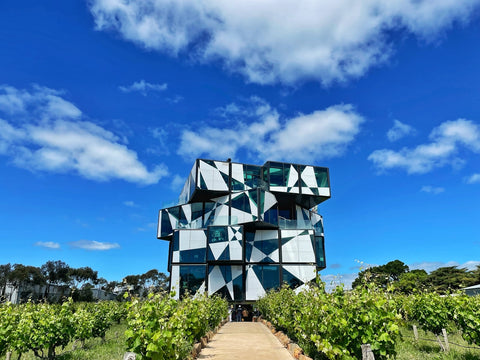
For travellers, it's the sort of destination that can anchor a Waiheke day. For buyers in Australia, it's a useful lens. If the winery had to be explained in one image, this would be it: serious wines poured with the beach almost at your feet.
How to Buy Man O' War Wines in Australia
For Australian drinkers, most guides fall short on a key point. They tell you where to sit, what the view is like, and which wine to taste on Waiheke. They don't answer the practical question. How do you buy man o' war winery wines here?
Verified data identifies this directly: a key information gap for Australian consumers is the lack of clear guidance on local availability and distribution. While NZ wine exports to Australia are growing, searches for "Man O War Australia stockists" often go unanswered, creating an opportunity for retailers to curate and guide purchases, as noted in this market-gap discussion.

What to look for when searching
Don't rely on broad search terms alone. Generic searches often surface travel content, overseas stores, or outdated references. A better approach is to search with a specific wine name attached, such as Dreadnought Syrah, Ironclad, or Estate Chardonnay, and then check whether the retailer clearly ships within Australia.
It also helps to focus on specialist online wine retailers rather than general marketplaces. Specialists are more likely to carry niche New Zealand producers, rotate stock seasonally, and give useful drinking notes instead of a bare product listing.
A practical buying checklist
Use this approach when you're trying to source the wines locally.
- Check the exact cuvée name. Man O' War has estate wines, flagship black-label wines, and prestige bottlings. "Man O' War red" is too vague to buy confidently.
- Read for style clues, not hype. If the note mentions Syrah with lift and savoury detail, that's a different buying decision from a Bordeaux blend built for structure.
- Look for mixed packs. If a retailer offers curated selections, that's often the safest entry point because it lets you compare styles at home.
- Review delivery terms early. Some Australian online stores make New Zealand wine more practical by bundling value across mixed orders. For broader advice, this guide on where to buy wine online in Australia is a strong place to sharpen your buying process.
- Ask whether the retailer knows the producer. A good merchant should be able to explain the difference between the estate tier and the flagship tier without reading the label back to you.
If a retailer can't tell you why Dreadnought and Ironclad are different wines for different occasions, keep looking.
How to choose your first bottle
If you usually drink McLaren Vale Shiraz, start with Dreadnought Syrah. You'll have a reference point for body and spice, but you'll also notice a different aromatic profile and a more maritime line through the wine.
If your palate leans to Cabernet blends, begin with Ironclad or Resolution if available. Those wines make the Waiheke story easier to read because they join dark fruit, structure, and site expression in a familiar frame.
If you mostly buy white wine, don't ignore the reds out of caution, but do give the Estate Chardonnay a proper look. It sounds like a sensible bridge bottle for Australians who want complexity without immediately stepping into the pricier flagships.
Food pairing and serving while you shop
Buying becomes easier when you know how you'll use the wine.
- Dreadnought Syrah suits grilled lamb, charred beef, or slow-cooked dishes you'd normally pair with a serious Australian Shiraz.
- Ironclad or Resolution work well with roast beef, hard cheeses, or winter dinners where structure matters.
- Estate Chardonnay belongs near roast chicken, pork, richer seafood, or creamy mushroom dishes.
Serving matters too. Flagship reds usually benefit from air. Whites with texture benefit from not being served ice-cold. That may sound basic, but it's often the difference between "good bottle" and "why didn't I buy more?"
Serving and Pairing Tips for Your Man O' War Wine
The easiest mistake with Man O' War is treating every bottle the same. These wines reward small adjustments.
Match the wine to the dish, not just the meat colour
Dreadnought Syrah works beautifully where you'd normally pour a quality McLaren Vale Shiraz, but I'd steer the food slightly towards savoury detail rather than sweetness. Lamb cutlets with rosemary, smoky aubergine, or pepper-crusted beef all make sense. Avoid sauces that push too sweet, because they can blur the wine's aromatic lift.
Ironclad and Resolution are better with dishes that have structure and a bit of chew. Roast lamb shoulder, beef short ribs, or aged cheddar all fit. These are wines for slower meals, not quick sipping.
Don't over-chill or under-think the whites
The Estate Chardonnay should be cool, not fridge-numb. If it's too cold, you'll mute the textural and savoury elements that make the wine interesting. Give it a proper glass and a few minutes to open.
For anyone building confidence with matching wine to food more broadly, this guide to wine and food pairing is a handy reference.
Serve the reds with enough air to let the aromatics rise, and serve the Chardonnay warm enough for texture to show. Those two choices will improve your first experience more than any tasting note.
If you're cellaring, think in terms of patience for the more serious reds and near-to-mid-term enjoyment for the more approachable bottles. Even without making the night overly formal, a decanter, the right glass, and a meal with some depth will help these wines show why Waiheke has earned such loyal followers.
If you'd like help choosing bottles with the same sense of place and character, McLaren Vale Cellars offers a practical way to explore premium wines online, with curated packs, sharp value on mixed orders, educational guides, and friendly support for shoppers who want to buy with confidence.
Comments (0)
There are no comments for this article. Be the first one to leave a message!