
Let’s get straight to the point: most Pinot Grigio you’ll find, especially the classic Aussie style, is a dry white wine. But if you’ve sworn you’ve tasted a sweet one, you’re not going crazy. That perception of sweetness is a fascinating dance between fruitiness, acidity, and just a whisper of leftover sugar.
Your Quick Answer to Is Pinot Grigio Sweet
Think of biting into a crisp, cold green apple. You get that initial fruity sweetness, but it’s immediately followed by a zesty, mouth-watering finish that’s refreshing, not sugary. That’s the heart and soul of a great dry Pinot Grigio.
We’ll walk you through why this wine is almost always dry, what makes some styles feel a bit richer, and how to spot the perfect bottle for your taste.

The Australian Style: Dry and Crisp
Here in Australia, winemakers have really leaned into crafting Pinot Grigio as a dry, zippy white wine, meaning it has little to no residual sugar left after fermentation. This gives it that crisp, light-bodied, and incredibly refreshing profile we love.
You’ll typically find Aussie Pinot Grigio bursting with high acidity and bright notes of citrus and green apple, all of which dial up the sensation of dryness. You can get a deeper dive into what separates these styles in our guide on the differences between dry and sweet white wine.
Here's the key thing to remember: "fruity" doesn't automatically mean "sweet." A wine can be loaded with flavours of pear, peach, and melon but still be technically dry because its high acidity and low sugar keep it feeling fresh and clean.
This dry character is exactly what makes it such a brilliant choice for pairing with food or just sipping on a warm afternoon. The confusion usually comes from our brains, which are hardwired to associate fruit flavours with sugar, creating a delicious illusion of sweetness.
Why Your Wine Tastes Dry Not Sweet
Ever wondered what a winemaker actually means when they call a wine 'dry'? It all comes down to a simple, natural process that happens in the winery.
During fermentation, tiny yeast organisms get to work, consuming the natural sugars found in the grape juice and converting them into alcohol. When the yeast eats up almost all the available sugar, you’re left with a beautifully dry wine.
This doesn’t mean there’s absolutely zero sugar left. The tiny amount that remains is called residual sugar. In most dry Pinot Grigio, this amount is so small it’s practically undetectable to our taste buds. Think of it as a finishing touch, not the main event.

Acidity: The Secret to a Crisp Finish
So, if those delicious fruit flavours can sometimes trick our brains into thinking "sweet," what's the secret ingredient that keeps Pinot Grigio tasting so crisp and clean? The answer is acidity.
Think of acidity like a squeeze of fresh lemon juice in a glass of sweet tea it instantly cuts through the sugariness, balancing the flavours and making everything taste brighter and more refreshing. This is exactly what high acidity does in a wine.
Even if a Pinot Grigio is bursting with vibrant fruit flavours like juicy pear, green apple, or melon, its zesty acidity acts as the perfect counterbalance. It provides that clean, mouth-watering finish that clearly signals to your palate that the wine is dry, not sweet.
The balance between perceived fruitiness and actual acidity is what defines the experience. A wine can smell sweet and fruity, but its high acidity ensures the finish is brisk and dry.
This interplay isn't just a matter of taste; it's backed by science. Research on Australian Pinot Grigio shows that most dry styles contain less than 3 grams per litre of residual sugar, which is far below the threshold for human perception of sweetness.
On top of that, an acidity level above 6 grams per litre very common in Aussie styles actively suppresses any sensation of sweetness, guaranteeing that classic dry profile we love. You can discover insights into Australian Pinot Grigio styles and learn more about this fantastic balance.
Understanding Pinot Grigio vs Pinot Gris
This is where things get interesting, and it’s a question we get asked all the time: are Pinot Grigio and Pinot Gris the same? The short answer is yes… and no. They’re made from the exact same grape, but the name on the bottle is a massive clue about the style of wine waiting inside.
Think of them as identical twins who grew up in different countries. They share the same DNA, but their accents, style, and personalities are completely different.
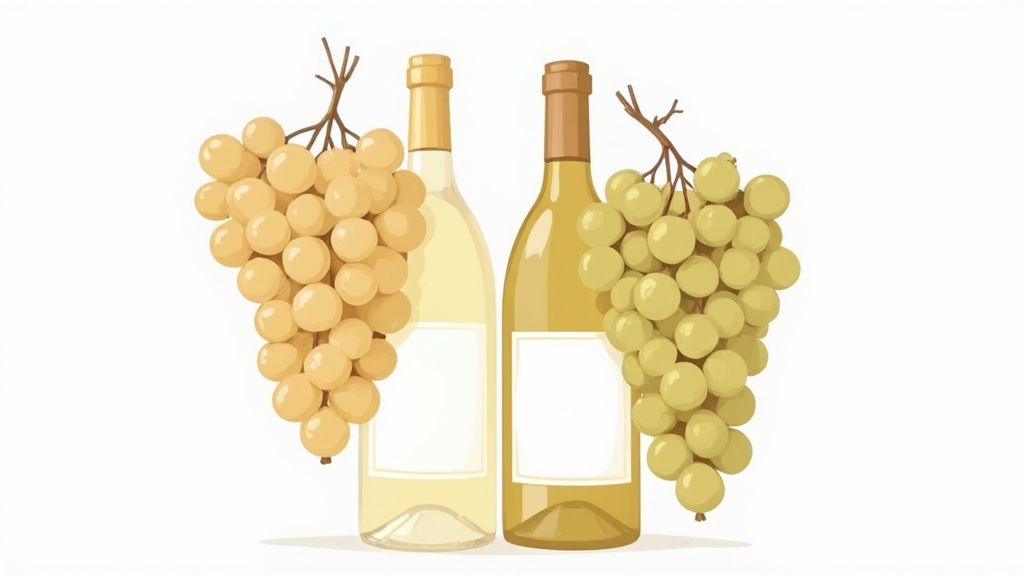
Pinot Grigio is the Italian name, and it signals the classic style that Italy made famous. We’re talking light-bodied, zesty, and bone-dry. It’s all about that crisp acidity and refreshing notes of green apple, lime, and pear.
Pinot Gris, on the other hand, is the French name, especially linked to the Alsace region. This style is typically richer, more full-bodied, and has a more luscious texture. The flavours lean towards honey, spice, and stone fruit, and it can range from dry to off-dry.
What This Means for Australian Wine
So, how does this play out in Australia? When you grab a bottle of Aussie wine labelled ‘Pinot Grigio’, the winemaker is giving you a heads-up that they’ve aimed for that clean, crisp, and refreshing Italian style. You can bet it’s going to be dry.
If you see a bottle that says ‘Pinot Gris’, the inspiration is likely French. Expect a wine with more texture, body, and complexity. While often dry, this style can sometimes have a touch of residual sugar, which gives it a richer, more rounded mouthfeel rather than overt sweetness.
The name is your first and best hint. Grigio almost always signals a zesty, dry wine, while Gris often points to a richer, more textural experience that might have a bit more body.
Getting your head around this difference is the key to picking the right bottle every time. For a deeper dive, check out our full article on Pinot Grigio vs Pinot Gris to really understand what sets them apart. It'll help you confidently choose a wine that perfectly matches what you’re looking for.
How Climate Shapes the Taste in Your Glass
Every wine’s story begins in the vineyard, and nothing has a bigger say in the final taste than the climate where the grapes grew. The weather plays a massive role in deciding whether your Pinot Grigio will be lean and zesty or lush and fruity.
Think of it like this: a tomato ripened slowly in cool weather will have a sharp, tangy flavour. But one that ripens fast in the blazing sun will be softer, sweeter, and juicier. Grapes are no different.
Cool Climate Crispness
Cooler climates, like Italy's famous Alto Adige region or our very own Adelaide Hills, act like a natural fridge for the grapes. The chilly temperatures make them ripen slowly and steadily over a long season.
This slow-and-steady ripening is the secret sauce. It allows the grapes to build up complex flavours while holding onto their natural acidity. That acidity is exactly what gives you that signature crispness, creating the classic, bone-dry style of Pinot Grigio that many of us know and love.
When you sip a cool-climate Pinot Grigio, you're tasting the direct result of that environment.
- Flavour Profile: You’ll find zesty notes of green apple, fresh lime, and a clean minerality that’s incredibly refreshing.
- Body and Finish: The wine feels light on its feet—clean, bright, and mouth-watering.
- Sweetness Perception: Even with plenty of fruit flavour, the high acidity makes the wine taste completely dry.
Warm Climate Richness
On the flip side, grapes grown in warmer spots have a totally different upbringing. All that sunshine and heat pushes them to ripen much faster, meaning they build up more sugar and end up with lower acidity.
This doesn't mean the wine will taste like a dessert, but it does create a rounder, softer texture. These wines often burst with flavours of juicy peach, ripe nectarine, and melon.
It's these richer fruit flavours that can trick our brains into perceiving a touch of sweetness, even when the wine is technically dry with almost no leftover sugar. It’s all about the fruitiness, not actual sugar.
At the end of the day, the climate sets the scene. A cooler origin almost always points to a drier, crisper wine. A warmer one, however, can produce a Pinot Grigio that feels richer and fruitier, giving a delightful illusion of sweetness.
Right, let's become a bit of a wine detective. You don't need a fancy sommelier course to figure out what's in the bottle before you buy it. The label is your ultimate cheat sheet, packed with clues to help you nail that perfect Pinot Grigio every time.
Once you know what to look for, choosing a wine goes from a guessing game to a confident choice.
Your first port of call should always be the region. As we’ve touched on, a cool-climate spot like the Adelaide Hills is a massive hint that you’re holding a crisp, dry style of wine with that zippy acidity we love. Warmer regions, on the other hand, can produce fruitier styles that might feel a touch sweeter on the palate.
Next up, flip the bottle over and have a squiz at the winemaker's tasting notes. This is where the people who made the wine tell you exactly what they were aiming for.
Decoding Tasting Notes
Think of tasting notes as signposts. The winemaker uses specific words to guide you towards the wine's style, and learning the lingo is your key to unlocking its secrets.
- Words that signal DRY: If you see terms like 'crisp,' 'zesty,' 'mineral,' 'bright,' or 'lean,' you’re in classic dry Pinot Grigio territory. Expect high acidity and a super refreshing finish.
- Words that suggest RICHNESS: Descriptions like 'aromatic,' 'textured,' 'rich,' or 'full-bodied' often point towards a Pinot Gris style. While still technically dry, these wines will feel rounder and more generous in your mouth.
Here’s a quick guide to help you translate that wine-speak into what you can actually expect in the glass.
Decoding Wine Descriptions: What Tasting Notes Really Mean
| If You Read This... | ...It Likely Means the Wine Is |
|---|---|
| "Crisp," "Zesty," "Racy," "Bright" | Dry and High in Acidity. Think citrus, green apple, and a mouth-watering finish. |
| "Mineral," "Flinty," "Salty" | Very Dry and Lean. These are savoury, elegant styles, often from cooler European regions. |
| "Textured," "Round," "Creamy" | Richer and Fuller-Bodied. It's still a dry wine, but with a softer, less sharp mouthfeel. |
| "Aromatic," "Perfumed," "Floral" | Fruit-Forward and Expressive. Often points to a Pinot Gris style with more pronounced fruit. |
| "Ripe," "Tropical Fruit," "Stone Fruit" | Fruit-Driven, Possibly Off-Dry. Hints at a richer style that can feel sweeter due to fruit. |
This isn't an exact science, but these clues give you a fantastic head start in finding a style you'll love.
Finally, take a quick glance at the alcohol by volume, or ABV. A higher ABV, typically 12.5% or more, usually means the yeast had a feast, converting almost all the grape sugar into alcohol. The result? A bone-dry wine.
A lower ABV (below 12.5%) can sometimes suggest that the winemaker stopped the fermentation a bit early, leaving a touch of that natural grape sugar behind. It’s not a fool proof rule, but it's another great clue to add to your arsenal.
By piecing these three bits of information together region, tasting notes, and ABV you can walk into any bottle shop and feel like you know exactly what you’re doing. You’ll be able to predict what’s in the bottle long before the cork comes out.
Perfect Food Pairings For Every Style
Let's be honest, the right food pairing can take a great wine and turn it into something truly unforgettable. Figuring out if your Pinot Grigio is sweet or dry is the secret to unlocking its magic at the dinner table.

For that classic, high-acid dry Pinot Grigio, your mantra should be light and fresh. Its zesty personality is a brilliant match for delicate dishes where its acidity can really sing.
Pairings for Dry Pinot Grigio
- Seafood: You can't go wrong with grilled fish, fresh oysters, or a prawn linguine. They're classics for a reason!
- Poultry: Think lemon-herb chicken or a simple roast turkey.
- Salads: Any salad tossed in a sharp vinaigrette will be a perfect partner.
The wine’s bright acidity slices through oils and richness, cleaning up your palate with every sip. For a deeper dive, check out our complete Pinot Grigio food pairing guide for more inspiration.
Now, for the richer, more textural Pinot Gris styles, you can afford to be a bit bolder. These wines stand up beautifully to creamy pasta, roast pork, and even mildly spicy Thai or Vietnamese dishes.
The wine's body and subtle fruit notes are fantastic with more complex flavours, creating a really harmonious meal. If you're keen to master the art of matching food and wine, consulting a pro's guide to wine pairing can offer some excellent tips.
Your Pinot Grigio Questions, Answered
Got a few lingering questions about Pinot Grigio? Let's clear them up. These are some of the most common queries we get, and the answers will have you choosing, serving, and enjoying your next bottle like a pro.
How Should I Serve Pinot Grigio?
Pinot Grigio really shines when it’s served well-chilled, somewhere between 7-10°C. The easiest way to get it there is to pop the bottle in the fridge for about two hours before you plan on pouring a glass.
If you serve it too cold, you'll numb all those lovely delicate aromas. Too warm, and it can taste a bit flat and uninspired. Getting the temperature just right makes all the difference.
Can You Age Pinot Grigio?
The short answer is: you really don't need to. Most Pinot Grigio is made to be enjoyed young and fresh, usually within a year or two of its vintage. All that vibrant acidity and bright fruit flavour that makes it so appealing is at its peak right after release. It's just not a wine that's built for long-term cellaring.
Our Tip: Think of Pinot Grigio as the wine for right now. It's all about that zesty, youthful character, so there's no need to tuck it away for a special occasion years down the track. Drink it fresh!
Is Pinot Grigio Popular in Australia?
Absolutely! Its popularity has skyrocketed since the early 2000s, right as Aussie wine drinkers started seeking out lighter, crisper white wines.
It’s just so approachable and easy to drink. The typically dry style with its clean finish and zesty character is a perfect match for our climate and lifestyle. You can read more about Australian wine trends here.
Ready to explore the crisp, refreshing world of Pinot Grigio? Discover our handpicked selection at McLaren Vale Cellars and find your new favourite today. Visit us at https://www.mclarenvalecellars.com.


Comments (0)
There are no comments for this article. Be the first one to leave a message!