
Let's get straight to it: yes, Sauvignon Blanc is almost always a dry white wine. But 'dry' in the wine world isn't about how it feels in your mouth. It’s a simple winemaking term that means the wine has very little, or no, leftover sugar after fermentation.
Your Guide to Dry Sauvignon Blanc
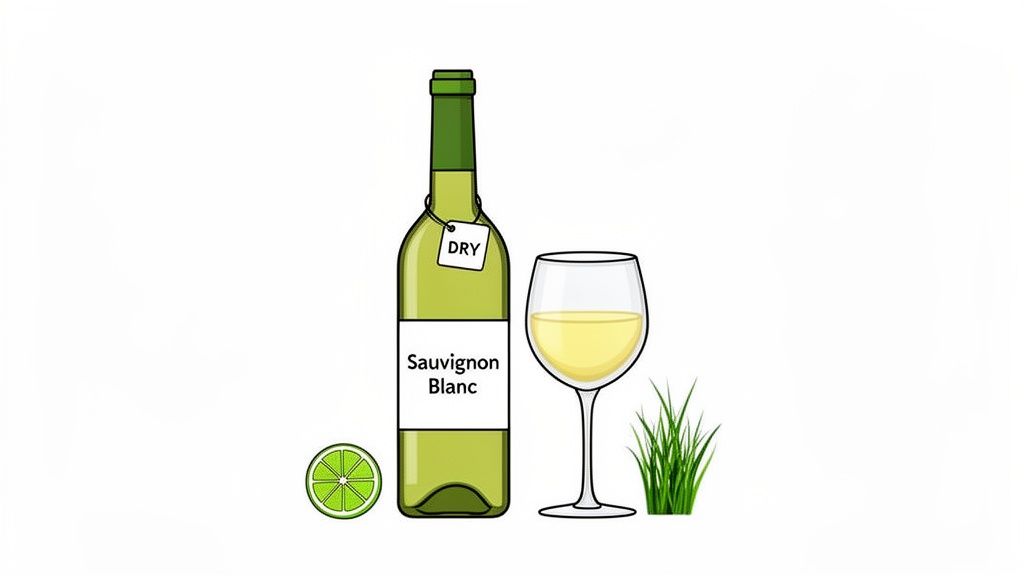
Think of a classic Sauvignon Blanc as the polar opposite of a sweet wine. Instead of sugar, it hits your palate with a zesty, high acidity and a burst of vibrant flavours that finish clean and crisp. This incredibly refreshing quality is exactly why it's a favourite around the globe.
So, you've got the short answer. Now, let's dive a little deeper into what makes this wine so wonderfully crisp and how its personality can shift from one region to the next.
What You Will Discover
- What 'Dry' Really Means: We'll break down what winemakers are actually talking about when they label a wine as dry.
- A Trip Around the World: Discover how a Sauvignon Blanc from right here in McLaren Vale tastes different from one made in New Zealand or France.
- Tips for Finding Your Perfect Bottle: Get some practical advice for reading labels and choosing a wine that perfectly suits your taste.
By the time you're done, you'll know exactly why the answer to "is Sauvignon Blanc dry?" is a confident 'yes'. More importantly, you'll have the confidence to walk into any bottle shop or browse any wine list and pick a real winner.
What 'Dry' Really Means in the World of Wine
Forget any idea that 'dry' wine will parch your mouth or leave you reaching for a glass of water. In the wine world, dry has a very specific technical meaning, and it all boils down to one thing: sugar. It’s a winemaking term, not a description of how the wine feels.
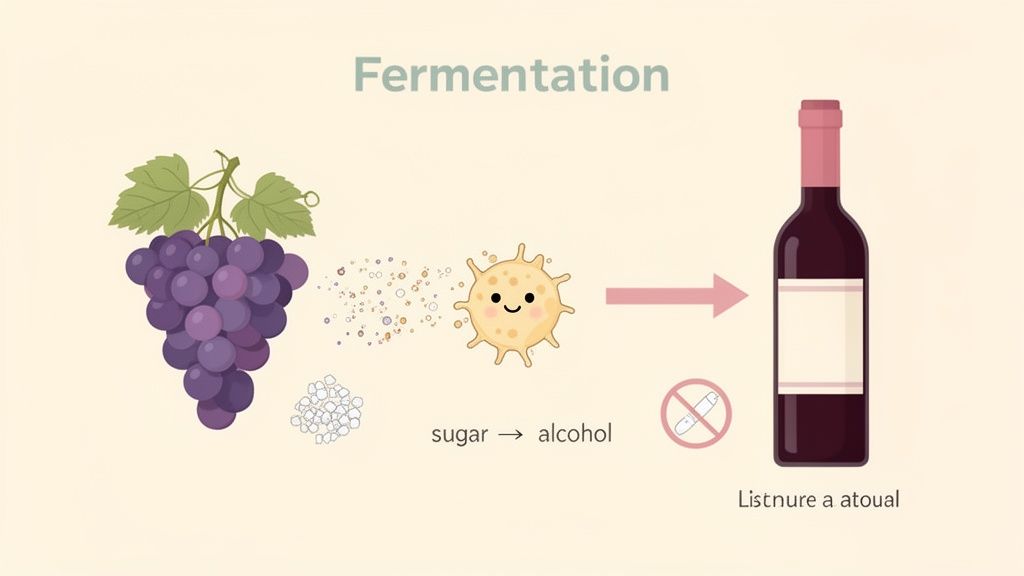
Think of fermentation as a feast for yeast. When grapes are crushed, their natural sugars are released. The winemaker introduces yeast, which happily gobbles up these sugars, turning them into alcohol.
In a dry wine, like a classic Sauvignon Blanc, the yeast is allowed to feast until nearly all the sugar is gone.
The Key Takeaway: A 'dry' wine is simply one with very little to no leftover sugar after fermentation. It’s the complete opposite of a sweet wine. A typical dry Sauvignon Blanc has less than 4 grams of sugar per litre.
This lack of sweetness is what lets the wine’s other qualities take centre stage. That mouth-watering, zesty feeling you get from a chilled savvy isn't dryness—it's acidity.
Acidity vs Dryness
It's really easy to mix these two up, but they play completely different roles in a wine.
- Dryness is all about the absence of sugar.
- Acidity is what makes your mouth water and gives a wine its refreshing, crisp quality. It provides the backbone and makes a wine feel bright and lively.
A wine can be packed with fruity flavours and still be bone-dry. The taste of passionfruit or lime doesn't come from sugar, but from aromatic compounds that were in the grapes themselves. To get a better handle on this, check out our complete beginner's guide to unlocking the secrets of dry white wine.
Getting your head around this difference is the first big step to choosing wine with confidence. Now, when you see 'dry' on a label, you’ll know to expect a clean, crisp finish, not a sweet one.
How Sauvignon Blanc Styles Change Around the World
While Sauvignon Blanc is almost always made in a dry style, its personality completely transforms depending on where it’s grown. This globe-trotting grape tells a different story in every region, adapting its flavour profile to the local climate and soil. The final product is consistently dry, but the journey to your glass is incredibly diverse.
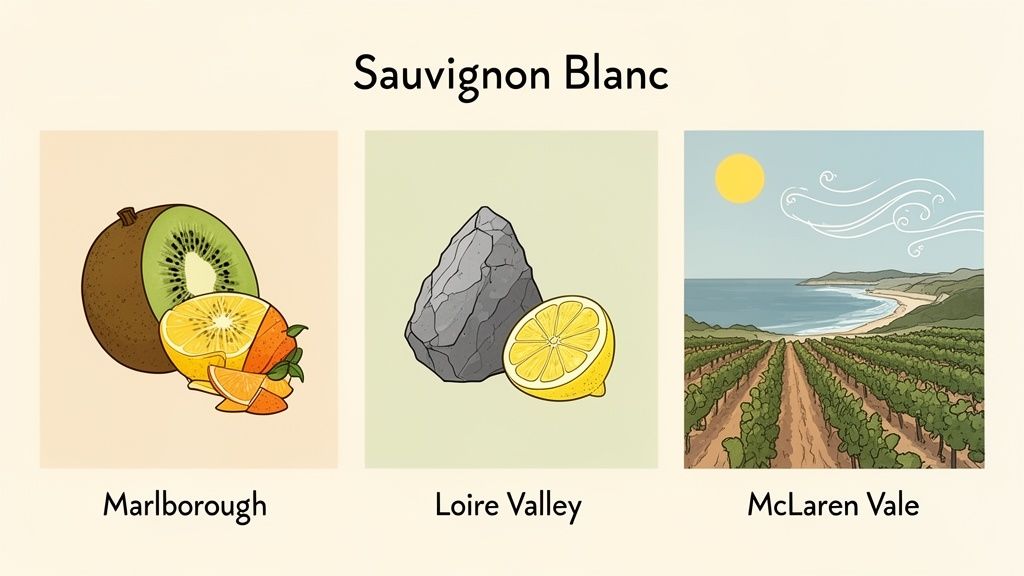
Think of it like a musician playing the same song on different instruments. The melody is the same—in this case, crisp and dry—but the sound and character change dramatically. A cooler climate often coaxes out more green, herbaceous notes, while warmer regions bring out riper, more tropical fruit flavours.
New Zealand: The Bold and Zesty
When most people think of Sauvignon Blanc, they picture New Zealand. Marlborough, in particular, has become world-famous for its distinctively bold and punchy style.
These wines are unmistakable, bursting with intense aromas of passionfruit, gooseberry, and a signature hint of freshly cut grass. The acidity is high and zesty, making it an incredibly vibrant and refreshing drink. It's the extrovert of the wine world—loud, proud, and full of energy.
France: The Classic and Restrained
Travel to its original home in France’s Loire Valley, and you'll find a more elegant and reserved expression. Here, in appellations like Sancerre and Pouilly-Fumé, Sauvignon Blanc takes on a completely different character.
The focus shifts from explosive fruit to subtle complexity. Expect delicate notes of lime, green apple, and a hallmark flinty or smoky minerality. It’s a sophisticated and food-friendly style that showcases restraint and elegance, proving just how versatile this grape can be.
Australia: The Vibrant Balance
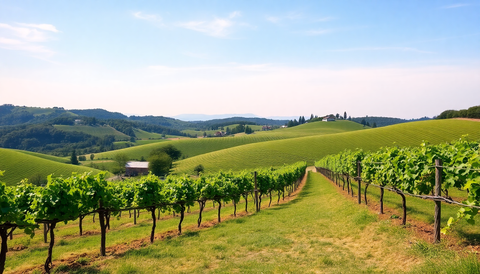
Right here in Australia, regions like McLaren Vale have carved out their own unique identity. Our warm days, tempered by cool coastal breezes from the Gulf St Vincent, create the perfect conditions for a wine that balances the best of both worlds.
A dry Sauvignon Blanc from McLaren Vale offers a beautiful concentration of flavour without sacrificing that essential crispness. You'll find a lively mix of citrus and tropical fruit notes underpinned by a refreshing acidic structure. It's a vibrant, balanced style that captures the unique spirit of our local terroir. You can learn more about the grape’s fascinating history in our article covering the origins of the Sauvignon Blanc grape.
Why McLaren Vale Excels at Dry Sauvignon Blanc
While McLaren Vale is rightly famous for its powerhouse reds, it's also a bit of a hidden gem for anyone who loves a premium dry white wine. The region's unique geography is our secret weapon for crafting an exceptional dry Sauvignon Blanc that's bursting with flavour yet still refreshingly crisp.
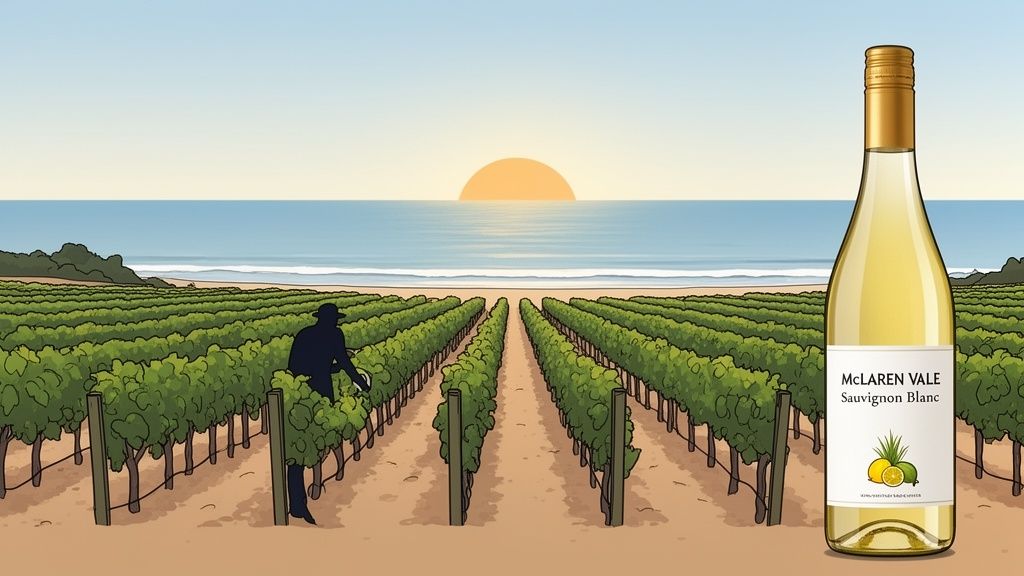
Our coastal climate, with its warm, sun-drenched days and cooling afternoon breezes rolling in from the Gulf St Vincent, creates the perfect environment. This beautiful balance allows the Sauvignon Blanc grapes to achieve full ripeness, developing those intense aromatic flavours without sacrificing their brilliant natural acidity. It’s this very acidity that gives the wine its signature zesty finish.
A Hands-On Approach to Quality
This high quality isn't just a happy accident of nature; it's the result of deliberate, passionate winemaking. Many of our local winemakers are deeply involved in the entire process, often growing the grapes themselves to ensure meticulous control from the vineyard right through to the bottle.
This dedication to hands-on viticulture means that when you pick up a bottle from McLaren Vale, you’re getting a wine that has been carefully managed to be reliably dry, aromatic, and expressive. For a wine to be classified as dry, it typically needs to have residual sugar levels under 4 grams per litre.
This commitment to quality is clear in the numbers. In a recent vintage, an impressive 62% of the region's Sauvignon Blanc was grown by the wineries themselves, showcasing an unwavering focus on control and excellence. You can read more about McLaren Vale's vintage statistics and see how this dedication translates into the bottle.
This hands-on approach results in a truly distinctive style. A dry Sauvignon Blanc from our region is not just another simple white wine; it's a vibrant expression of place and passion. You can taste the coastal influence and the careful craftsmanship in every sip, making it a genuinely special experience for those who appreciate a well-made, crisp white.
When you choose a McLaren Vale savvy, you're choosing quality you can count on.
How to Choose Your Perfect Bottle of Sauvignon Blanc
Walking into a wine shop and staring at a wall of labels can feel a bit daunting, but finding a great dry Sauvignon Blanc you'll actually love is easier than you think. Armed with a little know-how, you can confidently pick the perfect bottle for any occasion. The secret is learning to understand your own palate and then decoding the clues on the wine label.
First things first, look beyond just the region. Flip the bottle around and scan the tasting notes on the back label for keywords that scream classic, dry Sauvignon Blanc.
Label Clues for Dry Sauvignon Blanc: Keep an eye out for words like "crisp," "zesty," "vibrant acidity," "citrus," or "grassy." These are dead giveaways that the wine inside will be refreshing and finish clean, without any cloying sweetness.
This simple check is the quickest way to make sure you’re getting the style of wine you're after.
Finding a Wine That Suits Your Taste
Now, think back to the different flavour profiles we talked about. Are you in the mood for the punchy, tropical fruit explosion of a New Zealand savvy? Or maybe the refined, mineral elegance of a French Sancerre? Perhaps you’re chasing that perfect balance of vibrancy found in the best Australian Sauvignon Blanc from regions like McLaren Vale.
Knowing your preference is your best tool for navigating the wine aisle. Don't be shy about asking for recommendations based on these styles. For instance, you could tell the shop assistant, "I'm looking for a very dry Sauvignon Blanc that's more citrus-driven than tropical."
At the end of the day, understanding what you enjoy is the key to exploring the diverse world of this grape. It gives you the confidence to move beyond the usual suspects and discover a new favourite—one that perfectly matches your personal taste for a refreshing, classic, and wonderfully dry white wine.
Your Sauvignon Blanc Questions, Answered
Let's wrap things up by tackling a few of the most common questions we hear about Sauvignon Blanc. These quick-fire answers will help clear up any lingering doubts and make you feel that much more confident the next time you're choosing a bottle.
Are All Sauvignon Blanc Wines Completely Dry?
The short answer is yes, the vast majority are. It’s the signature style for this grape, so when you pick up a bottle, you can be pretty confident you’re getting something crisp and dry.
There are, of course, a few exceptions. You might occasionally find an 'off-dry' version where the winemaker leaves a tiny hint of sweetness to balance out some seriously zippy acidity, but this is rare for your standard table wine.
The main exception comes from the world of dessert wines. Famous sweet wines like Sauternes from Bordeaux often blend in Sauvignon Blanc, which is intentionally made sweet. But for a classic bottle from a region like McLaren Vale or Marlborough, you can be 99% certain it's going to be refreshingly dry.
How Can I Tell if a Sauvignon Blanc Will Be Fruity or Grassy?
This all comes down to the climate where the grapes were grown—it's a perfect example of terroir in action. The location tells you almost everything you need to know about the flavour profile.
- Cooler Regions: Think of places like France's Loire Valley. The cooler weather here produces wines with greener, more herbaceous notes of cut grass, gooseberry, and a flinty, mineral edge.
- Warmer Regions: Sunnier climates, like we have here in Australia or over in New Zealand, tend to bring out much more vibrant tropical and citrus fruit flavours. Expect passionfruit, grapefruit, and zesty lime to jump out of the glass.
The tasting notes on the back of the bottle are always your best friend here, giving you a reliable guide to what’s inside.
What Are the Best Foods to Pair with a Dry Sauvignon Blanc?
With its high acidity and punchy character, a dry Sauvignon Blanc is an absolute star at the dinner table. It’s a classic match for goat cheese, salads with sharp vinaigrette dressings, and just about any seafood you can think of, from fresh oysters to grilled fish.
The wine’s grassy or herbaceous notes also make it a brilliant partner for dishes loaded with fresh green herbs like basil, parsley, or coriander. This versatility means it works just as well with pesto pasta as it does with grilled chicken finished with a big squeeze of lime—the acidity just cuts through any richness and cleanses the palate beautifully.
At McLaren Vale Cellars, we pride ourselves on showcasing the vibrant, crisp, and reliably dry Sauvignon Blanc that our corner of South Australia is celebrated for. Explore our curated selection and find your perfect bottle today.

Comments (0)
There are no comments for this article. Be the first one to leave a message!