
Don't have a sprawling, underground vault for your wine? Don't worry, you're not alone. The real secret to protecting your favourite bottles is much simpler: find a cool, dark, and stable spot somewhere in your home and take a few steps to control the environment. With a little creative thinking, you can turn an ordinary space into a brilliant haven for your collection.
The Secret to Cellaring Without a Cellar
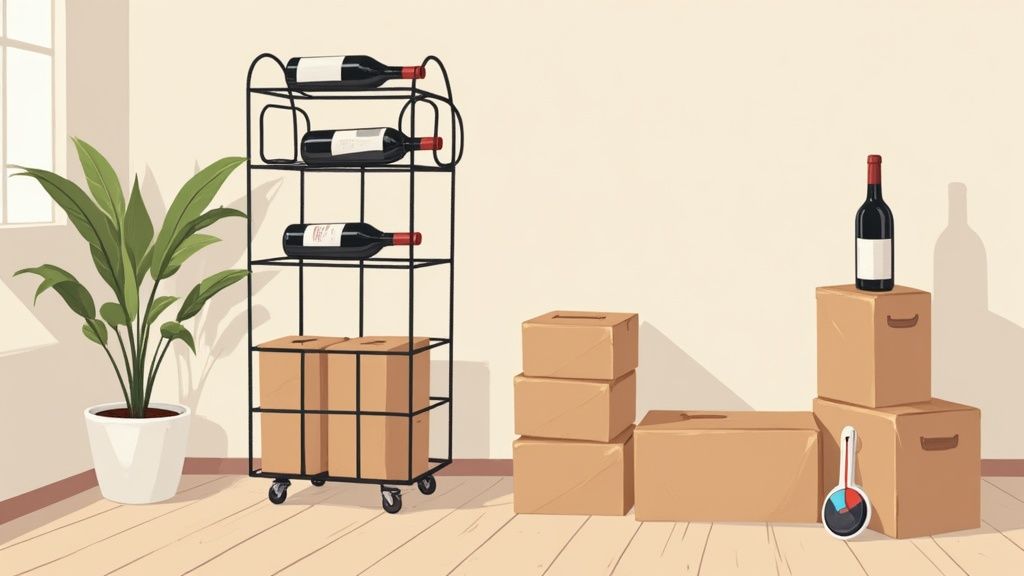
It’s a common myth that without a purpose-built cellar, your wine collection is doomed. The truth is, you can create a perfectly good environment for your bottles right where you live. This guide is all about breaking down the essentials into practical, achievable steps.
At the heart of it all are three core principles of wine storage. Get these right, and you'll preserve the flavour, aroma, and integrity of every bottle, ensuring your wine ages gracefully, whether it's for a few months or several years.
- Stable Temperature: This is the big one. Heat is wine's number one enemy, as it speeds up ageing and can cook off all those complex, delicate flavours.
- Consistent Darkness: UV light, from the sun or even bright indoor lights, can degrade the sensitive organic compounds that make wine so special.
- Minimal Vibration: Constant shaking or movement isn't good for wine. It can disturb the sediment in older reds and disrupt the bottle's natural evolution over time.
Navigating Australian Climates
Living in Australia, sticking to these principles is even more critical. Our climate can be pretty harsh, and those wild temperature swings are the biggest challenge for any wine lover.
You're aiming for a consistent temperature somewhere between 12-16°C, with daily fluctuations of no more than 5°C. That might sound tricky, but it's crucial. The Australian Wine Research Institute (AWRI) has shown that temperatures creeping over 25°C can seriously shorten a wine's life.
Forget any myths you've heard about needing expensive, high-tech setups. Once you understand these core concepts, you'll have the confidence to turn an everyday space into a genuinely effective wine sanctuary.
This guide will show you how to adapt these professional storage techniques to fit any apartment or house. For a deeper dive into the foundational rules, check out our comprehensive guide to unlocking the secrets of proper wine storage for the home enthusiast.
Next up, let's explore how to find the ideal spots in your home.
Finding Your Home's Hidden Wine Nook
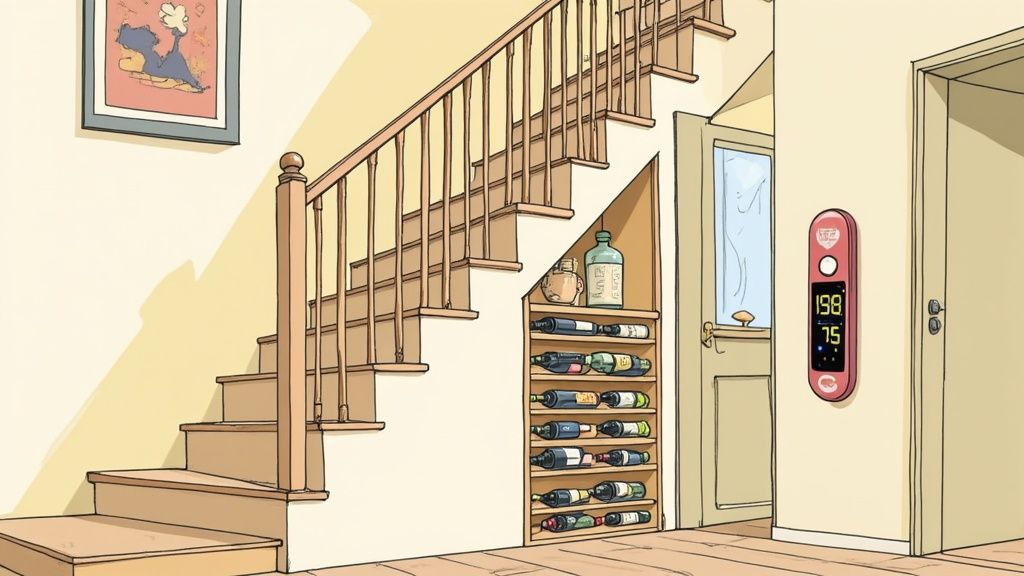
Every home has a spot that can work for storing wine—you just need to know where to look. The secret is to start scouting for those forgotten spaces that naturally tick the boxes of being cool, dark, and stable. You can learn to see your home through the eyes of a sommelier, turning an ordinary corner into a surprisingly effective wine haven.
Think about the places in your home least affected by daily life. These are usually interior spaces, away from external walls that soak up the Aussie sun. You'll be surprised at what you find once you start looking.
Some of the best candidates are often right under your nose:
- The bottom of an interior closet: The floor of a guest room or hallway closet that isn't opened much is often the coolest, most stable part of the room.
- A quiet pantry corner: Just make sure it's far from any heat-generating appliances like the oven or dishwasher.
- The cool space beneath a staircase: This is a classic choice for a reason. It's often dark, structurally sound, and holds a consistently lower temperature.
Put Your Potential Spots to the Test
So, how can you be sure a spot is any good? Don't just guess—get some data. A simple digital thermometer is your best friend here. Pop one in each potential location and just track the temperature over a few days, or even a full week.
Jot down the highest and lowest readings each day. You're hunting for the location with the least fluctuation. A spot that stays between a steady 15°C and 19°C is far better than one that swings from 12°C to 24°C, even if the average seems fine. Consistency is what really matters when you're figuring out how to store wine without a cellar.
A stable, slightly warmer spot will always be superior to a location that experiences dramatic temperature swings. Rapid changes cause the wine to expand and contract, which can compromise the cork's seal over time.
Once you’ve found the most stable environment in your home, you can start turning it into a functional micro-cellar. This doesn’t have to be a major renovation; even small tweaks can make a massive difference in protecting your collection.
A bit of modular racking will keep bottles organised and stored correctly on their side. For those really tight spots, clever organisation is everything. If you're looking for inspiration, our guide on wine storage in small spaces is packed with practical ideas. Even simple things, like adding insulated foam panels inside a cabinet, can help buffer against any remaining temperature shifts and give your hidden nook an extra layer of protection.
Comparing Potential Home Storage Locations
To help you size up your options, here's a quick comparison of common household spots and how they stack up for wine storage.
| Location | Temperature Stability | Light Exposure | Humidity Level | Best For |
|---|---|---|---|---|
| Interior Closet (Bottom) | Good to Excellent | Low (Dark) | Moderate | Short & Long-Term (if stable) |
| Under the Stairs | Good | Low (Dark) | Moderate | Short & Long-Term |
| Basement/Under the house | Excellent | Low (Dark) | Often Good (Cool) | Long-Term Ageing |
| Kitchen Pantry (away from heat) | Fair to Poor | Low (Dark) | Varies | Short-Term (days to weeks) |
| Garage | Poor | Varies | Varies | Avoid (extreme temp swings) |
| Living Room | Poor | High | Low | Avoid (temp swings & light) |
This table should give you a clearer picture of which spots are worth testing and which ones to avoid entirely. Remember, the goal is to find the most stable, dark, and cool location your home has to offer.
Controlling Temperature, Light, and Humidity
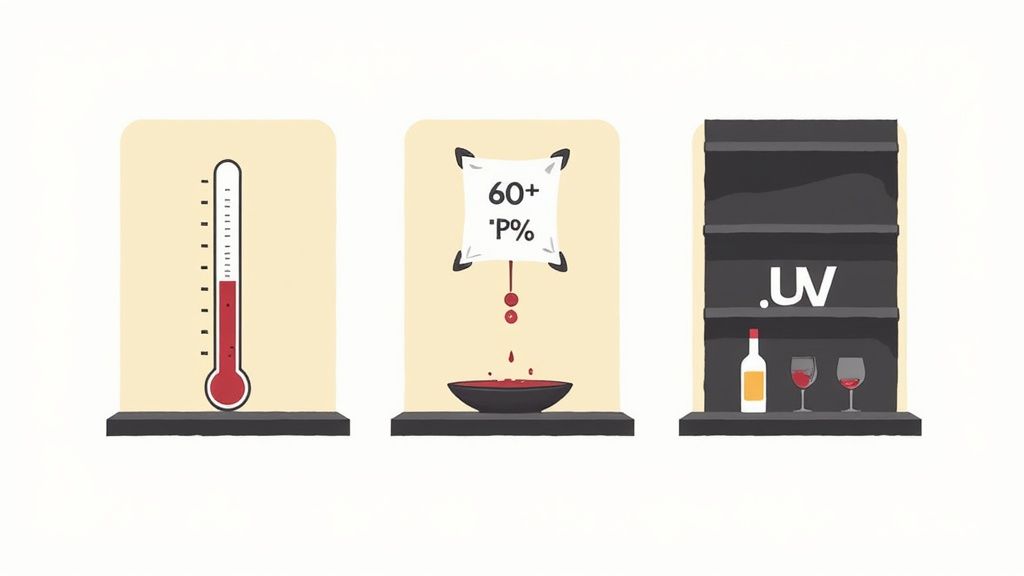
Once you've scouted the perfect hidden nook for your bottles, the next job is to get its micro-environment just right. To successfully store wine without a cellar, you need to manage the three big pillars of preservation: temperature, humidity, and light.
Getting these right is what separates a thriving collection from a cabinet full of disappointment.
Temperature is easily the most critical factor, but consistency beats chasing a perfect number. While the ideal range is a cool 12-16°C, the real enemy is a rapid temperature swing.
Think of it like this: when wine warms up, it expands slightly. When it cools, it contracts. If this happens too often or too quickly, it puts stress on the cork, which can compromise its seal. That lets tiny amounts of oxygen seep in, speeding up the ageing process and dulling those beautiful flavours.
The Battle Against Light Damage
The second silent destroyer of wine is ultraviolet (UV) light. It doesn't matter if it's direct sunlight or harsh indoor lighting—both can break down the complex compounds that give wine its unique aroma, flavour, and structure.
This phenomenon, often called "light strike," can leave a wine tasting flat or funky in a surprisingly short time. The solution is simple: total darkness.
- Keep bottles in their original boxes: Cardboard is an excellent, and free, light blocker.
- Choose an enclosed space: A closet or cabinet is always going to be better than an open rack in a bright living room.
- Avoid bright rooms entirely: Make sure your chosen spot isn't near a window or directly under a spotlight.
Even without a dedicated space, applying some of the essentials of home wine cellar design can help you create a much safer environment for your bottles. For a deeper dive, check out our guide on why wine and sunlight don’t mix.
Keep in mind that darker bottles offer more protection than clear or light green ones. This makes delicate whites and rosés particularly vulnerable to light damage, so they need extra vigilance.
Mastering Humidity in Australian Climates
Finally, humidity plays a vital role in long-term storage, especially for any bottles sealed with a natural cork. The goal here is a consistent humidity level of around 60-70%. This keeps the cork nice and plump, maintaining a tight seal against oxygen.
If the air is too dry—a common problem in many parts of Australia—corks can shrink and dry out, letting oxygen into the bottle and causing dreaded oxidation.
Fortunately, managing humidity is easier than you might think. For a small, enclosed space like a cabinet, just placing a small, open dish of water inside can often do the trick. Check it every so often and refill it as the water evaporates.
You can also find specialised humidity packs that are inexpensive and designed to maintain a specific moisture level, taking the guesswork out of it completely.
DIY Solutions and Smart Storage Investments
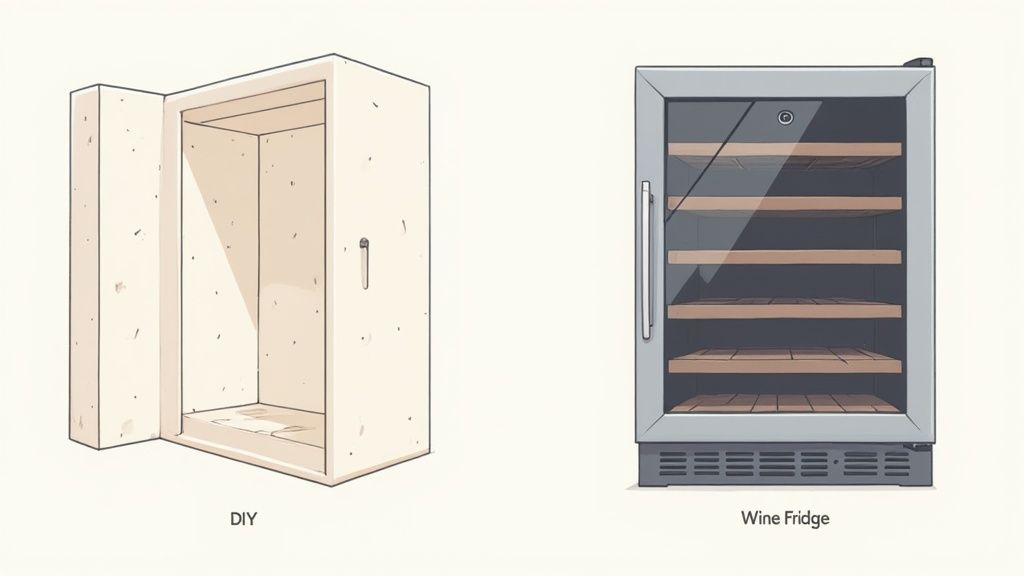
Once you’ve found the most stable spot in your home, it’s time to get clever and optimise it for your collection. You don’t need a massive budget to make some really meaningful improvements. In fact, a few simple DIY tricks can dramatically enhance your storage conditions, protecting your precious bottles from the elements.
These small projects can make a huge difference, especially when a seasonal heatwave hits. If you're looking for ways to integrate wine storage into existing nooks and crannies, checking out clever storage solutions and design tips for small spaces can spark some brilliant ideas.
Cost-Effective DIY Upgrades
If you've settled on a cabinet or a closet, a bit of insulation can work wonders. Grab some rigid foam insulation panels from your local hardware store, cut them to size, and fit them inside the walls of your chosen space. This creates an extra thermal barrier that helps buffer your wine against those annoying daily temperature swings.
Here’s another fantastic, low-cost trick: don't throw away those Styrofoam wine shippers! You know, the moulded inserts often used for posting wine. They offer excellent insulation and protection, making them a perfect short-term solution for safeguarding a few special bottles during an unexpected hot spell. Just pop the bottles inside and tuck the whole thing away in your cool, dark spot.
These DIY methods are all about creating a more stable microclimate. Even a small improvement that reduces temperature fluctuation by a few degrees can have a major positive impact on your wine over time.
Investing in a Wine Fridge
When you’re ready to move beyond improvised solutions, a dedicated wine fridge is the single best investment you can make. It’s crucial to understand that a wine fridge is not just a fancy mini-fridge from the kitchen department; it's a purpose-built appliance designed specifically for the unique needs of wine.
Unlike a standard fridge, which is far too cold and has very low humidity, a wine fridge maintains a consistent temperature and a healthy moisture level. When you're shopping for one, there are a few key features that absolutely justify the investment.
- UV-Filtering Glass Door: This is non-negotiable. It protects your collection from harmful light while still letting you admire your bottles.
- Vibration-Dampening Compressor: Modern wine fridges use tech that minimises the subtle vibrations that can disturb a wine’s sediment over the years.
- Dual-Zone Cooling: Many models offer separate temperature zones, which is brilliant for storing reds and whites at their ideal individual temperatures in the same unit.
While the initial outlay is higher than a DIY setup, a quality wine fridge removes all the guesswork. For any serious collector, especially in our warmer Australian climates, it offers peace of mind and the most practical, reliable long-term solution for storing wine without a cellar.
Storing for Tonight Versus a Decade from Now
Let's be honest: not every bottle you buy needs to be treated like a precious artifact. The way you store your wine should hinge entirely on when you plan to pop the cork. A bottle you’ve earmarked for next weekend's dinner party has far simpler needs than a premium McLaren Vale Shiraz you're carefully tucking away for a 10-year anniversary.
Figuring out this difference is the real secret to successfully storing wine without a proper cellar. It saves you from overthinking the everyday bottles while making sure your special occasion wines get the care they need to truly shine.
Short-Term Storage: The “Good Enough” Rules
For any bottle you plan on drinking within the next six months, the rules are much more forgiving. You don’t need a perfectly calibrated setup; you just need to sidestep the most common blunders. The goal here is simple: keep the wine safe and stable so it doesn't spoil before you get to enjoy it.
Think of it as finding a safe parking spot for your car, not building a climate-controlled garage. The best locations are usually cool, dark, and away from any vibrations or heat sources.
A few great spots for these bottles include:
- A dark pantry shelf: Just be sure to choose a spot well away from the oven or any other appliances that kick out heat.
- The bottom of a quiet wardrobe: This is often one of the most stable, dark, and temperature-consistent places in a home.
- An insulated box in a cool room: Keeping bottles in a simple Styrofoam shipper or even their original cardboard case adds a great layer of insulation.
For short-term storage, consistency is still your friend, but perfection isn't the aim. Just keeping the bottle out of direct sunlight and away from the kitchen's wild temperature swings will do the trick for a wine you'll be opening soon.
Long-Term Ageing: The Rules Get Stricter
Now, when you’re laying down a bottle for a year or more, the storage rules become non-negotiable. This is where you have to mimic the conditions of a traditional underground cellar as closely as you can. The game shifts from simple preservation to controlled, graceful maturation.
For these special bottles, laying them on their side is absolutely essential. This keeps the wine in constant contact with the cork, ensuring it stays moist and plump. A dry cork can shrink over time, allowing tiny amounts of oxygen to creep in and ruin the wine.
Absolute darkness also becomes critical. Even brief, repeated exposure to light can degrade the sensitive compounds in wine, especially over several years. And those little vibrations from daily life—foot traffic, a nearby washing machine—need to be minimised, as they can disturb the fine sediment and disrupt the delicate ageing process.
Caring for a powerful Cabernet Sauvignon meant for the long haul is a totally different commitment to stashing a crisp Sauvignon Blanc for next month. By tailoring your approach to each bottle's timeline, you make sure every wine is perfect when its moment finally arrives.
Common Wine Storage Mistakes to Avoid
Even with the best intentions, it’s frighteningly easy to make a simple mistake that can ruin a fantastic bottle of wine. By getting familiar with the most common blunders, you can protect your collection and make sure all your careful storage efforts pay off. Many of these pitfalls seem harmless on the surface but can quietly sabotage your wine over time.
One of the absolute worst offenders is the top of the kitchen refrigerator. It might seem like a convenient spot, but it’s public enemy number one for wine. The coils at the back of a fridge kick out a surprising amount of heat, while the compressor's constant vibrations disrupt the wine's delicate structure, rapidly speeding up the ageing process.
Places That Seem Fine but Aren't
Next on the list are garages and outdoor sheds. Especially in an Australian climate, these spaces go through wild temperature swings—from chilly winter nights to scorching summer days. This thermal rollercoaster is a recipe for disaster. It causes the wine to expand and contract, which can easily compromise the cork's seal and let damaging oxygen creep in.
Another frequent error is displaying your wine collection in a bright, sunny room. It might look beautiful, but UV rays from sunlight can literally "cook" a wine in just a few months. This breaks down its complex compounds, leaving it with a flat, lifeless flavour.
Many people don't realise that even strong indoor lighting can cause damage over time. The best practice is always to keep your wine in complete darkness until you're ready to serve it.
Finally, there are a few less obvious missteps that can still cause problems, particularly for bottles you’re hoping to age for a while.
- Storing Bottles Upright: For any wine sealed with a natural cork, storing it standing up for months or years is a critical mistake. The cork will eventually dry out, shrink, and allow oxygen to seep in, leading to oxidation.
- Forgetting About Them: Tucking bottles away in a warm corner of the house and forgetting they exist is another common problem. Out of sight shouldn't mean out of mind, particularly if the location isn't consistently cool.
By sidestepping these common blunders, you give your wine the best possible chance to mature gracefully, even without a professional cellar.
A Few Lingering Questions About Wine Storage
Even with the best advice, a few practical questions always pop up. Here are some of the most common ones we get about storing wine without a proper cellar.
How Long Can I Really Keep Wine in the Kitchen Fridge?
Look, a standard kitchen fridge is perfectly fine for a few days, maybe a week at most, before you plan to open a bottle. But it's a terrible place for long-term storage.
They're just too cold (hovering around 4°C), way too dry, and the motor's constant vibrations can deaden the wine's flavour over time. Think of it as a temporary holding spot, not a home.
Can I Store My Reds and Whites Together?
Yes, absolutely. If you've only got one spot to work with, the goal is a single, stable temperature. Aim for something around 13°C. It’s a happy medium that keeps both your reds and whites safe and sound while they age.
Of course, if you want to store each at its perfect serving temperature, a dual-zone wine fridge is the ultimate solution.
The most important thing is consistency. A stable 15°C is far better for your collection than a space that swings wildly between temperatures, even if the average seems right.
What If My Apartment Is Always Hot?
In a consistently warm apartment, especially during an Aussie summer, a wine fridge isn't just a luxury—it's your best mate. It's a worthy investment that takes all the guesswork and climate-related stress out of the equation.
It simply provides that cool, dark, and stable environment your collection needs to thrive, no matter how toasty it gets in your living room.
Ready to explore the best of McLaren Vale without leaving home? At McLaren Vale Cellars, we bring the region's finest Shiraz, Cabernet, and more right to your door. Discover your next favourite with our curated packs and enjoy free delivery on orders over $100. Start your tasting journey at https://www.mclarenvalecellars.com.


Comments (0)
There are no comments for this article. Be the first one to leave a message!