
Let's get straight to the point: the standard bottle of wine you see on the shelf holds 750 millilitres (mL). This is the universal size for most red, white, and rosé wines across the globe, making it the benchmark for everything from dinner parties to restaurant pours.
Understanding the 750 mL Standard
So, what does 750 mL actually mean in practical terms? Just think of it as three-quarters of a litre.
This isn't just some random number; it's a globally recognised standard that brings a welcome consistency to the wine world. It means that whether you're buying a bottle from a McLaren Vale cellar door or a shop in another country, you know what you're getting.
This consistency is crucial. It helps wineries streamline their bottling process, allows distributors to manage their stock, and gives you, the wine lover, confidence in your purchase. In Australia, the 750 mL format is completely dominant. In fact, a staggering 82 percent of all wine shipped in glass bottles across the country is in this standard size. You can learn more about Australian wine packaging trends on itsmywine.com.au.
How Many Glasses in a Bottle of Wine?
Now for the most important question: how much wine does that actually give you to drink?
A standard restaurant serving of wine is 150 mL. Do the maths, and you’ll find that a 750 mL bottle provides exactly 5 glasses of wine.
It's the perfect amount for sharing between two people over dinner, giving you a couple of generous glasses each with a little left for a top-up.
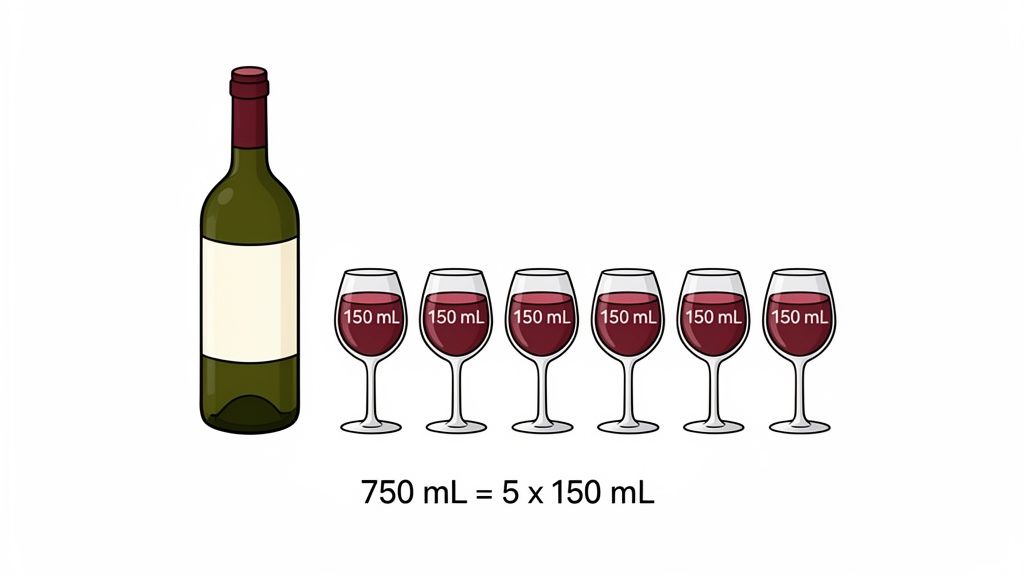
For anyone planning an event or just curious about serving sizes, it helps to see it all laid out. Here’s a quick summary of what a standard bottle holds.
Standard 750 mL Wine Bottle at a Glance
This simple table breaks down a standard bottle into the most common units, helping you pour with confidence every time.
| Unit | Equivalent Value |
|---|---|
| Millilitres (mL) | 750 mL |
| Litres (L) | 0.75 L |
| Standard Glasses (150 mL) | 5 glasses |
| Tasting Pours (75 mL) | 10 pours |
Whether you're splitting a bottle with a friend or stocking up for a party, knowing these equivalents is the first step to becoming a savvy host and a more informed wine enthusiast.
Why 750 mL Became the Global Standard

Ever found yourself opening a bottle and thinking, why 750 mL? It seems like an oddly specific number, not a nice round litre. Well, the answer isn’t some modern marketing decision. It’s a fantastic story that winds its way through history, tradition, and a bit of old-world practicality.
One of the most charming theories takes us back to the early days of French glassblowers. Long before machines took over, every bottle was a unique piece of art, crafted by a skilled artisan. The story goes that the average lung capacity of a glassblower could produce a bottle of roughly 750 mL in a single, powerful exhale. This very human limitation laid the groundwork for what would eventually become the global standard.
Then there was the influence of trade, particularly with the British, who were huge fans of French wine. While the French worked in litres, the British used their own Imperial gallons. A gallon, which is about 4.5 litres, was often shipped in large barrels.
To make trade and taxes a whole lot simpler, a convenient standard was born. A barrel held 50 gallons, which worked out to be exactly 300 bottles of 750 mL each. This neat conversion made life easier for merchants and customs officials on both sides of the Channel.
The Modern Advantages of a Standard Size
This historical quirk has stuck around for good reason, offering a bunch of practical benefits we still appreciate today. Having the 750 mL bottle as a global standard creates a predictable and reliable experience for everyone, from the winemakers right here in McLaren Vale to the person stocking their wine rack at home.
This uniformity gives us a few clear perks:
- Simplified Production: Wineries can use standardised equipment for everything from bottling and labelling to packing and shipping. This efficiency helps keep the wine you love more affordable.
- Predictable Cellaring: When you're buying wine to age, a standard bottle size means it will fit perfectly in most wine racks and cellars. It makes organising your collection a breeze.
- Effortless Event Planning: For anyone hosting a dinner party or a wedding, knowing a bottle holds about five standard glasses makes it simple to figure out how much wine you'll need.
It's this beautiful blend of artisan history and commercial smarts that has kept the 750 mL bottle on top. It’s a size that pays tribute to its past while perfectly suiting the way we enjoy wine today. To get the full story, you can dive into the curious history behind the 750 mL wine bottle in our detailed article.
Understanding Pours and Standard Drinks in Australia
So, you know a standard wine bottle holds 750 mL. That's the easy part. The real trick is understanding what that means when it hits your glass, especially here in Australia. It’s absolutely vital to know the difference between a typical restaurant 'serve' and an official 'standard drink', they’re almost never the same thing.
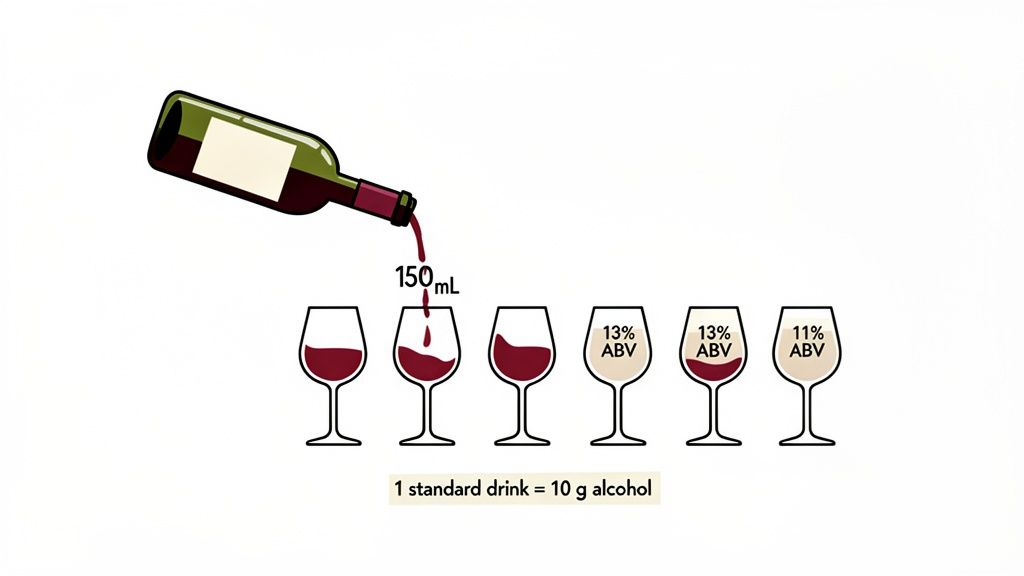
When you’re out at a restaurant or pub and order a glass of wine, you’re almost always getting a 150 mL pour. It’s become the accepted industry size, and it works out neatly: a 750 mL bottle gives you exactly five glasses. Simple.
But this is where things get a bit more serious. The Australian government’s 'standard drink' isn't a serving size at all. It's a precise measure of alcohol content.
What Is a Standard Drink?
In Australia, one standard drink contains exactly 10 grams of pure alcohol. For most wines, this translates to about 100 mL, a full third less than that restaurant pour.
This means a single 150 mL glass of wine almost always contains more than one standard drink. How much more? Well, that depends entirely on the wine's Alcohol by Volume (ABV).
If you’re keeping an eye on your intake, remember that a typical 150 mL glass of red wine works out to about 1.6 standard drinks. A white wine of the same size is usually around 1.4 standard drinks. This gap between a 'serve' and a 'standard drink' is the cornerstone of Australia's responsible drinking guidelines.
A higher ABV means more standard drinks in your glass. A bold McLaren Vale Shiraz clocking in at 14.5% ABV will pack a bigger punch than a lighter-style white at 12% ABV, even if both are poured to the same 150 mL line. The good news is that every bottle label must state how many standard drinks it contains, so always check.
Applying This to Your Pour
Once you get your head around this, it empowers you to make much smarter choices. If you’re looking to moderate your consumption at home, you can easily adjust your pour to a true standard drink of 100 mL. It’s a simple change that makes a big difference. For a deeper dive, check out our full guide on how many glasses of wine are in a bottle.
Of course, enjoying wine is also about the experience. Thinking about serving sizes and standard drinks doesn’t mean you can’t appreciate the presentation. The right glass not only feels great in your hand but can also help you judge your pours more accurately. You can even explore the latest trends in glassware to bring a bit of extra style to your responsible sipping.
Exploring the World of Wine Bottle Sizes
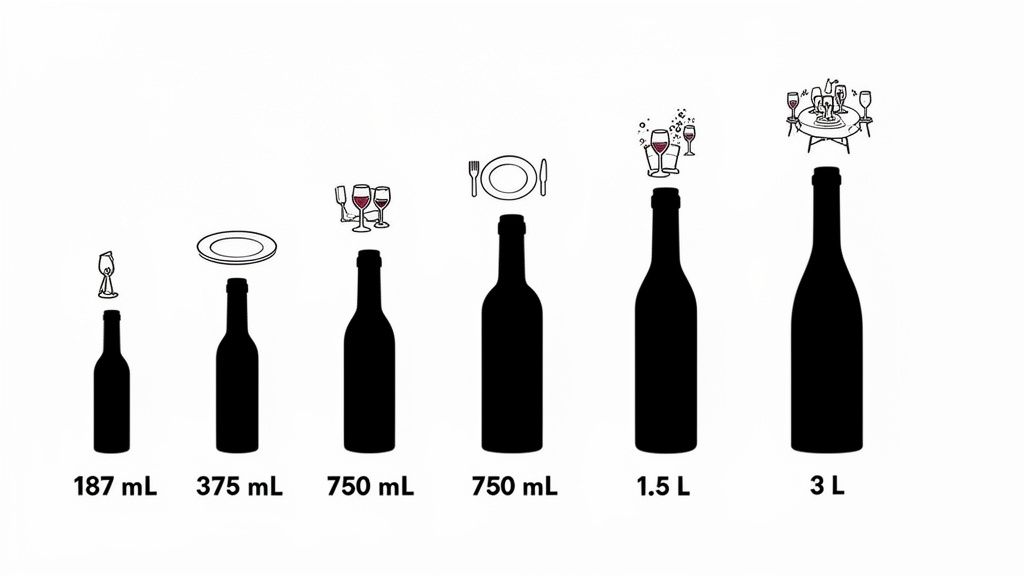
While the 750 mL bottle is the undisputed king of the wine world, it’s really just the beginning of the story. The world of wine is filled with a fascinating variety of bottle formats, each with its own name, purpose, and personality. Getting to know these different sizes opens up a new level of appreciation and practicality for any wine lover.
From a single-serve Piccolo perfect for a celebratory toast to a party-starting Magnum, the size you choose can completely change the experience. It’s not just about volume; it’s about suiting the occasion, managing serves, and even influencing how a wine ages.
From a Split to a Jeroboam
Understanding the different formats helps you buy smarter. A smaller bottle is ideal for trying a new varietal without committing to a full 750 mL, while larger formats are absolute showstoppers for gatherings and celebrations.
Here's a breakdown of the most common wine bottle sizes you're likely to encounter:
-
Split or Piccolo (187.5 mL): This tiny bottle holds a single generous glass of wine. It's almost exclusively used for sparkling wines, making it perfect for individual celebrations or as a party favour.
-
Half Bottle (375 mL): Holding exactly half the volume of a standard bottle, this size is brilliant for a quiet weeknight dinner for two. It offers about two and a half standard glasses, preventing waste.
-
Standard (750 mL): The hero of our story. This globally recognised bottle holds five standard 150 mL glasses and is the go-to for almost every occasion.
-
Magnum (1.5 L): This is where things get exciting. A Magnum holds 1,500 mL, or the equivalent of two standard bottles. It's the ultimate choice for a dinner party, as wine is known to age more gracefully in this larger format due to a lower oxygen-to-wine ratio.
-
Jeroboam or Double Magnum (3 L): Equal to four standard bottles, the Jeroboam is a true statement piece for a big celebration. It pours around 20 glasses, ensuring no one goes thirsty.
Choosing Your Format Wisely
The names and sizes might seem a bit old-fashioned, often drawing from biblical kings and historical figures, but their uses are entirely modern and practical. Beyond the bottles themselves, understanding how wine is stored and presented can enhance your appreciation; for example, you might be interested in a guide to choosing an antique drinks cabinet.
The key takeaway is that different occasions call for different bottles. While a standard 750 mL bottle is versatile, exploring other sizes gives you more control over your wine experience, from tasting to cellaring.
To help you get your head around all the different options, we’ve put together a simple table. It’s a great visual guide that connects each bottle's name to its volume and best use case.
Common Wine Bottle Sizes and Their Uses
This table makes it easy to decide which format is right for your next purchase, whether you're shopping for yourself or planning a major event.
| Bottle Name | Volume (mL) | Equivalent Standard Bottles | Best For |
|---|---|---|---|
| Piccolo | 187.5 mL | 1/4 Bottle | Single servings of sparkling wine |
| Half Bottle | 375 mL | 1/2 Bottle | A quiet dinner for two |
| Standard | 750 mL | 1 Bottle | Everyday enjoyment and sharing |
| Magnum | 1,500 mL | 2 Bottles | Dinner parties and graceful aging |
| Jeroboam | 3,000 mL | 4 Bottles | Large celebrations and events |
Next time you're browsing, think beyond the standard bottle. You might find a half-bottle is perfect for a weeknight, or that a magnum is exactly what you need to make your next dinner party truly memorable.
How to Choose the Right Bottle Size for Any Occasion
So, you've got the basics down on the different wine bottle sizes. Now for the fun part: putting that knowledge to good use. Picking the right bottle is about more than just knowing your mLs; it's about matching the wine to the moment. This is one of those simple skills that takes you from someone who just buys wine to a host who really thinks about their guests.
Your standard 750 mL bottle is your everyday hero, perfect for most situations. But sometimes, a different size just tells a better story. By thinking a little about who's coming and what kind of event you're hosting, you can pick a format that adds a bit of flair, makes things easier, or offers better value.
Dinner Parties and Intimate Gatherings
Hosting a dinner party for, say, six people? You might be tempted to splash out on a big 1.5 L Magnum. It looks impressive, for sure. But often, two standard 750 mL bottles are the smarter play. This way, you can offer some variety, maybe a rich McLaren Vale Shiraz for the main course and a crisp Sauvignon Blanc to start. You're catering to different tastes and food pairings right away.
With smaller groups, variety is your friend. Popping open a couple of different styles gets people talking and comparing notes, making the whole evening more interactive and memorable. A Magnum locks you into one wine. That’s great if you know it’s a guaranteed crowd-pleaser, but two separate bottles give you wonderful flexibility.
A Magnum is a statement piece perfect for a big celebration, but for a dinner party, variety often trumps sheer volume. Two standard bottles let you showcase different wines and please more palates.
Weddings and Large Celebrations
When you’re planning for a crowd, this is where the big guns come out. A 3 L Jeroboam (that’s four standard bottles in one) isn't just a drink it’s a centrepiece. It becomes a focal point for the party, bringing a sense of grandeur and occasion that a line-up of smaller bottles just can’t replicate.
There are some real practical upsides, too. At a wedding or a big birthday bash, opening one Jeroboam is a whole lot quicker and easier than wrestling with the corks of four individual bottles. It streamlines service for the bar staff and means less clutter on the tables. For sparkling wines, a Magnum or Jeroboam is also brilliant at keeping the fizz lively and the temperature steady, much more so than multiple smaller bottles being opened one after another.
Smart Shopping Strategies
Knowing your bottle sizes also turns you into a much savvier shopper. When you're browsing the deals here at McLaren Vale Cellars, this knowledge helps you spot what's genuinely good value.
- Case Deals: Buying a dozen 750 mL bottles is almost always the most economical way to stock up on a wine you love. You'll always have something great on hand for an impromptu get-together.
- Mixed Packs: These are fantastic for discovery. A mixed six-pack is the perfect way to sample a few different varietals or wineries without having to commit to a full case of something you've never tried.
- Half Bottles (375 mL): Don't dismiss these little guys! They're ideal for cracking open a premium wine you've wanted to try without the premium price tag. They're also perfect for a quiet night in when a full bottle feels like too much of a commitment.
Making Your Next Wine Purchase with Confidence
Now that you're armed with a clear understanding of wine volumes, you can approach your next purchase like a seasoned pro. The main thing to remember is simple but powerful: a standard 750 mL bottle of wine will reliably pour five generous 150 mL glasses. Think of this as your new foundation for smarter, more confident wine shopping.
This isn’t just wine trivia; it's a practical tool that puts you in control. When you spot a dozen deal or a mixed case, knowing the exact volume helps you calculate the true value per glass, ensuring you’re making a savvy investment. It also lets you plan perfectly for gatherings, so you’re never caught short or left with wasteful excess.
Building Your Ideal Wine Collection
Beyond just saving money, this knowledge helps you build a wine collection that truly suits your lifestyle. You can confidently explore new varietals with smaller 375 mL half-bottles, knowing you won't be stuck with an open bottle you can't finish. It also gives you the assurance to stock up on your favourites for future celebrations.
This knowledge transforms how you shop, shifting the focus from simply buying a bottle to strategically building a cellar. Each purchase becomes an intentional choice, whether you're planning for a quiet weeknight or a lively party.
Ultimately, knowing how many mLs are in a bottle of wine gives you control. It takes the guesswork out of the equation and replaces it with certainty, making every trip to the cellar door or online store a more rewarding experience. It’s that final piece of the puzzle that ensures your next wine journey is as exciting as it is enjoyable.
For more tips on navigating the world of online wine retail, explore our complete guide on how to buy wine online in Australia. It's packed with insights to help you discover and enjoy incredible wines with ease.
Frequently Asked Questions
Even after getting your head around the different bottle sizes, there are always a few lingering questions. Let's tackle some of the most common ones we hear at the cellar door, so you can pour your next glass like a seasoned pro.
How Many 100 mL Pours Are in a Bottle of Wine?
A standard 750 mL bottle of wine will give you exactly seven and a half 100 mL pours.
This is a particularly handy measurement to know in Australia. Why? Because a 100 mL pour of wine with average alcohol content is roughly equivalent to one official 'standard drink'. It's a simple way to keep track of your intake while enjoying a great bottle.
Does an Older Wine Have Less Millilitres?
No, not if it's been stored properly. A well-sealed bottle of wine shouldn't lose any noticeable amount of liquid over time, no matter how old it gets.
That little air gap you see between the wine and the cork is called 'ullage', and a small amount is totally normal. If you ever spot a significant drop in the wine level, though, it's usually a red flag. This often points to a dodgy cork or poor storage, which means too much oxygen has crept in and likely spoiled the wine.
When it comes to value, a Magnum often costs a little more than two standard bottles. Its real worth, however, shines when you’re cellaring fine wines. That slower aging process can lead to a far superior tasting experience down the track.
Is a Magnum Better Value than Two Standard Bottles?
This really depends on how you measure 'value'. If you're just looking at the price per millilitre, a 1.5 L Magnum is often priced slightly higher than two separate 750 mL bottles. So, you're not usually saving cash upfront.
The real value of a Magnum comes into play with aging. The larger volume means there's less oxygen exposure relative to the amount of wine, slowing down the maturation process. This allows complex flavours and aromas to develop more gracefully over a longer time. For that special bottle you're planning to cellar, many wine lovers would argue the superior aging potential makes a Magnum the smarter investment.
Ready to put all this newfound knowledge to good use? Explore our incredible range of McLaren Vale wines at McLaren Vale Cellars and find the perfect bottle—or Magnum—for any occasion. https://www.mclarenvalecellars.com


Comments (0)
There are no comments for this article. Be the first one to leave a message!