
If you've ever ordered a glass of wine in Australia and wondered exactly how much you're getting, you're not alone. The simple answer is that the most common pour you'll find is 150ml. This has become the unofficial standard in most restaurants, pubs, and bars across the country.
It’s a great size – enough to properly enjoy the wine, but also a practical measure for the venue.
Understanding Common Australian Wine Pours
Of course, that 150ml pour isn’t the only size you'll see on a wine list. Many places offer a few different options, giving you the choice between a small taste, a standard glass, or a more generous serve for when you’ve found a wine you really love.
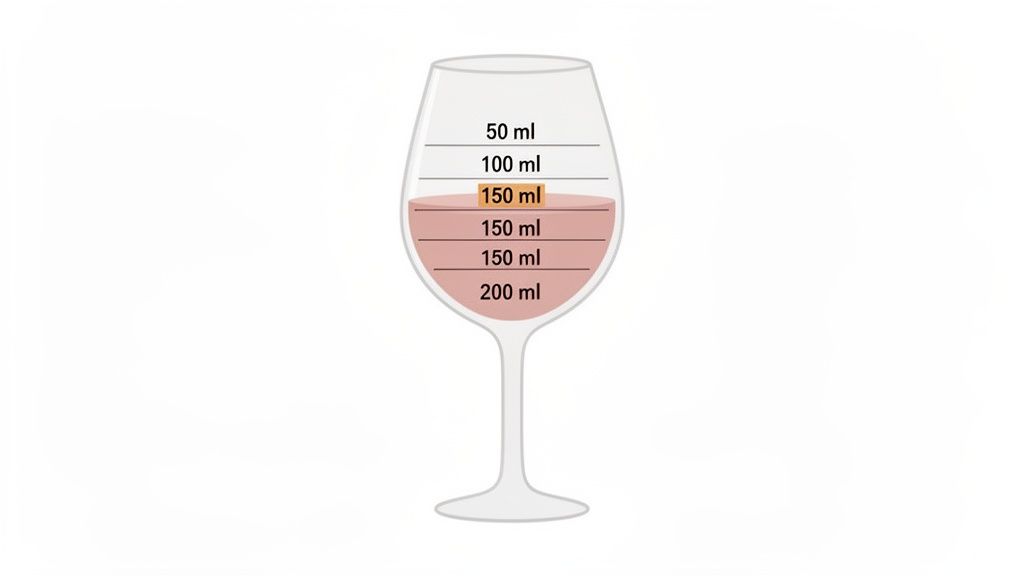
Knowing these common sizes helps you get a feel for what you're ordering and how it stacks up against a full bottle. It's all about matching your pour to the occasion. If you want to dive deeper into how these glasses relate to bottles, check out our complete guide to wine measurements.
Common Australian Wine Pours at a Glance
To make it even easier, here’s a quick reference table showing the typical wine pours you'll find in Australia. We've also included the approximate number of standard drinks for a classic red wine at 13.5% alcohol, which is a good baseline for many of the bold reds we love here in McLaren Vale.
| Pour Name | Volume (ml) | Approx. Standard Drinks |
|---|---|---|
| Taster/Half Glass | 75ml | 0.8 |
| Small Glass | 125ml | 1.3 |
| Standard Glass | 150ml | 1.6 |
| Large Glass | 200ml | 2.1 |
| Carafe/Two Glasses | 250ml | 2.7 |
This little chart is your best friend when you’re out and about, helping you keep track of your intake and order with confidence. Whether you’re opting for a small taster or settling in with a larger glass, you’ll know exactly what to expect.
Why the 150ml Pour Reigns Supreme
Ever found yourself wondering why that glass of wine at your favourite Aussie restaurant is just the size it is? It’s not a random guess. The 150ml pour has become the unofficial king of wine service, and for good reason. It’s the sweet spot—a carefully chosen measure that works perfectly for both the person pouring and the person sipping.
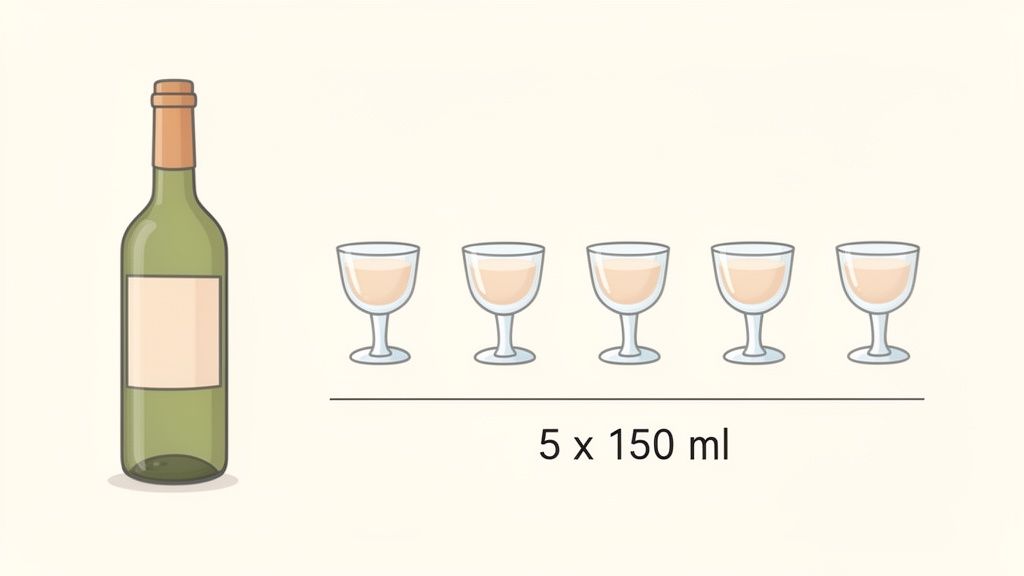
Think of a standard 750ml bottle of wine. With a 150ml serve, a bartender can get exactly five perfect, equal glasses from every single bottle. This simple maths makes life easier for the venue, helping them manage stock and set prices fairly. No guesswork, just consistency.
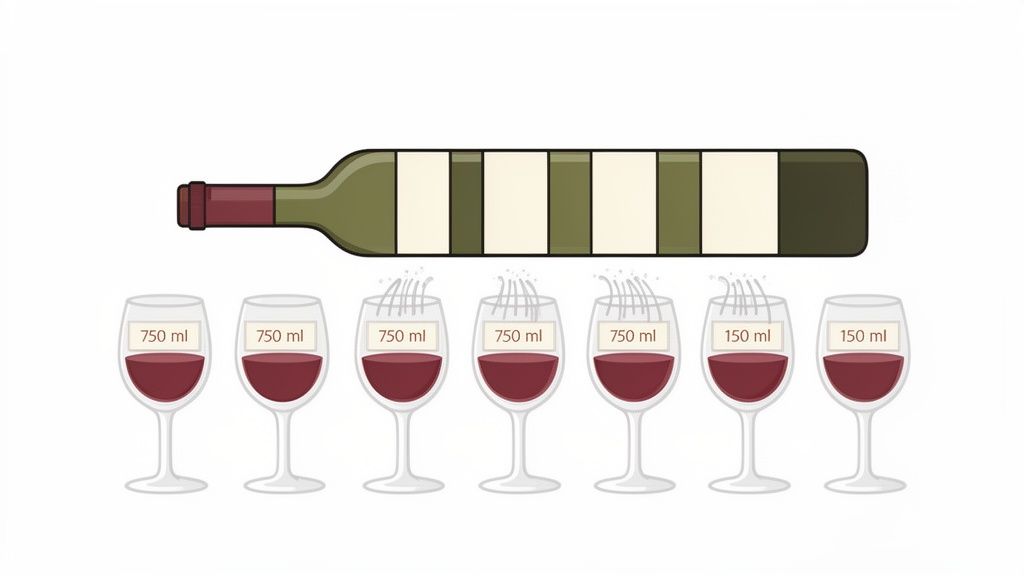
It’s also the size that aligns with responsible serving practices here in Australia. According to the Australian Government, a 150ml restaurant pour of red wine at 13.5% alcohol is equivalent to 1.6 standard drinks. If you want to dive deeper, you can discover more insights about wine serving standards to get a better handle on your pour.
More Than Just a Number
But the magic of the 150ml pour goes way beyond simple measurements. It’s all about the experience in the glass. This volume gives the wine just the right amount of room to breathe, swirl, and open up.
This breathing process, known as aeration, is what lets oxygen mingle with the wine. It helps to soften the tannins and unlock all those complex, beautiful aromas and flavours that have been waiting to come out.
For a big, expressive red like a classic McLaren Vale Shiraz, that extra space in the glass is non-negotiable. It allows the wine’s signature notes—think dark berries, rich chocolate, and a hint of spice—to really sing.
So, the 150ml pour isn’t just a number. It's about giving the wine the stage it deserves to put on its best performance, turning a simple glass into something truly memorable.
Converting Pours From a 750ml Bottle
Knowing how many millilitres are in your glass is one thing, but the real trick is knowing how that relates to the bottle you’ve just opened. This is where the magic happens—when you can confidently plan for a dinner party, pour even serves for guests, or just figure out how to make that special bottle of McLaren Vale Cabernet last.
It all comes down to some simple maths.
A standard wine bottle holds 750ml. This size has become the global standard for good reason, offering a practical volume for producers and wine lovers alike. If you’re curious, you can dive into the curious history behind the 750ml wine bottle.
When you use the standard Australian restaurant pour of 150ml, the calculation couldn’t be easier. A 750ml bottle will give you exactly five perfectly measured glasses of wine. This five-glass rule is the foundation for serving wine like a pro.
From Pours to Glasses
Of course, not every glass you pour will be a standard 150ml. So, how does the number change when you’re serving smaller tastes or more generous glasses?
The key takeaway is simple: the smaller your pour, the more glasses you'll get from the bottle. This is brilliant for wine tastings where you want everyone to sample multiple wines without overindulging.
Here’s a quick breakdown to help you visualise how different pour sizes translate into glasses per bottle.
Glasses Per 750ml Bottle of Wine
This simple table gives you a clear guide on how many glasses you can expect from a standard bottle. It's a handy reference for any occasion.
| Pour Size (ml) | Approximate Glasses Per Bottle |
|---|---|
| 125ml | 6 Glasses |
| 150ml | 5 Glasses |
| 175ml | About 4 Glasses |
| 200ml | About 3.5 Glasses |
Armed with this information, you can effortlessly manage your wine, ensuring every drop is accounted for and every guest gets a fair share. It’s all about pouring with purpose.
Decoding the Australian Standard Drink
When we talk about how many mls are in a glass of wine, it’s easy to get focused on the volume of the liquid in the glass. But Australian health guidelines nudge us to think about it a different way—not just about the liquid, but about the actual alcohol it contains. This is where the concept of the standard drink comes into play.
A standard drink in Australia is any beverage that contains 10 grams of pure alcohol. It's a simple, universal measure designed to help you keep track of your intake, whether you're enjoying wine, beer, or spirits. It’s a measure of alcohol, not the size of the glass.
For pubs and restaurants, pouring accurate standard drinks is a cornerstone of responsible service. If you're running a venue, you'll find plenty of handy information in guides covering essential UK pub supplies and local regulations.
The Standard Drink for Wine
So, where does our favourite drop fit into all this? Officially, one standard drink of wine is just 100ml. This is a really important number to lock away because it’s a lot smaller than the common 150ml restaurant pour we've been talking about.
Let’s break that down. A 100ml glass of a typical 13.5% ABV red wine equals exactly 1.0 standard drink. This means that a real-world 150ml restaurant serve is actually pouring you around 1.6 standard drinks.
This gap between a "standard drink" and a "standard serve" is where things often get blurry for people. A single glass of wine at a bar frequently contains more than one standard drink.
Getting your head around this difference is the key to enjoying wine responsibly. It gives you the power to look at a bottle’s label, check the alcohol percentage, and make a call that feels right for you. To go a bit deeper, have a look at our guide to uncovering the mysteries of wine alcohol content.
How to Pour the Perfect Glass at Home
Ready to bring a bit of that cellar door precision into your own home? Serving wine like a pro is easier than you might think, and it goes way beyond just guessing how much to pour.
Nailing a consistent serve not only helps when you've got guests over, but it genuinely enhances your appreciation for every single bottle.
The magic number is generally 150ml. This gives a beautiful, full-bodied McLaren Vale Cabernet Sauvignon enough room to swirl and breathe, unlocking all those complex aromas you paid for. If you're keen to get it just right, understanding how to achieve the perfect pour can make all the difference in presentation and taste.
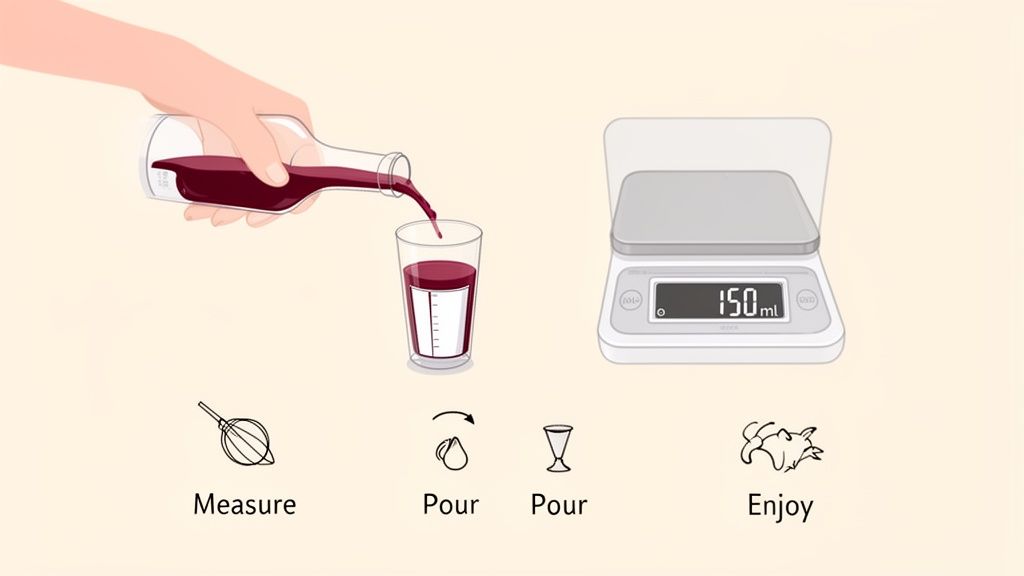
So, how do you hit that mark every time without just winging it? There are a few simple tricks you can use.
Simple Methods for a Consistent Pour
You don't need any fancy gadgets to get this right. With a couple of common kitchen items, you can serve with accuracy and confidence every time.
-
Use a Jigger or Measuring Cup: This is the easiest way. Grab that little tool from your cocktail kit. A standard jigger usually has 30ml and 60ml markings, making it a simple task to measure out 150ml. A small kitchen measuring cup is just as effective.
-
Learn Your Glassware: This is a great one-time trick. Pour 150ml of water into one of your favourite wine glasses and take a good look. Where does the water line sit? Is it just above the widest part of the bowl? Memorise that spot, and it becomes your visual guide for every pour after that.
-
Get Precise with a Kitchen Scale: For ultimate accuracy, pop your empty glass on a digital kitchen scale and hit the 'tare' button to zero it out. Since 1ml of wine weighs almost exactly one gram, just pour until the scale reads 150g. Simple as that.
This might seem like overkill, but trust us, it ensures every glass you pour offers the same balanced experience. It allows the wine to properly aerate, unlocking its full flavour profile and making your enjoyment that much more consistent.
Got Questions About Wine Pours? We’ve Got Answers.
Let's clear up a few common queries that pop up when talking about wine pours. This quick rundown will tackle those lingering questions you might have.
Does the Glass Shape Actually Change How Many ML are Poured?
While the physical volume doesn't change, the shape of the glass plays powerful tricks on your eyes. A standard 150ml pour can look almost lost in a big, wide-bowled glass designed for a bold McLaren Vale Shiraz.
Pour that exact same 150ml into a tall, slender flute for sparkling wine, and suddenly it looks far more generous. This is exactly why measuring your pour is always a better bet than just eyeballing it.
Why Do Pubs and Restaurants Offer Different Pour Sizes?
Offering a few different sizes like 125ml, 150ml, and 175ml is all about giving you more choice and helping venues serve alcohol responsibly. It’s a win-win.
A smaller 125ml pour is perfect if you're having a light lunch or want to try a premium wine without committing to a full glass. The 150ml is the go-to standard, while a larger 175ml is great when you’ve already landed on a favourite. It puts you in control of what you’re drinking and what you’re spending.
By providing options, venues allow patrons to tailor their experience. Whether you're tasting, enjoying a standard glass, or settling in, there's a size that fits the moment perfectly.
How Big is a Serving of Fortified Wine?
Because of its higher alcohol content, a standard serving of fortified wine—like a rich Port or a luscious Liqueur Muscat—is much smaller than your typical glass of table wine.
Here in Australia, a standard pour is just 60ml. With alcohol often sitting around 17.5%, this 60ml serve clocks in at about 0.9 standard drinks. It’s the ideal amount for a flavour-packed treat after dinner.
Ready to put your newfound knowledge to the test? Explore perfectly crafted wines from one of Australia's most beloved regions with McLaren Vale Cellars. Discover our curated sample packs to find your next favourite today.
Find Your Perfect McLaren Vale Wine at mclarenvalecellars.com

Comments (0)
There are no comments for this article. Be the first one to leave a message!