
Planning a party and wondering **how many glasses are in a bottle of champagne?Planning a celebration and trying to figure out how many glasses are in a bottle of champagne? You're in the right place. As a general rule, a standard 750ml bottle will comfortably serve five to six glasses. The final number really just comes down to how generous your pour is.
The Simple Answer To Champagne Servings
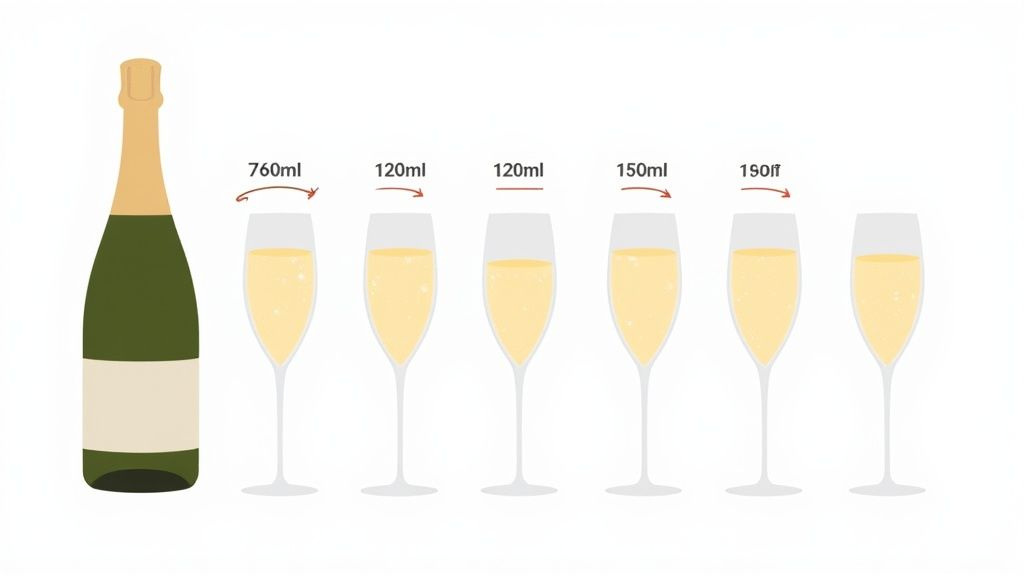
When you're hosting, the last thing you want is to run out of bubbles. Knowing your serving sizes is the key to making sure everyone gets to raise a glass for the toast. Luckily, the maths is pretty simple once you know the standard measurements we use here in Australia.
In most restaurants and bars, a 150ml pour is the norm for a glass of sparkling. With that pour size, a 750ml bottle gives you exactly five glasses. For toasts or home celebrations, however, a slightly smaller 125ml pour is far more common. This lets you stretch that same bottle to six full flutes.
These five-to-six glass servings are the standard across Australian hospitality, so it's a reliable estimate for any occasion you're planning. If you want to dive deeper into wine measurements, you can find more details in our comprehensive guide to wine bottle serves.
Understanding this little difference is the first step to serving champagne like a pro. A relaxed gathering might call for the more generous 150ml pour, while a quick, formal toast is perfect for the 125ml serving.
Champagne Pours from a Standard 750ml Bottle
To make your party planning even easier, here’s a quick reference guide.
| Pour Type | Pour Size (ml) | Glasses per Bottle |
|---|---|---|
| Generous Pour | 150ml | 5 Glasses |
| Standard Flute | 125ml | 6 Glasses |
Keep these numbers in your back pocket, and you can confidently buy the right amount of bubbly for your guests. No more guesswork, and definitely no last-minute trips to the bottle shop
Mastering the Art of the Champagne Pour
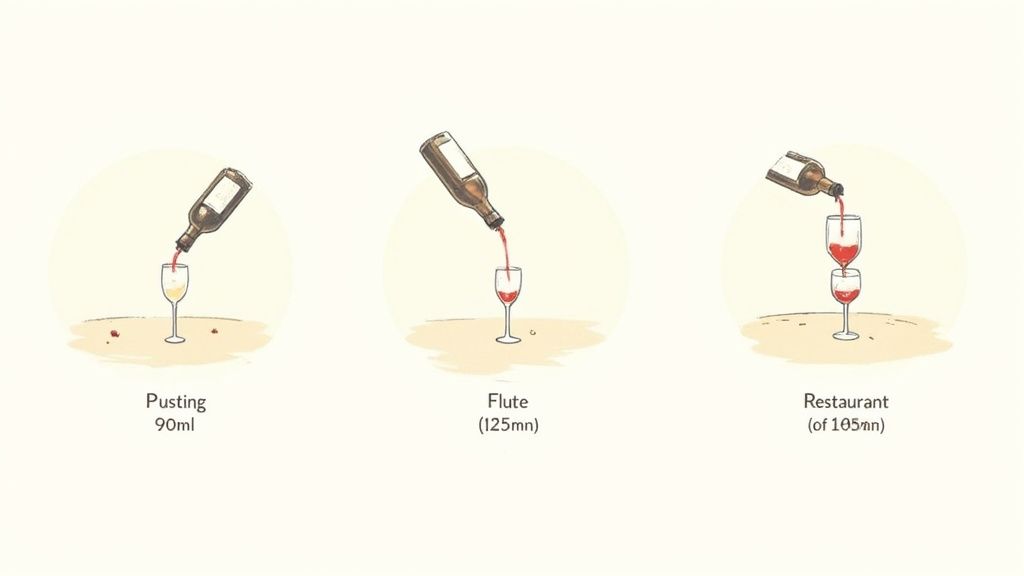
Pouring champagne is so much more than just getting liquid into a glass. It's about setting the scene and matching the serve to the moment. Think of it like a chef choosing the right knife for a specific task; a good host knows which pour is right for each occasion. Getting this right is what turns a good event into a truly great one.
Not every chat needs to be a long, drawn-out story. Sometimes, a short and sweet comment has the most impact. The same logic applies to champagne—different moments call for different measures.
The Standard Flute Pour
The most common serve you'll come across is the classic 125ml flute pour. It’s the go-to for toasts and general celebrations, striking the perfect balance between elegance and generosity. This pour fills a traditional flute about two-thirds of the way, leaving just enough room for the beautiful aromas to gather and for you to admire the stream of bubbles.
This is the industry benchmark for figuring out how many glasses are in a bottle of champagne. You can reliably get six proper serves from a standard 750ml bottle, making sure everyone has enough for a celebratory clink without going over the top.
Generous Pours for Dinners and Tastings
While the 125ml pour is the all-rounder, some situations call for a different approach.
-
The Restaurant Pour (150ml): Often found in Aussie bars and restaurants, this is a more generous serve. It’s perfect for when guests are settling in to enjoy a glass with dinner, giving you five glasses per bottle.
-
The Tasting Pour (90ml): If you're exploring a few different sparkling wines, a smaller pour is the way to go. At around 90ml, it allows everyone to sample multiple flavours without feeling overwhelmed. You'll stretch a single bottle to about eight tasting glasses.
The right pour really does set the tone. A smaller tasting pour invites exploration and comparison, while a generous flute pour signals it's time to celebrate and connect.
Nailing these different pours ensures your champagne service always feels just right for the setting. For a deeper dive into getting the most out of your bubbly, check out our expert guide on how to store and serve champagne for maximum enjoyment.
Serving from Different Champagne Bottle Sizes
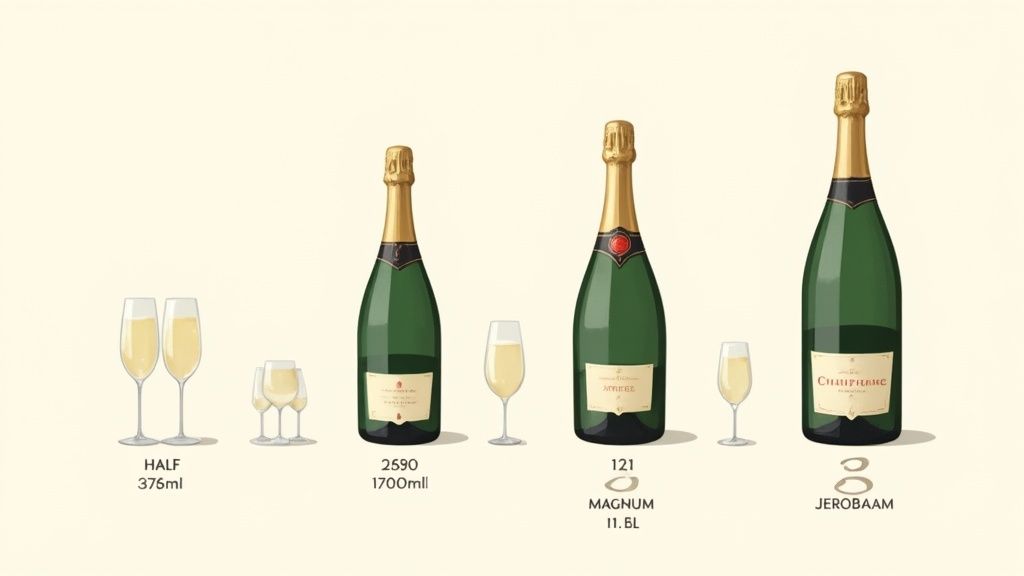
While the classic 750ml bottle is what most of us reach for, the world of champagne has a fascinating range of sizes. Knowing how many glasses you’ll get from each format is the key to unlocking new possibilities for hosting, whether you're planning an intimate dinner or a massive celebration.
Think of it this way: a standard bottle is like a classic novel, always satisfying. But sometimes, a short story is perfect for a quiet evening, while a major event calls for an epic saga. Champagne bottles offer a format for every guest list.
This isn’t just about being practical; it’s about choosing the right bottle with confidence. For those keen to explore beyond the classic French bubbles, our guide to sparkling wines is a fantastic starting point for other bubbly adventures — or shop our McLaren Vale sparkling wine range directly.
Common Bottle Sizes and Their Servings
Let’s break down the most popular sizes you're likely to find.
-
Half-Bottle (375ml): This is the perfect format for a quiet night in or an aperitif for two. As the name suggests, it’s exactly half a standard bottle, which gives you 3 standard glasses of champagne.
-
Magnum (1.5L): The life of the party! A Magnum holds the equivalent of two standard bottles and serves around 12 glasses, making it a favourite for any celebration. The larger format is also believed to help the wine age more slowly and gracefully.
-
Jeroboam (3L): When you really want to make a statement, the Jeroboam is your go-to. It holds four standard bottles and pours approximately 24 glasses, making it a true showstopper for weddings, milestone birthdays, or big corporate events.
Choosing a larger format like a Magnum isn't just about volume; it’s about enhancing the experience. The thicker glass and larger liquid-to-air ratio are believed to result in a more complex and nuanced flavour profile over time.
For a quick reference, here’s a handy table that breaks down the most common bottle sizes and how many pours you can expect from each.
Guide to Champagne Bottle Sizes and Servings
| Bottle Name | Volume (Litres) | Standard Pours (125ml) | Generous Pours (150ml) |
|---|---|---|---|
| Half-Bottle | 0.375 | 3 | 2.5 |
| Standard | 0.75 | 6 | 5 |
| Magnum | 1.5 | 12 | 10 |
| Jeroboam | 3.0 | 24 | 20 |
This simple guide should help you pick the perfect bottle size for any occasion, ensuring everyone gets a glass of the good stuff without any awkward last-minute runs to the bottle shop.
Essential Tips for Serving Champagne Perfectly
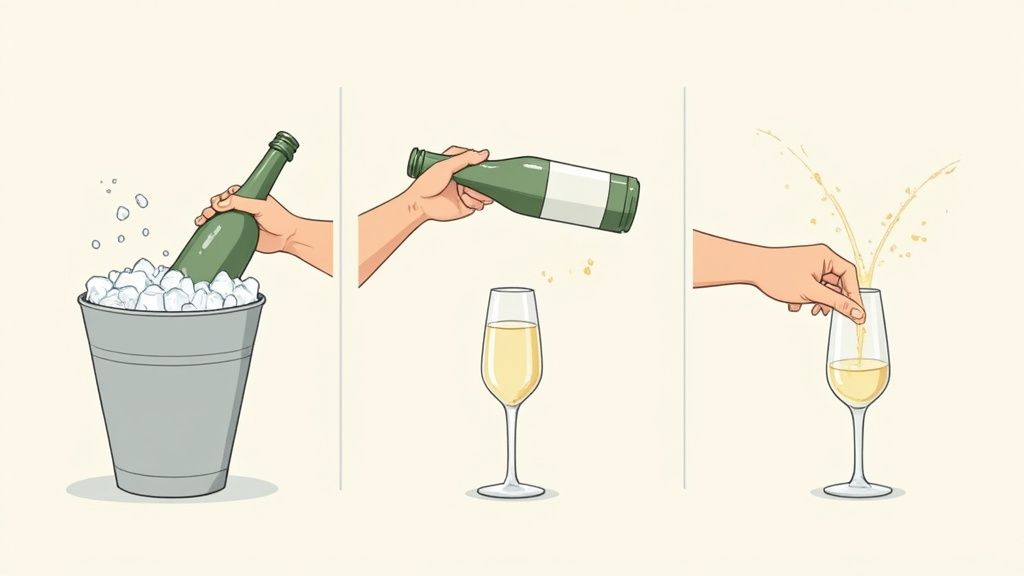
Knowing how many glasses you can get from a bottle is one thing, but serving it well is what turns a simple drink into a memorable moment. A few simple techniques are all it takes to elevate the experience and make sure every drop is enjoyed exactly as the winemaker intended.
First things first: chill your champagne properly. The sweet spot is between 8–10°C. If it’s too warm, you’ll lose those lovely bubbles in a flash. Too cold, and the delicate aromas and flavours get locked away. The quickest way to get it right is an ice bucket filled with half ice and half water—it’ll chill a bottle perfectly in about 30 minutes.
When you're hosting, getting the details right is what everyone remembers. It pays to avoid lukewarm drinks and serve beverages perfectly, making your guests feel truly looked after.
Opening and Pouring with Style
Forget the dramatic, cork-popping spectacle you see in movies. The real goal is a gentle, controlled hiss. This isn't just about looking slick; it's about preserving all that precious effervescence you paid for.
-
Remove the Foil and Cage: Start by peeling off the foil. Untwist the wire cage, but don’t take it off completely just yet. Keep a thumb firmly on top of that cork at all times.
-
Angle the Bottle: Hold the bottle at a 45-degree angle. This little trick increases the surface area of the champagne inside, which helps stop it from foaming over the second the cork is out.
-
Twist the Bottle, Not the Cork: This is the key. Grip the cork and cage securely with one hand, then use your other hand to slowly twist the base of the bottle away from the cork. You'll have far more control, and the cork will ease out beautifully.
Once it's open, pour just a small amount into each glass to let the initial fizz settle down. Then, go back and top them up by tilting the glass and pouring down the side—just like you would with a good beer. It's the best way to keep the bubbles lively.
The right glassware is just as important as the pour. A tall, narrow flute or a tulip-shaped glass is ideal because it concentrates the aromas and directs the stream of bubbles upward, enhancing both the flavour and the visual appeal. Avoid the wide, shallow coupe glass; while it looks glamorous, it causes the bubbles to disappear almost instantly.
Why Australia Is Obsessed with Champagne
When you’re trying to figure out how many glasses are in a bottle of champagne for your next get-together, you’re tapping into a much bigger story. Australia's love affair with French bubbly has exploded into a full-blown cultural phenomenon. What was once reserved for the most special of occasions has now become a go-to for celebrations big and small right across the country.
This isn’t just a vibe; the numbers tell a pretty incredible story about our nation's taste. Over the last couple of decades, our thirst for proper champagne has skyrocketed, turning Australia into one of the world's most important markets for this iconic sparkling wine.
The Great Australian Champagne Boom
The growth has been nothing short of explosive. If you rewind to 2001, Australia imported a pretty modest 890,000 bottles. Fast forward to 2022, and that number soared to an unbelievable 10.5 million bottles. That’s a nearly 12-fold increase, cementing our spot on the global stage. You can get more of the story on the booming Australian champagne economy over at thedrinksbusiness.com.
But it’s not just about drinking more; it's about drinking better. This incredible surge is part of a wider trend called 'premiumisation', where Aussie drinkers are consistently reaching for higher-quality, more interesting styles of fizz.
This shift really points to a growing appreciation for craftsmanship. We're moving beyond just the standard brut and starting to explore the nuanced worlds of rosé, vintage, and low-dosage champagnes. It shows a genuine hunger for quality and variety.
This new wave of sophisticated palates means that when you're choosing a bottle, you’re not just buying a drink. You’re taking part in a nationwide appreciation for one of the world’s finest traditions, making your celebration part of a delicious and ever-growing Australian obsession.
Your Champagne Serving Questions, Answered
Even the best-laid plans can leave you with a few last-minute questions when it’s time to pop the cork. Getting these little details right can make all the difference, ensuring your event goes off without a hitch and everyone enjoys their glass. Here are some quick answers to the questions we hear most often.
So, what do you do with leftovers? Can you actually save an opened bottle of bubbly? Absolutely. A good quality champagne stopper is your best friend here. It creates an airtight seal that keeps the fizz and flavour fresh for one to three days. Just seal it up tight and pop it back in the fridge.
Another common question is whether you serve other sparkling wines, like prosecco, the same way. The short answer is yes—serve it chilled in a flute. But the flavour profiles are worlds apart, and that’s an important distinction as more and more Aussies are exploring different kinds of sparkling wine.
How Does This Apply to Other Sparkling Wines?
While you'd serve prosecco almost identically to champagne, its light, fruit-forward character makes it a fantastic choice for more casual get-togethers or cocktails like a spritz. Champagne, with all its beautiful complexity, often shines brightest when it’s the star of the show.
This growing curiosity about different types of sparkling wine points to a bigger trend. Even though overall wine consumption has dipped slightly, the thirst for premium wines is stronger than ever. It's a clear sign that people are choosing quality over quantity, a shift that affects both champagne and other popular sparklers.
The Australian market has seen a huge surge in sparkling wine, thanks in large part to prosecco, which recently jumped 20% in volume and 17% in value. This really highlights a national palate that's both sophisticated and adventurous. You can dive deeper into these market trends and see what they mean for wine lovers. Learn more about Australian wine market insights
Keeping an Eye on Standard Drinks in Australia
Finally, it’s always smart to think about serving responsibly. Just how many standard drinks are in a bottle of champagne? A typical 750ml bottle with 12.5% alcohol contains around 7.4 standard drinks. Knowing this little fact helps you and your guests make great choices, ensuring your celebration is as safe as it is enjoyable.
Ready to stock up for your next celebration? Shop our McLaren Vale sparkling wine range, including our crowd-favourite Troublemaker Sparkling Blanc de Blanc, with free delivery Australia-wide on orders over $100.


Comments (0)
There are no comments for this article. Be the first one to leave a message!