
So, you’ve opened a beautiful bottle of white wine but didn't quite manage to finish it. Now comes the million-dollar question: how long will it keep?
The short and sweet answer is 3 to 5 days, provided you’ve sealed it up properly and popped it straight into the fridge. Generally, lighter-bodied wines are on the shorter end of that scale, while those with a bit more heft can often go the distance.
Your Guide to Opened White Wine Freshness
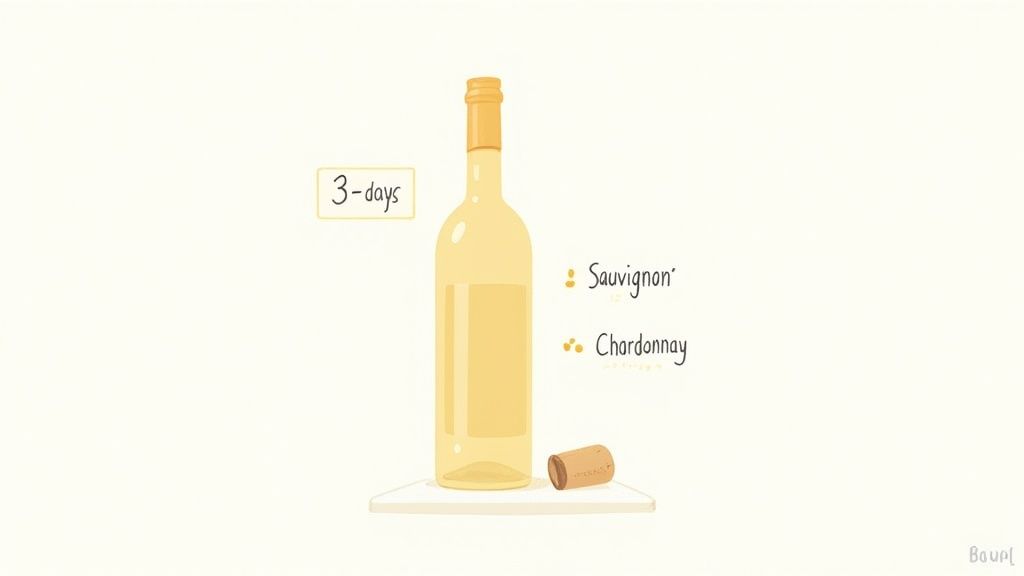
While that 3-to-5-day window is a great rule of thumb, it’s not the whole story. The real lifespan of your opened bottle comes down to a few key things, mostly the wine’s style and its natural structure. Think of it like fresh produce—a delicate lettuce leaf wilts much faster than a hardy cabbage, and the same idea applies to your wine.
A zippy, light-bodied white like a Sauvignon Blanc or Pinot Grigio is at its most fragile. Its beautiful, delicate aromas are the first things to disappear when oxygen gets involved. On the flip side, a richer, fuller-bodied Chardonnay, especially one that has seen some oak, has more structure and can hold its own for a little longer.
Key Factors Influencing Freshness
Two main things act as natural bodyguards in your wine, giving some bottles more stamina than others after the cork has been pulled:
- Acidity: Wines with higher acidity, like a crisp Riesling, have a stronger defence against oxygen. That natural tartness is fantastic at keeping the wine's fresh fruit flavours vibrant for longer.
- Body and Structure: Fuller-bodied wines simply have more stuffing. They often have a greater concentration of flavour and sometimes higher alcohol, both of which help to slow down the process of fading away.
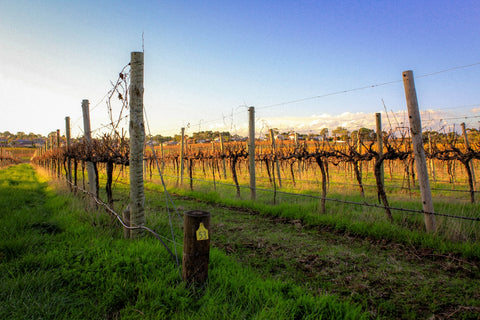
This holds true right here in Australia's best wine regions. In McLaren Vale, a place celebrated for top-tier Chardonnay and Riesling, you can expect an opened bottle to stay fresh for that classic 3-5 days when it's refrigerated and sealed tightly. For more local advice, check out the wine care tips from McLaren Vale Cellars.
The moment you pull the cork, a clock starts ticking. Oxygen, wine's "frenemy," begins its work, slowly breaking down the delicate aromas and flavours that make each bottle unique. Your goal is to slow that clock down as much as possible.
To give you a clearer picture, we've put together a quick guide on how long you can expect different styles of white wine to last once opened and stored in the fridge.
Opened White Wine Freshness Timeline
This table will help you make the most of every drop, from a crisp weeknight sipper to a more complex weekend treat.
| White Wine Style | Typical Freshness Window (Refrigerated) | Examples |
|---|---|---|
| Light-Bodied Whites | 1–3 Days | Pinot Grigio, Sauvignon Blanc, Riesling, Vermentino |
| Medium-Bodied Whites | 3–5 Days | Unoaked Chardonnay, Chenin Blanc, Pinot Blanc |
| Full-Bodied Whites | 3–5 Days | Oaked Chardonnay, Viognier, Sémillon |
| Sweet & Fortified Whites | 5–7 Days (or more) | Sauternes, Late Harvest Riesling, Fortified Muscat |
Remember, these are just guidelines. The best way to know is to give it a sniff and a small taste
Understanding Why Opened Wine Goes Bad
Ever popped open a bottle of crisp, vibrant white wine one day, only to find it tasting flat and lifeless a few days later? What's happening inside that bottle isn't magic; it's just a bit of science. Getting your head around this process is the key to knowing how long your opened white wine will last and how to protect its delicious flavours.
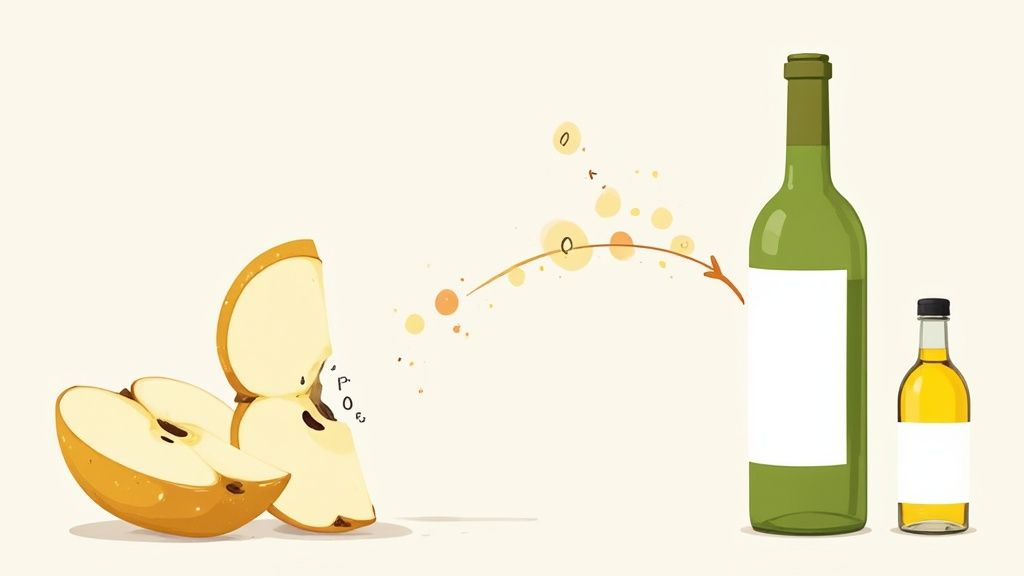
Think about an apple sliced in half and left on the kitchen counter. Before long, its crisp white flesh starts to turn an unappetising brown. That transformation is a chemical reaction with the air, and a very similar process happens to your wine. The moment you pull the cork, you introduce wine's greatest 'frenemy': oxygen.
The Double-Edged Sword of Oxygen
Oxygen is actually essential during winemaking, helping to soften tannins and develop complex flavours. But once the bottle is sealed, its job is pretty much done. When you reopen it, oxygen rushes back in and kicks off a process called oxidation, which is the number one reason your wine starts to go downhill.
This chemical reaction begins to dismantle the delicate compounds that give the wine its fruity and floral aromas. Those bright notes of citrus, green apple, and passionfruit in your Sauvignon Blanc start to fade away.
In their place, less desirable flavours and aromas move in. The wine can take on a nutty or bruised-fruit character, a lot like that browning apple. It just loses its vibrancy and becomes dull and muted. This is the first and most noticeable sign that your wine is past its prime.
The Role of Acetobacter in Wine Spoilage
But oxidation isn't the only force at play here. There's another microscopic culprit that loves an oxygen-rich environment: a group of bacteria called Acetobacter.
These tiny organisms are literally everywhere, including in wine, but they stay dormant in the low-oxygen world of a sealed bottle. Once you introduce a steady supply of air, they wake up and get to work. Their mission is simple: consume the alcohol in your wine and convert it into acetic acid.
If acetic acid sounds familiar, it should—it’s the main ingredient that gives vinegar its sharp, sour taste and pungent smell.
The combination of oxidation stripping away the good flavours and Acetobacter adding unpleasant ones is a two-pronged attack on your opened wine. This is why proper storage isn't just a suggestion; it’s an active defence against rapid flavour degradation.
When people say a wine has "turned," they're often describing the effects of this bacterial activity. A wine that smells sharp, vinegary, or even like nail polish remover has likely fallen victim to an overgrowth of Acetobacter.
How Wine's Natural Defences Fight Back
Fortunately, wine isn't entirely helpless. Certain components in the wine act as natural preservatives, slowing down both oxidation and bacterial growth. How effective these defences are is a huge factor in determining how long a white wine lasts after being opened.
Key protective elements include:
- Acidity: High acidity creates an inhospitable environment for microbes like Acetobacter. It’s why a zesty, high-acid Riesling will often outlast a softer, lower-acid white.
- Sulphites (Sulphur Dioxide): Added by winemakers, sulphites are powerful antioxidants and antimicrobials that protect the wine from spoilage. Wines with very low or no added sulphites are much more vulnerable once opened.
- Alcohol Content: While Acetobacter consumes alcohol, a higher alcohol level can initially slow down other spoilage microbes.
By understanding these forces—oxidation dulling the fruit and bacteria creating sourness—you can see why minimising air exposure and keeping the wine cold are so crucial. Refrigeration dramatically slows down these chemical reactions and bacterial activity, buying you precious extra days to enjoy your bottle. Every preservation method, from a simple cork to a fancy gas system, is designed to combat these two fundamental processes.
A Detailed Timeline for Every White Wine Style
Not all white wines are created equal, especially after you’ve popped the cork. The big question—"how long does white wine last once opened?"—doesn't have a single, simple answer. The wine's own unique character is what really dictates its staying power.
A delicate, zesty Pinot Grigio might start to lose its magic within a day or two, while a robust, oaked Chardonnay can still be a delight on day five.
The secret to this difference lies inside the bottle. Every wine has natural preservatives that act as a shield against the rapid decline caused by oxygen. The two most important defenders in this fight are acidity and sugar. Wines with higher levels of either (or both) simply have more stamina and can hold their ground for longer in the fridge.
Light, Crisp, and Aromatic Whites
Typical Lifespan: 1–3 Days
Think of wines like Sauvignon Blanc, Pinot Grigio, Riesling, and Vermentino. These are the styles we love for their vibrant, fresh, and often floral or citrusy aromas. Unfortunately, those beautiful, delicate aromatic compounds are the first to go in the battle against oxidation.
Once opened, these wines lose their zesty charm fast. While they’ll still be perfectly safe to drink for a few days, their peak drinking window is incredibly short. By day three, you'll almost certainly notice the bright fruit flavours have become muted and far less expressive.
Full-Bodied and Oaked Whites
Typical Lifespan: 3–5 Days
This category is home to the richer styles, like a classic oaked Chardonnay, Viognier, or Marsanne. These wines just have more going on—more structure, more concentration, and often a bit more alcohol—all of which help them last longer after being opened.
The winemaking process itself, especially the time spent in oak barrels, gives them extra phenolic compounds (like tannins) that act as antioxidants. This built-in protection means they can handle more oxygen before their complex flavours of vanilla, butter, and baked apple start to fade. A well-made oaked Chardonnay can taste just as good—or sometimes even more integrated and complete—on day two or three.
Key Takeaway: The more "stuffing" a wine has—whether from oak, concentrated fruit, or high acidity—the better equipped it is to last after being opened. Lighter wines are like sprinters, brilliant for a short burst, while fuller-bodied wines are more like marathon runners, built for endurance.
Sweet and Dessert Wines
Typical Lifespan: 5–7 Days (or longer)
Wines with a good amount of leftover sugar, like a late-harvest Riesling or a Sauternes, have a powerful secret weapon. Sugar is a fantastic natural preservative; it's the whole reason jams and preserves can last for ages!
This high sugar content dramatically slows down oxidation and stops spoilage bacteria from getting a foothold. An opened bottle of dessert wine, when properly sealed and refrigerated, can easily last for a week or even longer without losing much of its character.
Sparkling Wines
Typical Lifespan: 1–2 Days
Sparkling wines like Prosecco, Champagne, and our Aussie Blanc de Blancs have the shortest lifespan of all. Their whole identity is wrapped up in their effervescence—that delightful stream of bubbles created by dissolved carbon dioxide.
The moment the bottle is opened, that carbonation starts to escape. Even with a specialised sparkling wine stopper, it's a losing battle. While the wine's flavour might hold up for a day or two, the bubbles will flatten out quickly, leaving you with a wine that just feels lifeless. For sparkling wine, the best advice is always to finish the bottle the same day you open it.
If you want to get a better handle on the nuances between these styles, it’s well worth exploring a white wine guide for understanding different styles.
Factors Influencing White Wine Longevity After Opening
So, what makes one wine fade overnight while another holds on for days? It all comes down to a few key characteristics inherent in the wine itself. Some elements act as a natural shield against oxygen, while others make a wine more fragile.
This table breaks down the main factors that determine how long your opened bottle will stay fresh and enjoyable.
| Influencing Factor | Impact on Longevity | Wine Styles Affected |
|---|---|---|
| High Acidity | Increases Longevity | Acts as a natural preservative, slowing down spoilage in crisp styles like Riesling and Sauvignon Blanc. |
| Sugar Content | Increases Longevity | Inhibits bacterial growth and slows oxidation, giving dessert and sweet wines a very long life. |
| Oak Influence | Increases Longevity | Adds tannins and phenolic compounds that are antioxidants, protecting oaked Chardonnay and Viognier. |
| Carbonation | Decreases Longevity | Bubbles dissipate quickly once opened, which dramatically alters the wine's texture and mouthfeel. |
Understanding these factors helps you predict how a wine will evolve and plan accordingly. It’s all about knowing which wines to finish quickly and which ones you can savour over a few evenings.
Mastering the Art of Wine Preservation
So, you’ve opened a beautiful bottle of white wine, enjoyed a glass or two, and now you’re wondering how to keep the rest tasting fresh. Just jamming the cork back in and hoping for the best is a bit of a gamble. To truly hang onto those delicate flavours, you need a solid game plan. It’s all about fighting back against oxidation, and your first move is always the same: get it in the fridge, fast.
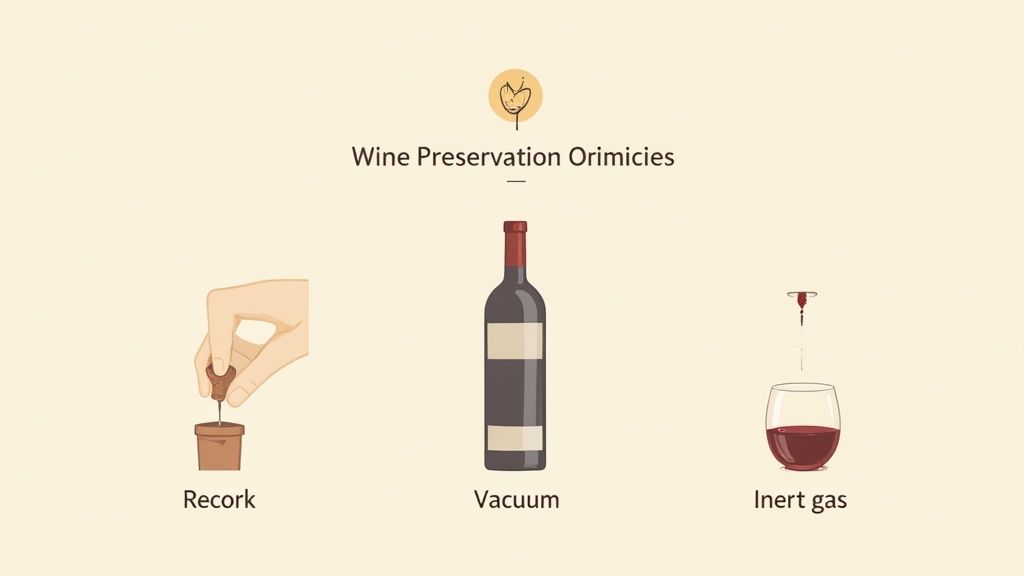
Cold temperatures are your best friend here. They dramatically slow down the chemical reactions that make wine go flat and dull, essentially hitting the pause button on its flavour. But refrigeration alone isn’t the whole story; you also have to deal with the oxygen you let into the bottle the moment you popped the cork.
This is where a few preservation tricks come in handy, ranging from simple kitchen hacks to some nifty gadgets. The goal is always to minimise the wine’s contact with air, keeping it vibrant for another day or two.
Simple and Effective Preservation Techniques
The easiest method? Recork the bottle tightly and stick it straight in the fridge. Quick tip: use the same end of the cork that was originally facing the wine. The top end has been exposed to the outside world and might carry dust or other nasties you don’t want mixing with your Chardonnay. A snug fit is what you’re after.
Another brilliant, low-tech solution is to transfer the leftover wine into a smaller, airtight container. Got half a bottle left? Pouring it into a small screw-cap bottle or even a clean jam jar dramatically cuts down the amount of air trapped inside. Less air means less oxidation. Simple as that.
Pro Tip: Always store your opened bottle of white wine upright in the fridge. Laying it down increases the surface area exposed to that pesky oxygen, which just speeds up the process of it going off.
Upgrading Your Preservation Game
If you often find yourself with a bit of leftover wine, investing in a proper preservation tool can be a game-changer. These gadgets are designed to either pull the oxygen out or lay down a protective barrier between the wine and the air.
-
Vacuum Pumps: These are probably the most common and affordable tools out there. They come with reusable rubber stoppers that you pop into the bottle. A few pumps with the handheld device sucks out most of the air, creating a vacuum that seriously slows down oxidation.
-
Inert Gas Systems: For the more serious enthusiast, an inert gas system is the next step up. You use a small canister to spray a harmless gas like argon (which is heavier than oxygen) into the bottle. This gas forms a perfect protective blanket over the wine's surface, stopping oxygen from getting anywhere near it.
With tools like a vacuum pump and proper refrigeration, you can expect a premium McLaren Vale white wine to last up to 5 days after opening. It's a small investment that pays off in flavour.
Step-By-Step Preservation Guide
Whichever method you land on, consistency is key. The moment you decide you're done pouring for the night, it's time to act.
- Seal Immediately: Don’t let it sit on the counter. Choose your weapon—the original cork, a vacuum stopper, or a smaller container—and seal that bottle up.
- Refrigerate Promptly: Place the sealed bottle upright in the coldest part of your fridge.
- Minimise Agitation: Try not to shake or slosh the bottle around. All that movement just helps mix more oxygen into the wine.
For those who really want to get the most out of their wine, especially fuller-bodied whites, exploring something like a Decanter Drinkware Set can also enhance the experience. Nailing these preservation techniques is a crucial part of enjoying wine properly. For a deeper dive into long-term care, check out our complete guide to wine storage. Once you get these habits down, you can answer "how long does white wine last opened?" with a confident, "As long as I need it to."
How to Tell if Your White Wine Has Gone Bad
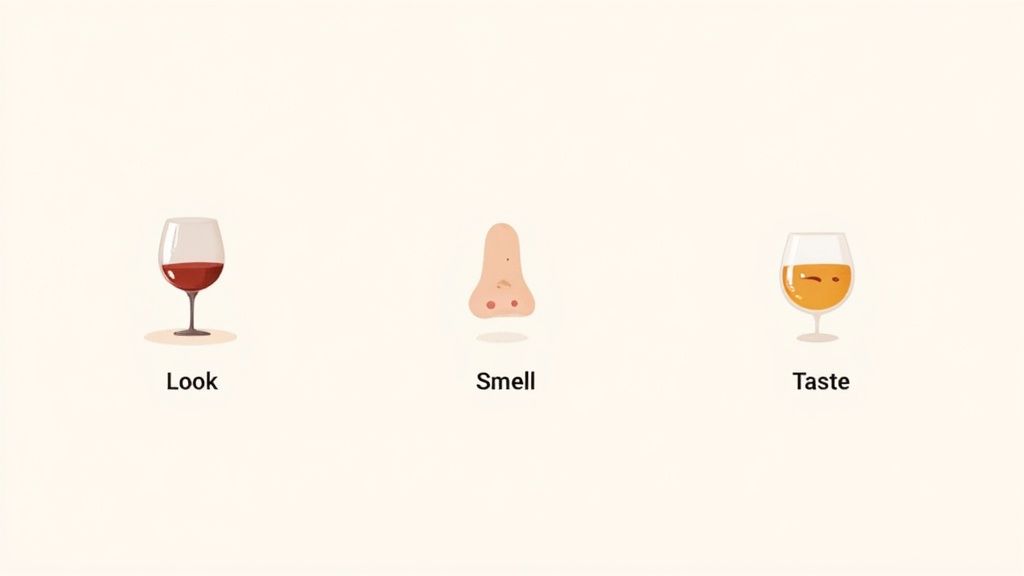
So, you’ve done everything right—recorked, refrigerated—but a few days later, you’re eyeing that half-full bottle of white wine with suspicion. Is it still good? The best way to know for sure is to trust your own senses. A simple three-step check using your eyes, nose, and palate will tell you everything you need to know.
This sensory check is your most reliable tool. It’s the difference between confidently pouring another glass or deciding that bottle is now destined for a risotto.
The Visual Check: What Your Eyes Tell You
Start by pouring a little wine into a clear glass. To get a really accurate look at its colour, hold it against a plain white background, like a napkin or a piece of paper.
A fresh white wine should look bright and vibrant. The colour itself can vary wildly, from the pale straw-green of a young Riesling to the deep gold of an oaked Chardonnay, but the key is that it looks alive.
The biggest red flag is a dramatic colour change. If your once-pale Sauvignon Blanc now looks dull, brownish, or a much deeper gold, that's a tell-tale sign of oxidation. The wine has had too much contact with air, causing its delicate compounds to break down. While a tiny bit of darkening can happen, a noticeable brown tinge means it's well past its prime.
The Smell Test: Trusting Your Nose
Your sense of smell is incredibly powerful and is often the first thing to warn you that a wine has turned. Give the glass a gentle swirl to release the aromas and take a proper sniff.
You’re hoping to find the wine’s original character—think fresh citrus, crisp apple, floral notes, or maybe a hint of vanilla. If those appealing smells are gone and have been replaced by something unpleasant, you have your answer.
Keep an eye out for these warning signs:
- A Sharp, Vinegary Smell: This pungent, almost nail-polish-remover aroma is a dead giveaway that bacteria (specifically Acetobacter) have turned the alcohol into acetic acid.
- Nutty or Bruised Apple Scent: If it smells strongly of sherry, bruised apples, or almonds, that’s classic oxidation.
- Musty or Damp Cardboard Odour: This smell points to a different problem called cork taint. It would have been present from the moment you opened the bottle, making it undrinkable from the start.
Your nose knows best. If the wine smells sharp, flat, or just plain weird, it’s a strong signal the flavour will be just as disappointing. Honestly, you can often make the call at this stage.
The Final Step: The Taste Test
If the wine looks okay and doesn't smell offensive, it’s time for a small sip. You don’t need to gulp it down; a tiny taste is all it takes to confirm your suspicions.
A wine that has gone off will taste flat and lifeless. All that vibrant fruit flavour will be gone, replaced by something sour, bitter, or harshly acidic. It will lack its original freshness and complexity, leaving a pretty unpleasant aftertaste.
Learning these signs is a great skill for any wine lover. For a deeper dive, check out our guide on how to tell if a wine has gone bad. At the end of the day, it's simple: if you don’t enjoy the taste, there’s absolutely no reason to drink it.
Don't Tip It, Transform It: Creative Ways to Use Leftover White Wine
Just because a white wine has lost its fresh, vibrant edge for drinking doesn’t mean it belongs down the drain. An opened bottle that’s a day or two past its prime is actually a fantastic secret weapon in the kitchen, ready to add a splash of acidity and complexity to countless dishes. It's a no-waste approach that turns leftover wine into a valuable culinary asset.
Instead of letting it fade in the fridge, start thinking of it as a cooking ingredient. A splash of dry white wine can work wonders in a hot pan right after you’ve sautéed chicken or fish. This technique, known as deglazing, lifts all those flavourful browned bits stuck to the bottom, forming the base for an incredible, rich sauce.
Cooking with Past-Its-Prime Wine
A slightly oxidised white wine can also bring wonderful depth to other dishes. Its acidity is perfect for cutting through the richness of a creamy risotto, and it adds a bright, aromatic steam for a pot of fresh mussels. Don't let that half-full bottle go to waste; you can even freeze it for later. In fact, you might get some great ideas from this piece on how a chest freezer can be a versatile tool for preserving ingredients.
Here are a few practical ideas to get you started:
- Whip Up a Marinade: Combine the wine with olive oil, garlic, and your favourite herbs to make a flavourful marinade for chicken or pork.
- Brighten Soups and Stews: A small amount added to a vegetable soup or chicken stew can really liven up the overall flavour profile.
- Create a Vinaigrette: Whisk leftover wine with olive oil, Dijon mustard, and a touch of honey for a simple yet elegant salad dressing.
Pro Tip: One of the best ways to save wine for cooking is by freezing it in an ice cube tray. Once the cubes are solid, pop them into a freezer bag. This gives you perfectly portioned flavour bombs, ready to drop into any dish whenever you need them.
If you’re feeling a bit more adventurous, you can even embark on a small project by making your own white wine vinegar. Simply leave the leftover wine in a loosely covered jar in a dark, quiet spot. Over several weeks, natural bacteria will get to work converting the alcohol into acetic acid, resulting in a tangy, homemade vinegar perfect for dressings and sauces. By rethinking its purpose, that leftover wine becomes a key player in your kitchen.
Your Questions About Opened White Wine, Answered
Even when you've got the basics down, a few specific questions always seem to pop up. From storage quirks to whether your favourite local drop has more staying power, here are the answers to those lingering queries.
Is a Screw Cap Better Than a Cork for Resealing?
For keeping an opened bottle fresh, a screw cap is your best friend. Hands down. It creates a reliably airtight seal every single time, which is exactly what you need to fight off that pesky oxygen.
A natural cork can do the job if you pop it back in the right way (the same end that was in the bottle, please!), but they're not foolproof. Over time, corks can dry out, lose their springiness, and fail to create a perfect seal, letting in just enough air to spoil the party.
One handy trick for a stubborn cork is to wrap it in a small piece of wax paper before pushing it back in. It helps it slide in and creates a tighter fit. But for pure, simple reliability, the screw cap wins every time.
Can I Freeze Leftover White Wine?
Absolutely! Freezing is a brilliant way to deal with that last splash of wine you can't finish. While the freezer isn't kind to the wine's delicate texture and aromas—so it's not great for drinking later—it perfectly preserves its flavour for cooking.
Just pour the leftover wine into an ice cube tray. Once the cubes are frozen solid, pop them into a freezer bag. This gives you perfectly portioned flavour bombs, ready to add a splash of acidity and depth to your next risotto, pan sauce, or stew. It's a fantastic no-waste kitchen hack.
Storing your opened white wine upright is non-negotiable. Laying the bottle on its side might seem tidy, but it dramatically increases the surface area of the wine exposed to oxygen. That's a fast track to stale wine. Keeping it upright minimises that contact, helping it stay fresh for longer.
Do Some McLaren Vale Whites Last Longer After Opening?
Yes, certain styles definitely have more staying power. Wines with a bit more natural backbone—think a zippy, high-acid Riesling or a well-structured Chardonnay from here in McLaren Vale—will generally hold up better than a more delicate, aromatic wine like a Sauvignon Blanc.
Why? The wine's acidity acts as a natural preservative, slowing down the oxidation that makes those beautiful fruit flavours fade away. While the 3-to-5-day rule is a solid guide for most whites, you might find these sturdier local heroes are still singing on day five, especially if you’ve given them a helping hand with a vacuum pump.
At McLaren Vale Cellars, we pride ourselves on offering a stunning selection of white wines that are perfect for any occasion. Whether you're looking for a crisp Riesling or a complex Chardonnay, explore our curated collection and find your next favourite bottle today. Visit us at https://www.mclarenvalecellars.com.

Comments (0)
There are no comments for this article. Be the first one to leave a message!