
It’s a classic dilemma: you open a beautiful bottle of crisp white wine, pour a single glass, and pop it back in the fridge. But how long do you really have before it starts to taste… well, not so great?
As a general rule of thumb, you can expect an opened bottle of white wine to last for 3 to 5 days if you reseal it properly and keep it chilled. Lighter, zippier whites are best enjoyed within the first three days, while richer, fuller-bodied styles like an oaked Chardonnay can hold on for closer to five. Stick to this simple timeframe, and you'll catch the wine while its best flavours are still front and centre.
Your Guide to White Wine Freshness
We've all been there. You twist the cap on a bottle of Sauvignon Blanc, enjoy a glass with dinner, and then wonder if the rest will be just as good tomorrow night. It’s a fair question, and the answer isn't as simple as you might think. The moment you expose that wine to the air, a clock starts ticking.
While that 3-to-5-day window is a fantastic starting point, the truth is that not all white wines are created equal. The style of the wine, its acidity, and exactly how you store it after that first pour all play a huge role in how long it stays fresh. For those of us who love our Aussie wines, getting these details right is the secret to avoiding a disappointing glass and unnecessary waste.
A Quick Freshness Reference
Here in Australia, the advice for enjoying opened white wine lines up with what you'll hear globally, but local winemakers and experts always stress the importance of good storage. Pop it back in the fridge and seal it tight, and you can get up to 5 days of freshness.
However, the delicate, aromatic notes in a light-bodied Pinot Grigio can start to fade within 2 to 3 days. On the other hand, a more robust, oaked Chardonnay has the structure to last the full 5 days. If you want to learn more, we break down how to maximise your white wine's longevity right here at McLaren Vale Cellars.
To make things even easier, here’s a quick reference guide to keep handy.
White Wine Freshness Guide After Opening
This table is a great at-a-glance tool for some of the most popular white wine styles you'll find. Just remember to always use a good stopper and keep it in the fridge!
| White Wine Type | Typical Lifespan (in Fridge) | Best Consumed Within |
|---|---|---|
| Light-Bodied (e.g., Sauvignon Blanc, Pinot Grigio) | 3-4 Days | 2-3 Days |
| Full-Bodied (e.g., Oaked Chardonnay, Viognier) | 4-5 Days | 3-4 Days |
| Aromatic (e.g., Riesling, Gewürztraminer) | 3-5 Days | 3 Days |
| Sparkling Wine (e.g., Blanc de Blancs) | 1-3 Days (with stopper) | 1-2 Days |
While this table gives you a simple snapshot, the rest of this guide is all about digging into the why behind these numbers. We’ll get into the science of what keeps wine fresh, compare different styles, and share some practical tips to make sure every glass from the bottle is as enjoyable as the first.
Why Opened Wine Goes Bad: The Science Simplified
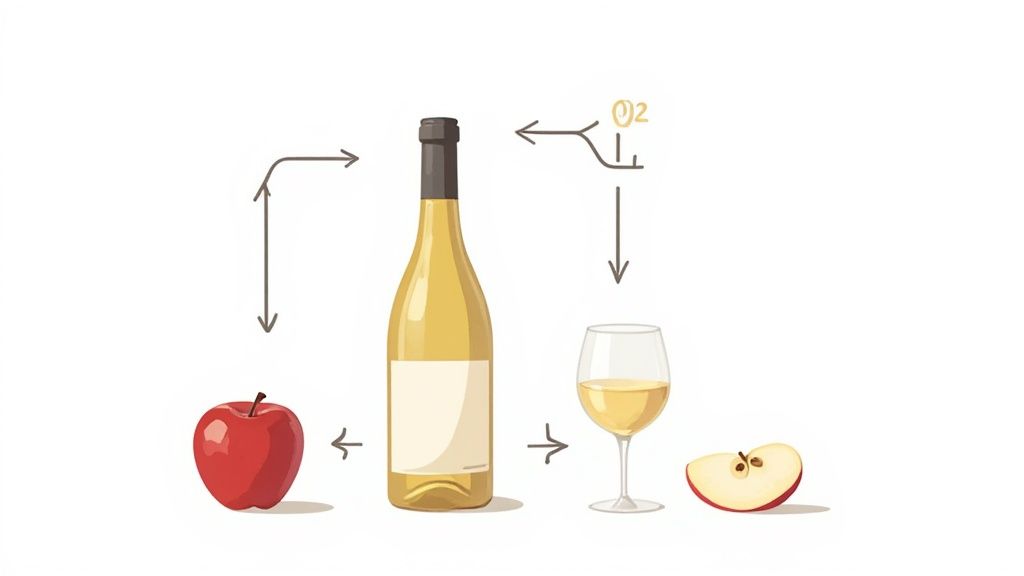
Ever wondered why that vibrant Sauvignon Blanc you loved on Friday tastes flat and lifeless by Sunday? The culprit is simple chemistry, and its name is oxygen. Getting your head around this process is the key to keeping your favourite white wine tasting fresh long after you've opened it.
Think about what happens when you slice an apple and leave it on the kitchen counter. Within minutes, it starts to turn brown and loses its crisp flavour. That's oxidation, and it's exactly what happens to your wine the moment you pop the cork or twist off the cap.
As soon as wine meets air, oxygen gets to work, breaking down all the delicate compounds that create those beautiful aromas and flavours we love.
This chemical reaction doesn't just mute the wine; it actively creates new, less desirable characteristics. At first, the bright, fruity notes fade away, replaced by nutty or bruised apple aromas. Leave it for too long, and a specific bacterium called Acetobacter can turn the alcohol into acetic acid—the main ingredient in vinegar. No one wants that.
The Unseen Enemies of Freshness
While oxygen is the main villain here, it doesn't work alone. A couple of other factors can dramatically speed up the decline of your opened white wine. Understanding these helps explain why the storage methods we'll chat about later are so crucial.
- Heat: Storing opened wine at room temperature is like hitting the fast-forward button on oxidation. Warmer temperatures accelerate all chemical reactions, causing the wine to degrade much quicker. This is why the fridge is your wine’s best friend after opening.
- Light: Direct sunlight or even bright artificial light can harm your wine. UV rays break down the organic compounds that create its flavour and aroma, a problem known as "light strike." This can lead to some pretty unpleasant smells, often compared to wet cardboard.
The Freshness Triangle: Think of oxygen, heat, and light as a triangle of threats. To protect your wine, you need to minimise its exposure to all three. This simple concept is the foundation of every effective wine preservation strategy.
Wine’s Natural Defence System
Fortunately, wine isn’t completely defenceless. Certain components in the wine act as natural preservatives, influencing how long it will last after being opened.
Two of the most important defenders are acidity and sulfites. High-acid wines, like a zesty Riesling, tend to hold up against oxidation better than lower-acid styles. Acidity acts as a natural buffer against spoilage.
Likewise, sulfites (sulfur dioxide), which winemakers often add, are powerful antioxidants that protect the wine from both oxygen and microbial nasties. This is why some wines hold up much better than others—a topic we'll dive into next.
Not All White Wines Age the Same After Opening
Just like a marathon runner has more stamina than a sprinter, a robust, oaked Chardonnay will easily outlast a delicate Pinot Grigio in the fridge. It all comes down to the wine's structure—its acidity, alcohol, and body—which dictates how long it can fend off its mortal enemy: oxygen.
Getting a handle on these differences is the key to knowing exactly how long your bottle will stay fresh once you've popped the cork. Each style of white wine has a unique chemical makeup, giving some a short, vibrant life and others the fortitude to hang on for days. Let's break down what you can expect from your favourite varieties.
Light-Bodied and Zesty Whites
First up are the crisp, zesty whites like Sauvignon Blanc, Pinot Grigio, and unoaked Riesling. We love these wines for their vibrant, fresh fruit and floral aromas, but sadly, those delicate characteristics are the first to disappear when exposed to air.
You’ll want to enjoy these within 1 to 3 days of opening for the best experience. On day one, they’re at their absolute peak—aromatic, lively, and full of energy. By day two, you might notice the bright citrus or green apple notes have become a bit muted, though the wine is still perfectly enjoyable. Wait until day four, and they often taste flat, losing that zesty punch that makes them so refreshing in the first place.
Full-Bodied and Oaked Whites
Now, let's talk about the heavyweights: oaked Chardonnay, Viognier, or a rich Sémillon. These wines have more substance, often with higher alcohol and complex flavours from their time in oak barrels. This structure provides a natural defence against oxidation.
These bolder whites can comfortably last for 3 to 5 days in the fridge. The oak gives the wine tannins and other phenolic compounds that act as natural preservatives, slowing down the decay process. While the initial fresh fruit notes might soften after a day or two, the secondary flavours of vanilla, butter, and spice often hold strong. Some people even enjoy this subtle evolution in the bottle.
Why Oak Makes a Difference: Oak barrels do more than just add flavour; they introduce microscopic amounts of oxygen during ageing, which actually makes the wine more resilient to it later on. This process also adds tannins—natural antioxidants—giving oaked whites a longer post-opening lifespan.
Aromatic and Off-Dry Styles
What about aromatic wines like Gewürztraminer or a slightly sweet Riesling? The secret here often lies in the sugar content. A little bit of residual sugar acts as a mild preservative, helping the wine stay fresh for longer.
Most aromatic styles, especially those with a touch of sweetness, will last for 3 to 5 days. Their intense floral or spicy aromas are surprisingly resilient, though just like their light-bodied cousins, the most delicate notes will be the first to fade. High acidity, a hallmark of quality Riesling, also plays a crucial role here in preserving that freshness. If you're keen to dive deeper into the nuances of these grapes, you can explore our comprehensive guide on white wine varieties.
The popularity of these styles across Australia is clear from the national production figures. White wine grapes consistently make up a huge portion of the annual crush, with Chardonnay, Sauvignon Blanc, and Pinot Gris leading the charge. These numbers directly influence what's in our fridges, so understanding this 3–5 day window helps us get the most out of the wines we love. You can dig into the data in Wine Australia's National Vintage Report to learn more about Australian wine production trends.
Mastering the Art of White Wine Preservation
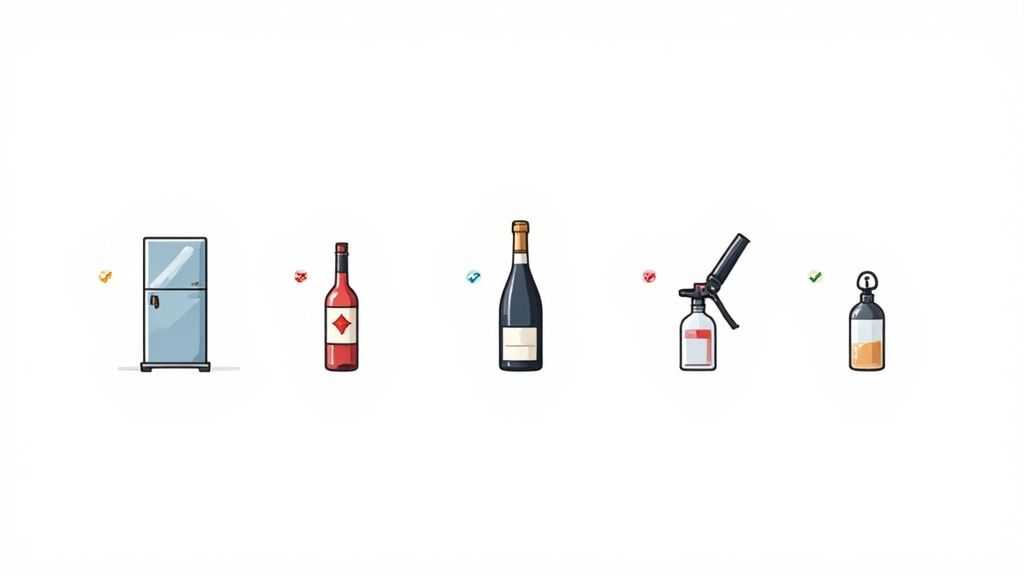
Knowing the science is great, but putting it into practice is what keeps your wine tasting vibrant day after day. This is your playbook for making that opened bottle last, ensuring the final glass is almost as good as the first pour.
The golden rule? Get it back in the fridge. Immediately.
Heat is the enemy of fresh wine, acting like a fast-forward button for oxidation. Chilling the bottle slams the brakes on those chemical reactions. This simple step can mean the difference between a wine that’s tired after a day on the counter and one that’s still lively after three or four days in the cold.
But the fridge is just your first line of defence in the battle against oxygen.
Your Toolkit for Sealing the Deal
Once your wine is chilled, the next mission is to cut off its air supply. You’ve got a few options here, ranging from the dead simple to more advanced gear for the serious wine lover. Let's break down the most common methods.
-
The Original Cork or Screw Cap: This is the easiest trick in the book, and it works surprisingly well for the short term. Just pop the original cork back in—use the “clean” side if the wine-soaked end has swollen up. For a screw cap, just twist it back on nice and tight. This is your go-to if you plan on finishing the bottle within 1-2 days.
-
Wine Stoppers: A definite step up from the cork. A good rubber or silicone stopper creates a much tighter seal against oxygen creeping in. They’re cheap, reusable, and a brilliant way to keep your wine tasting fresh for up to 3 days.
-
Vacuum Pumps: These handy gadgets are a crowd favourite for a reason. They work by sucking the air out of the bottle’s headspace before you seal it with a special rubber stopper. By physically removing a good chunk of the oxygen, you can easily push your wine’s lifespan to a solid 4-5 days.
Myth Buster: The Silver Spoon Trick
You’ve probably seen someone drop a silver spoon into an open bottle of bubbly, swearing it keeps the fizz. Sad to say, it’s pure folklore. The metal does absolutely nothing to stop the dissolved CO2 from escaping. For sparkling wines, your only real option is a proper hinged stopper that clamps down on the bottle’s lip. That’ll buy you a day or two of decent bubbles.
Advanced Preservation Systems
If you regularly open premium bottles or just fancy a single glass at a time, investing in a more advanced system can be a total game-changer. These tools take oxygen almost completely out of the equation.
An inert gas system, like a Coravin or a simple argon spray can, works by blanketing the wine with a harmless gas (usually argon) that's heavier than air. This protective layer sits on the wine's surface, stopping oxidation dead in its tracks. A system like this can keep a wine pristine for weeks, sometimes even months. Learning more about proper white wine temperature and cellaring tips will help you get the most out of these impressive tools.
For those serious about their collection, dedicated wine coolers are fantastic for maintaining ideal long-term conditions. If you run into any trouble with yours, having access to good wine cooler repair services can be a lifesaver.
Choosing the right method for your drinking habits will slash waste and make sure every glass you pour is a good one.
Comparing Wine Preservation Methods
To make it easier, here’s a quick comparison of the common methods for preserving opened white wine, looking at how well they work, what they cost, and when to use them.
| Method | How It Works | Effectiveness | Best For |
|---|---|---|---|
| Original Cork/Cap | Creates a basic physical barrier. | Low (1-2 days) | Finishing the bottle the next day. |
| Rubber Stopper | Forms a tight, airtight seal. | Medium (2-3 days) | Everyday drinkers who want an affordable upgrade. |
| Vacuum Pump | Removes oxygen from the bottle. | High (4-5 days) | Regularly saving bottles for more than a few days. |
| Inert Gas (Argon) | Displaces oxygen with a heavier gas. | Very High (Weeks+) | Preserving premium wines or for single-glass drinkers. |
Ultimately, the best tool is the one you’ll actually use. Even just popping the screw cap back on and sticking the bottle in the fridge is a massive improvement over leaving it on the counter.
How to Tell If Your White Wine Has Gone Bad
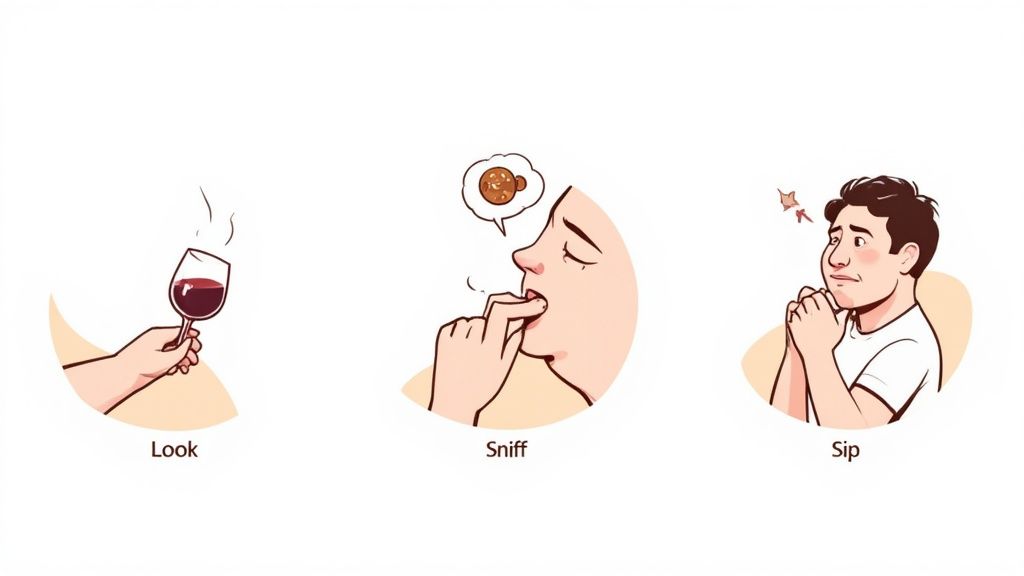
Before you tip that glass of days-old white wine down the sink, hold on a moment. The best tools you have for judging a wine are your own senses. Trusting your eyes, nose, and palate is the most reliable way to know if a wine is still good to drink.
This simple three-step process—look, sniff, and sip—will tell you everything you need to know.
It's also worth remembering that drinking a slightly oxidised wine isn't going to harm you; it just won't be very pleasant. The flavours will be flat and uninteresting, but it won’t make you sick. The real goal here is to figure out when the wine has lost its magic.
Step 1: Look for Colour Changes
Your first clue is right there in the glass. A fresh white wine should look vibrant and clear, with a colour ranging from pale straw to a deeper gold, depending on the grape and style.
As oxygen works its way in, the wine will start to darken and take on a duller, deeper yellow hue. If it's been open for far too long, you might notice a distinct brownish or amber tint. This colour shift is a dead giveaway that the wine has had too much air and is well past its prime.
For a deeper dive, our guide on how to tell if a wine has gone bad covers these visual cues in more detail.
Step 2: Sniff for Off Aromas
Your nose is your most powerful weapon in detecting a spoiled wine. A good white wine should smell fresh and inviting, full of fruit, floral, or mineral notes. When a wine has turned, that aroma changes dramatically.
Here are the key scents to watch out for:
- Nutty or Bruised Apple Smells: This is the classic signature of oxidation. The wine loses all its fresh, fruity character and starts smelling more like sherry, bruised apples, or even toasted nuts.
- Sharp Vinegar Scent: A pungent, sour aroma like vinegar or nail polish remover is a bad sign. It means acetic acid bacteria have taken hold, and the wine has started its journey to becoming vinegar.
- Wet Cardboard or Musty Odours: This smell points to a different problem called cork taint. While it can happen in a freshly opened bottle, it's definitely a flaw that means the wine is no good.
Trust Your Instincts: If the wine smells "off" or just plain wrong, it probably is. Our sense of smell is incredibly good at detecting spoilage, so don't second-guess yourself if something seems amiss.
Step 3: Sip with Caution
If the wine looks and smells okay, it’s time for a small, tentative sip. You'll know immediately if it's gone bad. An oxidised white wine will taste flat, tired, and completely stripped of its personality.
Instead of crisp acidity and bright fruit, you'll get a sour, vinegary, or bitter profile. The wine will feel harsh and unbalanced in your mouth. If this is what you taste, the wine has definitely seen better days and is better suited for cooking than for drinking.
Don't be afraid to use it to deglaze a pan for a sauce—the heat will burn off the unpleasant flavours, leaving behind some useful acidity.
Smart Tips for Buying and Storing Your Wine
Knowing how to keep your wine fresh is one thing, but making smarter choices at the bottle shop can stop waste before it even starts. When you match what you buy to how you drink, you can be sure every single glass is enjoyed exactly as it should be.
If you know you’re only after a single glass, there's no need to commit to opening a standard 750ml bottle. Many of Australia's best wineries now offer their top drops in much friendlier formats.
Buy for the Occasion
Think about grabbing one of these smaller options to cut down on leftovers and keep things fresh:
- Half-Bottles (375ml): This is the perfect size for one or two people. It gives you two generous glasses without the pressure of finishing a full bottle, so you get all the quality without racing against the clock.
- Canned Wines: These are becoming more popular for a reason! Single-serve cans are brilliant for picnics, barbecues, or just a simple weeknight glass. They’re the ultimate in portion control and take all the guesswork out of preservation.
- Sample Packs: If you love a bit of variety, curated selections like our packs from McLaren Vale Cellars are a fantastic way to explore different wines without having to buy a full dozen of the same thing.
The Screw Cap Advantage: Here in Australia, the screw cap is king, and it’s one of your best allies in keeping wine fresh. Unlike corks, they create a perfect, airtight seal every single time you twist them shut, making them far more reliable for keeping that leftover wine in good nick for a day or two.
At the end of the day, preventing waste just comes down to shopping with a bit of intention. By choosing the right format for the occasion and embracing the simple genius of the screw cap, you can enjoy your favourite white wines exactly as the winemaker intended—one perfect glass at a time.
Got a Few More Questions?
Even after covering the basics, a few queries always seem to pop up. Let's tackle some of the most common questions we hear about keeping your white wine fresh after you've popped the top.
Can I Just Leave an Opened White Wine on the Counter?
Definitely not. Once you’ve opened a bottle, heat becomes its number one enemy, fast-tracking the oxidation that kills its flavour. The best thing you can do is reseal it and get it straight into the fridge.
This simple step is the single most effective way to slam the brakes on those chemical reactions and keep your wine tasting fresh.
Does the Old Spoon-in-the-Bubbly-Bottle Trick Actually Work?
Ah, the classic wine myth! Sadly, it’s completely untrue. A metal spoon does absolutely nothing to stop the dissolved carbon dioxide from making a run for it. If you want to keep your sparkling crisp for a day or two, you need a proper sparkling wine stopper.
These stoppers are designed to clamp down and create a seal that can handle the pressure.
The only way to keep the fizz is with a specialised stopper built for the job. Anything else, including that old wives' tale about the spoon, is just wishful thinking.
Is It Still Safe to Drink White Wine That's Been Open for a Week?
It won't hurt you, but it almost certainly won't taste any good. After a week, even a well-sealed bottle in the fridge will have lost its spark. The bright, fruity notes will be long gone, replaced by dull, nutty, or even vinegary flavours.
At this point, it's probably best to relegate it to your cooking wine collection.
Do Screw Caps Help an Opened Wine Last Longer?
A screw cap does create a fantastic seal, which is a big plus. When you twist it back on, the fit is usually much tighter than you’d get from jamming a cork back in.
However, the wine is still exposed to the oxygen trapped inside the bottle. So, while a screw cap certainly helps, you should still stick to the same 3-5 day fridge rule.
Ready to put your newfound knowledge to the test? Explore the fantastic range of crisp, vibrant white wines at McLaren Vale Cellars, perfect for any occasion. From zesty Sauvignon Blancs to elegant Chardonnays, find your next favourite bottle and make sure you enjoy it to the very last drop.
Pop over to our online store to see the full collection.

Comments (0)
There are no comments for this article. Be the first one to leave a message!