
Ever cracked open a stunning bottle of McLaren Vale Shiraz on Friday, only to wonder if it's still good for a glass on Sunday? It’s a common question. The short answer is yes—most opened red wine will last for 3-5 days if you pop the cork back in and stick it in the fridge.
How Long Your Opened Red Wine Really Lasts
While that 3-to-5-day window is a great rule of thumb, the real answer isn't quite so simple. It really depends on the wine itself. A big, tannic Cabernet Sauvignon, for instance, has a lot more fight in it than a delicate, light-bodied Pinot Noir. Getting to know these differences means you can enjoy your wine at its peak without feeling rushed to finish the bottle in one sitting.
The wine's age is another huge factor. According to insights from Australian winemakers, a classic dry red like a premium McLaren Vale Shiraz generally holds up for 3 to 5 days when properly sealed. This is especially true for younger reds (around two to five years old), as their firm tannins act like a natural preservative, keeping them robust for a good three days.
But as a wine gets older, its tannins soften, making it more fragile once opened. A red that’s five to ten years old might only be at its best for about two days. And if you’re lucky enough to open a bottle over 10 years old? It’s best to enjoy that one the same day you uncork it. For more on the science of how wine ages, Redman Wines offers some fantastic insights.
To make things easy, here’s a quick guide to help you know what to expect from different styles of red wine.
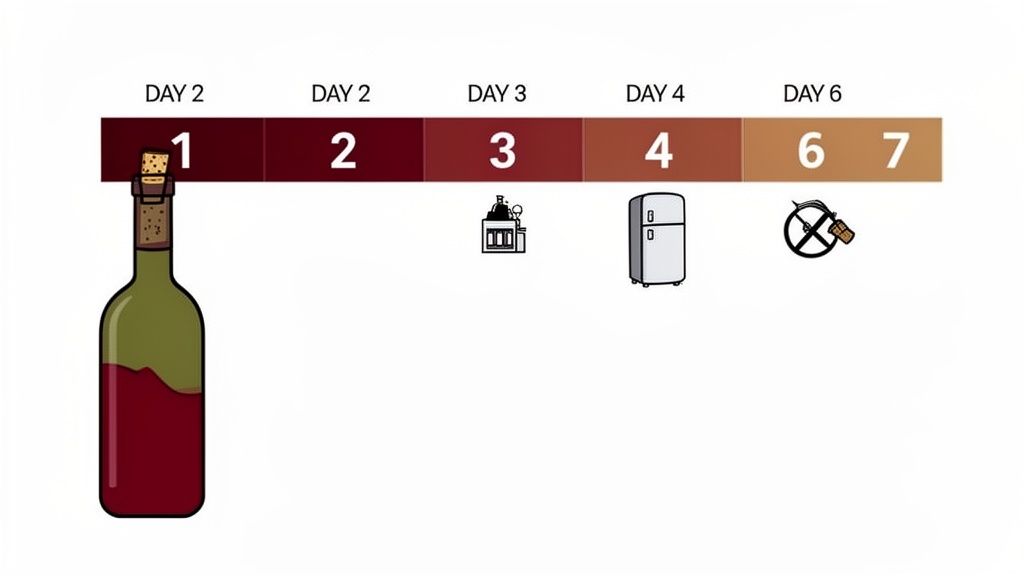
Quick Guide How Long Opened Red Wine Lasts
This table gives you a general idea of how long different red wines will last after you've opened them, assuming you've sealed them and put them in the fridge.
| Red Wine Style | Typical Longevity (Re-corked & Refrigerated) |
|---|---|
| Light-Bodied Reds (e.g., Pinot Noir, Gamay) | 2–3 Days |
| Medium-Bodied Reds (e.g., Merlot, Grenache) | 3–4 Days |
| Full-Bodied Reds (e.g., Shiraz, Cabernet Sauvignon) | 4–5 Days |
| Fortified Reds (e.g., Port, Tawny) | 28+ Days |
As you can see, the bolder and more structured the wine, the longer it will stay fresh. Fortified wines are in a league of their own, lasting for weeks thanks to their high alcohol content.
The Science of Wine Spoilage Explained Simply
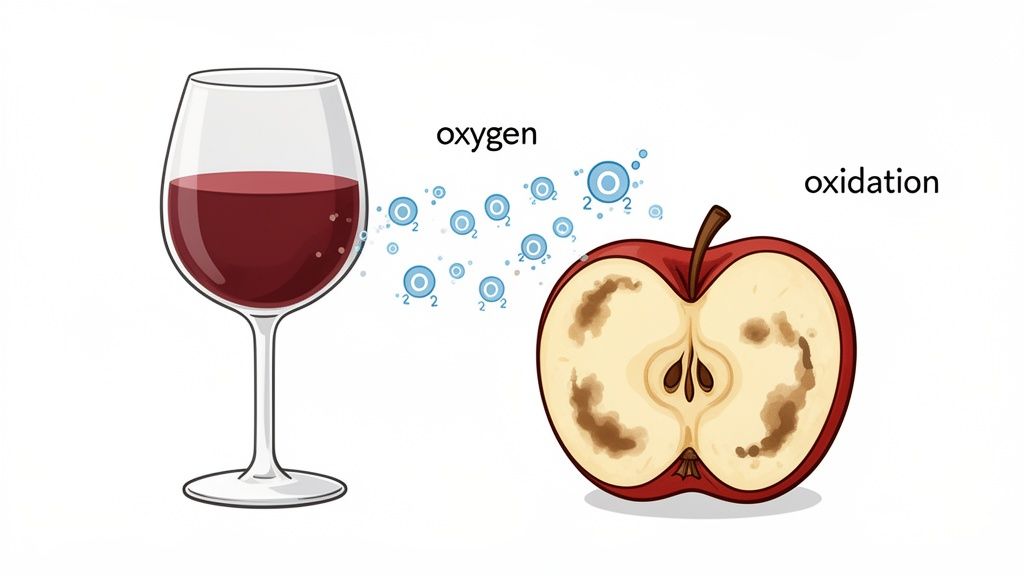
Ever wondered why that beautiful bottle of red loses its magic just a day or two after you’ve opened it? The main culprit has a simple name: oxidation.
Think about what happens when you slice an apple and leave it on the kitchen counter. It slowly turns brown and unappealing. That’s the exact same chemical reaction happening in your wine bottle, just in slow motion. When you pull the cork, you invite oxygen in, and it immediately gets to work on all the delicate compounds that give your wine its unique character—the aromas, flavours, and even its vibrant colour.
A Double-Edged Sword
Now, a little bit of oxygen isn’t always the enemy. In fact, right after opening, it can be a good thing. This is exactly why we let a wine "breathe." A small amount of air can soften the tannins in a young, powerful red, helping to unlock its complex aromas and make it more approachable. It’s like stretching your legs after a long drive; it just helps everything loosen up.
But there’s a definite tipping point. After a few hours, that helpful interaction turns destructive. The very same oxygen that initially coaxed the wine out of its shell starts to aggressively break it down.
Key Takeaway: Oxygen is both a friend and an enemy to wine. A brief introduction helps it "open up," but prolonged exposure leads to spoilage. Understanding this balance is the key to knowing how long your opened red wine lasts.
The Chemical Breakdown
As oxidation marches on, it starts stripping away the wine's vibrant fruit flavours. What was once juicy and delicious becomes flat, dull, and lifeless. The lovely aromas of blackberry, cherry, or spice are elbowed out by sharper, less inviting smells.
Here’s a look at what’s happening behind the scenes:
- Ethanol to Acetaldehyde: Oxygen turns the alcohol (ethanol) in the wine into a compound called acetaldehyde. This is what gives spoiled wine that nutty, bruised-apple, or sherry-like scent.
- Rise of Acetic Acid: In an oxygen-rich environment, a specific bacterium called Acetobacter begins to thrive. It feeds on the alcohol and produces acetic acid—the main ingredient in vinegar. This is why a wine left open for too long develops that sharp, sour, vinegary taste.
- Colour Changes: Oxidation also attacks the pigments in red wine. That brilliant ruby or garnet hue you first admired will fade into a dull, brownish colour.
This whole process is a natural, unavoidable part of a wine's life. Compounds like sulfites are added during winemaking to act as an antioxidant shield, but their protective power quickly fades once the bottle is open and air rushes in. If you're curious, you can learn more about demystifying sulfites in wine and the important role they play.
Ultimately, knowing how to limit this exposure to air is the foundation of every preservation technique we’re about to explore.
What Determines Your Opened Wine's Lifespan
Not all red wines are created equal, especially after you've popped the cork. The answer to "how long does opened red wine last" isn't one-size-fits-all.
Think of a bold, young Shiraz as a marathon runner, built with the stamina to go the distance. A delicate, aged Pinot Noir, on the other hand, is more like a sprinter—absolutely brilliant for a short burst, but it quickly runs out of steam.
It really comes down to four key variables working together to either protect your wine or send it downhill. Once you get a handle on these, you can get a lot more life out of every bottle.
The Wine's Inherent Structure
The biggest factor is the wine’s natural makeup—specifically its levels of tannins and acidity. These compounds are like a natural suit of armour, protecting the wine from its greatest enemy: oxygen.
- Tannins: These are the compounds that create that drying sensation on your tongue and gums. They come from grape skins, seeds, and stems, and they're powerful antioxidants. Full-bodied reds like Cabernet Sauvignon and Shiraz are packed with them, which is a big reason they can last for 4-5 days after opening.
- Acidity: That tartness or "zing" you taste in a wine also does a great job of slowing down the chemical reactions that cause a wine to go flat. Wines with a good backbone of acidity naturally resist spoiling for longer.
So, a wine that's high in both tannins and acidity has a seriously formidable defence system. It’ll stay fresh and vibrant for much longer than a wine with a softer, gentler profile.
Temperature and Light Exposure
Where you store your opened bottle is just as important as what’s inside it. Heat and light are the enemies of freshness, acting like accelerators for all those chemical reactions that make a wine taste tired and stale.
Leaving your opened red wine on the kitchen counter, especially if it's a warm or sunny spot, is a recipe for rapid decline. The best solution? The fridge.
I know, it feels wrong to chill a red wine. But trust me, the cooler temperature dramatically slows down the rate of oxidation. Just remember to pull it out about 30-60 minutes before you plan to drink it, giving it time to come back up to a more enjoyable temperature.
Storing an opened red wine in a cool, dark place like the refrigerator is the single most effective step you can take to preserve its flavour and aroma for several days.
The Amount of Wine Left
The final piece of the puzzle is the air-to-wine ratio inside the bottle. A nearly full bottle has very little oxygen trapped inside, so the wine will degrade quite slowly.
But a bottle with only a glass or two left is a different story. It’s mostly full of air, meaning the remaining wine is under constant attack from oxygen. This speeds up the oxidation process significantly. The longevity of any opened alcoholic beverage is heavily influenced by air exposure, and you might find it interesting to consider some insights into half-full bottle storage myths, even if they relate to different spirits.
According to Australian industry data, the standard shelf life for a properly refrigerated red wine is 3-6 days after opening. This data confirms that full-bodied reds like a McLaren Vale Shiraz last the longest, all thanks to their structure fighting off oxygen more effectively than their lighter-bodied cousins. You can discover more insights about Australian beverage shelf-life on IDL.au to see how different drinks stack up.
Proven Methods to Preserve Your Opened Red Wine
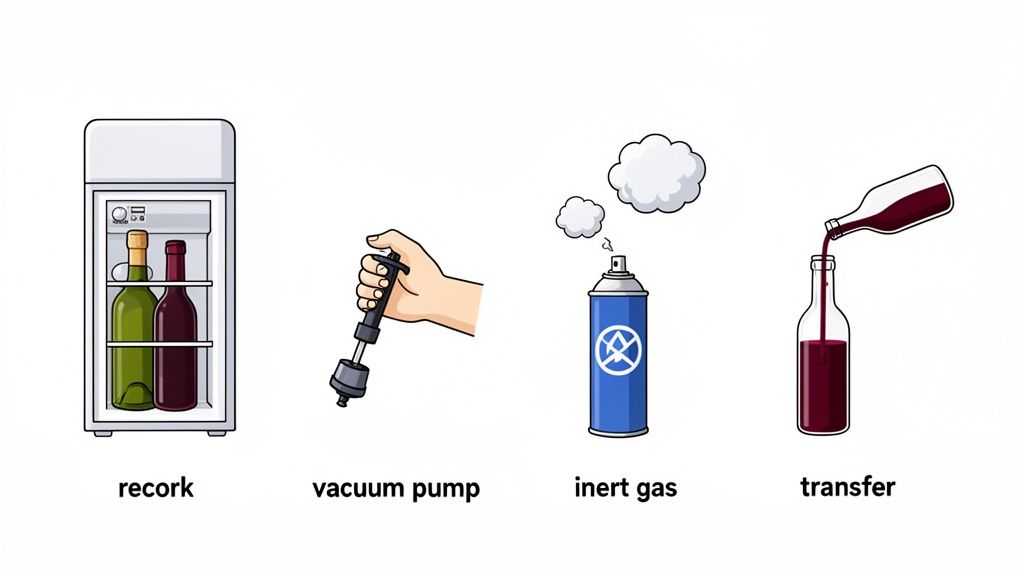
So, you know the enemies working against your wine the moment you pop the cork. Now, it's time to fight back. The good news is you don’t need a high-tech lab to keep your wine fresh. A few simple, practical methods can make a massive difference, letting you enjoy a great bottle over several days instead of just one.
The absolute easiest first step is to recork the bottle tightly and stick it straight in the fridge. This simple move tackles the two biggest culprits—oxygen and heat—in one go. It’s a foundational habit every wine lover should get into.
From there, you can explore a few tools designed to give your wine even more staying power. These gadgets range in price and complexity, but they all share the same goal: stopping oxygen in its tracks.
Simple and Effective Preservation Tools
For most of us, a couple of affordable tools are all it takes to seriously extend the life of an opened red. These options are easy to use and deliver great results for the money.
-
Vacuum Pumps: These are popular for a reason. A vacuum pump comes with reusable rubber stoppers that you pop on the bottle. Then, you use the pump to suck most of the air out, creating a partial vacuum that dramatically slows down oxidation. It's a simple, manual process that can easily add another day or two of freshness.
-
Inert Gas Systems: This method takes a completely different approach. Instead of removing oxygen, you replace it. Products like Private Preserve use a canister to spray a harmless blend of inert gases (usually argon and nitrogen) into the bottle before recorking. Because these gases are heavier than oxygen, they form a protective blanket right on the wine's surface, keeping air from ever touching it.
These methods are especially brilliant for more delicate or expensive wines where you really want to hang onto those nuanced aromas. For a deeper dive into protecting your collection, check out our complete guide to wine storage for more expert tips.
Advanced Preservation for Enthusiasts
If you frequently open premium bottles or just want to pour a single glass at a time, a more advanced system might be a worthy investment. These devices offer the ultimate in wine preservation.
The most famous is the Coravin system. This clever piece of kit uses a super-thin, medical-grade needle to pierce the cork without removing it. It then injects argon gas to pressurise the bottle, which allows the wine to flow out through the needle. When you pull it out, the cork naturally reseals itself, leaving the rest of the wine completely untouched by oxygen.
This technology allows you to pour a glass from a bottle today and come back to it weeks, months, or even years later, with the wine still perfectly preserved. It’s a game-changer for serious collectors.
According to Wine Selectors, robust reds with higher tannins like Shiraz and Cabernet Sauvignon can last a good 3-5 days when sealed and stored in a cool, dark spot. This is especially true for wines from regions like McLaren Vale, where iron-rich soils can produce wines with more prominent tannins, naturally extending their life after opening. In fact, surveys show that around 80% of Australian wine drinkers report getting an extra day or two of freshness when using simple tools like vacuum stoppers. You can learn more about how long different wines last on wineselectors.com.au.
How to Know When Your Red Wine Has Gone Bad
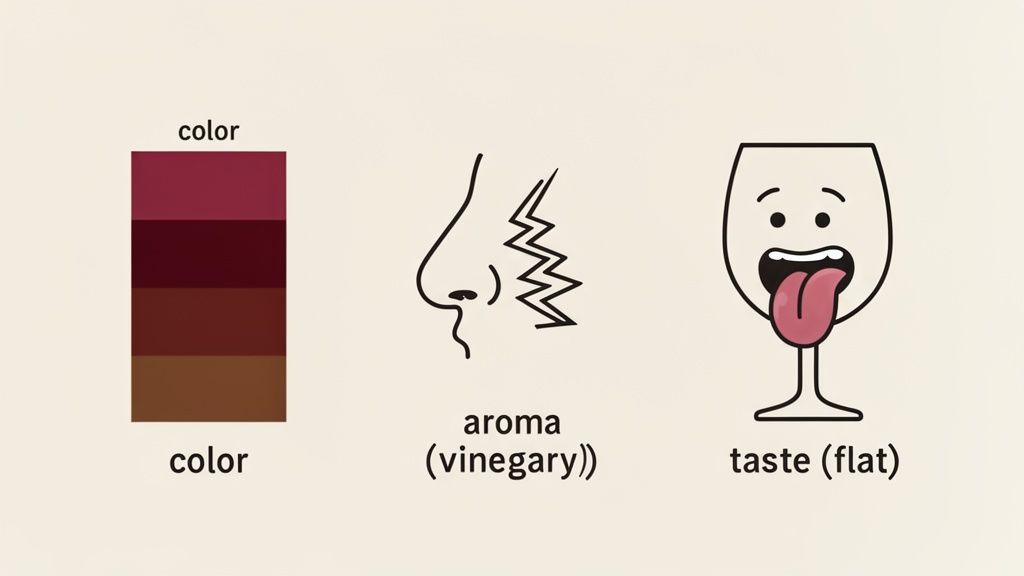
So, you've got a bottle of red that's been open for a few days. How do you know if it’s still good? Thankfully, you don't need any fancy gadgets. The best tools for the job are your own senses. Trusting your eyes, nose, and palate is the most reliable way to tell if a wine is past its prime.
First things first, have a good look. A healthy red wine should have a clear, vibrant colour, whether it’s the bright ruby of a Pinot Noir or the deep, inky purple of a classic McLaren Vale Shiraz. As oxygen works its magic—or in this case, its mischief—that colour starts to fade and shift.
A key visual cue that your wine has turned is a change from its vibrant red or purple hues to a dull, brownish, or murky brick colour. This browning is a dead giveaway that the wine has been exposed to too much air for too long.
This visual check is your first clue. If the colour looks flat and tired, it’s a pretty strong sign the flavour and aroma have gone the same way.
Trust Your Nose
Your sense of smell is your most powerful ally here. Before you even think about tasting it, give the wine a good swirl in the glass and take a deep sniff. A fresh, happy red wine will greet you with inviting aromas of fruit, spice, earth, or oak.
A wine that’s gone off will smell distinctly different. Be on the lookout for a few specific warning signs:
- Sharp and Vinegary: This is the most common culprit. If you get a sharp, acidic whiff like salad dressing or vinegar, that’s the work of acetic acid bacteria converting the alcohol. Game over.
- Nutty or Like Bruised Apples: A sherry-like aroma indicates oxidation has taken over, stripping the wine of its fresh fruit notes.
- Damp Cardboard or Musty Basement: While this is less common for a bottle that was fine when opened, a mouldy or musty smell can point to other faults.
If the aroma is off-putting in any way, it’s almost certain the wine won't be enjoyable to drink.
The Final Taste Test
If the wine passes the look and smell test, you can move on to a small taste. You'll know instantly if something is wrong.
An opened red wine that's gone bad will have lost all its personality. Those vibrant fruit flavours will be gone, replaced by a flat, lifeless taste. It might feel overly acidic, sour, or even have a strange metallic bitterness.
Imagine that beautiful McLaren Vale Shiraz, once bursting with blackberry and spice, now tasting dull and sour. That loss of structure and flavour is the final confirmation. If the wine no longer brings you any pleasure, it’s time to let it go—perhaps to the kitchen, where it can still find a new purpose in a stew or a sauce.
Creative Ways to Use Leftover Red Wine
When a bottle of red is just past its drinking peak, please don’t pour that liquid potential down the sink. A wine that has lost its fresh, fruity notes is often the secret ingredient your cooking has been missing all along.
Think of it not as spoiled, but as transformed. It's ready for a new culinary purpose. The key is to catch it when it's just slightly oxidised—a bit dull for sipping, but absolutely perfect for the kitchen. If it smells strongly of vinegar or damp cardboard, it’s gone too far. But a bottle that’s simply flat can still add incredible depth and complexity to a whole range of dishes.
Elevate Your Cooking
Leftover red wine is a powerhouse in the kitchen. It can tenderise meat, deglaze a pan, or form the base of a truly luxurious sauce. Its acidity and lingering fruit flavours are brilliant at balancing rich, savoury dishes and bringing a new dimension to your meals.
Here are a few classic ways to put it to work:
-
Create a Rich Reduction Sauce: Gently simmer your leftover red wine with some beef or chicken stock, a sprig of thyme, and a bay leaf. Let it reduce by about half, and you’ll have a thick, flavourful sauce that’s perfect for drizzling over a steak or roast.
-
Marinate Tougher Cuts of Meat: Use the wine as the foundation for a marinade. Combine it with garlic, herbs, and a splash of olive oil to tenderise and infuse amazing flavour into beef, lamb, or pork before you grill or slow-cook it.
-
Add Depth to Stews and Soups: A generous splash of red wine can elevate a simple bolognese, beef stew, or lentil soup from good to great. It adds a background richness that water or stock alone simply can’t match.
Get Creative with Leftovers
Beyond savoury sauces and stews, that last bit of wine can find its way into desserts, drinks, and even homemade pantry staples. These ideas ensure not a single drop goes to waste.
Poaching fruit like pears or figs in red wine with sugar and spices like cinnamon and star anise creates an elegant and effortless dessert. The wine infuses the fruit with a beautiful colour and a warm, spiced flavour.
You can also make your own red wine vinegar. It’s a simple process of letting the wine continue its journey with the help of a "mother" culture, resulting in a flavourful vinegar perfect for salad dressings.
And don't forget cocktails! Leftover wine can be an excellent base for some seriously creative drinks. For a bit of inspiration, check out these fantastic wine cocktail recipes that can give your bottle a brilliant new lease on life.
A Few Lingering Questions
Even with the best preservation gear, a few practical questions always seem to pop up. Here are some quick, clear answers to the most common queries we get about what to do with that leftover red.
Does It Really Matter If I Store an Opened Bottle Upright?
Yes, it absolutely does. Once that cork is popped, always store the bottle standing up.
Laying it on its side might seem tidy, but it dramatically increases the wine's surface area that's exposed to the oxygen trapped inside. More air contact means faster spoilage. An upright bottle keeps that contact to a minimum, helping the wine stay fresh for longer. It's the complete opposite of how you store an unopened, cork-sealed bottle, which needs to be on its side to keep the cork moist.
Can I Freeze Leftover Red Wine?
You bet! Freezing leftover red is a brilliant way to save it for cooking down the track.
While the freezing process messes with the wine's delicate structure—so you wouldn't want to drink it afterwards—all its core flavours are perfectly preserved for the kitchen.
Here’s a top tip: pour the leftover wine into an ice cube tray. You'll have convenient, pre-portioned blocks ready to drop straight into sauces, stews, or marinades whenever a recipe calls for a splash of red.
Is That Silver Spoon Trick for Bubbly a Real Thing?
It’s a charming myth, but unfortunately, that's all it is. Sticking a silver spoon in an open bottle of sparkling wine does nothing to preserve the fizz. There's no science behind it, and the bubbles will escape just as quickly as they would without it.
If you want to keep your sparkling red or white fresh for another day or two, you need a proper sparkling wine stopper. These gadgets are designed to clamp onto the bottle, creating a tight, pressurised seal that effectively traps the carbonation inside. It's the only way to keep that delightful bubbly character intact.
At McLaren Vale Cellars, we reckon enjoying great wine should be simple and satisfying. Explore our curated selection of premium McLaren Vale wines and find your next favourite, all backed by our Taste Guarantee and free delivery across Australia on orders over $100. Shop our best sellers today!

Comments (0)
There are no comments for this article. Be the first one to leave a message!