
Ever opened a beautiful bottle of McLaren Vale Shiraz, savoured a glass, and then wondered if it’ll taste just as good tomorrow? It’s a classic wine lover's dilemma.
The good news is, you've got some time. Most opened red wines will last for three to five days if you seal them up properly and pop them in the fridge. But that's just a rule of thumb, the real answer depends entirely on the wine's style and backbone.
The Simple Answer to How Long Opened Red Wine Lasts
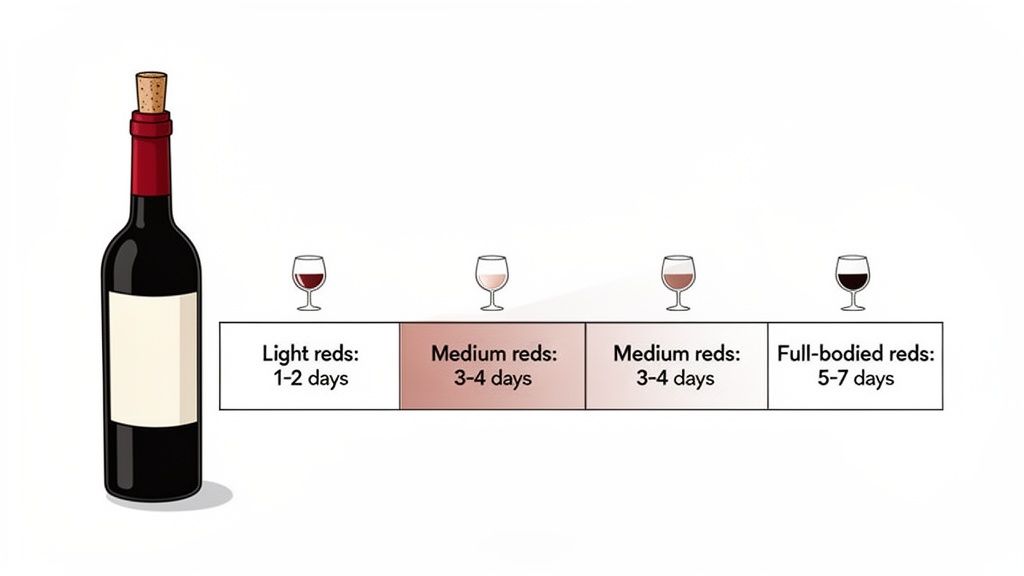
The moment you pull that cork, a countdown begins. The enemy here is oxygen. While a little bit of air is a good thing right after opening, it helps soften the wine and release its beautiful aromas, too much exposure over time is what causes it to go flat. This process is called oxidation, and it’s what turns vibrant fruit flavours dull and eventually sour.
Think of a wine’s structure, its tannins, acidity, and alcohol, as its natural armour against oxygen. The more robust that armour, the longer the wine will last. This is exactly why a big, bold red will almost always outlive a delicate, lighter-bodied one.
Australian wine experts at Redman Wines, a family-owned icon in South Australia's Coonawarra region, suggest that dry reds like Shiraz typically last three to five days when properly sealed and kept away from light and heat. It's a great reminder that even the pros know that proper storage is key.
Quick Guide How Long Opened Red Wine Lasts
To give you a clearer picture, we've broken down the general timelines for different styles of red wine. Just remember, these estimates assume you're re-sealing the bottle and storing it in the fridge.
| Red Wine Style | Typical Lifespan After Opening |
|---|---|
| Light-Bodied Red (e.g., Pinot Noir) | 1–3 days |
| Medium-Bodied Red (e.g., Merlot) | 3–4 days |
| Full-Bodied Red (e.g., Shiraz, Cabernet) | 4–6 days |
| Fortified Wine (e.g., Port, Tawny) | 1–4 weeks |
Consider these timelines your starting point. As we go on, we'll get into the nitty-gritty of why these differences exist and share some practical tips to help you get the most out of every single bottle.
Why Your Red Wine's Flavour Changes After Opening
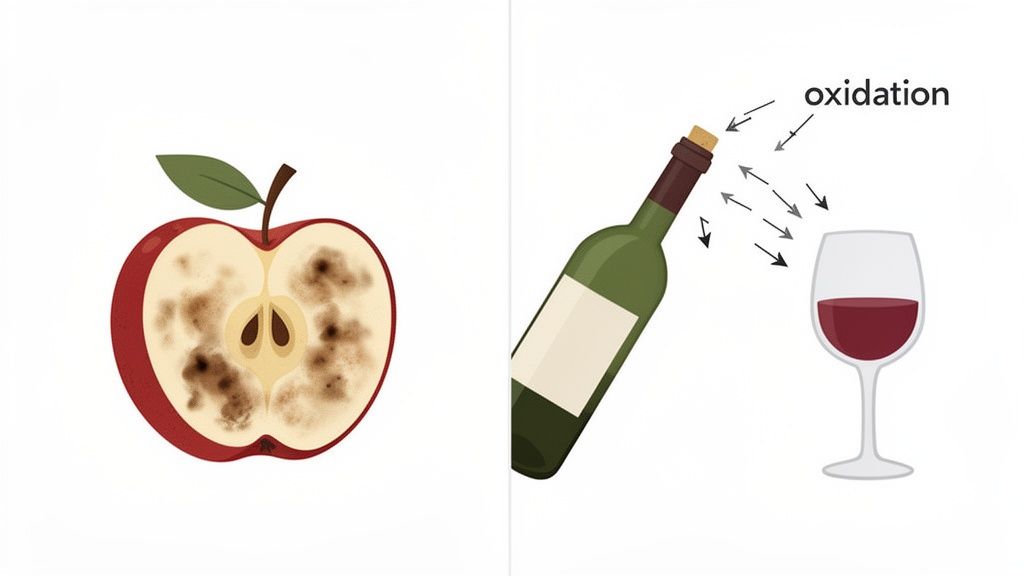
The moment you pop that cork, you've invited oxygen to the party. And just like any party guest, it starts to change the atmosphere in the bottle. This process, called oxidation, is the number one reason your red wine evolves, and eventually fades, after you open it.
Think about what happens when you slice an apple and leave it on the kitchen counter. Before long, that crisp, white flesh turns brown, and its fresh flavour goes dull. Wine goes through a very similar transformation when it meets the air. Oxygen gets to work on the various compounds in the wine, changing its aroma, flavour, and even its colour.
Now, a little bit of oxygen isn't a bad thing at first. It can help a young, tightly-wound red wine to "breathe" or open up, softening its edges and making its aromas more expressive. This is exactly why we decant robust reds; understanding what a decanter is used for is all about using a controlled burst of air to enhance the wine's best features.
But that delicate dance with oxygen doesn't last forever. After a few hours or days, the very same process that helped the wine shine becomes its undoing.
The Wine's Natural Defence System
Fortunately, red wine isn't completely defenceless. It has a built-in protection system to fight back against the rapid effects of oxidation. Two key components act as the wine's personal bodyguards, preserving its structure and vitality for longer.
These natural preservatives are tannins and acidity.
-
Tannins: These are compounds that come from grape skins, seeds, and stems, as well as from time spent in oak barrels. They’re what cause that drying, slightly grippy sensation you feel on your gums. More importantly, tannins are powerful antioxidants that dramatically slow down the oxidation process, giving the wine its structural backbone.
-
Acidity: This is the tart, mouth-watering quality that keeps a wine feeling fresh and zesty. Much like tannins, high acidity helps to preserve the wine, acting as a natural buffer against spoilage. If you're keen to go deeper, our complete guide to understanding wine acidity has all the details.
A wine's longevity after opening is directly linked to its structure. A full-bodied McLaren Vale Shiraz, packed with tannins and balanced by good acidity, has a much stronger defence against oxygen than a delicate, low-tannin Pinot Noir. This is why bolder reds typically last several days, while lighter styles are best enjoyed much more quickly.
Key Factors That Determine Your Wine's Lifespan
Not all red wines are created equal, especially after you've pulled the cork. How long a red lasts isn't a simple question with a single answer; it's a dynamic outcome influenced by what's in the bottle. Think of it this way: some wines are built like marathon runners, while others are sprinters. Their performance after opening reflects that inherent structure.
Several key characteristics determine whether your wine will still be delicious on day three or start to fade by the next morning. Understanding these gives you the power to predict how a particular bottle will evolve and plan accordingly.
The Grape Variety's Role
The type of grape used is one of the biggest clues to a wine's stamina. Grapes with thicker skins, like Cabernet Sauvignon and Shiraz, are naturally high in tannins. These tannins act as the wine's structural backbone and a powerful natural preservative, protecting it from the rapid effects of oxygen.
On the flip side, thin-skinned grapes like Pinot Noir and Gamay have far fewer tannins. While this makes them delightfully delicate and silky from the first pour, it also means they have less armour to fight off oxidation. They're simply more fragile and will lose their vibrant fruit character much faster.
The Takeaway: The higher the tannin, the longer the wine is likely to last after being opened. A robust, grippy red has the built-in resilience to stand up to oxygen for several days.
The Influence of Age and Winemaking
A wine's age and how it was made also play a huge role in its post-opening lifespan. Just like people, wines change as they get older, and their ability to handle stress (like a rush of oxygen) diminishes.
-
Youthful vs. Aged Wines: A young, vibrant red wine is full of fight. Its tannins are firm, its acidity is bright, and its structure is at its peak. An older, mature vintage, however, has already spent years slowly interacting with tiny amounts of oxygen through the cork. Its tannins have softened, making it elegant but also more vulnerable. Once you open an aged red, it should be enjoyed quickly, often within a day.
-
Alcohol and Oak: Higher alcohol content can act as a preservative, giving a wine more staying power. Similarly, wines aged in oak barrels often gain extra tannins from the wood, which contributes to a more robust structure that can better withstand a few days of air exposure. For enthusiasts looking to preserve their collection long-term, managing a dedicated wine cellar inventory is all about controlling these same principles of longevity.
Imagine you've grabbed a curated sample pack featuring Shiraz and Cabernet. Drawing on decades of Aussie wine wisdom, Wine Selectors suggests higher-tannin reds like these can last three to five days when sealed and refrigerated. This lines up perfectly with the hearty styles from places like South Australia.
Lighter reds like Pinot Noir, however, fade quicker, typically within two to three days. This practical knowledge explains why some bottles are perfect for savouring over a weekend, while others are best finished the night they're opened.
How to Properly Store Opened Red Wine
Knowing how to properly store your opened wine is the single most effective way to hang onto those delicious flavours. The moment you recork a bottle, your next move determines whether it stays vibrant for another day or starts to fade overnight. It’s all about slowing down that inevitable process of oxidation.
The good news? The best preservation methods are actually quite simple and accessible. With a few practical tricks up your sleeve, you can take control of your wine's lifespan and confidently enjoy that bottle over a few nights.
The Golden Rule: Refrigerate Your Red Wine
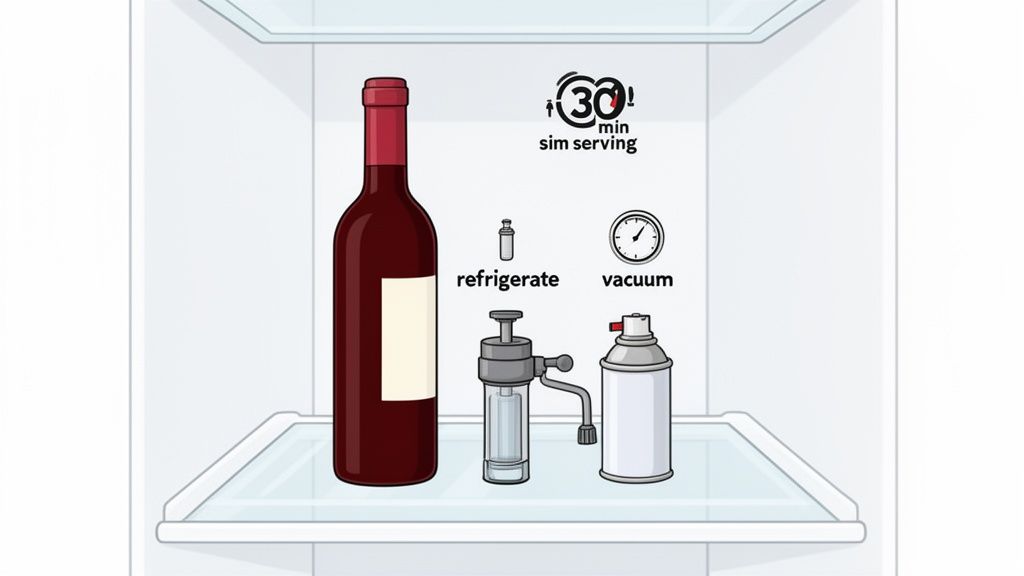
I know, it feels completely wrong to stick a beautiful bottle of McLaren Vale Shiraz in the fridge, but trust me, this is the most important step you can take. Cool temperatures dramatically slow down the chemical reactions that cause wine to spoil, essentially hitting the pause button on oxidation.
Leaving an opened red on the kitchen counter is the fastest ticket to a flat, lifeless wine.
Of course, you don’t want to drink it ice-cold. Just pull the bottle out of the fridge about 30 minutes before you plan to pour another glass. This gives it just enough time to return to a more suitable serving temperature, unlocking all its aromas and flavours without sacrificing freshness.
For a deeper dive into the ideal conditions, check out our complete guide to wine storage for both opened and sealed bottles.
Practical Tools for Wine Preservation
Beyond the fridge, a few handy tools can help you win the war against oxygen and make your favourite red last even longer. These gadgets range from simple and affordable to more advanced systems, with a solution for every type of wine drinker.
Here are a few popular and effective options that really work:
- Vacuum Pumps: These are a fantastic entry-level tool. You get a reusable rubber stopper that fits into the bottle opening, and a small pump to suck out most of the oxygen. Creating that partial vacuum significantly slows down spoilage.
- Inert Gas Systems: If you're looking to protect a special or expensive bottle, inert gas is the way to go. Systems like Coravin use a fine needle to draw out wine through the cork, replacing the liquid with a harmless, heavy gas like argon. This creates a protective blanket over the wine, stopping oxygen in its tracks.
- Smaller Containers: This is a brilliant low-tech solution. If you know you'll only drink half a bottle, have a smaller, airtight glass container ready. As soon as you've poured your glass, transfer the leftover wine into the smaller vessel, filling it as close to the top as possible to minimise the amount of air inside.
The less air your wine touches, the longer it will last. Whether you're pumping out oxygen with a gadget or just reducing the headspace in a smaller jar, the goal is always the same: protecting the wine’s delicate character from the damaging effects of air.
How to Tell If Your Red Wine Has Gone Bad
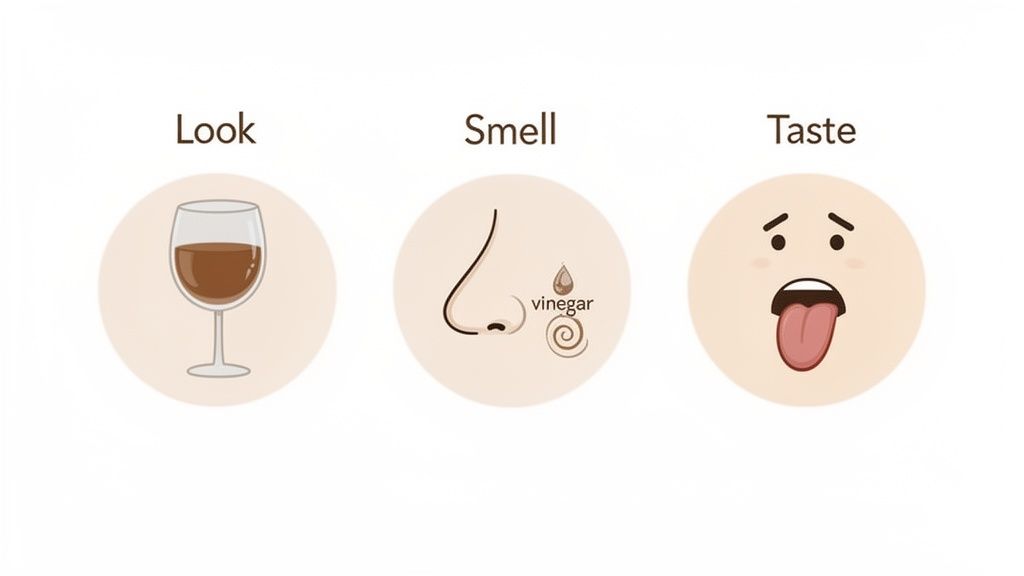
Even with the best preservation tricks, every open bottle of red wine eventually crosses the point of no return. But how can you tell when your wine has passed its prime? Simple: trust your senses. A quick look, sniff, and sip is all you need to decide if that leftover wine is still a delightful drink or better off in the stew pot.
You don't need to be a wine expert for this. It’s all about noticing when something is clearly off. These sensory clues are your most reliable guide.
Check the Colour and Appearance
Your first clue is right there in the glass. Pour a little wine and tilt it against a white background, a napkin or piece of paper works perfectly. This helps you see its true colour without any distractions.
A young, healthy red should be vibrant and clear, ranging anywhere from a bright ruby to a deep, moody purple. When oxygen has started to get the upper hand, you'll see a noticeable shift.
- Look for a brownish tinge: A wine that’s on the decline will often lose its bright, jewel-like red tones and take on a dull, brownish or brick-orange colour.
- Check for cloudiness: Now, some unfiltered wines naturally have a bit of sediment. But if a wine that was perfectly clear when you opened it is now murky or cloudy, that can be a red flag for bacterial activity.
An obvious colour change, especially from a vivid red to a flat, brownish hue, is one of the surest signs your wine has seen better days. It's a clear signal that oxygen has won the battle.
Trust Your Nose
Your sense of smell is probably your most powerful tool for spotting a spoiled wine. A good wine smells inviting, think fruit, spice, earth, or oak. A wine that has turned will give off aromas that are anything but pleasant.
Give the glass a gentle swirl to release the aromas and take a good sniff. If the lovely scents you remember from day one have been replaced by sharp, off-putting smells, you have your answer. For a deeper dive, check out our guide on how to tell if a wine has gone bad.
Keep an eye (or nose) out for these warning signs:
- A sharp, vinegary, or nail polish remover smell. This is a dead giveaway for acetic acid bacteria.
- A musty scent like wet cardboard or a damp basement, which often points to cork taint.
- A bruised apple or nutty aroma. This is a classic sign of advanced oxidation.
The Final Test Taste
If the wine looks and smells okay, the final test is a small sip. You’ll know almost immediately if it has turned. A spoiled wine loses all its personality; the vibrant fruit flavours vanish, and the whole structure just feels flat and lifeless.
Instead of the balanced, enjoyable taste you started with, you’ll likely get a wine that’s unpleasantly sour or bitter. It might taste harsh and acidic, with none of the complexity it once had. If it reminds you more of salad dressing than Shiraz, it’s definitely time to pour it out.
Got Questions About Your Leftover Red?
Even once you get the hang of how long an open bottle of red will last, a few specific questions always seem to pop up. Let's clear up some of the most common ones so you can get the most out of every drop.
Can I Freeze Leftover Red Wine?
Yes, you absolutely can, but with one big catch: don't plan on drinking it later. Freezing and thawing will wreck the wine's delicate flavours and texture, making it pretty unpleasant to sip.
However, frozen wine is a secret weapon in the kitchen. Just pour what's left into an ice cube tray. Once frozen, pop the cubes into a freezer bag. You now have perfect, ready-to-go flavour bombs to add incredible depth to stews, Bolognese sauce, or risottos for months to come. It’s a brilliant trick to avoid waste.
How Long Do Fortified Wines Last After Opening?
Fortified wines like Port and Tawny are the marathon runners of the wine world. They have a distilled spirit (usually brandy) added during production, which bumps up the alcohol content significantly and acts as a fantastic preservative.
A Tawny Port, which has already seen plenty of oxygen during its long barrel-ageing process, will happily last for several weeks, even up to two months, after you pop the cork, as long as it's kept somewhere cool and dark. A more delicate Vintage Port, on the other hand, is a different story and should be enjoyed within a few days, just like a regular red wine.
Ready to explore the robust, age-worthy reds of one of Australia's premier regions? McLaren Vale Cellars offers a curated selection of Shiraz, Cabernet, and more, perfect for savouring. Discover your next favourite and enjoy free delivery on orders over $100. Shop our collection today.
Comments (0)
There are no comments for this article. Be the first one to leave a message!