
So, you’ve opened a beautiful bottle of red but haven’t quite finished it. The big question is, how long have you got before it loses its magic?
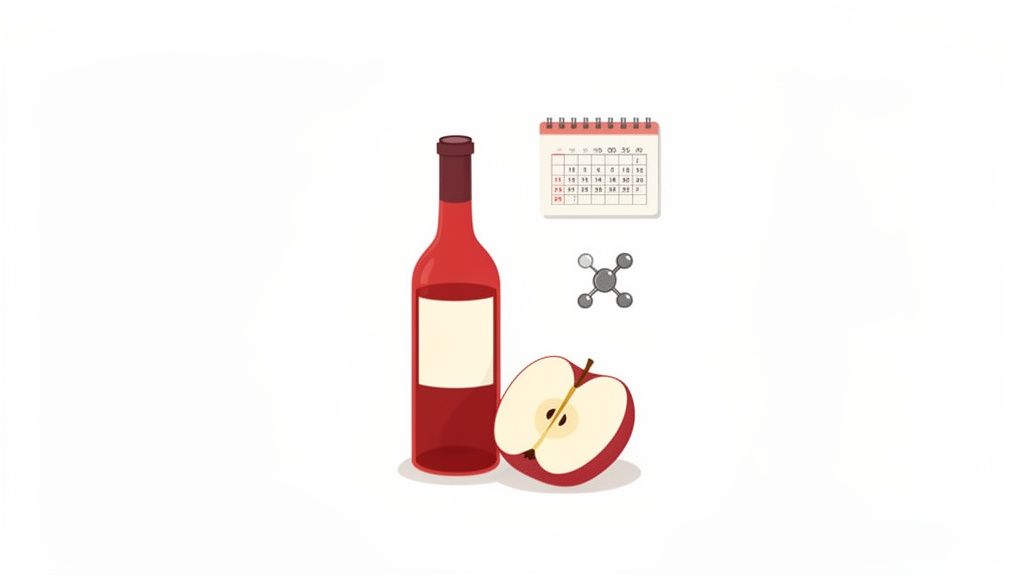
As a general rule of thumb, you can expect most red wines to stay fresh for 3 to 5 days after you’ve popped the cork, as long as you store them properly. Think of it like a sliced apple left on the counter. Once it’s exposed to air, it starts to change. That same process, called oxidation, is what happens to your wine, causing its bright, fruity flavours to slowly fade.
How Long You Can Really Enjoy Your Opened Red Wine
While that 3-to-5-day window is a great starting point, the real answer depends entirely on the style of wine you’re drinking. Not all reds are created equal when it comes to staying power. Lighter-bodied wines with lower tannins, like a delicate Pinot Noir, are more fragile and are best enjoyed within the first two or three days.
On the flip side, a big, bold red like a classic McLaren Vale Shiraz has the structure to go the distance. Thanks to higher levels of tannins and acidity—which act as natural preservatives—these wines can hold onto their vibrant berry notes and spicy character for a solid 3 to 5 days. You can find out more about how different wines evolve from leading Australian wine authorities.
To make things simple, here’s a quick guide to help you know what to expect from your favourite bottle once it's open.
Opened Red Wine Freshness Guide
This handy chart gives you a quick reference for how long different red wines typically last after being opened, assuming you’ve recorked them and put them in the fridge.
| Wine Type | Typical Freshness Window | Example from McLaren Vale |
|---|---|---|
| Light-Bodied Red | 2–3 Days | Grenache |
| Medium-Bodied Red | 3–4 Days | Merlot |
| Full-Bodied Red | 3–5 Days | Shiraz, Cabernet Sauvignon |
| Fortified Wine | 2–4 Weeks | Tawny, Vintage Port |
Just remember, this is a guide. The best way to know if a wine is still good is to trust your own senses! A quick sniff and a small taste will tell you everything you need to know.
Why Some Red Wines Last Longer Than Others
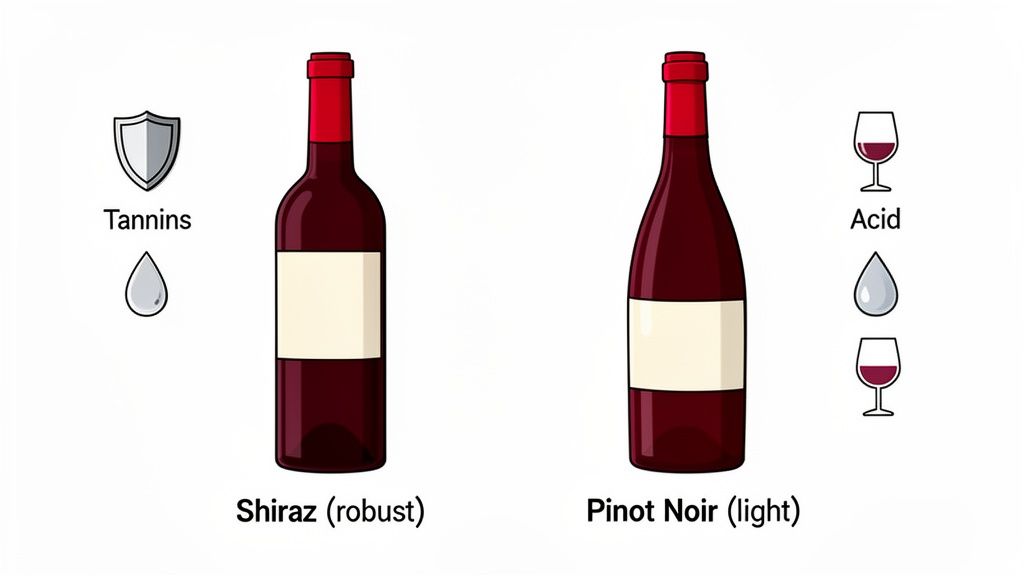
Have you ever noticed how a robust McLaren Vale Shiraz still tastes fantastic on day three, while a lighter red might lose its charm after just one night? This isn't your imagination; it's all down to the wine's natural defence system. How long an open bottle of red lasts really depends on its structure, which is built from three key components.
Think of these elements as the wine's personal bodyguards, fighting off the effects of oxygen. The more robust its defences, the longer it will stay vibrant after you've popped the cork. Getting your head around these factors is the secret to knowing how long you can really enjoy that open bottle.
The Power Trio: Tannin, Acidity, and Alcohol
The first and most important defender in red wine is tannin. Tannins are the natural compounds from grape skins, seeds, and stems that give wine that slightly astringent, mouth-drying feeling. More importantly, they're powerful antioxidants, dramatically slowing down the oxidation that makes a wine taste flat and tired.
A wine with high tannins is like a sturdy house built with a strong frame. It has the structural integrity to withstand the elements, in this case, oxygen, for much longer.
Acidity is another crucial player. It’s what gives a wine its crispness and zesty backbone. Just like tannins, a good level of acidity helps preserve the wine’s freshness and vibrancy, acting as another line of defence against spoilage.
Finally, alcohol content also has a role. Higher alcohol levels can help slow down microbial growth, adding to the wine's stability once it's opened. These three components work together to determine a wine's staying power. For example, Australian experts confirm that full-bodied reds like Cabernet Sauvignon and Shiraz can hold strong for 3-5 days when stored correctly, all thanks to their powerful structure. You can read more about how tannins preserve flavour over at Canterbury Wines.
The Best Ways to Store Your Open Red Wine
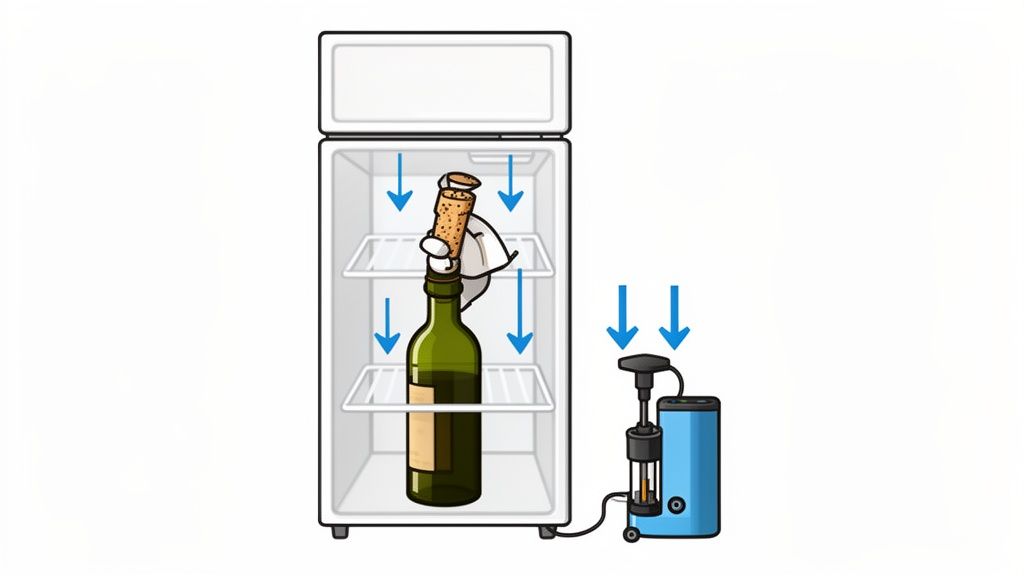
You’ve just poured a glass from a stunning bottle of McLaren Vale Shiraz, and now the challenge begins: how do you keep the rest tasting just as good tomorrow? The secret weapon in this battle against oxidation is simpler than you might think. Your number one enemy is oxygen, so your entire goal is to minimise its contact with the wine.
Leaving an open bottle on the kitchen counter is the fastest way to turn those vibrant flavours dull and lifeless. The single most effective step you can take is to put it straight in the fridge. Cold temperatures act like a pause button, dramatically slowing down the chemical reactions that cause the wine to go off.
The refrigerator is your open red wine's best friend. It won't stop oxidation completely, but it will significantly slow it down, giving you days of extra enjoyment from every bottle.
This isn’t just anecdotal advice; it’s backed by science. Cooler temperatures are proven to be essential for preserving a wine's quality. In fact, research shows that storing wine even a few degrees cooler preserves 20-30% more of its character over time, a principle that is just as true for an opened bottle as it is for a sealed one.
Simple Preservation Methods You Can Use Now
While popping it in the fridge is key, you can combine it with a few other tricks to really extend the life of your wine. Here are the most practical and effective methods for preserving that open bottle of red.
- Re-cork It Tightly: The second you're done pouring, jam the original cork back in the bottle. Push it in as far as it will go to create the tightest possible seal against any more air getting in.
- Use a Vacuum Pump: These affordable gadgets are a brilliant investment for any regular wine drinker. A vacuum pump sucks most of the oxygen out of the headspace in the bottle, which can easily add another day or two to its life.
- Transfer to a Smaller Bottle: If you have about half a bottle left, pour it into a smaller, clean screw-cap container. This drastically reduces the amount of air touching the wine's surface, which is the main culprit behind spoilage.
For those truly serious about their collection, you could explore inert gas systems like Coravin, which blanket the wine with harmless argon gas to displace oxygen. But for most of us, a combination of a tight seal and a cold fridge is all you need to keep that wine fresh.
For more long-term storage advice, check out our guide on how to store wine without a cellar.
Signs Your Red Wine Has Gone Bad
So, how can you tell if that leftover red wine has officially passed its prime? The good news is, it’s not dangerous to drink, just unpleasant. Your own senses are the best tools you have to judge whether that last glass is still worth pouring.
Trust what you see, smell, and taste. A few simple checks will tell you everything you need to know about when it’s time to say goodbye to that bottle.
Check the Colour
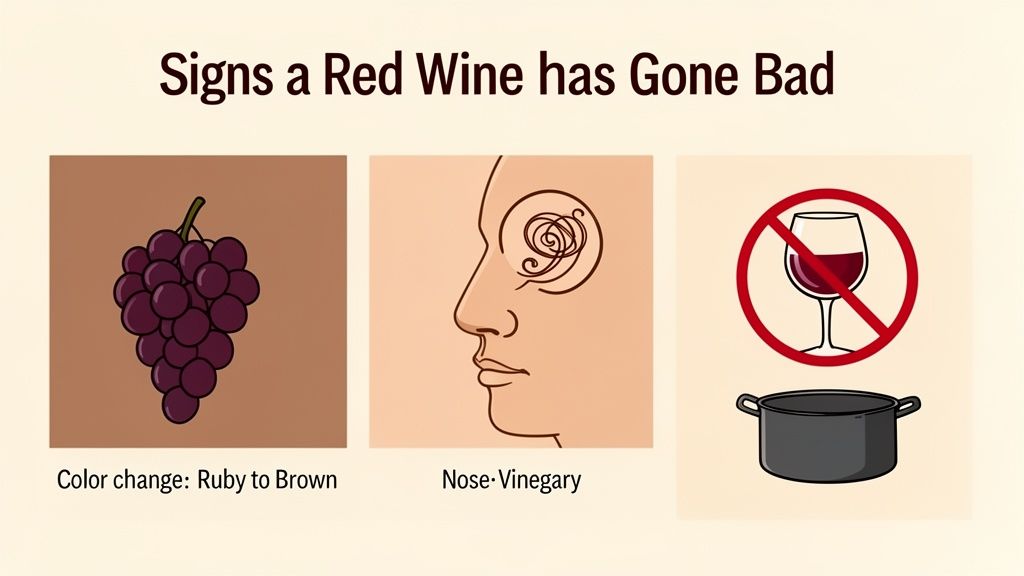
One of the first signs of over-oxidation is a change in colour. A fresh red wine should have a vibrant, jewel-toned hue, whether it’s a bright ruby or a deep, brooding purple. As the wine goes off, this colour begins to dull and fade.
You’ll start to notice the wine taking on a brownish or brick-coloured tinge, especially around the edges in the glass. This visual shift is a clear signal the wine has lost its freshness and its flavour profile has flattened out.
Trust Your Nose
Your sense of smell is probably your most powerful ally here. A good red wine offers complex aromas of fruit, spice, or earthy notes. When a wine has turned, these lovely scents are replaced by sharp, off-putting ones.
The most obvious giveaway is a sharp, vinegary smell, reminiscent of salad dressing. This means acetic acid bacteria have converted the alcohol into vinegar—a process that is, unfortunately, irreversible.
Other warning signs include a musty, damp cardboard scent or a chemical smell like nail polish remover. If it doesn’t smell inviting, it certainly won’t taste any good. For a deeper dive, learn more with our full guide on how to tell if a wine has gone bad.
The Final Taste Test
If the colour and smell seem okay, the final test is a small sip. A wine that has gone bad will taste flat and lifeless, lacking its original fruit character. Instead of vibrant flavours, you might get a taste that is overly sour, sharp, or bitter.
Simply put, it will just taste wrong. Don't worry, a small taste won't harm you, but there's no point in drinking something you don't enjoy! If the wine has reached this stage, it's best used for cooking in a stew or a red wine reduction.
Keeping Your McLaren Vale Favourites Fresh
Let's bring this all home to the Australian wines you know and love. When you pop the cork on a bottle from McLaren Vale, you’re usually dealing with reds that have a serious amount of structure and intensity. That inherent character is your biggest ally in making them last.
Take the region's undisputed champion, McLaren Vale Shiraz. It’s naturally loaded with tannins, giving it a powerful backbone that acts as a brilliant shield against oxygen. This means you can confidently expect your open Shiraz to drink beautifully for 3 to 5 days when you’ve recorked it and stuck it in the fridge. Its vibrant dark fruit flavours will hold on tight, often just softening enough by day two to show off some new layers.
It's a similar story with our Cabernet Sauvignon, which is built for the long haul, both in the cellar and on your counter. With its firm tannins and solid acid structure, an open bottle will easily cruise along for up to 4 or 5 days. You'll find its classic rich blackcurrant and savoury notes stay remarkably intact.
Maximising Your McLaren Vale Reds
To get the most out of these robust wines after opening, just keep these key points in mind:
- Seal and Chill Immediately: The second you’ve finished pouring, get that cork back in and put the bottle straight in the fridge. Honestly, this is the single most effective thing you can do.
- Let It Warm Up a Little: Before pouring your next glass, pull the bottle out and let it sit at room temperature for about 15-20 minutes. This little bit of time helps its aromas and flavours to open back up.
- Trust Your Senses: While these wines are pretty resilient, always give them a quick sniff and a small taste. If the flavours still feel vibrant and balanced, you're good to go.
By understanding the gutsy nature of McLaren Vale reds, you can stop worrying about having to finish a bottle in one night. These wines have the structure to reward you over several days.
For more detailed advice on getting the conditions just right, check out our complete guide to wine storage tips for Australians, which will help you keep every bottle perfect.
Your Burning Questions About Open Red Wine
We've gone through the basics, but let's be honest, you probably still have a few specific questions. Let's tackle some of the most common queries and myths we hear about keeping your red wine fresh after you've popped the cork.
Can You Drink Red Wine That Has Been Open for a Week?
Technically, you can drink it. But the real question is, will you want to?
After a full week, most red wines have waved the white flag. Oxidation will have stripped them of their vibrant fruit flavours, leaving behind sharp, vinegary notes. While it’s not going to harm you, the experience will be a pale imitation of the wine you first opened.
A big, beefy McLaren Vale Shiraz might still be hanging on, but it’ll be a shadow of its former glorious self. For the best flavour, it's always best to finish your bottle within that 3-to-5-day window.
Does Putting a Silver Spoon in an Open Bottle Actually Work?
This is a classic old wives' tale, often linked to keeping sparkling wine fizzy. Unfortunately, for both reds and bubblies, it's pure myth. A silver spoon dangling in the neck of a bottle does absolutely nothing to stop oxidation or preserve your wine.
The only things that truly slow down spoilage are limiting oxygen and keeping the wine cool. So, ditch the cutlery and grab the original cork, a screw cap, or a proper wine stopper instead.
Should I Let Refrigerated Red Wine Warm Up Before Drinking?
Yes, absolutely! This is a simple step that makes a world of difference.
Serving red wine straight from the fridge is a sure-fire way to mute its beautiful aromas and complex flavours. It’ll taste dull, and the tannins can feel harsh and astringent. The sweet spot for most reds is just below room temperature, somewhere between 15–18°C.
To get it just right, pull your red wine out of the fridge about 20-30 minutes before you plan to pour a glass. This gives it enough time to warm up gently, allowing its full character to come alive in the glass.
Trust us, this small bit of patience pays off in a big way.
Is a Screw Cap Better Than a Cork for Storing Open Wine?
Once a bottle is open, a screw cap is your best friend. It’s far more effective and convenient for resealing than trying to jam a swollen cork back into the neck.
Screw caps create a much tighter, more reliable seal, which does a better job of keeping oxygen out. While natural cork has its romantic, traditional appeal for ageing unopened bottles, the sheer practicality of a screw cap wins hands down for preserving an open wine. It's one of the easiest ways to keep your red fresh for an extra day or two.
Ready to put your knowledge to the test? Explore the bold, structured reds that are built to last at McLaren Vale Cellars and discover your next favourite bottle today. Find the perfect McLaren Vale Shiraz or Cabernet Sauvignon at https://www.mclarenvalecellars.com.


Comments (0)
There are no comments for this article. Be the first one to leave a message!