
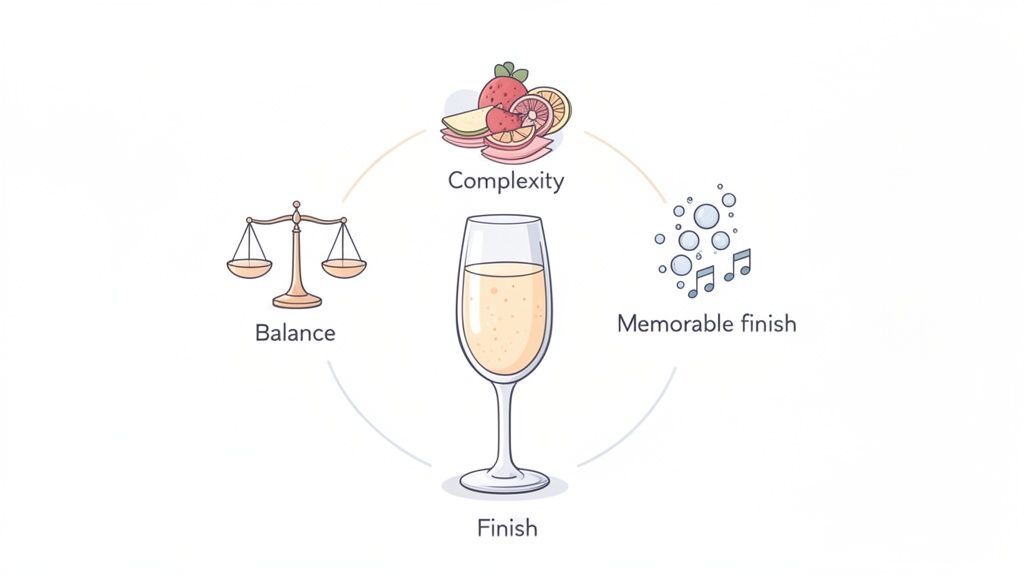
A truly great sparkling wine is a masterclass in harmony, bringing together three critical elements: balance, complexity, and a memorable finish.
Think of it like a perfectly composed piece of music. The crisp acidity is the beat, the rich fruit flavours are the melody, and those fine, persistent bubbles provide the rhythm. When it all comes together, a great sparkling wine feels cohesive, exciting, and utterly satisfying on the palate.
What Elevates a Sparkling Wine to Greatness?
This guide is your roadmap to understanding how these elements work in harmony, from the vineyard right through to your glass. We'll dive into production methods, decode different styles, and share practical tips for tasting and pairing. The goal is to help you discover exceptional sparkling wine with confidence, moving beyond simply "fizzy" to truly appreciate the incredible craft in every bottle.
The Core Qualities to Look For
So, what separates the good from the great? It’s not about the price tag or a famous label, but the experience you have when you take that first sip. Three pillars uphold any superior sparkling wine:
- Balance: This is the seamless integration of acidity, sweetness, alcohol, and fruit. No single element should shout louder than the others. A well-balanced wine feels refreshing, complete, and just right.
- Complexity: A great sparkling wine is never one-dimensional. You might first notice layers of crisp green apple, citrus zest, and pear, which then give way to richer notes of toasted brioche, almond, or a touch of honey that evolve as you sip.
- Finish: The finish is all about that lingering taste left after you’ve swallowed. A memorable finish is long, pleasant, and clean, leaving you wanting to take another sip immediately.
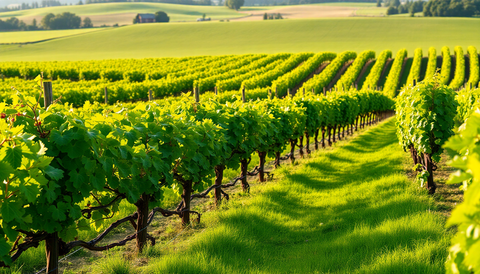
The Australian sparkling wine scene is absolutely booming, especially in regions like South Australia. Market data shows a valuation of USD 370.58 million, which is projected to climb to USD 593.32 million by 2033. This incredible growth is fueling the production of world-class sparkling base wines, particularly from the outstanding Chardonnay vineyards in McLaren Vale. You can read more about the latest Australian wine production trends to get a sense of this exciting expansion.
A great sparkling wine tells a story. It speaks of its terroir, the grape varietals used, and the skill of the winemaker. It’s an experience that engages all your senses, from the sound of the pop to the final, lingering flavour.
How the Bubbles Get into the Bottle
The captivating fizz in a great sparkling wine doesn't happen by accident; it's the result of a deliberate, and quite fascinating, process. Not all bubbles are created equal, and the way they get into the bottle has a huge impact on the wine’s final taste, texture, and personality.
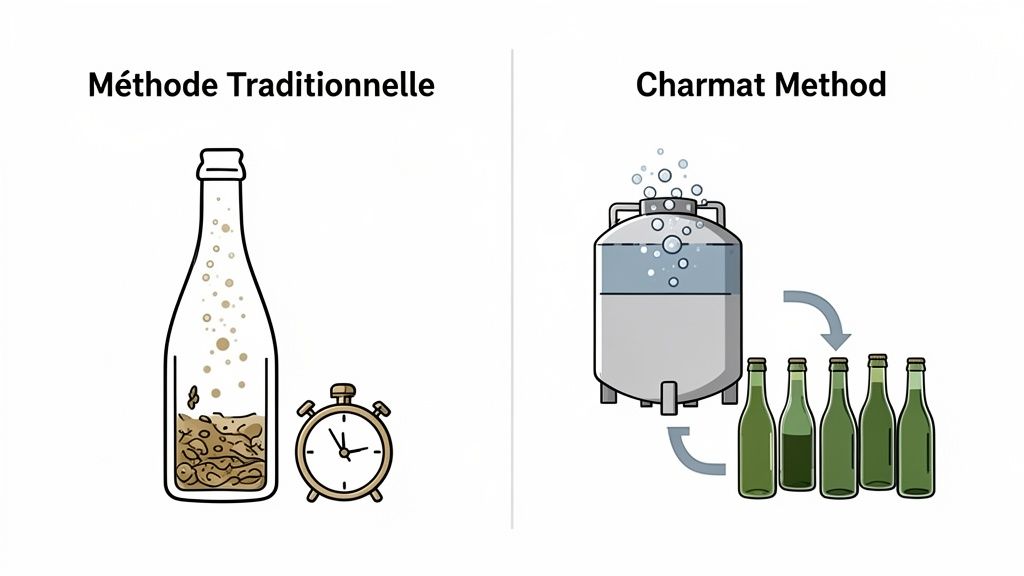
There are two main paths a winemaker can take to create those delightful bubbles: the painstaking Méthode Traditionnelle and the zippy Charmat Method. Think of it as the difference between a slow-fermented, hand-kneaded sourdough and a quickly baked loaf of bread. Both can be delicious, but they offer completely different levels of complexity and texture.
The journey starts with a still base wine, which then undergoes a magical secondary fermentation. This is where the carbon dioxide—the bubbles—is created and trapped, just waiting for you to pop the cork.
The Labour of Love: Méthode Traditionnelle
The Méthode Traditionnelle, famously used in Champagne and for premium sparklers like our Blanc de Blanc, is the more complex, time-consuming, and hands-on approach. It's a true mark of craftsmanship.
Here’s the breakdown:
- In-Bottle Fermentation: A special mix of yeast and sugar, known as the liqueur de tirage, is added to the base wine before it's sealed inside its final bottle.
- Sur Lie Ageing: The wine then rests on the spent yeast cells, called lees (sur lie), for months or even years. This is the crucial step that builds those rich, complex flavours of brioche, nuts, and toast that define a truly great sparkling wine.
- Riddling and Disgorgement: The bottles are slowly turned and tilted until all the lees collect in the neck. The neck is then flash-frozen, and the plug of sediment is popped out.
This painstaking method creates those fine, persistent bubbles and a creamy mouthfeel, delivering the depth and elegance found in the world’s most celebrated sparkling wines. Want to go deeper? You can learn more about why some wines sparkle in our detailed guide.
The Fresh and Fruity: Charmat Method
The Charmat Method, also known as the tank method, is famous for producing Italy’s Prosecco. It’s a technique designed to preserve the fresh, fruity, and floral notes of the grapes, rather than developing secondary characters.
Instead of happening in individual bottles, the secondary fermentation takes place in large, pressurised stainless steel tanks. This approach is much quicker and less labour-intensive, resulting in a wine that is bright, crisp, and youthful. The bubbles are typically larger and more zesty compared to the fine mousse from the traditional method.
This table breaks down the key differences at a glance.
Sparkling Wine Production Methods at a Glance
The method a winemaker chooses directly shapes your experience in the glass. Here's a simple comparison of the two main techniques.
| Feature | Méthode Traditionnelle (e.g., Champagne, Blanc de Blanc) | Charmat Method (e.g., Prosecco) |
|---|---|---|
| Fermentation Vessel | Individual bottle | Large, pressurised stainless steel tank |
| Key Flavours | Complex, toasty, nutty, yeasty notes (brioche, almond) from extended lees contact. | Fresh, vibrant fruit and floral notes, capturing the primary grape character. |
| Bubble Texture | Fine, persistent, and creamy (often called 'mousse'). | Larger, more zesty, and often less persistent. |
| Time & Cost | Long and labour-intensive, resulting in a higher price point. | Quick and efficient, making it more affordable. |
| Best For | Creating wines with depth, complexity, and significant aging potential. | Producing bright, youthful, and aromatic wines meant for early enjoyment. |
Ultimately, Méthode Traditionnelle delivers complexity and yeasty depth, while the Charmat Method prioritises vibrant fruit and aromatic freshness. One isn't inherently "better"—they simply create two very different, and equally enjoyable, styles of sparkling wine.
Decoding Sparkling Wine Styles and Sweetness
Walking into the sparkling wine aisle can sometimes feel like you're trying to learn a new language. But don't worry, once you get a handle on a few key terms, a whole universe of flavour opens up. The style of a sparkling is mostly decided by the grapes used, which shapes its taste, colour, and overall character right from the start.
Two of the most important styles you'll see are Blanc de Blancs and Blanc de Noirs. These French terms are wonderfully descriptive and tell you exactly what to expect in the glass.
-
Blanc de Blancs: This literally means "white from whites." These wines are made exclusively from white grapes, most famously 100% Chardonnay. Think crisp, elegant, and zesty, with notes of green apple, lemon, and a distinctive chalky minerality. They're the epitome of finesse.
-
Blanc de Noirs: Translating to "white from blacks," this style is a white sparkling wine made entirely from red grapes like Pinot Noir and Pinot Meunier. The magic happens when the juice is pressed off the skins immediately, preventing any colour from bleeding into the wine. The result is a bubbly with more body, structure, and lovely red fruit notes like strawberry and cherry.
From Bone-Dry to Sweet: A Guide to Sweetness
Another crucial clue on the label is the sweetness level. This tells you how much sugar was added right at the end, after the second fermentation. The spectrum is surprisingly wide, going from bone-dry to lusciously sweet, so there’s a perfect match for every palate and every dish.
You can think of it as a dial for dryness. Brut is by far the most popular and versatile style out there. It’s known for its dry, crisp profile that makes it an absolute winner for pairing with food.
The term 'Brut' indicates a dry style of sparkling wine, containing less than 12 grams of residual sugar per litre. This versatile dryness makes it the go-to choice for aperitifs and pairing with a wide array of foods.
Here’s a quick rundown of the scale, from the driest to the sweetest:
- Brut Nature/Zero Dosage: This is as dry as it gets, with virtually no added sugar. It's sharp, intensely crisp, and incredibly refreshing.
- Extra Brut: A step up, but still very dry. Expect a clean, precise, and focused tasting experience.
- Brut: The classic dry style we all know and love. It has just enough fruitiness to balance the acidity, making it fantastic with almost anything.
- Extra Dry/Extra-Sec: Here’s where it gets a bit confusing. "Extra Dry" is actually slightly sweeter than Brut, with a softer, more fruit-forward feel.
- Dry/Sec: Noticeably off-dry, with a gentle sweetness that works beautifully with mildly spicy foods.
- Demi-Sec: A distinctly sweet style that’s an ideal partner for fruit tarts and desserts.
- Doux: The sweetest of them all, this is often served as a dessert wine in its own right.
Global Styles Worth Exploring
While Champagne from France gets most of the limelight, countless other regions are producing phenomenal sparkling wines, each with its own unique identity. Here in Australia, cooler climates like McLaren Vale are crafting world-class sparklings from classic Chardonnay and Pinot Noir grapes that can easily rival the best of them.
Head over to Spain and you'll find Cava, made using the same traditional method as Champagne but with native Spanish grapes, which gives it a unique earthy, savoury character. And of course, there's Italy's Prosecco. Made with the Charmat method, it’s famous for its fresh, fruity, and floral notes of pear and honeydew melon.
If you’re keen to dive deeper and find your next favourite bottle, check out our comprehensive guide to sparkling wine varieties.
How to Taste Sparkling Wine Like an Expert
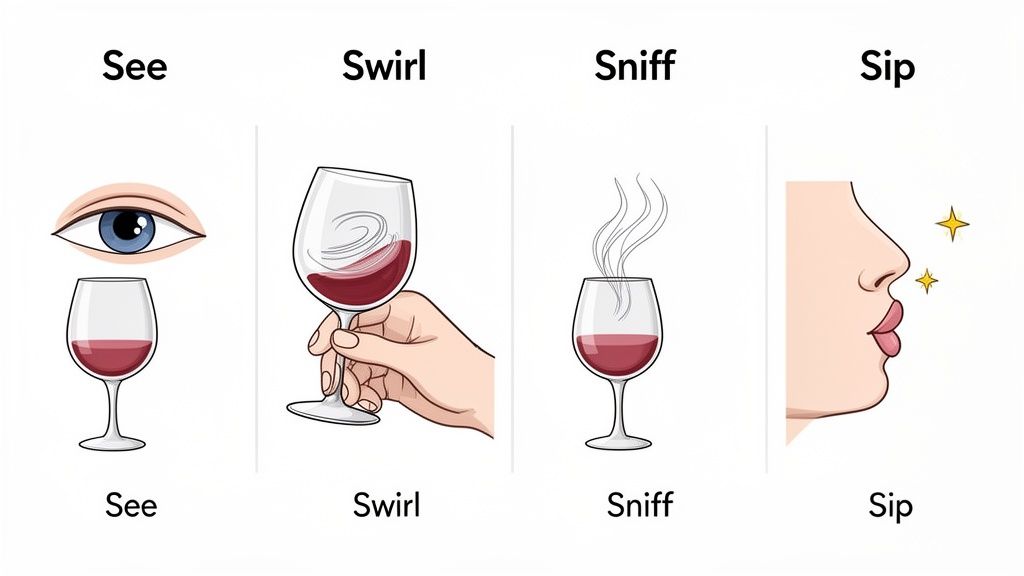
This is where the real fun begins. Forget stuffy rituals and intimidating jargon—tasting a great sparkling wine is all about tuning into your senses. We'll use the classic "See, Sniff, Sip" approach, but with the added magic of bubbles.
The goal isn't to become a sommelier overnight. It's about discovering what you genuinely enjoy and building a bit of confidence with every glass. This simple framework will completely change how you appreciate the craft and care that goes into every bottle.
Step 1: See the Sparkle
Pour a little into your glass and hold it up to a good light source. The first thing you'll see is that mesmerising stream of bubbles, known in the wine world as the perlage.
What are you looking for? Ideally, you want bubbles that are fine, small, and seemingly endless. This delicate, persistent stream is often the signature of a high-quality, traditional-method sparkling. It’s these tiny bubbles that create a beautifully creamy texture on the palate—what experts call the mousse.
Step 2: Sniff the Aromas
Here’s a key difference from still wine: you don’t need to give it a big, vigorous swirl. In fact, that can make the bubbles fizz out too quickly. Just a gentle tilt and a lift of the glass to your nose is all it takes.
So, what do you smell? Your first impression will likely be the primary fruit aromas coming directly from the grapes.
- Primary Notes: Think crisp green apple, zesty lemon, fresh pear, or even delicate white florals.
- Secondary Notes: If it's a méthode traditionnelle wine, you'll start to pick up richer, more complex scents from its time on lees—things like freshly baked bread, toasted brioche, or roasted almonds.
A truly great sparkling wine has layers of aroma that unfold as it sits in the glass. Don’t rush this step. Give it a moment to reveal its full character.
This sensory exploration is part of a booming culture. Australia's sparkling wine market was valued at USD 370.58 million and is projected to surge to USD 593.32 million by 2033. This growth shows a real national passion for discovering premium, celebratory styles. You can discover more insights about the rising popularity of Australian sparkling wine.
Step 3: Sip and Savour
Alright, the moment of truth. Take a small sip and let the wine wash over your tongue. Pay attention to how it feels. Notice that initial pop of flavour, the texture of the bubbles, and how the taste lingers long after you’ve swallowed.
Think about the balance. Is the crisp acidity playing nicely with the fruitiness? Does it feel refreshing and clean on the palate? The finish is the final clue. A top-quality sparkling will leave a pleasant, lasting impression that makes you want to go back for another sip.
Ultimately, trust your own palate. The best wine is always the one you love to drink.
Perfect Pairings and Serving Suggestions
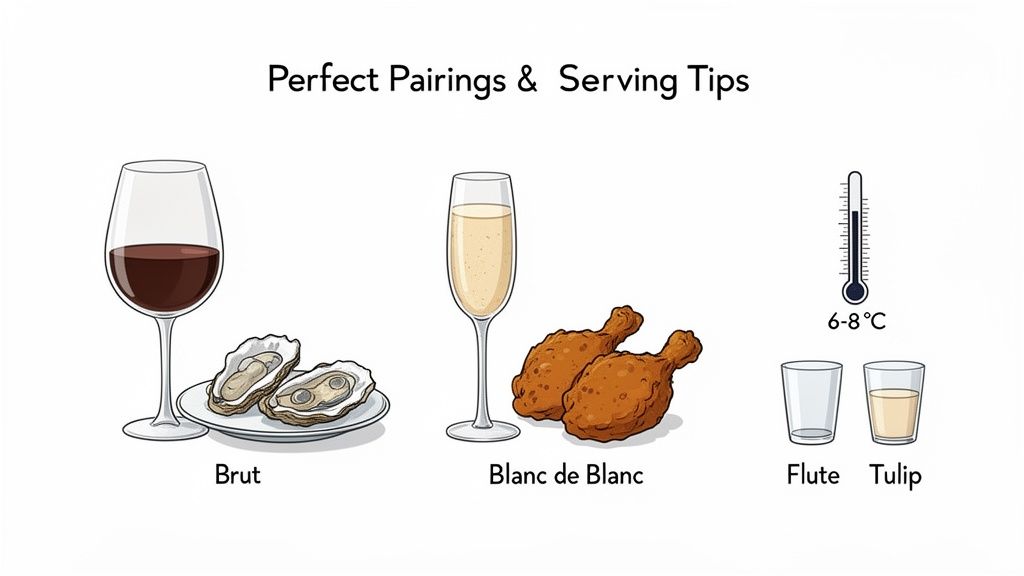
A great sparkling wine is so much more than a celebratory toast. Truth be told, it’s one of the most versatile, food-friendly wines you can pour. That bright acidity and those cleansing bubbles are magic when it comes to cutting through rich foods, making it a brilliant partner for an incredible range of dishes.
The guiding principle is wonderfully simple: match the body of the wine to the weight of the food. Lighter, zesty sparklers sing with delicate dishes, while richer, more complex bottles can stand up to heartier fare. This simple rule unlocks a world of culinary possibilities that go way beyond the usual canapés.
Classic and Adventurous Food Pairings
Sure, the classic pairings are timeless for a reason, but don't be afraid to experiment. The crispness of a quality sparkling can elevate everyday meals into something genuinely special.
Here are a few ideas to get you started:
- Light-Bodied & Crisp (e.g., Brut, Prosecco): The quintessential pairing is with fresh oysters, sashimi, or light appetisers. But for a more adventurous match, try it with salty popcorn or potato crisps—the acidity cuts through the fat beautifully.
- Medium-Bodied & Complex (e.g., Blanc de Blancs): The creamy texture and citrus notes are a dream with rich seafood like grilled prawns or pan-seared scallops. Unexpectedly, it’s also a phenomenal partner for fried chicken, where its acidity cleanses the palate with every bite.
- Full-Bodied & Rich (e.g., Blanc de Noirs, Vintage Champagne): These robust wines can handle stronger flavours. Think roast chicken, creamy pasta dishes, or even earthy mushroom risotto.
The secret to a perfect pairing lies in balance. The wine should complement the food, not overpower it. Let the acidity and bubbles act as a refreshing counterpoint to the texture and flavour of your dish.
To make things even easier, here’s a quick reference guide for your next dinner party or quiet night in.
Sparkling Wine Pairing Cheat Sheet
| Wine Style | Classic Pairings | Adventurous Pairings |
|---|---|---|
| Brut / Extra Brut | Fresh Oysters, Sushi, Caviar | Fish and Chips, Salty Popcorn |
| Blanc de Blancs | Grilled Prawns, Scallops, Goat Cheese | Fried Chicken, Macaroni and Cheese |
| Rosé | Smoked Salmon, Duck Breast | Spicy Thai Green Curry, Charcuterie Board |
| Blanc de Noirs | Roast Chicken, Mushroom Risotto | Pork Belly, Truffle Fries |
This is just a starting point, of course. The best part about pairing is the discovery, so feel free to get creative and find what works for you!
Serving Your Sparkling Wine Correctly
Getting the serving details right ensures you enjoy every nuance the winemaker intended. A few simple steps can make a massive difference in your tasting experience, and it all starts with temperature.
The ideal serving temperature for most sparkling wine is a well-chilled 6–8°C. If it’s too cold, you’ll mute the delicate aromas; too warm, and the bubbles can feel aggressive and the flavours flat. An hour or two in the fridge usually does the trick perfectly.
Glassware also plays a vital role. While classic champagne flutes are great for preserving that lovely stream of bubbles, many experts now lean towards a tulip-shaped glass. This style has a wider bowl that allows the aromas to collect, enhancing the bouquet, while still tapering at the top to focus the effervescence.
Finally, when it comes to opening the bottle, safety and style go hand in hand. Always point the bottle away from yourself and others. After removing the foil and cage, hold the cork firmly with one hand while twisting the bottle (not the cork) with the other. This gives you maximum control for a gentle, satisfying sigh instead of a dangerous pop.
Finding Your Perfect Bottle with Confidence
Right, you’re now armed with everything you need to step out and explore the world of fizz. Whether you're standing in a bottle shop aisle or browsing online, understanding the difference between styles and production methods takes the guesswork out of it. It turns a chore into a discovery. At the end of the day, your own taste is the only guide that matters.
If you're just starting this fantastic journey, a curated tasting pack is a brilliant way to begin. These selections give you a guided tour of different styles without having to commit to a full bottle of each. You get to compare a crisp Blanc de Blancs against another style, side-by-side. It’s the perfect, no-risk way to figure out what you genuinely love.
Start Your Sparkling Wine Adventure
Already a fan of those elegant, traditional-method wines? Then you should absolutely seek out a premium Blanc de Blancs. Keep an eye out for mentions of brioche and citrus on the label—that’s your clue to the beautiful complexity that comes from careful ageing. It’s a fantastic benchmark for quality.
Exploring should be fun, which is why getting good value is so important. Look for retailers that offer things like taste guarantees or rewards programs, as these little perks make the whole discovery process that much more satisfying. It puts you in the driver's seat to experiment and find your next favourite bottle.
A great sparkling wine is simply one that you love to drink. Trust your own palate, embrace the journey, and don’t be scared to try something completely new. The perfect bottle is the one you can’t wait to pour again.
Here at McLaren Vale Cellars, we try to make this exploration both easy and rewarding. Our sample packs are designed to introduce you to some exceptional local styles. We also offer great value on mixed half-case deals, letting you stock up on what you love or try new things with total confidence. For a few more ideas on what to try next, check out our latest sparkling wine recommendations.
Your Sparkling Wine Questions, Answered
To wrap things up, let's tackle some of the most common questions that pop up about sparkling wine. These quick answers will clear up any confusion and have you sipping like a pro in no time.
What’s the Difference Between Champagne and Sparkling Wine?
It all comes down to one word: geography. To be called Champagne, the wine must come from the Champagne region of France and adhere to a strict set of winemaking laws.
Sparkling wine is the catch-all term for any bubbly made elsewhere in the world. But don't let that fool you—many regions, including right here in Australia, use the exact same high-quality Méthode Traditionnelle to craft sparkling wines that are every bit as spectacular as their French counterparts.
How Long Can I Store an Unopened Bottle?
Most non-vintage sparklers are made to be enjoyed fresh, usually within 1-3 years of buying them. That’s when their bright, zesty character is at its peak.
High-quality vintage sparkling wines, however, are a different story. These can age beautifully for 5-10 years, sometimes even longer, developing wonderfully complex nutty and toasty flavours. To give them the best chance, store your bottles on their side in a cool, dark place where the temperature stays nice and steady.
The best wine isn't always the most expensive one; it's the one you love drinking. Trust your own palate, and you'll always find a great sparkling wine that’s perfect for you.
Once Opened, How Long Does Sparkling Wine Last?
Once that cork is popped, the clock starts ticking. Sparkling wine begins to lose its fizz almost immediately, so for the best taste and bubbles, it’s really best to finish the bottle the day you open it.
If you have a proper sparkling wine stopper, you might be able to keep some life in it for 1-3 days in the fridge. Just know that it won’t be quite as vibrant as it was on day one. Fresh is always best!
Is Expensive Sparkling Wine Always Better?
Not at all. While a higher price tag often points to the time and effort involved—like the labour-intensive Méthode Traditionnelle and top-notch grapes—the most important thing is what you enjoy.
There are plenty of incredibly delicious and well-made sparkling wines that won't break the bank. Your personal taste is the ultimate decider.
At McLaren Vale Cellars, we make it easy to discover your next favourite bubbly. Check out our curated sample packs and value-packed mixed half-case deals to explore an exceptional range of Australian sparkling wines.

Comments (0)
There are no comments for this article. Be the first one to leave a message!