
So, what separates a good Pinot Grigio from a truly great one? It's not about the price tag. It's about a perfect harmony of bright fruit flavours, zesty acidity, and a clean, satisfying finish that leaves you wanting another sip.
A great bottle goes beyond just being crisp; it offers a subtle complexity and texture that makes it memorable.
What Makes a Pinot Grigio Truly Great
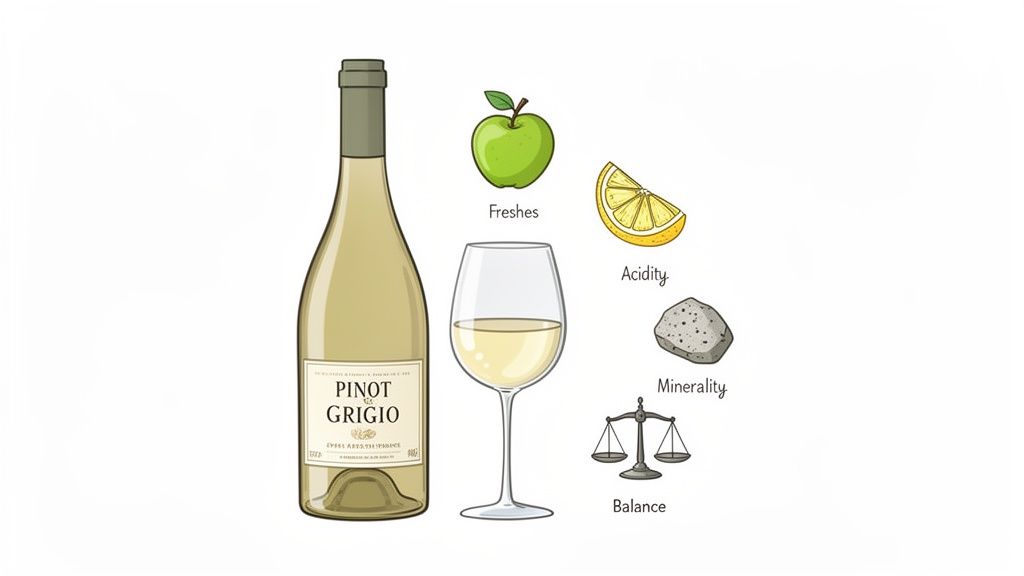
Welcome to the vibrant world of Pinot Grigio, a white wine loved for its crisp, easy-drinking nature but capable of so much more. This guide is your roadmap, helping you move past picking any old bottle off the shelf to discovering what makes a Pinot Grigio exceptional. We'll cut through the confusion and show you how a winemaker’s touch shapes the final taste in your glass.
Our journey starts by understanding the grape's dual identity. You'll see it labelled as both 'Pinot Grigio' and 'Pinot Gris'—they're the same grape, but the name is often a clue to the style. Think of them as twins with different personalities, shaped by where and how they were raised.
The Core Components of Quality
A standout bottle isn’t just refreshing; it’s a finely tuned balancing act. To find a truly great Pinot Grigio, you need a wine that delivers on several fronts. These are the building blocks that transform a simple drink into a memorable experience.
Here’s what to look for:
- Bright Fruit Flavours: Look for clear, distinct notes of green apple, pear, lemon, or lime, not just a generic fruity taste.
- Zesty Acidity: This is the 'zing' that makes the wine feel lively and clean on your palate. It should be refreshing, not sharp or sour.
- Satisfying Texture: Beyond just being light, a great example might have a subtle richness or a clean, mineral-like finish that lingers pleasantly.
A Rising Star in Australia
The popularity of this grape is surging, and for good reason. Australia's Pinot Gris/Grigio production has seen incredible growth, recently becoming the fifth most-crushed grape variety nationally for the first time. It's a huge shift in the country's wine scene, proving just how much we've come to appreciate its versatile charm. You can read more about this trend in Australian wine production.
At its best, a great Pinot Grigio is the ultimate versatile white wine. It can be an invigorating aperitif on a sunny afternoon or the perfect companion to a delicate meal, showcasing its ability to be both simple and sophisticated.
By learning to spot these signs of quality, you can move past just picking a familiar name and start selecting bottles with real confidence. This is your first step towards a more enjoyable wine journey, empowering you to know exactly what to expect before you even pour a glass.
Understanding the Two Styles of This Versatile Grape
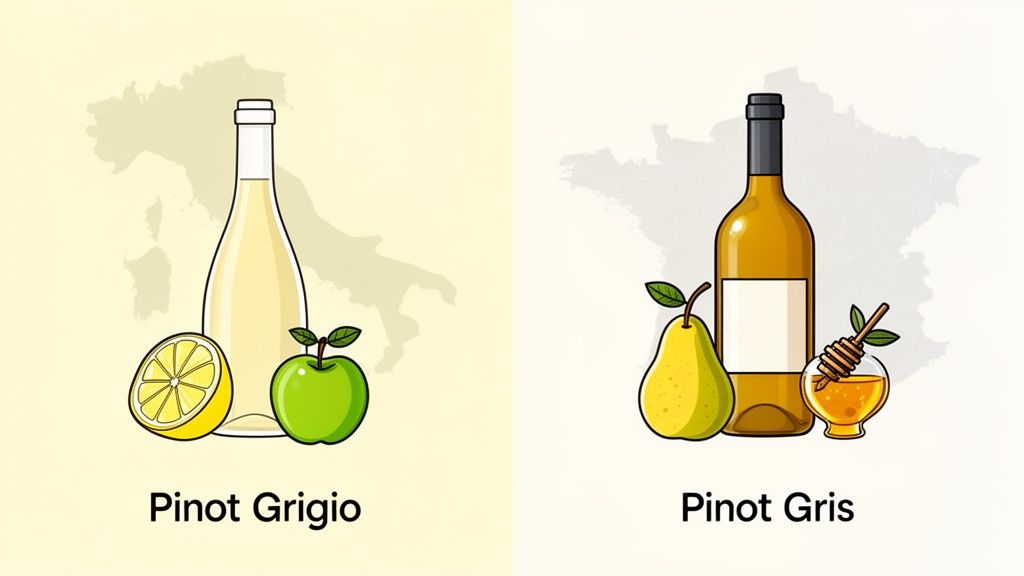
One of the most fascinating—and sometimes confusing—things about this grape is its split personality. It’s the exact same grape, but the name on the label, whether it’s ‘Pinot Grigio’ or ‘Pinot Gris’, signals a completely different experience in the glass. Getting your head around this is the first real step to picking a bottle you’ll genuinely love, every single time.
Think of them as identical twins raised in different countries. They share the same DNA, but their upbringing has shaped them into two very distinct individuals. This isn't just about a name; it's a deliberate choice by the winemaker that tells you everything about the style they were aiming for, from the vineyard right through to the cellar.
Once you grasp this, you can look at a label and know exactly what to expect. No more surprises when you pour that first glass.
The Lean and Zesty Italian Style
When you see Pinot Grigio on a label, it’s a clear nod to the classic Italian style. This is the version most of us know and love: light-bodied, crisp, and incredibly refreshing. To get this zesty profile, winemakers typically harvest the grapes a bit earlier to lock in all that vibrant natural acidity.
The winemaking is kept clean and simple. Fermentation usually happens in stainless steel tanks, which is perfect for preserving the wine's pure fruit character without adding extra flavours from oak.
The result is a wine defined by:
- Aromas: Bright, clean scents of green apple, lemon, and lime, sometimes with a subtle hint of almond or fresh white flowers.
- Palate: A zippy, high-acid profile that makes your mouth water. The flavours are direct and punchy, making it a brilliant aperitif or a partner for light dishes.
- Finish: The finish is usually short and sharp, leaving your palate feeling clean and ready for the next sip.
This Italian approach is all about capturing freshness and vibrancy. It’s the wine equivalent of a squeeze of lemon over grilled fish—it brightens everything up without stealing the show.
Its massive popularity comes down to its straightforward, reliable nature. It’s an uncomplicated, food-friendly wine that delivers consistent refreshment, making it a go-to for casual get-togethers and warm summer afternoons.
The Rich and Textural French Style
On the other side of the coin is Pinot Gris, the name that signals a richer, more complex French style, originally from the Alsace region. This approach is all about showcasing the grape's potential for depth and texture. Winemakers often leave the grapes on the vine a little longer, letting them develop riper, more concentrated flavours.
The winemaking can be more hands-on, too. Some producers might ferment the wine in old oak barrels or let it rest on its lees (the expired yeast cells) to build a creamier, more rounded mouthfeel. This adds layers of complexity that set it miles apart from its zesty Italian cousin. To dig deeper, you can explore the key differences between Pinot Grigio and Pinot Gris in our detailed guide.
This style is characterised by:
- Aromas: More developed notes of ripe pear, golden apple, and stone fruits like apricot, often with a touch of honey or ginger.
- Palate: A fuller body with a slightly oily or viscous texture. The acidity is still there but feels softer and beautifully integrated.
- Finish: A longer, more lingering finish that can have a pleasant, slightly spicy or nutty quality.
To make it even clearer, here’s a simple breakdown of the two styles.
Pinot Grigio vs Pinot Gris at a Glance
| Characteristic | Pinot Grigio (Italian Style) | Pinot Gris (French Style) |
|---|---|---|
| Origin | Italy | France (Alsace) |
| Body | Light-bodied | Medium to full-bodied |
| Acidity | High, zesty | Medium, softer |
| Primary Flavours | Green apple, lemon, lime, pear | Ripe pear, yellow apple, nectarine, honey |
| Aromas | Citrus, white flowers, wet stone | Stone fruit, ginger, almond, spice |
| Texture | Crisp, clean, refreshing | Richer, often slightly oily or viscous |
| Winemaking | Stainless steel, early harvest | Often older oak, later harvest, lees contact |
| Best For | Aperitifs, light seafood, salads | Richer fish, roast chicken, spiced dishes |
While they come from the same grape, the winemaker's decisions create two completely different wines, each with its own perfect occasion.
Australian Winemakers Choosing Their Path
Here in Australia, our winemakers have the freedom to follow either path, and you’ll find bottles labelled both ways. Wineries in cooler climate regions like McLaren Vale are perfectly positioned to produce both styles, tailoring their approach based on the specific vineyard and the character they want to express.
So, when an Australian winemaker puts 'Pinot Grigio' on the label, they're telling you to expect that crisp, zesty Italian profile. If it says 'Pinot Gris', they’ve aimed for that richer, more textural Alsatian style. This simple piece of knowledge is your key to confidently navigating the delicious and diverse world of this incredible grape.
Decoding the Flavours and Aromas in Your Glass
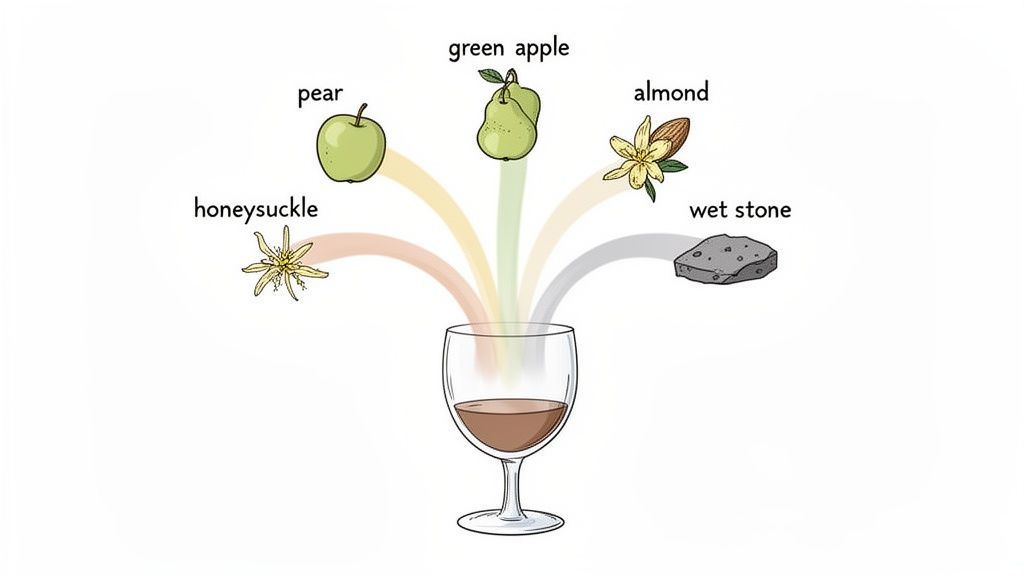
Let's cut through the jargon. Talking about wine shouldn't be intimidating. It's about translating what's in the glass into real, recognisable smells and tastes. This is your field guide to what a great Pinot Grigio actually tastes like, giving you the confidence to pinpoint what you're enjoying.
Every wine tells a story, and Pinot Grigio is no different. We'll start with the obvious notes that are easy for anyone to pick up, then dig into the more subtle hints that signal you've got a top-quality bottle in your hands.
Unlocking the Primary Fruit Profile
The first thing to do with any wine is to get a handle on its main fruit character. For a classic, crisp Italian-style Pinot Grigio, these are the bright, refreshing flavours that jump out of the glass. They form the backbone of the wine’s personality.
Think about the clean, crisp flavours you'd find in an orchard or a citrus grove. These are the most common starting points:
- Green Apple: Imagine the sharp, mouth-watering snap of a Granny Smith. It's a hallmark of many cool-climate white wines.
- Pear: This is usually a softer, juicier note, like a Bartlett pear. It adds a gentle sweetness and gives the wine a rounder feel on the palate.
- Lemon and Lime: This is the zesty, citrusy kick that gives Pinot Grigio its signature zing. It's what makes it so ridiculously refreshing on a warm day.
These straightforward fruit notes are the foundation. But a truly great Pinot Grigio offers so much more than just simple fruitiness. It has layers that make it far more interesting to drink.
Discovering Deeper Complexity
Once you get past that initial burst of fruit, the higher-quality examples start to reveal more subtle, secondary notes. These are the nuances that separate an everyday drop from a memorable one, often coming from the specific vineyard terroir or the winemaker's skill.
These are the flavours that take a wine from just being 'nice' to genuinely compelling.
A great Pinot Grigio doesn’t just quench your thirst; it captures your attention. It’s the difference between a simple melody and a full symphony, where delicate secondary notes add depth and harmony to the bright fruit core.
Keep an eye out for these subtle hints that you're drinking a more crafted wine:
- Honeysuckle: A delicate, sweet floral aroma that adds a really elegant, perfumed lift to the wine.
- Almond: You'll often find this on the finish—a slightly bitter, nutty note that adds a pleasant twist.
- Minerality: This is one of the trickiest to describe but one of the easiest to recognise once you know what you're looking for. People often describe it as the smell of wet stones after rain or crushed flint. It adds a savoury, almost salty character that is incredibly refreshing.
These notes don't shout; they whisper. Learning to pick them out is half the fun of wine tasting and a sure sign you've got a well-made Pinot Grigio in your glass.
Understanding Acidity and Body
Finally, let's demystify two crucial terms: acidity and body. Acidity isn't a bad thing—in fact, it's the lifeblood of a refreshing white wine. It's the 'zing' or 'freshness' that makes the wine feel lively and cleanses your palate. It's what makes your mouth water and leaves you reaching for another sip.
Body, on the other hand, is all about the weight and texture of the wine in your mouth. Is it light and zippy, like skim milk? Or does it feel a bit richer and more rounded, like full-cream milk?
A classic Italian-style Pinot Grigio is typically light-bodied, while a French-style Pinot Gris will have a fuller, more textural body. Understanding this difference helps you pick a wine that perfectly suits what you're in the mood for.
Perfect Pairings to Elevate Your Meal
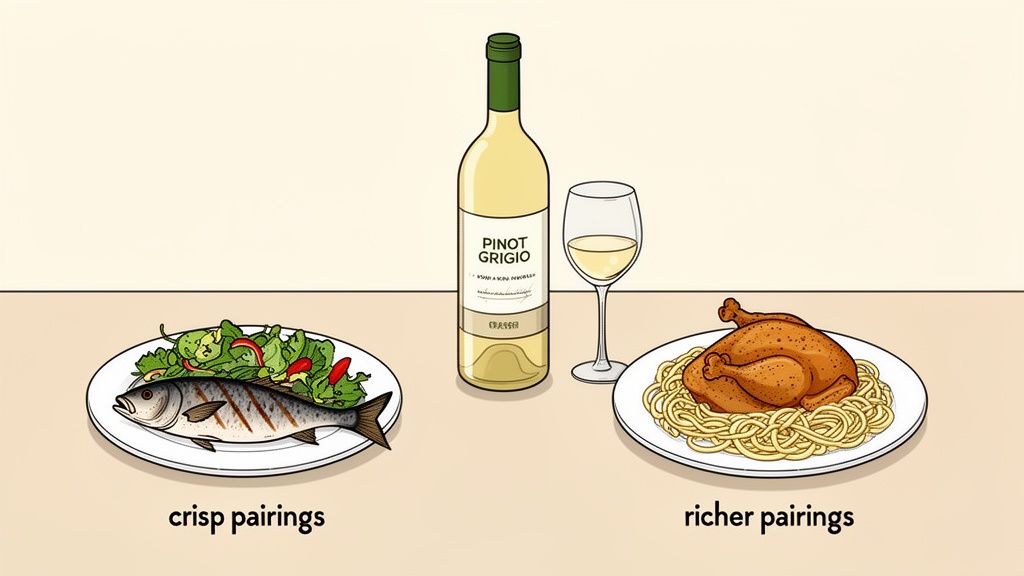
A well-chosen wine can turn a good meal into an unforgettable one. Pinot Grigio, with its vibrant acidity and clean profile, is a particularly brilliant partner at the dinner table. The secret to a perfect pairing isn’t complicated; it’s all about creating balance.
The wine's bright, zesty character acts like a squeeze of fresh lemon, cutting through richness and lifting the flavours of your food. The goal is to match the wine’s intensity with dishes that complement, rather than overpower, its delicate nuances.
Let's get into some specific, delicious ideas that work every time, so you can start creating pairings with confidence.
Pairing Crisp Italian-Style Pinot Grigio
The classic Italian style is all about high acidity, a light body, and clean fruit notes of green apple and citrus. This profile makes it a natural match for light, fresh, and delicate dishes.
Think of it as the ultimate palate cleanser, enhancing foods that are equally clean and vibrant. Its zesty profile won't steamroll subtle ingredients; instead, it works to brighten them up.
- Grilled and Steamed Seafood: The wine’s citrusy acidity is a perfect match for grilled prawns, steamed mussels, or a simple piece of pan-seared fish.
- Fresh Salads: A summer salad with a light vinaigrette is a classic pairing. The wine's acidity mirrors the dressing, creating a beautiful harmony.
- Sushi and Sashimi: The clean, mineral finish of a great Pinot Grigio is fantastic with the delicate flavours of raw fish, cleansing the palate between bites.
- Light Pasta Dishes: Think pasta tossed with lemon, garlic, fresh herbs, and olive oil. The wine cuts through the oil and complements the zesty, herbaceous notes perfectly.
Pairing Richer French-Style Pinot Gris
When you move to the more textural, aromatic Pinot Gris style, the pairing possibilities expand. These wines have a fuller body, softer acidity, and riper fruit flavours like pear and stone fruit, often with a hint of spice or honey. This allows them to stand up to richer and more flavourful dishes.
This style calls for dishes with a bit more weight and complexity.
The richer texture of a Pinot Gris acts as a bridge to heartier foods. Its slightly creamier mouthfeel and complex aromatics can handle spices and sauces that would overwhelm a lighter Grigio, making it an incredibly versatile food wine.
Consider these options for a more robust Pinot Gris:
- Roast Chicken or Pork: The ripe fruit flavours and gentle spice notes in the wine are a beautiful complement to roasted white meats.
- Creamy Pasta Dishes: A carbonara or a creamy mushroom pasta works wonderfully with the wine's texture and weight.
- Mildly Spiced Asian Cuisine: The slight hint of sweetness and ginger notes in some Pinot Gris styles make it a brilliant match for Thai green curry or Vietnamese dishes.
- Hearty Vegetarian Fare: Think risotto, potato and leek soup, or dishes featuring roasted root vegetables.
A Quick Pairing Cheat Sheet
To make things even easier, here is a quick reference guide to help you find the perfect match for your bottle. For a more comprehensive look, you can unlock the versatility of Pinot Grigio with our complete food pairing guide.
This cheat sheet will get you started on your next culinary adventure.
Pinot Grigio Food Pairing Cheat Sheet
| Wine Style | Best With | Avoid |
|---|---|---|
| Crisp Pinot Grigio | Grilled fish, oysters, summer salads, sushi, light pasta, goat cheese | Heavy cream sauces, rich red meats, overly spicy dishes, blue cheese |
| Rich Pinot Gris | Roast chicken, pork loin, creamy risotto, mild curries, smoked salmon | Very light, delicate salads, overly acidic tomato sauces |
Whether you're enjoying a crisp, zesty drop or a richer, more textural style, there's a perfect meal waiting to happen. Cheers
How to Choose, Serve, and Store Your Wine Like a Pro
Now that you know what to look for in terms of style and flavour, let's translate that knowledge into a perfect real-world wine experience. Choosing, serving, and storing your Pinot Grigio correctly is the difference between a good glass and a truly great one.
These aren't complicated rules or about buying expensive gadgets. It’s just a few simple, practical tips to remove the guesswork, ensuring every bottle you open is at its absolute best—whether you're browsing the wine aisle or pouring a glass for friends at home.
Selecting the Right Bottle
When you’re standing in front of a wall of wine, the label is your best friend. Look past the price tag, and you'll find a few key details that tell you a lot about the style and quality of the wine inside.
Here are the clues to look for to make a smarter choice:
- Region: A wine from a cooler Aussie climate, like the Adelaide Hills or parts of Victoria, will almost always be crisp and zesty. The label is your guide to the wine’s origin story.
- Vintage: Pinot Grigio is all about youthful freshness. Look for a recent vintage, ideally within one to three years of the current date, to guarantee you’re getting all those vibrant fruit flavours at their peak.
- The Name: Remember the difference between 'Grigio' and 'Gris'. If the label says Pinot Grigio, you can expect that classic, crisp Italian style. If it says Pinot Gris, you're in for a richer, more textural French-style experience.
These small details empower you to predict what's in the bottle, helping you find a Pinot Grigio that perfectly matches your taste.
Perfect Serving Temperature and Glassware
How you serve your wine is just as important as the bottle you choose. The right temperature and glass will unlock all the delicate aromas and flavours the winemaker worked so hard to create.
The biggest mistake most people make is serving white wine far too cold. Straight from the fridge, that intense chill completely mutes the wine's personality, hiding all those lovely notes of pear, citrus, and honeysuckle you bought it for.
The sweet spot for serving Pinot Grigio is between 7-10°C. This is chilled, but definitely not ice-cold. An easy trick is to pull the bottle out of the fridge about 20 minutes before you plan to pour.
That little bit of time allows the wine to warm up just enough for its aromas to blossom. You’ll be amazed at the difference it makes.
As for glassware, you don't need anything fancy. A standard white wine glass with a U-shaped bowl is perfect. Its slightly narrower opening helps concentrate those delicate aromas, funnelling them right where you can enjoy them most. To dive deeper, check out our detailed guide on unlocking the secrets of Pinot Grigio temperature, glassware, and storage tips.
Keeping Your Wine Fresh
Proper storage is key to preserving your wine’s quality, whether you're keeping it for a few weeks or saving an opened bottle for the next day. Pinot Grigio isn’t really a wine for long-term ageing; its charm is all in its youthful vibrancy.
Just follow these simple rules:
- Unopened Bottles: Store your bottles on their side in a cool, dark place with a steady temperature. A cellar is perfect, but a cupboard away from direct sunlight and heat works just fine. Laying them down keeps the cork moist, preventing it from drying out and letting air spoil the wine.
- Opened Bottles: Once opened, a bottle of Pinot Grigio will stay fresh for about 2-3 days if you seal it properly. Use a wine stopper or the original screw cap to seal it tightly and pop it back in the fridge. This slows down oxidation and keeps the wine tasting crisp.
By following these straightforward tips, you can ensure every glass of Pinot Grigio you pour is a true reflection of its potential—crisp, aromatic, and utterly delicious.
Finding the Best Value in Pinot Grigio
Alright, you've got the inside scoop on the different styles, you know how to pick out the key flavours, and you’re ready to pair your wine like a pro. Now for the fun part: putting it all together to find a bottle that doesn't just taste good, but delivers incredible value.
But what does "value" really mean when we're talking about wine?
It’s a common trap to think value simply means the cheapest bottle on the shelf. True value is all about the experience in the glass. It’s that wine that punches well above its weight, giving you a level of quality, complexity, and pure enjoyment that feels like it should have cost a lot more. It's the bottle that makes you pause after that first sip and think, "Wow, this is fantastic for the price."
What to Look For on Your Quest
Hunting for a great value Pinot Grigio isn't some wild goose chase. You already know what the clues are. A wine that truly over-delivers will show clear signs of quality winemaking and offer more than just simple, one-note fruitiness.
Keep an eye out for these hallmarks of a high-value bottle:
- Distinct Aromatics: The wine should have a clear, inviting nose. Think crisp green apple, pear, or citrus, maybe with those subtle hints of almond or honeysuckle we talked about.
- Balanced Acidity: It should feel zesty and refreshing on your palate, not sharp or sour. This lively acidity is the backbone of any well-made, food-friendly wine.
- A Memorable Finish: A great value wine doesn't just vanish. It leaves you with a clean, pleasant finish that lingers for a moment, making you want to go back for another sip.
When a wine ticks these boxes, you know the winemaker has paid attention to every detail, from the vineyard right through to the bottle. That care is what creates a memorable drinking experience, and finding it at a sharp price is the ultimate win for any wine lover.
Your Path to Confident Buying
Finding great value shouldn't be a lottery. Here at McLaren Vale Cellars, we believe that exceptional wine should be accessible. We’ve done the hard work of tasting and selecting wines that are guaranteed to over-deliver, ensuring every bottle you open is a rewarding one.
Value is where quality and price meet. It’s not just about saving a few dollars; it’s about spending them wisely on a wine that brings you genuine pleasure and confidence with every single pour.
We take the guesswork out of buying. With options like our curated Sample Packs, you can explore different styles without committing to a full case. Plus, our Taste Guarantee means you can try new things completely risk-free. We stand behind every bottle, so you can focus on the best part: discovering your next favourite great Pinot Grigio.
Your Pinot Grigio Questions, Answered
Even after you've got the basics down, a few questions always seem to pop up when you're exploring a new wine. We get it. So, let's tackle the most common queries about Pinot Grigio to build your confidence and help you feel like a true wine insider.
Think of this as your go-to guide for those lingering curiosities. Getting these details right will make your next glass even more enjoyable.
Is Pinot Grigio a Sweet or Dry Wine?
The short answer? The vast majority of Pinot Grigio you'll come across is made in a dry style. This means it has very little, if any, noticeable sweetness. Its whole personality is built on that signature crisp acidity and bright, clean fruit notes of green apple, lemon, and pear. It's a reliably dry and refreshing choice.
Now, if you venture into the French 'Pinot Gris' style, you might find a subtle hint of off-dry sweetness, which is there to balance out a richer texture. But for a classic Australian or Italian Pinot Grigio, you can count on a zesty, dry white wine. That clean profile is precisely what makes it play so well with food.
What Is the Difference Between Pinot Grigio and Sauvignon Blanc?
While they're both hugely popular dry white wines, they have completely different personalities. I like to think of Pinot Grigio as the elegant, adaptable friend who gets along with everyone, while Sauvignon Blanc is the life of the party—bold, loud, and impossible to ignore.
- Pinot Grigio: Tends to be more delicate and subtle. You'll find notes of pear, green apple, and citrus, often with a clean, mineral, or even almond-like finish. It’s understated and incredibly food-friendly.
- Sauvignon Blanc: This one is a full-on aromatic assault (in a good way!). It bursts from the glass with pungent flavours of passionfruit, gooseberry, capsicum, and that classic fresh-cut grass aroma.
So, if you want a versatile, crisp wine that will complement your meal without stealing the show, a great Pinot Grigio is your best bet. If you're in the mood for a zesty, aromatic wine that makes a statement all on its own, reach for the Sav Blanc.
Should I Age My Pinot Grigio?
As a general rule, no. Most Pinot Grigio is made to be enjoyed young, fresh, and full of life. It’s all about celebrating that vibrant fruit, those floral hints, and the zippy acidity. The perfect window for drinking is usually within one to three years of the vintage date on the bottle.
Unlike some whites that develop complex nutty or toasty notes with age, Pinot Grigio's charm is all about its youthful energy. Let it sit for too long, and those bright, fresh flavours will simply fade away.
While there are a few exceptions—some high-end, complex Pinot Gris from places like Alsace can develop lovely honeyed notes over time—they are very much the exception. For the absolute best experience, consider your bottle ready to drink the moment you bring it home.
What Is the Best Temperature to Serve Pinot Grigio?
Getting the temperature right is key. You're aiming for a sweet spot between 7–10°C. Serve it too warm, and the alcohol can taste a bit harsh while the flavours fall flat. Serve it ice-cold, straight from the back of the fridge, and you’ll mute all those beautiful, delicate aromas.
Here’s a great rule of thumb: pull the bottle out of the fridge about 20 minutes before you plan to pour it. That little bit of time allows the wine to open up and show its true personality, unlocking all that crisp, aromatic potential for you to enjoy.
Ready to discover your next favourite bottle? Explore our curated selection at McLaren Vale Cellars, where our Taste Guarantee ensures you can confidently find a great Pinot Grigio you'll love. Shop our premium McLaren Vale wines today.


Comments (0)
There are no comments for this article. Be the first one to leave a message!