
So, what exactly makes a Pinot Grigio good? A quality bottle is all about vibrant acidity, those lovely subtle fruit notes like pear and green apple, and a clean, mineral finish that leaves you wanting another sip.
It’s like the difference between a quick phone snapshot and a professionally composed photograph. Both capture a moment, but one reveals far more depth, detail, and balance.
What Makes a Good Pinot Grigio
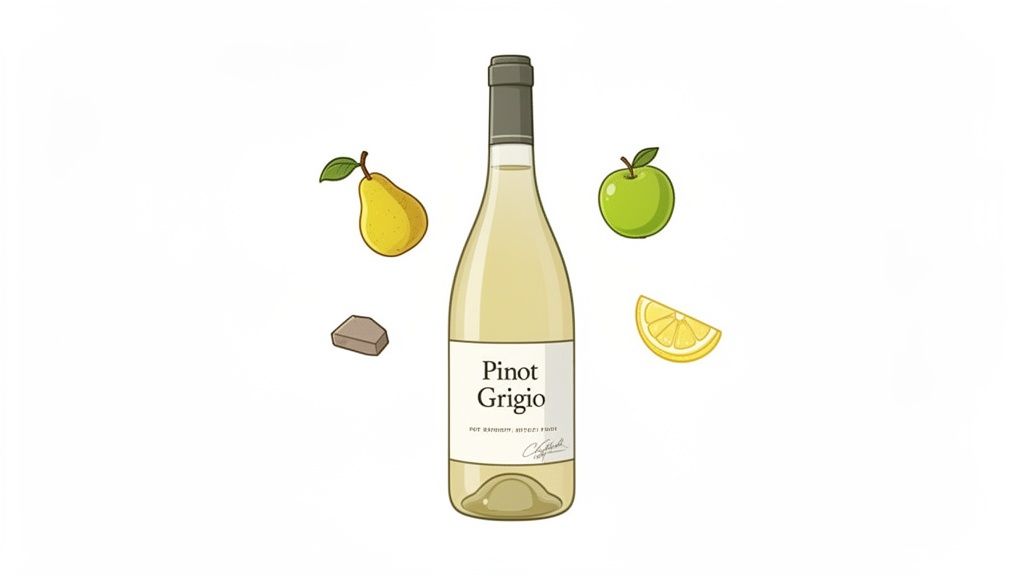
Let's move past the idea of Pinot Grigio as just another simple, generic white wine. While it's true that many mass-produced versions can be watery and forgettable, a well-made bottle is a truly refreshing and nuanced experience. The trick is knowing what to look for, and it all comes down to balance.
A genuinely good Pinot Grigio isn't defined by one single flavour. Instead, it’s about the beautiful interplay of several key elements that come together to create a harmonious and satisfying whole.
Core Qualities to Look For
The best examples of this wine consistently deliver on three fronts: fruit, acidity, and finish. These are the markers of quality that elevate a bottle from basic to brilliant.
- Vibrant Acidity: This is the wine's backbone. A quality Pinot Grigio should feel crisp and zesty, making your mouth water just a little. It's this brightness that makes it so refreshing and incredibly food-friendly.
- Subtle Fruit Notes: Look for delicate aromas and flavours of green apple, pear, lemon, and lime. These notes should be present but not overpowering, adding a layer of complexity without being sweet.
- Clean Mineral Finish: After you take a sip, a great Pinot Grigio leaves behind a clean, crisp sensation, often with a hint of wet stone or even a touch of salinity. This minerality provides a satisfying and elegant conclusion.
The Two Personalities of the Grape
It's also crucial to understand that this grape has two main personalities, which usually depend on where it’s grown and the winemaker's style. The lighter, zesty Italian style known as 'Grigio' is the most common, while the richer, more aromatic French style is called 'Gris'.
The name on the label, Grigio or Gris, is your first clue to the style inside the bottle. One promises lean, crisp refreshment, while the other offers a rounder, more textured experience.
This amazing versatility has helped make Pinot Grigio/Gris one of Australia's fastest-growing white wine varieties. Here in regions like McLaren Vale, winemakers are fully embracing the grape, with national crush volumes surging in recent years to keep up with demand. You can dive deeper into the local trends in our article on the 2024 McLaren Vale vintage statistics.
Navigating the Styles of Pinot Grigio and Pinot Gris
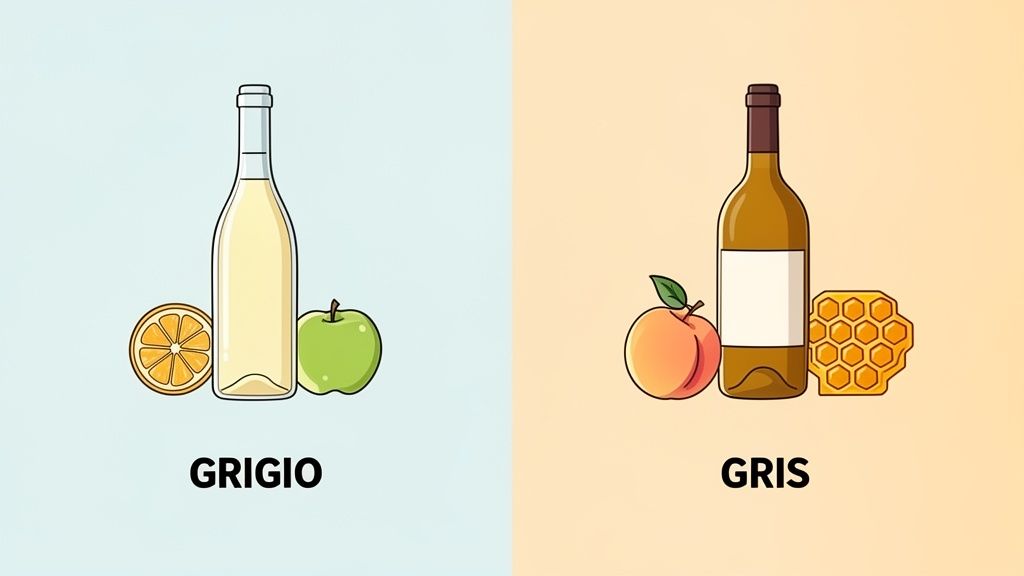
Here's the most important thing to know: although they’re made from the exact same grape, the name on the label, Pinot Grigio or Pinot Gris, is your first big clue to the style of wine waiting inside. Think of them as two distinct personalities of the same grape, each one shaped by the winemaking traditions of its home country.
Getting your head around this fundamental split is the key to finding a good pinot grigio that hits all the right notes for you. One style is all about being lean and zesty, while the other is richer and more aromatic.
The Italian Grigio Style
When you see "Pinot Grigio" on a label, it's almost always a nod to the classic Italian style. This is the wine that has become famous for its light body, bone-dry palate, and laser-like acidity. It’s wonderfully straightforward and refreshing.
The primary flavours are crisp and clean, leaning heavily on notes of green apple, zesty lime, and lemon peel. Often, there’s a subtle almond or saline minerality on the finish. This style is made for easy drinking, making it a perfect partner for a warm afternoon or some light nibbles.
The French Gris Style
On the flip side, a label reading "Pinot Gris" points towards the French style, especially from the Alsace region. This version is a world away from its Italian twin. It's typically richer, more full-bodied, and packs a noticeably more complex aromatic punch.
Here, the flavour spectrum shifts to riper stone fruits like peach and apricot, along with delicious hints of honey, ginger, and sweet spice. The texture is often a bit oilier, giving it more weight, and the wines can range from dry to off-dry, offering more substance on the palate.
Think of it this way: Italian Grigio is like a zesty lemon sorbet, light, sharp, and invigorating. French Gris is more like a baked apple tart, warmer, spicier, and more comforting.
To really get a feel for what makes this grape unique, it helps to see how it stacks up against other popular whites, like the difference between Pinot Grigio and Sauvignon Blanc.
Pinot Grigio vs Pinot Gris At a Glance
For a quick summary, here’s how the two styles generally compare. This table is a great starting point for figuring out which one you might prefer.
| Characteristic | Pinot Grigio (Italian Style) | Pinot Gris (French/New World Style) |
|---|---|---|
| Primary Flavours | Green Apple, Lemon, Lime, White Nectarine | Peach, Apricot, Honey, Almond, Ginger |
| Body | Light | Medium to Full |
| Acidity | High | Medium |
| Texture | Crisp, Zesty, Clean | Richer, Smoother, Sometimes Oily |
| Sweetness | Bone Dry | Dry to Off-Dry |
| Key Regions | Northern Italy | Alsace (France), Oregon (USA), Australia |
| Best Enjoyed | Young and Fresh | Can develop complexity with a few years of age |
Of course, winemakers love to experiment, but this gives you a solid idea of what to expect from each name.
Styles Around the World
This tale of two styles now extends across the globe, with winemakers choosing which path to follow. New World regions have enthusiastically embraced both approaches, sometimes even blending characteristics to create their own unique spin.
- Oregon, USA: Wineries here often lean into the Alsatian Pinot Gris style, producing wines with a rich texture and lovely notes of pear and honeydew.
- Germany: Known locally as Grauburgunder, German versions are typically dry with a fuller body, showcasing both citrus and stone fruit notes.
- Australia: In regions like our own McLaren Vale, winemakers craft styles that can capture the best of both worlds, the vibrant acidity of Grigio with the textural interest and aromatic depth of Gris.
Exploring the difference between these two primary expressions is a seriously rewarding journey for any wine lover. To get even deeper into their distinctions, you can learn more about Pinot Grigio vs Pinot Gris in our detailed article.
How to Spot Quality in a Bottle of Pinot Grigio
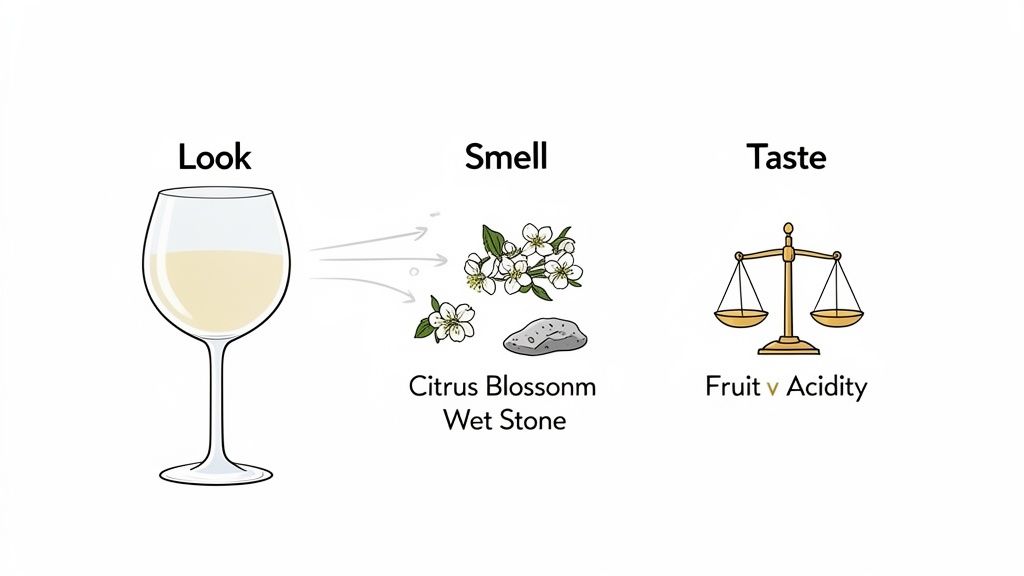
So, you're standing in a wine aisle, faced with a wall of options. How do you separate a genuinely good Pinot Grigio from the countless forgettable bottles? The good news is you don't need to be a sommelier; you just need to know what clues to look for, both on the label and in your glass.
Assessing wine quality is less about strict rules and more about observation. By engaging your senses of sight, smell, and taste, you can quickly learn to recognise the hallmarks of a well-crafted wine. It's a simple, three-step process that demystifies what’s in your glass.
Look The Part
The first impression starts before you even take a sip. Pour the wine into a clear glass and hold it against a white background, like a napkin or a piece of paper. A quality Pinot Grigio should be crystal clear, not hazy or cloudy.
Its colour can range from pale straw with greenish hints, typical of a crisp Italian style, to a slightly deeper golden hue, which might suggest a richer, Alsatian-style Pinot Gris. This initial visual check confirms the wine is clean and gives you the first clue to its character.
Smell The Difference
Now for the fun part. Give the glass a gentle swirl to release its aromatic compounds and take a sniff. Don't be shy, get your nose right in there! A mass-produced, lower-quality Pinot Grigio might smell faint, generic, or even a bit like straight alcohol.
In contrast, a well-made example will offer distinct and appealing aromas. You should be able to pick up notes like:
- Citrus: Fresh lemon, zesty lime, or even grapefruit.
- Tree Fruit: Green apple, juicy pear, or white nectarine.
- Floral and Mineral Notes: Subtle hints of honeysuckle, citrus blossom, or a clean scent of wet stone.
These complex aromas are a dead giveaway of quality winemaking. They show that care was taken to preserve the grape's delicate character from the vineyard all the way to the bottle.
Taste for Balance
This is where it all comes together. Take a sip and let the wine coat your tongue. What you're looking for is balance, the harmonious interplay between fruit, acidity, and the finish. A good Pinot Grigio should feel refreshing and vibrant, not watery or flat.
The real marker of quality on the palate is the finish. A great Pinot Grigio doesn’t just disappear; it leaves a clean, pleasant, and lingering taste that makes you want another sip. An abrupt or harsh finish is often a sign of a lesser wine.
As you taste, notice how the acidity makes your mouth water, this is a good thing! It should be bright but not aggressive, perfectly balancing the subtle fruit flavours. This clean, zesty profile is what makes a great Pinot Grigio so incredibly satisfying.
Pairing Food to Elevate Your Wine
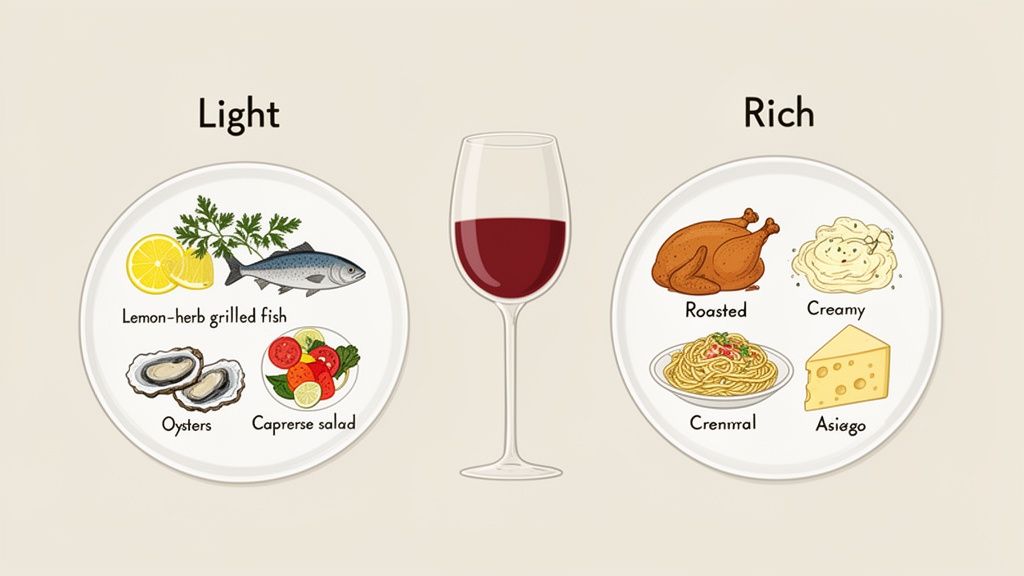
Pairing wine with food isn’t about following a stuffy rulebook; it’s about creating moments where the dish and the wine both sing a little louder. A good Pinot Grigio is one of the most versatile players you can have on your team, effortlessly complementing a huge range of flavours. The secret? Just match the wine's personality to the weight of the food.
Think of a crisp, zesty Italian-style Grigio as your go-to for light and fresh dishes. Its vibrant acidity works exactly like a squeeze of lemon, cutting through richness and making every flavour on the plate pop. It’s the perfect choice for delicate meals that need that bright, zesty lift.
Matching Zesty Grigio Styles
When you’ve got a lean, mineral-driven Pinot Grigio, stick to foods that are just as fresh and uncomplicated. You want to complement the wine’s clean profile, not steamroll it with heavy flavours.
- Fresh Seafood: A no-brainer. Grilled fish with lemon and herbs, a platter of fresh oysters, prawns, or simple sushi are all fantastic. The wine’s citrus notes are a natural match.
- Light Salads: A classic Caprese salad with creamy mozzarella, ripe tomatoes, and fresh basil is just about perfect. That bright acidity in the wine cuts right through the richness of the cheese.
- Simple Pastas: Think spaghetti aglio e olio (garlic and oil) or a light pasta primavera. These dishes let the wine’s subtle fruit character really shine.
Pairing Richer Gris Styles
Now, when you shift gears to a richer, more textured Pinot Gris, you can start thinking about heartier, more flavourful meals. Its fuller body and aromatic complexity can stand up to bolder ingredients and creamier sauces, making for a truly satisfying match.
A richer Pinot Gris has the weight to complement roasted meats and creamy sauces, transforming a simple meal into something truly memorable. Its stone fruit and spice notes add another layer of flavour.
These more robust wines are made for comforting dishes. Imagine pouring a glass next to a succulent roasted chicken seasoned with thyme and rosemary, the wine’s own herbal notes will echo the dish beautifully. It’s also a fantastic partner for creamy pasta, like a fettuccine Alfredo or a classic carbonara.
Don't be afraid to try it with lightly spiced food, either. A mild Thai green curry can be a wonderful pairing, where the wine's touch of sweetness and rich texture cools the heat while complementing the aromatic spices. For a deeper dive, our versatility of Pinot Grigio food pairing guide has even more ideas to get you started.
And cheese? For the zesty Grigio, try a creamy goat cheese or fresh ricotta. With the richer Gris, a nutty Asiago or a semi-firm Comté is a sublime choice, giving you the confidence to match your bottle perfectly, whatever the occasion.
Serving and Storing Your Wine Like an Expert
Getting the simple details right can make a massive difference to how your wine tastes. When you serve a good Pinot Grigio at the right temperature and in the proper glass, you’re letting it show off its vibrant character just as the winemaker hoped.
Think of it like listening to your favourite song. You wouldn't play it through tiny, tinny phone speakers; you’d want a decent set of headphones to catch every note. The same idea applies here, the right conditions let the wine's full personality shine.
The Ideal Serving Temperature
The sweet spot for serving Pinot Grigio is chilled, but definitely not ice-cold. You should aim for a temperature somewhere between 7-10°C. For most people, popping the bottle in the fridge for about two hours before you plan to drink it is perfect.
If you over-chill it, you're essentially putting all those lovely flavours and aromas to sleep. The intense cold tightens up the wine, masking the delicate notes of pear, citrus, and minerality we've been talking about. A slightly warmer temperature allows everything to open up and express itself.
A classic mistake is pouring white wine straight from a frosty fridge. Just letting the bottle sit on the counter for 10-15 minutes before opening it can make a world of difference. It's a simple trick that unlocks so much more aroma.
Glassware and Storage Essentials
The right glass also plays a surprisingly big part. A standard white wine glass with a U-shaped bowl and a slightly narrower opening is what you want. This shape helps to capture and concentrate those delicate aromas, funnelling them towards your nose as you take a sip.
When it comes to storage, just remember this one simple rule: Pinot Grigio is made to be enjoyed right now. It’s a wine that celebrates youth and freshness, not one you tuck away in a cellar for years.
- Drink it young: Most Pinot Grigio is at its absolute best within 1-3 years of its vintage date.
- Store it properly (short-term): Keep any unopened bottles in a cool, dark place away from direct sunlight and big temperature swings. A pantry or cupboard is fine.
- After opening: Pop the cork back in (or screw the cap on tight) and stick it in the fridge. It will stay fresh and zesty for about 3-5 days before its bright, fruity character starts to fade.
There’s absolutely no need to age this wine; all its charm lies in that vibrant, crisp, and refreshing profile. So go on, enjoy it while it's at its peak.
Exploring Excellent Australian Pinot Grigio
While Italy and France might get most of the limelight, Australia has quietly been carving out a serious reputation for top-notch Pinot Grigio. Winemakers right across the country, particularly in cooler spots like our own McLaren Vale, are making some truly exceptional wines with a personality all their own.
This isn't just about mimicking what Europe does. Far from it. Australian producers are forging their own path, crafting a signature style that often feels like the best of both worlds.
Think about the zesty, refreshing kick you love in an Italian Grigio, but then add the texture and aromatic depth you’d find in a French Gris. The result is a wine that’s both incredibly vibrant and satisfyingly complex.
This commitment to quality is definitely turning heads. The Australian vintage has been a real turning point for white wines, and Pinot Grigio/Gris is showing some seriously strong performance in shops. In fact, the category has seen a big jump in domestic sales, which is a fantastic success story in what can be a tough market. You can read more about these exciting domestic market trends at WBM Online.
Finding Your Perfect Aussie Bottle
The real beauty of Australian Pinot Grigio is its balance. You can expect all those bright fruit flavours, pear, nectarine, and crisp green apple, held together by that all-important clean acidity. These aren't simple, one-dimensional wines; they are thoughtfully made to let the grape’s natural character and the unique terroir of regions like McLaren Vale shine through.
Australian Pinot Grigio is a fantastic middle-ground for wine lovers. It provides the easy-drinking refreshment of the Grigio style while offering the nuanced aromatics and texture that make the Gris style so intriguing.
Navigating this exciting local scene is where having a trusted source really helps. At McLaren Vale Cellars, we’ve done the hard work for you. We’ve put together a selection that highlights the very best our region has to offer, zeroing in on producers who are making truly good pinot grigio that punches well above its price tag.
Buy with Confidence and Explore More
We reckon trying new wines should be fun, not a chore. That’s why we’ve made it easy to discover local gems with complete peace of mind.
- Curated Mixed Cases: Our mixed packs are a brilliant way to sample a few different styles and find a new favourite without having to commit to a full case of one thing.
- Our Taste Guarantee: We stand by every single bottle we sell. If you’re not completely happy with a wine you've bought from us, we'll make it right. It’s our way of letting you step outside your comfort zone and try a new Australian Pinot Grigio, completely risk-free.
Think of us as your personal guide to the fantastic wines being produced right in our own backyard. For some top picks, make sure you check out our guide on the best Pinot Grigio in Australia for 2025.
Still Have Questions About Pinot Grigio?
Even after a deep dive, a few questions always seem to pop up. Let's tackle some of the most common curiosities about finding and enjoying a great bottle of Pinot Grigio, tying together everything we've talked about.
Is Pinot Grigio Sweet or Dry?
Almost always, Pinot Grigio is a dry white wine. The classic Italian style, in particular, is known for being bone-dry with that signature zesty acidity we love.
That said, the richer Pinot Gris style you find in places like Alsace or Oregon can sometimes have a whisper of sweetness. This isn't to make it sugary, but to beautifully balance its fuller body and more intense aromatic profile.
What’s the Difference Between Pinot Grigio and Sauvignon Blanc?
While they both sit in the "crisp white wine" camp, their personalities couldn't be more different. A good Pinot Grigio is all about subtlety, offering delicate notes of green apple, pear, and a squeeze of lemon.
Sauvignon Blanc, on the other hand, is the life of the party. It's far more aromatic and zesty, practically bursting from the glass with bold flavours of grapefruit, passionfruit, and that unmistakable grassy or herbal kick.
Think of it this way: Pinot Grigio whispers its flavours, while Sauvignon Blanc shouts them. Both are wonderfully refreshing, but they deliver their character in completely different ways.
Should I Age My Pinot Grigio?
Definitely not. Pinot Grigio is a wine that celebrates youth and freshness. All its charm is packed into its vibrant fruit and lively acidity, which are at their absolute peak within 1-3 years of the vintage date.
Unlike some other whites that gain complexity with age, this is one to enjoy while it’s young and full of energy.
How Can I Be Sure I’m Buying a Good Pinot Grigio?
The best way is to look for clues of quality right on the bottle. Check the label for specific regions known for excellence, like Alto Adige in Italy or our very own Adelaide Hills and McLaren Vale here in Australia.
More importantly, buy from a trusted retailer who actually curates their selection and stands behind every bottle. That's the real secret to making sure you always get a wine that delivers on its promise.
At McLaren Vale Cellars, we take all the guesswork out of finding exceptional Australian wine. You can explore our hand-picked selection of premium Pinot Grigio with total confidence, backed by our Taste Guarantee. Discover your new favourite bottle at McLaren Vale Cellars today.

Comments (0)
There are no comments for this article. Be the first one to leave a message!