
Finding a good cabernet sauvignon boils down to one essential thing: balance. A quality bottle isn’t defined by a hefty price tag or a famous label; it’s about how the core elements of fruit, structure, and flavour come together in perfect harmony.
What Actually Makes a Cabernet Sauvignon Good

Think of a premium Cabernet Sauvignon as a perfectly conducted orchestra. Every instrument has a vital part to play, and no single one should drown out the others. This is exactly what winemakers aim for—a seamless and memorable experience from the moment you lift the glass to the very last sip.
When you hear a wine expert praise a wine as “good,” what they’re really saying is that it’s balanced. This sense of harmony is created by the interplay of four key characteristics that truly define a wine's quality.
The Core Four Elements of Quality
A well-made Cabernet Sauvignon is a masterclass in integration, where nothing feels out of place. Here are the main components you’ll start to recognise:
- Fruit Flavours: This is the wine's melody. It should taste ripe and distinct—think blackberry, cassis, or dark cherry—but never sickly sweet or jammy.
- Tannins: These provide the rhythm and structure. Tannins are what create that drying sensation in your mouth, but in a great Cabernet, they should feel fine-grained and velvety, not rough or bitter.
- Acidity: This is the bright, high note that keeps the wine feeling fresh and lively. Without enough acidity, even a powerful red can taste heavy and flat.
- Oak and Finish: The use of oak barrels adds complexity, like a deep bassline, contributing notes of vanilla, cedar, or spice. The finish is how long those delicious flavours linger after you swallow.
A truly good Cabernet Sauvignon is defined by its structure and complexity. The wine should have a clear beginning, a compelling middle (the palate), and a satisfyingly long finish, creating a complete sensory journey.
Beyond the Basics
Getting a handle on these elements gives you a practical framework for spotting quality, moving you beyond marketing hype or a fancy label. You’ll start to understand why one bottle feels elegant and complete while another might seem disjointed or clunky.
This knowledge empowers you to pinpoint exactly what you enjoy, whether it’s the bold fruit of a McLaren Vale Cabernet or the refined structure of a cooler climate style. To see how Aussie styles stack up globally, you can explore more about Cabernet Sauvignon's worldwide journey and Australia's unique place in it.
Ultimately, a good Cabernet Sauvignon tells a story—a story of its grape, its home, and the winemaker's skill in bringing it all together.
Decoding the Flavours of Cabernet Sauvignon
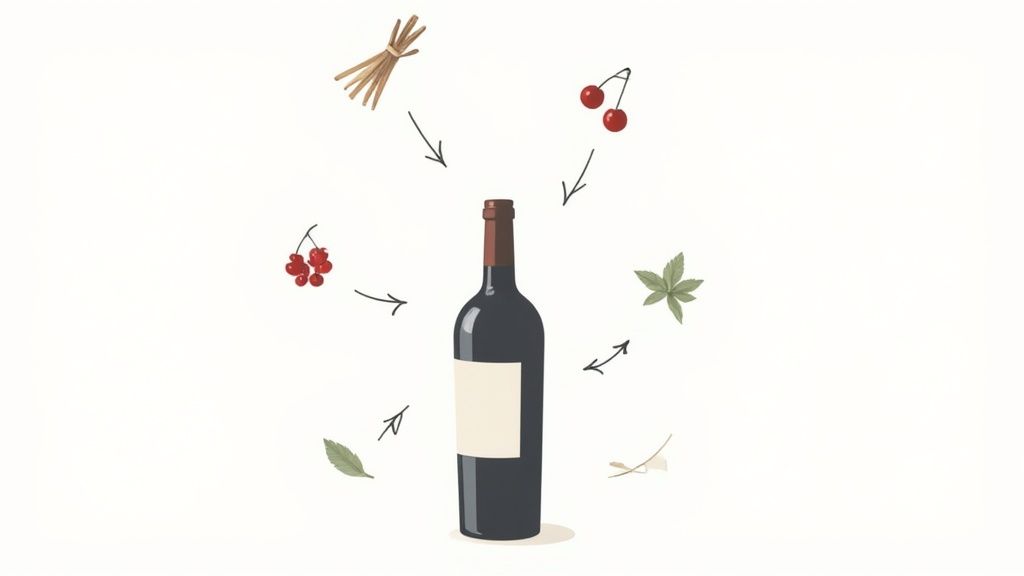
Ever read a wine description that mentions “notes of cassis and leather” and wondered what that actually means? You're not alone. Learning to pick out the flavours in a good Cabernet Sauvignon is a bit like learning a new language—once you get the hang of the vocabulary, a whole world of appreciation opens up.
Every sip tells a story, unfolding through three distinct layers of aroma and taste. Winemakers and critics call these layers primary, secondary, and tertiary notes. Think of them as the different stages of a wine's life: primary notes come straight from the grape, secondary notes from the winemaking magic (especially time in oak barrels), and tertiary notes develop slowly as the wine matures in the bottle.
Primary Fruit Flavours
The first things you’ll notice in a young Cabernet Sauvignon are the primary notes, which are born directly from the grape. These are almost always powerful dark fruit flavours that define the wine’s core personality. Blackcurrant (also known as cassis) is the grape’s signature calling card, a flavour that’s hard to miss.
Alongside that classic blackcurrant, you'll often find other rich fruit characters:
- Black Cherry: A deep, slightly sweeter fruit note.
- Blackberry: Often has a tart, brambly edge to it.
- Plum: Adds a ripe, juicy, and rounded feel to the profile.
But where the grapes are grown plays a massive role. In cooler regions like Coonawarra or parts of Margaret River, the fruit is often joined by herbal or savoury notes. This comes from a compound called pyrazines, which can show up as pleasant hints of mint, eucalyptus, or even a subtle green capsicum character. It’s what gives these wines their unique, refreshing lift.
Head to warmer climates like the Barossa Valley, however, and those pyrazines are much less obvious. The intense sun coaxes out riper, more concentrated fruit flavours that can lean towards being deliciously rich and jammy.
Secondary and Tertiary Notes: The Winemaker's Touch and the Gift of Time
While fruit defines the grape, the winemaker’s choices and the passage of time add fascinating layers of complexity. Secondary notes are introduced during fermentation and ageing, mostly from contact with oak barrels. French and American oak impart different characteristics, but you'll often pick up things like:
- Vanilla
- Cedar
- Baking spices (like clove and nutmeg)
- Toasted coconut
- Mocha or coffee
As a good cabernet sauvignon ages gracefully in the bottle, it develops tertiary notes. These are the complex, savoury aromas that emerge over years as the wine’s components mingle and evolve. It's these mature characteristics that collectors prize, transforming the wine from simply fruity to something far more profound.
Tertiary notes are the hallmark of a well-aged, high-quality Cabernet Sauvignon. They represent the wine’s final evolution, revealing a depth and complexity that only time can create.
To help you get a better handle on this, here’s a quick breakdown of where those flavours come from.
Cabernet Sauvignon Flavour Spectrum
| Note Category | Common Flavours & Aromas | Origin |
|---|---|---|
| Primary (Grape) | Blackcurrant, blackberry, black cherry, plum, mint, eucalyptus, green capsicum | The grape itself and the climate it was grown in. |
| Secondary (Winemaking) | Vanilla, cedar, spice (clove, nutmeg), smoke, toast, coffee, mocha | Fermentation and, most significantly, ageing in oak barrels. |
| Tertiary (Ageing) | Leather, tobacco leaf, dried herbs, forest floor, mushroom, graphite | The slow chemical reactions that happen in the bottle over many years. |
Common tertiary flavours to look for include earthy notes like tobacco leaf, damp forest floor, dried herbs, and savoury hints of leather or graphite. These intricate flavours are a key reason why premium Cabernet Sauvignon is considered one of the world's most age-worthy wines.
Understanding these layers doesn't just make you sound smart at dinner parties; it helps you zero in on a bottle that perfectly matches what you love in a wine.
Australia's Premier Cabernet Sauvignon Regions
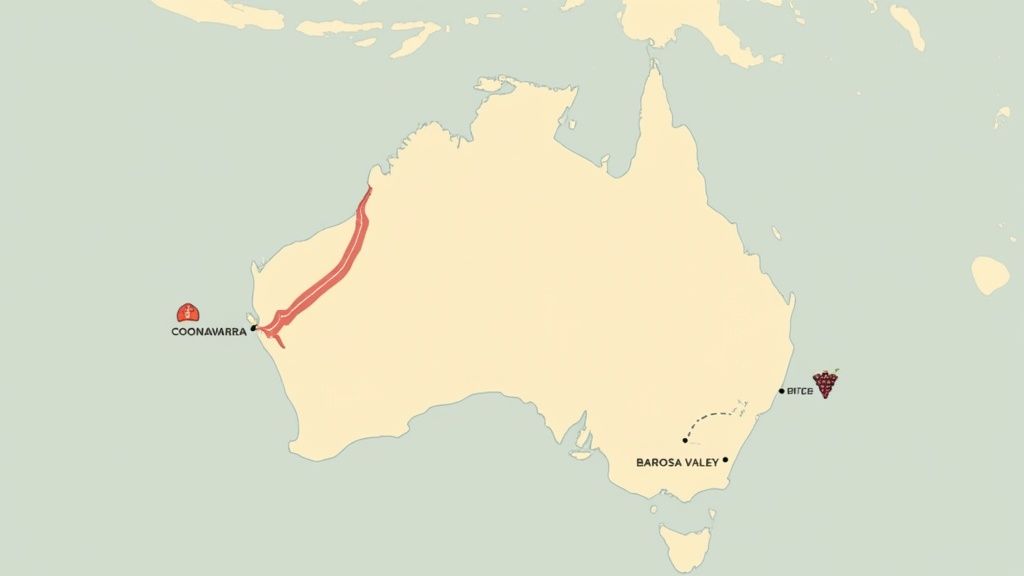
To really find a great Cabernet Sauvignon, you need to get to know its home. Australia's landscape is incredibly diverse, offering a brilliant spectrum of styles where the soil, sun, and sea breezes—what we call terroir—shape the final flavour in your glass. It's amazing how a Cab from one spot can taste remarkably different from another just a few hundred kilometres away.
Think of it like this: the grape is the raw ingredient, but the region is the artist that stamps its unique signature on the final product. Nailing these regional differences is your secret weapon for picking a bottle that perfectly suits your taste, whether you're after something elegant and complex or big, bold, and powerful.
Let’s take a little tour of Australia's top Cabernet country.
Coonawarra: The Classic Benchmark
When people talk about classic Aussie Cab, Coonawarra in South Australia is almost always the first name that pops up. This region is legendary for one thing above all else: its famous strip of 'terra rossa' soil. This vibrant red, iron-rich clay sits right on top of a bed of limestone, creating the perfect drainage and conditions for growing world-class Cabernet.
The result? Wines famous for their elegance, structure, and incredible ability to age. A classic Coonawarra Cabernet hits you with intense blackcurrant and minty notes, all held together by firm, fine-grained tannins that get beautifully silky over time. They are the quintessential cellar-worthy Australian reds.
Margaret River: Coastal Sophistication
Now, let's jump across the country to Western Australia. Margaret River gives us a completely different, yet equally brilliant, expression of Cabernet Sauvignon. Its maritime climate, with those crucial cooling breezes coming off the Indian Ocean, stops the grapes from getting too ripe and jammy. This proximity to the coast is the region's secret sauce.
This climate brings a wonderful savoury quality to the wines. You'll find notes of bay leaf, olive, and graphite weaving through the dark fruit core. Margaret River Cabs are typically medium-to-full-bodied with a firm structure and a fresh, almost salty finish. They're sophisticated, complex, and often get a splash of Merlot to add a bit of softness.
The beauty of Australian Cabernet Sauvignon is its regional diversity. A wine's postcode tells you more about its likely style than almost any other factor. It’s the key to choosing between the structured elegance of Coonawarra and the bold richness of the Barossa.
The Bold South Australian Powerhouses
While Coonawarra is all about elegance, other South Australian regions like the Barossa Valley and McLaren Vale are famous for their powerful, full-bodied Cabernets. These warmer zones create wines bursting with ripe, concentrated flavours of blackberry, dark chocolate, and liquorice, all wrapped up in plush, velvety tannins.
McLaren Vale, in particular, consistently pumps out rich and bold styles of this iconic red. The region's commitment is clear in its recent production growth; a recent vintage report showed a 28% jump in the total winegrape crush to 36,104 tonnes, which is 16% above the five-year average. You can dive into the details in the full regional summary for McLaren Vale vintage statistics.
These wines have an immediate, generous fruit appeal that makes them delicious right now, but they can also age gracefully, developing more savoury notes over time. Getting to know these regions will help you find a good cabernet sauvignon for any occasion.
Perfect Food Pairings for Cabernet Sauvignon
Forget the simple old rule of "red wine with red meat." To create a truly memorable meal, you need to think about how your wine and food actually work together. A good cabernet sauvignon, with its bold structure and firm tannins, isn't just something you drink with your food; it's an active player that can elevate every single bite. The magic is all in understanding the simple science behind a great match.
Think of the tannins in Cab Sauv as a natural palate cleanser. When you take a bite of something rich and fatty, like a beautifully marbled steak, those fats coat your mouth. The tannins in the wine swoop in, binding to the proteins and fats and scrubbing your palate clean. This makes the next bite of food taste just as incredible as the first. It's a fantastic partnership where both the food and the wine taste better.
Classic Matches Made in Heaven
Some pairings are classics for a reason—they just work, every single time. The robust character of Cabernet Sauvignon makes it the perfect partner for hearty, savoury dishes that can match its intensity.
Here are a few combinations that never miss:
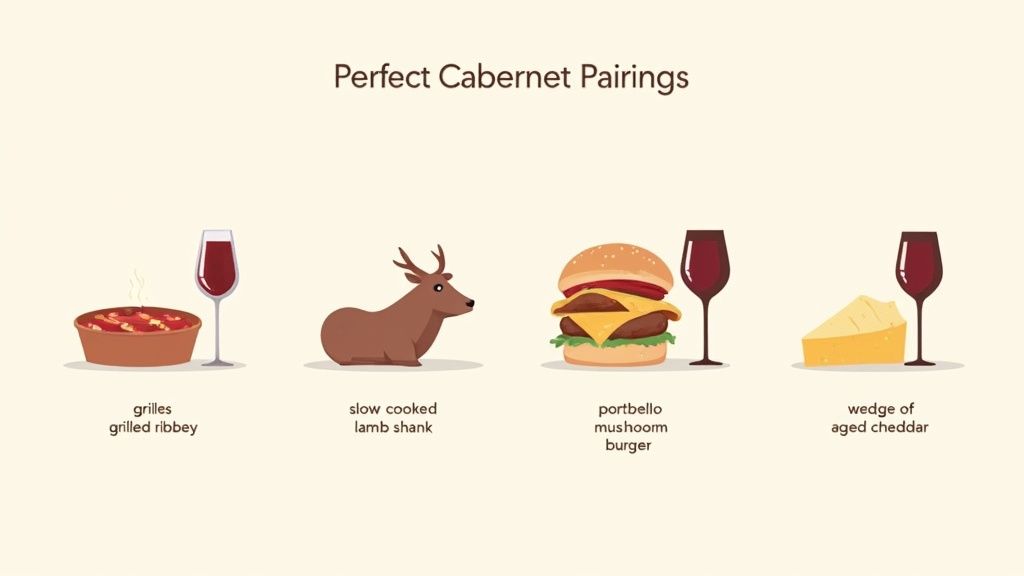
- Grilled Ribeye or Sirloin Steak: This is the ultimate pairing. The char from the grill echoes the wine's occasional smoky notes, while those powerful tannins slice right through the rich marbling of the beef.
- Slow-Cooked Lamb Shanks: A rich, fall-off-the-bone dish like braised lamb is a perfect match for a full-bodied Cabernet. The wine’s dark fruit flavours complement the savoury depth of the meat beautifully.
- Aged Hard Cheeses: Firm, aged cheeses like a sharp cheddar or a nutty gouda have just the right amount of fat and protein to soften the wine's tannins, creating a smooth, harmonious finish.
Surprising Vegetarian and Alternative Pairings
Don't let anyone tell you Cabernet Sauvignon is only for meat-eaters. Its savoury, earthy notes make it surprisingly versatile. The trick is to match its weight and intensity with equally robust vegetarian ingredients and cooking methods.
A great food and wine pairing creates a synergistic effect, where the combined experience is more delightful than either the food or the wine would be on its own. It's all about creating balance on the palate.
Take a grilled portobello mushroom burger, for example. It has that "meaty" texture and umami punch to stand up to the wine. A rich lentil stew or a pasta dish with a hearty mushroom ragu can also create a wonderfully satisfying match. Exploring these options can open up a whole new world in both your cooking and your wine appreciation. For a deeper dive, our Cabernet Sauvignon food pairing guide has plenty more ideas.
If you're serious about creating incredible dining experiences, you might want to check out some restaurant tracking apps for foodies to log your favourite meals and successful pairings. Mastering these combinations is the secret to becoming the hero of your next dinner party, turning a simple meal into something truly special.
Finding Great Cabernet Sauvignon on a Budget
You don't need to spend a fortune to enjoy a genuinely good bottle of Cabernet Sauvignon. It’s a common misconception. While the big names from famous regions certainly carry a premium price tag, there’s an incredible world of value out there if you know where to look.
The secret is to hunt beyond the usual suspects. Think of it like finding an undiscovered band that plays with the soul of a stadium headliner. Lesser-known pockets in South Australia, or even up-and-coming spots in Victoria and New South Wales, are producing stunning Cabs that punch well above their weight. These areas often have the perfect climate and soil but just haven’t hit the big time yet, which keeps prices reasonable.
How to Spot a Bargain
One of the smartest ways to find value is to follow the winemaker, not just the region. Many top-tier producers release a 'second label' or a more accessible tier of Cabernet. These wines are often crafted with the same skill and care as their flagship bottles but might come from younger vines or less prestigious vineyard blocks.
Another great trick is to look at regions famous for something else. For example, Argentina is king when it comes to Malbec, but it also produces some fantastic, wallet-friendly Cabernet Sauvignon. Grown in high-altitude vineyards, these wines often have a brilliant freshness and complexity that’s a world away from the usual, offering incredible bang for your buck.
Smart buying is all about recognising potential. A $25 bottle from a passionate producer in a rising-star region can often deliver more pleasure and character than a generic, mass-produced wine at the same price point.
What Your Money Gets You
Knowing what to expect at different price points helps you find the best bottle for your budget. Here’s a quick guide:
- Under $25: In this range, you’ll find bright, fruit-forward wines designed for immediate enjoyment. They might be less complex, but they deliver those classic dark fruit flavours that make Cabernet Sauvignon so loved. They're perfect for a casual weeknight dinner. For some top picks, check out our guide to the best Cabernet Sauvignon under $30 in Australia.
- $25-$50: This is the sweet spot where things get really interesting. Wines here start showing off real complexity and structure. You'll notice more oak influence, finer tannins, and the kind of backbone that means they can improve with a few years in the cellar.
The Australian wine scene is constantly evolving to meet global tastes, and a major part of that shift is a growing focus on sustainability. With sustainably grown grapes now accounting for over 10% of the national vintage, this trend is set to make Aussie Cabernet even more appealing on the world stage.
Got Questions About Picking a Cabernet Sauvignon?
Walking into a wine shop can feel a bit overwhelming, especially with a wall of Cabernet staring back at you. Let’s tackle some of the questions we hear all the time to clear up the confusion and help you grab your next bottle with total confidence.
Think of this as your cheat sheet for those nagging doubts. By answering these, we're turning wine-speak into practical knowledge that will help you understand what makes a good cabernet sauvignon truly sing.
Does Older Always Mean Better?
It’s a classic wine myth: the dustier the bottle, the better the juice. Not so fast. While top-tier Cabernets are definitely built to age, developing incredible new flavours over the years, plenty of others are crafted to be bright, juicy, and delicious the moment they’re released.
The truth is, a wine’s quality comes down to its balance and structure from day one, not just its age. A brilliantly made young Cabernet will always beat a mediocre old one that was never meant for the cellar. Age can add layers of complexity, but it can't create quality that wasn't there to begin with.
What’s the Deal with Tannins?
Ever take a sip of red wine and feel that slightly fuzzy, drying sensation on your tongue and gums? That’s tannin. It’s a texture, not a flavour, and it feels a lot like drinking a super-strong cup of black tea.
In Cabernet Sauvignon, tannins are everything. They provide the structural backbone that gives the wine shape and allows it to age gracefully. When they're on point, tannins feel fine-grained and add a pleasant firmness. If they’re harsh or "green," they can make a wine feel bitter and unpleasant. A great Cabernet has tannins that are noticeable but feel like they belong—smooth, integrated, and harmonious.
Is a screw cap a sign of a cheap wine? Absolutely not, especially here in Australia and New Zealand. Top-tier producers have embraced screw caps to get rid of the risk of cork taint and lock in the wine's freshness. Don't let the closure fool you—some of Australia's best Cabernets are sealed this way.
To Decant or Not to Decant?
Deciding whether to decant your Cabernet can make a massive difference to your drinking experience. The answer really depends on the wine's age and style.
- For young, bold Cabernets (under 5 years old): Go for it! Giving the wine 30–60 minutes in a decanter lets it breathe, softening up those tight tannins and helping all the beautiful aromas to open up.
- For older, delicate wines (10+ years): Be much more gentle. The main reason to decant a mature wine is to carefully separate it from the sediment that’s collected in the bottle. Too much air can quickly kill the fragile, complex aromas of an aged wine.
This renewed focus on quality is being seen in production trends right across the country. In a recent vintage, the national winegrape crush bounced back, and among red varieties, Cabernet Sauvignon saw a double-digit jump in volume. This growth points to strong market demand and fresh investment in this classic grape. You can get the full story on these Australian wine production trends on vinetur.com.
Ultimately, getting your head around these questions helps you trust your own palate and make smarter choices at the bottle shop.
At McLaren Vale Cellars, we’re proud to curate a selection of the finest Cabernet Sauvignon from one of Australia's most celebrated regions. Whether you're chasing a bold young red or a sophisticated aged classic, explore our collection to find your next favourite bottle. https://www.mclarenvalecellars.com
Comments (0)
There are no comments for this article. Be the first one to leave a message!