
You've got a good bottle of Australian gin, a bottle of ginger liqueur, and friends arriving on a warm evening. The obvious temptation is to pour freely, add citrus, and hope the result tastes balanced. That's how a promising drink becomes either syrupy or aggressively alcoholic.
A good gin and ginger liqueur cocktail depends on one decision: ginger liqueur should usually act as a modifier, not the entire foundation. Treat it like a seasoning. It should bring warmth, sweetness and length to the gin, while citrus and dilution keep the finish fresh.
Why Gin and Ginger Works in Australia
The setting suits the drink. A backyard table, cold glassware, lime on the bench and a highball or coupe ready for service all favour a cocktail that feels refreshing without becoming bland. Gin provides aromatic lift, while ginger adds heat and a rounded sweetness that works naturally with citrus.
Australian producers have given this pairing a recognisable local identity. Fossey's Gin publishes a branded Gin Ginger recipe using its Original Gin Elixir, freshly squeezed lime, Bundaberg ginger beer, fresh ginger and mint. The recipe page was published on 9 April 2021 and updated in 2025, making it a useful marker of the serve's continued relevance in the Australian market. The use of Australian gin brands alongside Bundaberg ginger beer also makes the combination feel less like a borrowed bar formula and more like a familiar local serve.
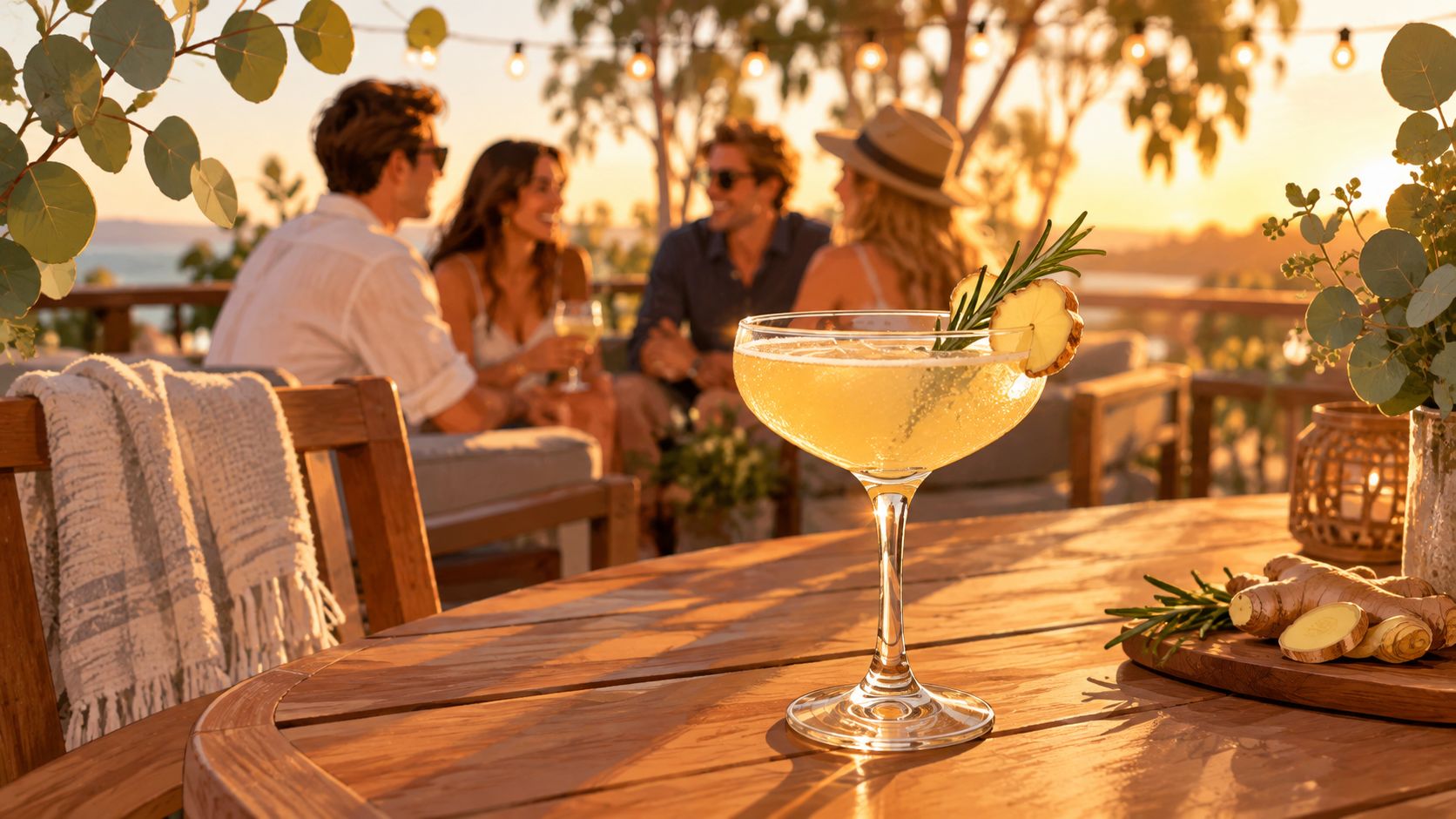
Ginger has a stronger Australian spirits presence than many drinkers realise. Castle Glen Australia lists a Ginger Liqueur at 21% ALC/VOL and records a Bronze Medal from the Australian Distilled Spirits Awards in 2016, showing that ginger liqueur had already received formal national recognition by then. The category works particularly well with gin because both ingredients can carry botanical detail, but they do so in different ways.
The useful distinction: ginger beer refreshes and lengthens a drink, while ginger liqueur concentrates ginger flavour, sweetness and alcohol.
That distinction matters at a gathering. A tall gin and ginger beer serve is easy-drinking and spacious. A short cocktail made with gin and ginger liqueur is more concentrated, so it needs careful control of citrus, dilution and sweetness. Australian palates often respond well to bold flavour, but bold doesn't mean unbalanced. The best version still finishes cleanly.
The Perfect Ratio and Method
Start with 45 ml gin, 15 ml ginger liqueur and 20 ml fresh lime juice. Add ice, shake, then strain into a chilled coupe. This produces a spirit-led sour with ginger warmth, rather than a liqueur drink that happens to contain gin.
The exact liqueur measure is the control point. If the liqueur is particularly sweet or intense, reduce it slightly and let the gin lead. If it's dry, peppery or restrained, the full measure can work. Taste the liqueur on its own first. You're looking for its sweetness, ginger heat and finish, not just its alcohol strength.
A reliable build
- Chill the glass. Place a coupe in the freezer or fill it with ice and water while you prepare the drink. Cold glassware slows warming and protects the texture after straining.
- Measure rather than free-pour. Add the gin, ginger liqueur and lime to a shaker. Fresh lime matters because bottled juice often lacks the sharp aroma needed to offset liqueur sweetness.
- Shake with solid ice. Shake firmly until the tin feels cold. The purpose isn't only to combine ingredients. Shaking also adds controlled dilution, which softens alcohol and integrates the citrus.
- Double-strain if necessary. A fine strainer removes pulp and small ice fragments, leaving a cleaner coupe serve. This is especially useful when the drink is intended as an aperitif.
- Finish easily. Express a lime peel over the surface, or add a small piece of fresh ginger and a mint leaf. Avoid a heavy garnish that competes with the drink's aroma.
Australian recipes often use a taller format. One local reference pairs 50 ml gin with 100 ml ginger ale or ginger beer, a 1:2 spirit-to-mixer ratio documented in an Australian ginger cocktail recipe. That approach suits drinkers who want more length and carbonation than a coupe provides.
For an even longer highball, an Australian recipe uses 50 ml gin and 200 ml ginger mixer, creating a drink of about 250 ml before ice, with a 1:4 spirit-to-mixer ratio. The method calls for a chilled glass, lime and mint, as shown in this gin and ginger cocktail benchmark. Use that format when the occasion calls for refreshment. Use the shorter shaken format when you want ginger liqueur to remain noticeable.
Carbonation rule: Never shake ginger beer or ginger ale. Build the drink over ice, add the carbonated mixer last, and stir gently.
The final choice depends on the liqueur. If it already supplies sweetness, don't automatically add syrup. If the cocktail tastes sharp, add dilution before sugar. A small splash of chilled water can solve an overly concentrated drink without turning it cloying.
Choosing the Right Gin
The gin should either provide a stable backbone or contribute a botanical note that ginger can amplify. The wrong choice isn't necessarily a poor gin. It may be too delicate, too floral or too crowded for the liqueur.
Classic dry gin
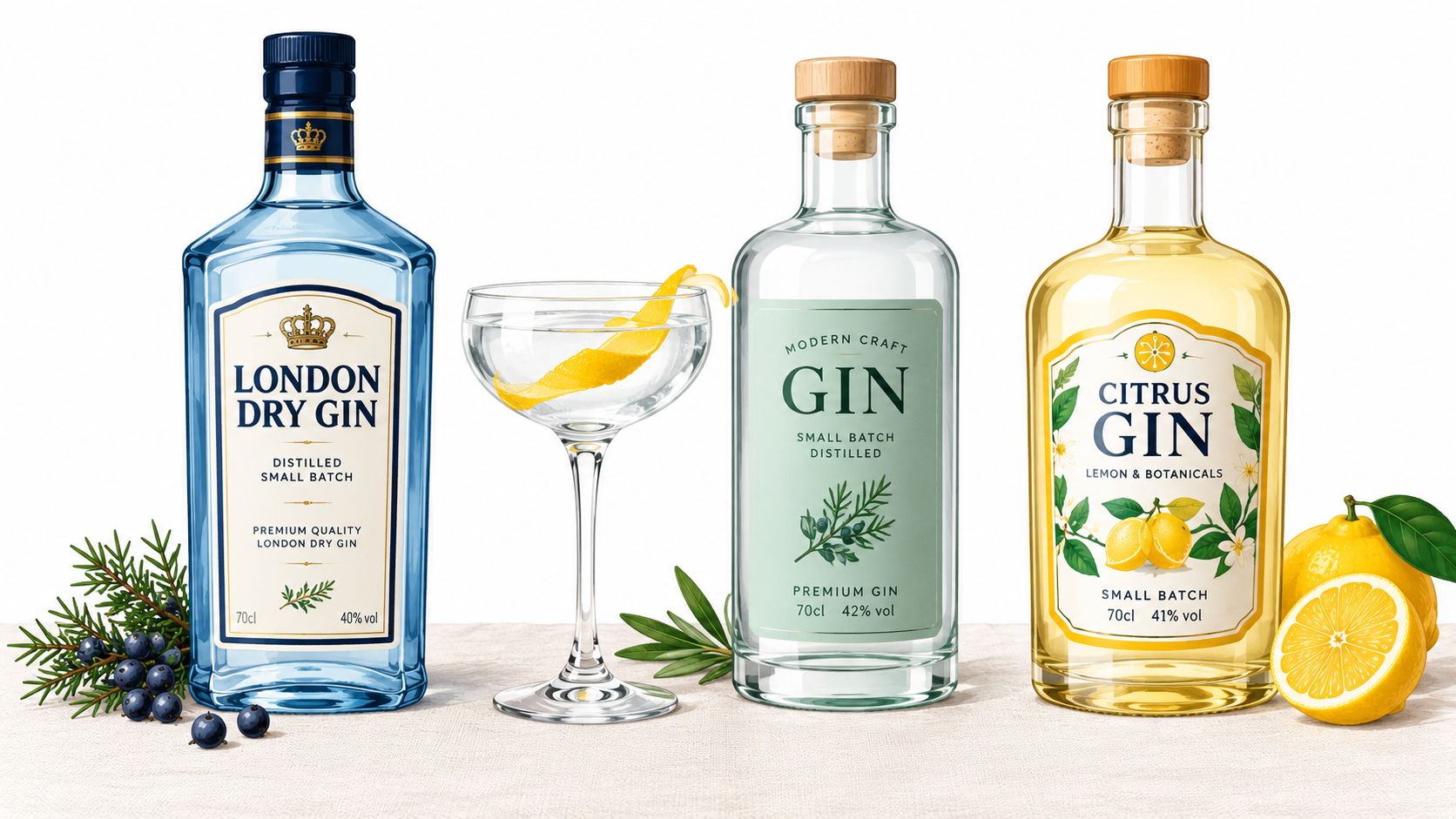
A classic London Dry style is the safest starting point. Its juniper structure gives the cocktail a clear centre, while citrus peel and spice notes can sit comfortably beside ginger. Choose this style when you want the drink to taste recognisably like gin, with the liqueur providing warmth around the edges.
A strongly juniper-led bottle can handle a fuller ginger liqueur measure. A softer dry gin may need less liqueur and more lime so the drink doesn't become sweet and indistinct.
Native botanical gin
Australian native-botanical gins can be more expressive, with ingredients that bring pepper, resin, citrus or savoury notes. These flavours can be excellent with ginger, but they need restraint. Use the liqueur as a small modifier and avoid adding several other sweet ingredients.
If the gin already has lemon myrtle, finger lime or pepperberry character, fresh lime may be enough to sharpen the drink. Additional ginger syrup would usually blur the distinction between the gin and liqueur.
Fruit-led and fortified styles
Fruit-forward gins can work, particularly with ginger liqueurs that are dry rather than confectionery-sweet. Citrus gin liqueur is another route. McLaren Vale Cellars' gin liqueur mixer guide identifies ginger ale as a suitable mixer for citrus gin liqueur and uses a 1:2 liqueur-to-mixer ratio, a useful reference for a lighter, longer serve.
The key is to decide what you want the gin to do:
| Gin style | What it contributes | Best ginger approach |
|---|---|---|
| Classic dry | Juniper and structure | Use ginger liqueur as a measured modifier |
| Native botanical | Pepper, citrus or savoury complexity | Keep the liqueur restrained |
| Fruit-led | Soft fruit and aroma | Use dry ginger, lime and minimal extra sugar |
A related Australian style is shiraz gin, which can bring fruit and colour rather than a traditional dry profile. It deserves a lighter hand with sweet ginger liqueur, because both components can quickly push the drink towards richness.
For visual guidance on production and style, this video offers useful context:
Variations and Pairing Ideas
The cleanest variation is a tall highball. Combine gin and ginger liqueur with lime over ice, then add ginger beer and stir once. This lets the carbonation carry the aroma and gives guests a longer drink for warm-weather hosting.
For a drier profile, use less ginger liqueur and choose a less sweet ginger mixer. Don't compensate with extra citrus indefinitely. Too much lime makes the drink thin and aggressive, especially when the gin has peppery botanicals.
A more aromatic version can use mint, a lime wheel and a thin slice of fresh ginger. Fresh ginger adds fragrance and texture, but it shouldn't replace the liqueur entirely. The liqueur provides integration, while the fresh ingredient supplies a sharper top note.
Food and occasion matches
This cocktail works naturally with salty, spicy and fried food. Think prawns with lime, grilled chicken, crisp vegetable fritters or dishes with chilli and herbs. Ginger's warmth can stand beside spice, while carbonation and citrus help reset the palate.
For a wine-oriented gathering, serve the cocktail before a lighter South Australian white or sparkling wine. Keep the cocktail as the arrival drink, then move to wine with food rather than asking guests to compare a strongly flavoured ginger drink with delicate dishes.
If you're planning a larger celebration, the broader guide to best drinks for Orange County events is useful for thinking about drink stations, guest preferences and longer serves, even though this cocktail is being adapted for an Australian setting.
A citrus-led variation can borrow the same balancing logic used in this guide to crafting citrus liqueur. Add orange peel or a small amount of orange liqueur only when the base drink is already dry enough. Otherwise, citrus becomes another source of sweetness instead of a source of lift.
For groups, pre-mix only the still ingredients. Keep ginger beer or ginger ale chilled and add it in each glass. This protects carbonation and gives guests control over how long or concentrated they want the serve.
Pro Tips for Success
Use a coupe for the shaken version and a tall highball for the carbonated version. Both should be properly chilled before pouring. Warm glassware makes a balanced drink seem flatter and more alcoholic because the cocktail loses temperature quickly.
Fresh lime is the simplest correction tool, but it isn't a cure for every problem. If the drink tastes heavy, check the liqueur measure first. If it tastes hot, add dilution. If it tastes thin, the mixer may be too dominant or the gin may lack enough structure.
- Keep ginger liqueur measured: Start as a modifier and increase only after tasting.
- Protect carbonation: Add ginger beer last and stir gently.
- Control ice: Use enough cold ice to chill the drink, but don't shake a carbonated mixer.
- Choose a restrained garnish: Mint, lime peel or fresh ginger is enough.
- Taste before batching: Liqueur sweetness varies, so a single tested serve should come before preparing several drinks.
Australian cocktail consumption data recorded 32% of Australian consumers drinking cocktails in on-premise settings, according to the NielsenIQ and CGA Australia Cocktail Insights report. That makes consistent preparation especially important for bars and hosts serving more than one round. Write down the exact measure, glass, ice and mixer used, then repeat it.
The most common failure is treating ginger liqueur like ginger beer. Ginger beer provides length and bubbles. Ginger liqueur brings concentrated sweetness and warmth. Once that distinction is clear, the cocktail becomes easy to adjust without losing its identity.
McLaren Vale Cellars offers Australian gin and liqueur selections alongside wine, cocktail guidance and curated packs for exploring different styles. Visit McLaren Vale Cellars to choose a bottle for your next gin and ginger liqueur cocktail, then use the tasting and cocktail resources to refine the serve.

Comments (0)
There are no comments for this article. Be the first one to leave a message!