
A truly excellent Sauvignon Blanc is more than just a refreshing white wine; it’s a perfect harmony of vibrant aroma, crisp acidity, and a finish that keeps you coming back for more. It balances zesty citrus and tropical fruit flavours with that signature grassy or mineral edge, creating an experience that's both complex and incredibly refreshing.
What Makes a Sauvignon Blanc Truly Excellent
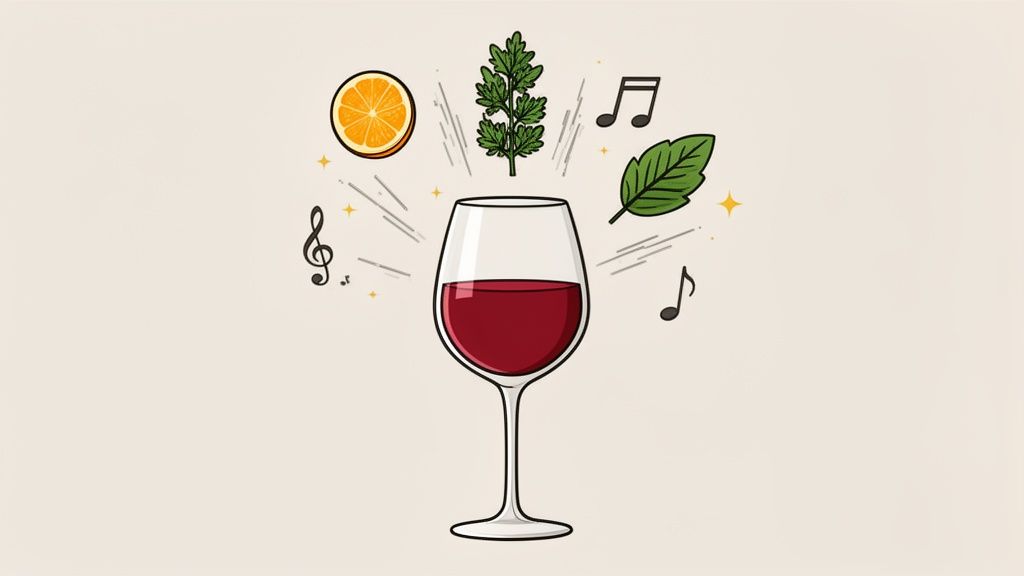
So, what elevates a good Sauvignon Blanc to a great one? It’s not just one thing. It's the beautifully orchestrated balance of several key elements working together, like a world-class orchestra where every instrument plays its part flawlessly. When a winemaker nails this, the result is a wine that’s both exhilarating and sophisticated.
An excellent Sauvignon Blanc tells you a story about where it came from. The climate, the soil, and the winemaker’s touch all leave their fingerprints on the final product. From the flinty, restrained elegance of France's Loire Valley to the explosive passionfruit notes of Marlborough, New Zealand, this grape is a brilliant translator of its environment.
The Core Pillars of Quality
At its heart, the quality of a Sauvignon Blanc rests on four main components. Getting your head around these pillars is the first step to spotting a truly outstanding bottle, as they provide the structure and personality that define the wine’s character.
- Aromatic Intensity: A great Sauvignon Blanc greets you with a powerful, inviting bouquet before you even take a sip. This could be a rush of passionfruit and grapefruit or more subtle notes of freshly cut grass and gooseberry.
- Acidity as the Backbone: Acidity is what makes the wine feel refreshing and lively on your palate. It should be crisp and clean, never sharp or sour, providing a mouth-watering quality that makes you want another taste.
- Body and Texture: While typically light to medium-bodied, an exceptional Sauvignon Blanc has a noticeable presence. It might feel zesty and energetic or have a slightly richer, more rounded mouthfeel.
- A Long, Clean Finish: The final impression is crucial. An excellent example doesn’t just vanish; it lingers pleasantly, echoing its primary flavours without any bitterness.
The magic happens when these elements are in perfect equilibrium. A wine with overpowering acidity but no fruit flavour, or a strong aroma with a weak finish, just falls short. It’s this seamless integration that turns a simple drink into a memorable experience.
This guide will walk you through each of these aspects, helping you decode the aromas, explore global styles, and ultimately, find your next favourite bottle of Sauvignon Blanc. Let's start by diving deeper into the signature scents that make this grape so unique.
Decoding the Signature Aromas of Sauvignon Blanc
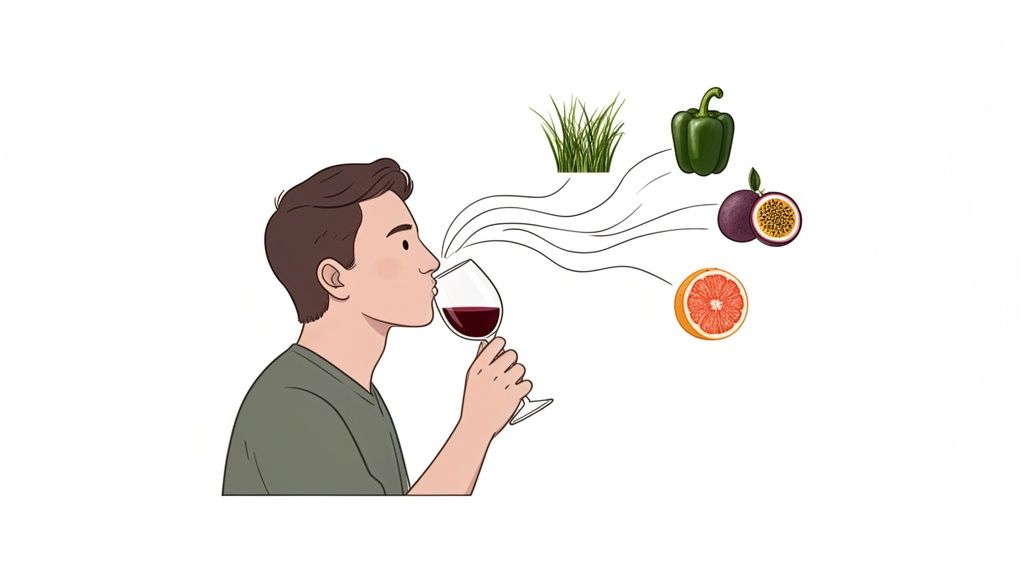
That powerful, unmistakable scent of Sauvignon Blanc is its calling card. It’s what makes you stop, swirl your glass, and take a deep breath before that first sip even crosses your lips. This isn't just some random fruitiness; it's a fascinating bit of chemistry that tells you the whole story of the grape, where it grew, and what the winemaker was aiming for.
Think of these aromas as two distinct families of scents, both living happily in the same bottle. One family is all about green, grassy, and herbaceous notes. The other is a full-on explosion of zesty, tropical fruit. An excellent Sauvignon Blanc almost always shows off a beautiful interplay between both, creating layers of complexity that make the wine so incredibly compelling.
Getting your head around these two groups is the secret to appreciating why your wine might smell like a freshly mown lawn one day and a vibrant fruit salad the next.
The Green and Herbaceous Character
Those classic "green" notes you find in Sauvignon Blanc come from a group of organic compounds called pyrazines (pronounced peer-a-zeens). They’re responsible for aromas that might remind you of cut grass, green capsicum, asparagus, or even gooseberry.
Pyrazine levels are massively influenced by the climate. In cooler spots like France’s Loire Valley, the grapes take their sweet time to ripen, which keeps these compounds around in higher concentrations. The result? Wines that lean more savoury and herbaceous.
A great way to think about pyrazines is to imagine snapping a fresh green bean in half—that crisp, vegetal scent is a close cousin to what you'll find in many Old World style Sauvignon Blancs. It adds a refreshing, savoury edge that balances out all that fruit.
This green character gives the wine structure and a nice savoury counterpoint, stopping it from being just one-dimensionally fruity. For many wine lovers, it's a signature element they actively look for.
The Tropical and Citrus Burst
On the flip side of the aromatic spectrum, you’ll find compounds called thiols. These are the powerhouses behind those intense tropical fruit and citrus aromas that have made New World Sauvignon Blancs—especially from Marlborough and parts of South Australia—so wildly popular.
Thiols are what deliver those big, bold scents that leap out of the glass, like:
- Passionfruit: A dead giveaway for many Aussie and New Zealand styles.
- Grapefruit: Gives it that zesty, mouth-watering citrus kick.
- Guava: Adds a lush, exotic tropical note to the mix.
Warmer climates and even specific yeast strains used during fermentation can crank up these thiol-driven flavours, creating a wine that just bursts with energy. Often, the secret to finding a truly brilliant Sauvignon Blanc is finding one that perfectly balances these zesty thiols with the elegant green notes from the pyrazines. It’s this dynamic tension that makes the wine so endlessly fascinating.
Exploring Global Styles from Old World to New World
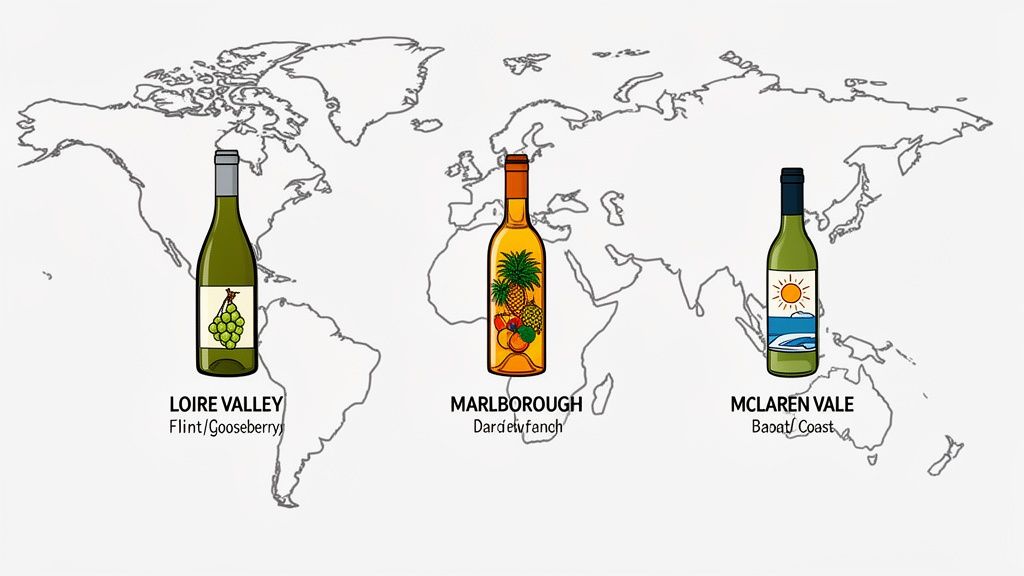
Here’s one of the most exciting things about Sauvignon Blanc: not all of it tastes the same. Not even close. The grape is a remarkable translator of its environment, meaning a bottle from the hills of France will be a world away from one grown under the South Australian sun.
Getting your head around this is like getting a world tour in a glass. The first step is understanding the difference between Old World (basically, Europe) and New World (everywhere else) styles. Old World Sauv Blanc is often more reserved and mineral-driven, while the New World dials up the fruit and aromatic intensity.
Let's dive into three iconic regions that show this diversity perfectly.
The Old World Benchmark: Loire Valley
France's Loire Valley is the spiritual home of Sauvignon Blanc. It's where it all started. Here, in famous villages like Sancerre and Pouilly-Fumé, the wines are celebrated for their incredible elegance and subtlety. The cooler climate, combined with unique limestone and flint soils, produces a wine with razor-sharp acidity and a stony, mineral character you won't forget.
Forget big, tropical fruit explosions. Instead, you'll find more refined notes:
- A distinct flint or "gunflint" aroma, especially in wines from Pouilly-Fumé.
- Crisp gooseberry and tart green apple flavours.
- A subtle herbaceousness, like freshly cut grass or wet river stones after the rain.
This style is savoury, structured, and an absolute dream to pair with food. It’s the classic yardstick against which all other Sauvignon Blancs are measured. To get the full story on its French heritage, you can explore the origins of the Sauvignon Blanc grape from the Loire Valley to Australian innovation.
The New World Icon: Marlborough
Fly to the other side of the planet, and you'll land in Marlborough, New Zealand—the region that single-handedly put New World Sauvignon Blanc on the map. Thanks to its long, sunny days and cool nights, Marlborough produces wines that practically burst out of the glass with intense, vibrant aromatics. It's the style many people think of first when they hear "Sauvignon Blanc."
A Marlborough Sauvignon Blanc is unmistakable. Its powerful bouquet of passionfruit, grapefruit, and zesty lime leaps from the glass, backed by a signature green, herbaceous kick. It's the loud, extroverted cousin to the Loire Valley's more quiet, introverted classic.
The Australian Innovator: McLaren Vale
And then there's South Australia's McLaren Vale, which offers a fascinating middle ground, taking the best of both worlds. Our Mediterranean climate, with its warm days cooled by ocean breezes from the Gulf St Vincent, creates an excellent Sauvignon Blanc with both generous fruit and fantastic structure.
McLaren Vale wines capture those vibrant tropical notes you expect from the New World, but often with a more refined palate and elegant acidity. You might find a beautiful balance of passionfruit and citrus alongside a subtle salty or mineral edge—a little nod to our coastal home. This unique blend of ripeness and freshness is exactly what makes McLaren Vale a top-tier destination for exceptional white wine.
To make these differences even clearer, here's a quick side-by-side comparison.
Sauvignon Blanc Regional Style Comparison
| Characteristic | Loire Valley (Old World) | Marlborough (New World) | McLaren Vale (New World) |
|---|---|---|---|
| Primary Aromas | Gooseberry, lime, wet stone, flint | Passionfruit, grapefruit, capsicum | Passionfruit, citrus, subtle saline |
| Acidity Level | High, sharp | High, zesty | Medium-High, refreshing |
| Body | Light | Light to Medium | Medium |
| Overall Style | Mineral-driven, subtle, elegant | Aromatic, fruit-forward, vibrant | Balanced, generous, structured |
This table really highlights how the same grape can wear so many different hats, depending on where it lays its roots. From the old-school elegance of France to the punchy New Zealand style and the balanced beauty of McLaren Vale, there’s a whole world of Sauvignon Blanc out there waiting to be discovered.
Why McLaren Vale Is a Hotspot for Exceptional White Wine
While France and New Zealand often steal the Sauvignon Blanc spotlight, South Australia's McLaren Vale has quietly become a paradise for growing world-class whites. It’s a region that combines New World vibrancy with an elegant structure, producing wines that absolutely stand out from the crowd.
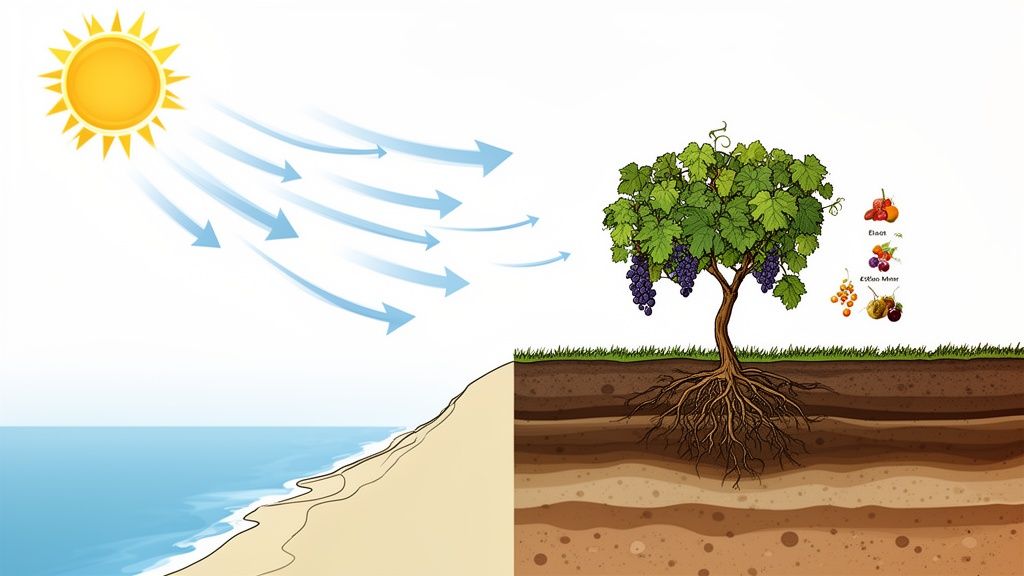
The secret isn't just one thing. It's a perfect storm of sun, sea, and soil all working together in beautiful harmony. This unique combination allows McLaren Vale to craft an excellent Sauvignon Blanc that’s both generously fruity and impressively balanced. The region’s Mediterranean climate provides the ideal conditions for grapes to develop intense, ripe flavours while holding onto that crisp, mouth-watering acidity that’s essential to any great white wine.
The Power of a Mediterranean Climate
McLaren Vale enjoys a classic Mediterranean climate, defined by warm, sun-drenched days and mild winters. This consistent sunshine is brilliant for ripening grapes, letting them build up complex sugars and flavours. But too much heat can lead to flabby, uninspired wines.
This is where the region’s geography plays a critical role. The nearby Gulf St Vincent acts as a natural air conditioner, sending cool sea breezes across the vineyards each afternoon. This cooling effect slows everything down, preserving the grape's natural acidity and ensuring the final wine is fresh, lively, and perfectly balanced.
Think of it like slow-roasting versus flash-frying. The gentle, consistent ripening gives the flavours time to deepen and integrate, creating a more nuanced and complete wine than one rushed by relentless heat. This balance is the hallmark of McLaren Vale's style.
Diverse Soils Add Layers of Complexity
Beneath the vines, McLaren Vale boasts a complex mosaic of ancient soils. This geological diversity is a winemaker’s dream, as different soil types contribute unique characteristics to the wine. It means that even within a small area, winemakers can produce wines with completely distinct personalities.
These varied soil structures contribute to the wine in several ways:
- Terra Rossa: This famous red clay over limestone provides excellent drainage and encourages deep root growth, often resulting in wines with great structure and longevity.
- Sandy Loams: Found closer to the coast, these soils can impart a subtle saline or mineral note, adding a savoury complexity that complements the fruit flavours beautifully.
- Biscay Clay: Heavier clay soils retain more water, which can produce wines with a richer texture and more concentrated fruit character.
This diverse terroir is a key reason the region produces such standout premium whites within South Australia. The climate creates crisp, refreshing wines with distinctive citrus notes, and the total vineyard area provides substantial capacity for quality white varieties. You can read the full McLaren Vale vintage report to see the data for yourself.
By connecting the dots between sun, sea, and soil, it becomes clear why McLaren Vale is a premier destination for exceptional white wines. If you're keen to experience this unique character firsthand, you might be interested in exploring the best McLaren Vale white wines we have to offer.
How to Serve, Pair and Store Your Sauvignon Blanc
Getting the most out of an excellent Sauvignon Blanc is about more than just pulling the cork. How you serve, pair, and store your wine can make a huge difference, turning a great bottle into a truly memorable experience. These simple steps are all it takes to make sure every glass tastes exactly how the winemaker intended.
Temperature is the first, and arguably most important, detail to get right. Sauvignon Blanc absolutely shines when it’s chilled, but not ice-cold. If you serve it straight from a frosty fridge, you risk muting all those beautiful, complex aromas—effectively hiding the vibrant personality you paid for.
The sweet spot is around 8-10°C. A great rule of thumb is to pull the bottle from the fridge about 20-30 minutes before you plan on pouring. This little bit of time allows those signature notes of passionfruit, citrus, and fresh-cut grass to wake up and really express themselves in the glass.
Perfect Pairings for Sauvignon Blanc
That trademark high acidity and herbaceous character make Sauvignon Blanc one of the most food-friendly wines out there. Its zesty nature acts just like a squeeze of fresh lemon, cutting through rich dishes and cleansing the palate with every sip.
The classic pairings work so well for a reason. The wine’s crispness is a perfect match for:
- Goat Cheese: The tangy acidity in both the cheese and the wine are a brilliant complement to one another. A goat cheese and caramelised onion tart isn't a classic for nothing!
- Green Vegetables: Its grassy, herbaceous notes beautifully echo the flavours of things like asparagus, green beans, and leafy salads tossed in a vinaigrette.
- Seafood: This is a no-brainer. Think freshly shucked oysters, grilled fish, or prawns sizzling with garlic. The wine’s citrus profile just lifts and enhances all those delicate flavours of the sea.
But don’t be afraid to get a bit more adventurous. The zesty profile of a McLaren Vale Sauvignon Blanc has enough punch to stand up to the bold flavours of a Thai green curry or Vietnamese summer rolls, creating a truly dynamic pairing.
If you're looking for a more culinary approach, this delicious roast beef with white wine cream sauce recipe is a great example of how wine can elevate a dish from good to great.
Storing Your Wine Correctly
Proper storage is crucial for keeping your Sauvignon Blanc tasting fresh, whether you're saving it for a few days or a few years. Most bottles, especially from New World regions like McLaren Vale, are made to be enjoyed young and vibrant—typically within 1-3 years of their vintage.
For short-term storage after you've opened a bottle, just pop the cork back in tightly (or use a stopper) and stick it in the fridge. It should hold up well for about two to three days.
If you’re planning on cellaring it for longer, find a cool, dark place with a stable temperature. The key is to keep it away from vibrations and direct sunlight, which can spoil the wine over time.
Your Guide to Choosing an Excellent Sauvignon Blanc
Now that you're armed with a bit of knowledge about aromas, regions, and serving styles, you’re ready to hit the shops with confidence. Think of finding your next bottle of excellent Sauvignon Blanc as an adventure—and the label is your treasure map. It holds all the crucial clues about the wine inside. Look for the region. Is it the flinty promise of Sancerre or the sunny disposition of McLaren Vale? That one detail will tell you so much about the style you're about to pour.
Beyond just reading the label, modern wine shopping has some fantastic, customer-friendly ways to explore without taking a big risk. Instead of committing to a full case of a wine you’ve never tried, look for curated sample packs. These collections are often handpicked by people who know the region inside and out, allowing you to compare different styles side-by-side and figure out what you genuinely enjoy.
Making Your Purchase with Confidence
Another great thing to look for is a taste guarantee. Any retailer who’s truly confident in their selection will stand behind their wines, giving you peace of mind. It completely removes the financial risk from trying something new and turns a simple purchase into a guided discovery.
Here at McLaren Vale Cellars, we don't just see ourselves as a store; we're your partner on this journey. Our local wine industry is absolutely thriving, with recent vintages showing substantial growth in production. This isn't just about quantity—it reflects a powerful momentum in quality and investment. You can discover more about McLaren Vale's thriving wine industry and see for yourself why it’s become such a reliable source for exceptional wines.
Your palate is unique, and the best wine is always the one you love the most. Use this guide as a starting point, trust your instincts, and never be afraid to experiment. The perfect bottle is out there waiting for you.
We invite you to put all this newfound knowledge into practice. To keep the adventure going, check out our guide to finding the best Australian Sauvignon Blanc. Explore our handpicked selection, and let us help you find an outstanding wine from our premier South Australian region.
Sauvignon Blanc: Your Questions Answered
Let's wrap things up by tackling some of the most common questions that pop up about Sauvignon Blanc. These quick insights will help lock in everything we've talked about and give you that extra bit of confidence next time you're picking out a bottle.
What's the Difference Between Oaked and Unoaked Sauvignon Blanc?
The Sauv Blanc you most likely know and love is unoaked. This means it’s fermented in stainless steel tanks, a process that keeps it fresh, zesty, and aromatic. It’s the secret behind that classic crisp character.
Every now and then, you might come across an oaked version, sometimes called 'Fumé Blanc'. These wines are aged in oak barrels, which softens them up, adds a creamier texture, and introduces richer notes of vanilla or spice. It’s a completely different, much rounder style of wine.
Is Sauvignon Blanc a Sweet or Dry Wine?
Sauvignon Blanc is almost always a dry white wine. During fermentation, the yeast gobbles up nearly all the natural grape sugars, leaving very little sweetness behind.
Don't let the vibrant tropical fruit flavours fool you! A wine can taste fruity without being sweet, and that's the magic of Sauv Blanc. Its dry, refreshing profile is what makes it so fantastic with food.
Key Takeaway: Fruity is not the same as sweet. An excellent Sauvignon Blanc can explode with passionfruit flavour while being bone-dry on your palate. This is the hallmark that makes it so refreshing and food-friendly.
How Long Should I Keep a Bottle of Sauvignon Blanc?
Most Sauvignon Blanc is made to be enjoyed young and fresh, especially the vibrant New World styles from places like McLaren Vale. Pop them open within 1-3 years of the vintage date to experience their lively aromatics at their absolute peak.
However, a few top-tier examples, particularly from classic Old World regions like Sancerre in France, can age beautifully. With 5-10 years of careful cellaring, these wines can transform, developing complex nutty and honeyed notes that are a real treat to discover.
Ready to discover an exceptional bottle from one of Australia's premier regions? Explore the curated collection at McLaren Vale Cellars and find your next favourite today. https://www.mclarenvalecellars.com


Comments (0)
There are no comments for this article. Be the first one to leave a message!