
Ever seen the word "dry" on a bottle of dry red wine and wondered what it meant? It’s a common source of confusion, but it has nothing to do with how the wine literally feels in your mouth.
In the wine world, dry is simply a technical term that means the wine has little to no leftover sugar. During fermentation, yeast eats up the natural sugars in the grape juice and converts them into alcohol. When this process is complete and nearly all the sugar is gone, you're left with a dry wine.
What Defines a Dry Red Wine
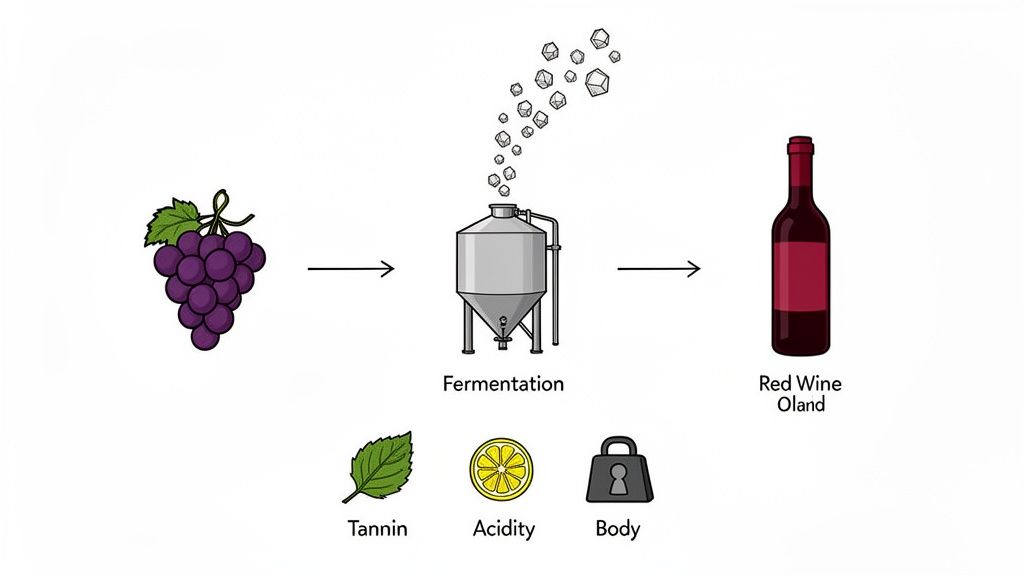
While the near-absence of sugar is the official definition, the real personality of a dry red wine comes from the interplay of three other crucial elements: tannins, acidity, and body. Getting your head around these components is the key to figuring out exactly what you love in a glass of red.
The Role of Tannins
Tannins are natural compounds found in grape skins, seeds, and stems, as well as the oak barrels wines are often aged in. They’re responsible for that slightly grippy, mouth-drying feeling you might get on your tongue and gums—think of the sensation of drinking a very strong cup of black tea.
Tannins are essential because they give a wine its structure, complexity, and backbone. A young Cabernet Sauvignon with firm tannins can feel powerful and bold, while a Pinot Noir with softer tannins will feel much smoother and more delicate on the palate.
The Importance of Acidity
Acidity is that zesty, mouth-watering quality that makes a wine feel bright and lively. It’s what keeps a wine from tasting flat or heavy, lifting its fruit flavours and adding a refreshing kick. Think of it like a squeeze of lemon over a rich meal—it just brings everything to life. To dive deeper into this vital component, you can explore our detailed guide to understanding wine acidity.
Acidity is what gives a wine its crispness and refreshing finish. It balances the richness of the fruit and the power of the tannins, ensuring no single element overwhelms your palate.
Understanding Body and Alcohol
The "body" of a wine is all about its perceived weight and texture in your mouth. This is heavily influenced by its alcohol content—the direct result of how much sugar was converted during fermentation. A dry red wine can fall anywhere on the spectrum from light to full-bodied:
- Light-bodied wines feel more delicate and have lower alcohol.
- Medium-bodied wines hit that sweet spot with a balanced weight, making them incredibly versatile.
- Full-bodied wines, like a classic McLaren Vale Shiraz, feel rich and heavy, coating your mouth with concentrated flavour.
Exploring Popular Dry Red Wine Styles
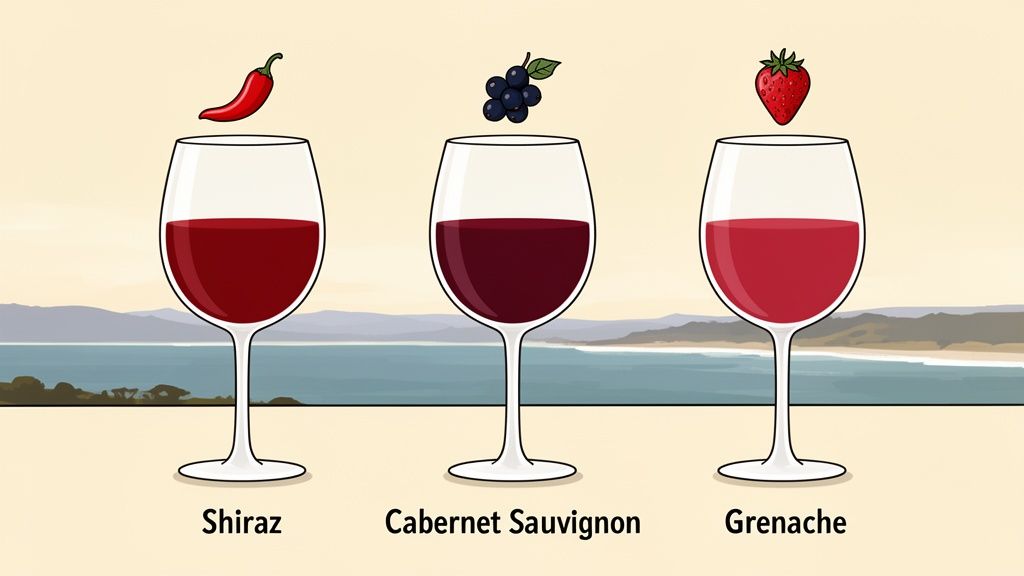
The world of dry red wine is incredibly diverse, with each grape variety offering a unique personality shaped by its genetics and the place it’s grown. Getting to know the key players is the first real step towards figuring out what you truly love to drink. Let’s explore some of Australia's most beloved styles, many of which find their best expression right here in regions like McLaren Vale.
From bold and powerful to elegant and delicate, there's a dry red out there for every palate. The main differences come down to the grape's inherent characteristics—things like the thickness of its skin, which has a huge impact on the final wine's colour and tannin levels.
For a deeper dive into the whole spectrum, you can also read our complete guide to red wine styles from light to full-bodied.
Shiraz The Australian Icon
Shiraz is arguably Australia's most famous grape, producing a bold, full-bodied dry red that’s loved worldwide. In warm climates like McLaren Vale, it delivers powerful flavours of blackberry, plum, and dark chocolate, often with a signature kick of black pepper or spicy oak.
Its thick skins are the secret to its deep, dark colour and robust tannins, giving it a rich texture and fantastic structure. This makes it the perfect partner for hearty dishes like a grilled steak or a rich lamb roast.
Cabernet Sauvignon The Structured Classic
Often called the king of red grapes, Cabernet Sauvignon creates wines with impressive structure and complexity. It’s famous for its firm tannins and trademark notes of blackcurrant, cedar, and sometimes a subtle hint of green capsicum or mint.
Cabernet Sauvignon is a thinker's wine, often revealing more layers as it opens up in the glass. That firm structure is also what allows it to age so beautifully, softening over time to develop more savoury, earthy notes.
A key difference between Shiraz and Cabernet Sauvignon lies in their flavour profile and texture. Shiraz often feels spicier and jammier with softer, plusher tannins, while Cabernet Sauvignon tends to be more savoury and herbaceous with a firmer, more structured mouthfeel.
Grenache The Perfumed Charmer
Grenache produces a wonderfully aromatic, medium-bodied red that's all about bright red fruit flavours. Think raspberry, strawberry, and red cherry, often accompanied by a distinctive spicy or herbal note, like cinnamon or white pepper.
It generally has softer tannins and a lighter colour than Shiraz or Cabernet, making it an approachable and incredibly versatile choice. This is a wine that charms with its perfume and juicy fruit character, making it a fantastic match for a wide range of foods.
A Quick Guide to Dry Red Wine Styles
Feeling a bit overwhelmed by the options? Don't be. To help you distinguish between these fantastic varieties, here’s a simple breakdown of what to expect from each glass. This cheat sheet is perfect for finding your next favourite bottle.
| Grape Variety | Primary Flavours | Body | Tannin Level | Acidity Level | Pairs Well With |
|---|---|---|---|---|---|
| Shiraz | Blackberry, Plum, Black Pepper, Chocolate | Full | High | Medium | Grilled Meats, BBQ, Rich Stews |
| Cabernet Sauvignon | Blackcurrant, Cedar, Mint, Dark Cherry | Full | High | High | Lamb Roast, Hard Cheeses, Steak |
| Grenache | Raspberry, Strawberry, White Pepper, Orange Rind | Medium | Low-Medium | Medium | Roasted Chicken, Charcuterie, Spicy Dishes |
| Merlot | Plum, Black Cherry, Chocolate, Bay Leaf | Medium-Full | Medium | Medium | Pasta with Red Sauce, Roasted Pork |
| Pinot Noir | Cherry, Cranberry, Mushroom, Clove | Light | Low | High | Duck, Salmon, Mushroom Risotto |
Hopefully, this gives you a clearer picture of where your tastes might lie. Each grape tells a different story, and the fun is in the discovery!
Merlot The Smooth All-Rounder
Merlot is loved for its soft, plush texture and crowd-pleasing flavour profile. It typically shows flavours of ripe plum, black cherry, and chocolate, with supple tannins that make it feel smooth and velvety in the mouth.
It’s generally less grippy than its old friend Cabernet Sauvignon, offering a rounder, more generous fruit character right from the get-go.
Pinot Noir The Elegant Finesse
At the lighter end of the spectrum is Pinot Noir, a grape that produces some of the most elegant and ethereal red wines in the world. It’s a delicate, thin-skinned grape, which results in a wine with a pale ruby colour, low tannins, and high acidity.
Expect fragrant notes of red cherry, raspberry, and earthy undertones of mushroom or forest floor. It’s a wine that’s all about subtlety and grace.
How to Pair Food with Dry Red Wine
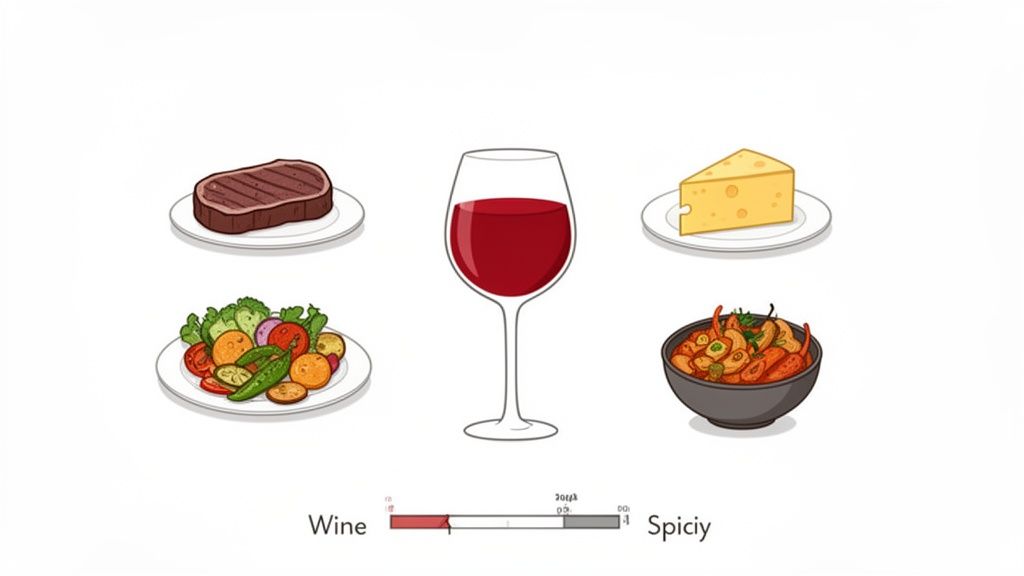
Pairing food with a great dry red wine can feel intimidating, but it’s really not about memorising a strict set of rules. It’s all about creating harmony between what’s in your glass and what’s on your plate. Forget the old "red wine with red meat" mantra; let's get into what really makes a food and wine combination sing.
The simplest place to start is matching weight with weight. A rich, heavy dish needs a wine that can stand up to it without getting lost. A delicate dish, on the other hand, calls for a lighter wine that won’t steamroll its subtle flavours. It's that easy.
The Core Principles of Pairing
Two key elements in your dry red wine are your secret weapons for making a meal truly memorable: tannins and acidity.
Tannins, that grippy, drying sensation you feel on your gums, absolutely love protein and fat. When they meet, they bind together, which softens the wine and cleanses your palate. This is the magic behind why a powerful, tannic Cabernet Sauvignon is the classic partner for a juicy steak.
Acidity is the freshness, the zestiness in a wine. It acts like a squeeze of lemon over a rich dish, cutting through fat and resetting your taste buds for the next bite. A wine with good acidity can make a heavy meal feel lighter and more vibrant.
Pairing Pro Tip: Match the intensity of the wine with the intensity of the food. A big, bold McLaren Vale Shiraz needs a hearty lamb roast or a rich, savoury stew. An elegant Pinot Noir would be completely overwhelmed by that same dish but sings alongside roasted duck or a mushroom risotto.
Pairing by Wine Style
Instead of getting lost in endless options, just start with the style of red wine you're pouring. Each one has a natural affinity for certain flavours and ingredients. For a deeper dive, check out our complete guide to wine and food pairing for perfect matches.
Here are a few go-to suggestions to get you started:
- Full-Bodied Reds (Shiraz, Cabernet Sauvignon): These wines demand robust dishes. Think grilled meats, barbecued ribs, aged hard cheeses like cheddar, and meals with rich, savoury sauces.
- Medium-Bodied Reds (Grenache, Merlot): Their versatility is their strength. Try them with roasted chicken, pork loin, hearty pasta dishes with tomato-based sauces, or even a gourmet burger.
- Light-Bodied Reds (Pinot Noir): Their bright acidity and gentle tannins are perfect for more delicate fare. Pair them with salmon, roast turkey, charcuterie boards, and earthy vegetarian dishes featuring mushrooms or lentils.
And don't be afraid to experiment with vegetarian or spicy foods, either. A fruity Grenache can handle a bit of chilli heat beautifully, while an earthy Pinot Noir is a fantastic match for a lentil shepherd's pie. At the end of the day, the best pairing is the one you enjoy the most.
Choosing the Perfect Bottle for Any Occasion
Picking out the right bottle of dry red wine shouldn't be a chore. Instead of staring down a wall of options and feeling lost, the secret is to think about the moment. The perfect wine is simply the one that fits the occasion, whether it’s a casual Tuesday pizza night or a once-in-a-lifetime anniversary dinner.
When you match the wine to the occasion, the whole experience just clicks. A bright, easy-drinking Grenache might be the hero of a relaxed BBQ with mates, while a complex, powerful Cabernet Sauvignon can be the star of a more formal gathering. It’s all about aligning the wine’s personality with the mood you’re trying to create.
Matching Wine to the Moment
Thinking about the why behind your bottle is the quickest way to narrow the field. Are you celebrating? Unwinding? Giving a gift? Each scenario calls for a slightly different playbook.
Here are a few common situations and some rock-solid choices:
- The Weeknight Dinner: You want something affordable, versatile, and ready to enjoy without a fuss. A medium-bodied Merlot or a fruit-forward Grenache blend often hits the spot, pairing beautifully with simple meals from pasta to a roast chook.
- The Special Celebration: This is where you can splash out on something memorable. A premium McLaren Vale Shiraz, with its bold fruit and spicy complexity, or an elegant, aged Cabernet Sauvignon has the structure and depth to mark a big moment.
- The Thoughtful Gift: If you know the recipient's tastes, great! If not, a classic, well-regarded variety is a safe bet. A high-quality Pinot Noir is almost always appreciated for its elegance, while a reputable regional Shiraz is a brilliant showcase of iconic Australian flavour.
Decoding the Wine Label
The label is your roadmap to what’s inside, but sometimes it feels like it’s written in another language. Don't sweat the small stuff. Just focus on a few key bits of information, and you’ll be choosing with confidence in no time.
The most useful details on any wine label are the grape variety, the region, and the vintage. Together, these three things tell you almost everything you need to know about the wine’s likely style and quality.
Once you know what to look for, spotting the right dry red becomes much simpler. Keep an eye out for these crucial clues:
- Region: Where the grapes grew has a massive impact on flavour. A Shiraz from a warm region like McLaren Vale will be bold and packed with fruit, while one from a cooler climate might be leaner and spicier. The region tells a story about the wine’s character.
- Vintage: This is the year the grapes were picked. While not every year is dramatically different, a particularly good vintage can be a sign of higher quality. It also tells you the wine's age, which is crucial for reds built to be cellared.
- Producer: Over time, you’ll start to recognise winemakers and brands you can trust. If you loved a winery’s Grenache, chances are you’ll enjoy their other wines too. Building a mental library of reliable producers is one of the best ways to make sure you always pick a winner.
How to Properly Store and Serve Your Wine
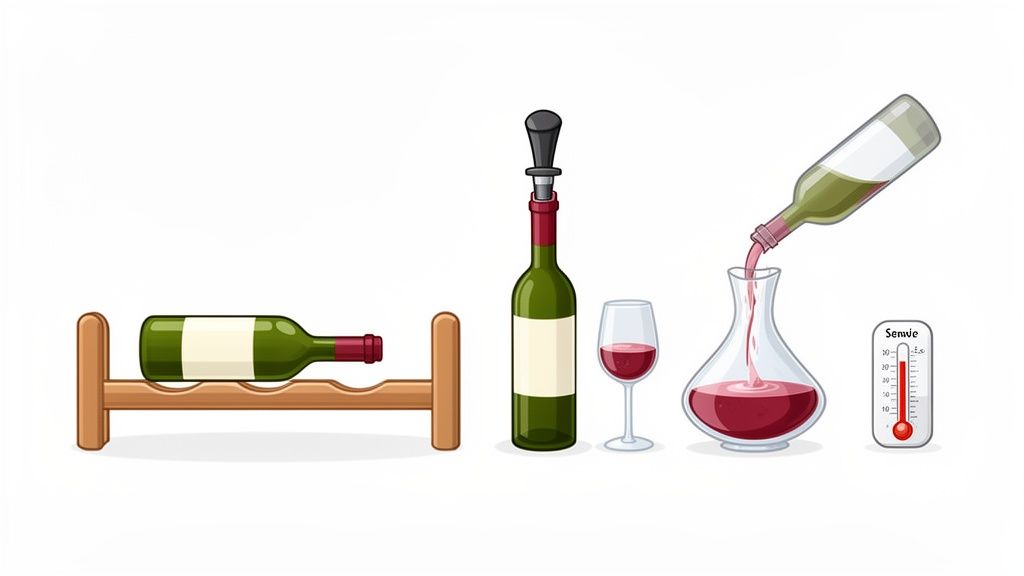
Getting the most out of your dry red wine doesn't stop when you bring the bottle home. How you store and serve it can make or break the tasting experience, unlocking all the incredible flavours and aromas the winemaker worked so hard to create.
The good news? You don’t need a fancy underground cellar to get it right. A few simple, consistent habits are all it takes to ensure every glass is as good as it can be.
The Ideal Serving Temperature
One of the biggest mistakes we see is serving red wine too warm. When a red gets warm, the alcohol fumes can dominate, completely masking the beautiful fruit notes and making the wine taste flat or ‘soupy’.
On the flip side, serving it too cold mutes the aromas and makes the tannins feel harsh and astringent. It’s all about finding that perfect sweet spot.
- Lighter-bodied reds (Pinot Noir): Serve slightly chilled, around 12-14°C.
- Medium-bodied reds (Grenache, Merlot): Aim for 14-16°C.
- Full-bodied reds (Shiraz, Cabernet Sauvignon): Best at a cool room temperature, around 16-18°C.
Here's a simple trick we use all the time: just pop your bottle of red in the fridge for about 20 minutes before you plan to open it. This brings it down to a much more expressive and enjoyable temperature.
To Decant or Not to Decant
Decanting—pouring wine into a separate vessel before serving—does two key things. First, it introduces oxygen (aeration), which helps soften the tannins and allows the aromas to open up. This is a game-changer for young, powerful reds like a big McLaren Vale Shiraz.
Second, it helps separate an older wine from any sediment that may have formed in the bottle over the years.
For most young, everyday drinking wines, a good swirl in your glass is all you need. But for a bold, tannic red, giving it 30-60 minutes in a decanter can truly transform the experience from great to unforgettable.
Just as your wine benefits from the right conditions, it's worth remembering that proper storage techniques are key for other fine pantry items too. For long-term wine storage, the basics are simple: find a cool, dark place with a stable temperature, away from direct sunlight and vibrations.
Why McLaren Vale Is a Premier Dry Red Region
When you're on the hunt for a world-class Australian dry red, you’ll quickly find that all roads lead to McLaren Vale. This stunning pocket of South Australia, tucked between rolling hills and a breathtaking coastline, has a unique geographical advantage that makes it a true paradise for growing grapes.
So, what's the secret sauce? It all comes down to the powerful maritime influence. Cooling sea breezes sweep in from the Gulf St Vincent, blanketing the vineyards and allowing the grapes to ripen slowly and steadily. This beautiful balance is the key—it stops the fruit from becoming overripe and jammy, helping it develop deep, complex flavours while holding onto that all-important acidity.
A Shiraz Heartland
While plenty of grapes feel right at home here, McLaren Vale is, without a doubt, the heartland of Australian Shiraz. It’s become the country's go-to destination for premium dry reds, with Shiraz making up around 60% of the total grape crush. The result is a wine that’s both powerful and refined, bursting with rich dark fruit and a signature velvety texture. You can dive deeper into the diverse varieties of McLaren Vale on Wikipedia.
But the story doesn't end with Shiraz. The region’s varied microclimates let other grapes shine, too.
- Grenache: McLaren Vale is home to some of the oldest Grenache vines on the planet, producing incredibly aromatic wines loaded with bright red fruit and spicy undertones.
- Cabernet Sauvignon: The Cabernets from this region offer a unique expression, often showing off rich blackcurrant notes alongside a subtle minty or savoury edge that is distinctly McLaren Vale.
The combination of ancient geology, diverse soils, and a Mediterranean climate gives winemakers an incredible palette to work with. It allows them to craft wines with a distinct sense of place—wines that are not just delicious, but also tell the story of where they came from.
This remarkable consistency and quality are exactly why a dry red wine from McLaren Vale is always a reliable and exciting choice, no matter the occasion.
Your Top Questions About Dry Red Wine Answered
Diving into the world of wine can feel like learning a new language, with terms like 'dry,' 'tannic,' and 'bitter' often causing a bit of confusion. Don't worry, you're not alone! We get asked these questions all the time.
Let's clear the air and tackle some of the most common queries about dry red wine, so you can feel more confident with every sip.
Is a Dry Red Wine the Same As a Bitter Wine?
Great question, and the simple answer is no—they’re completely different things. Dryness in wine is all about the absence of sugar, not a flavour you can taste.
That mouth-puckering, slightly astringent feeling that coats your tongue and gums? That’s actually tannin. Tannins are natural compounds found in grape skins, seeds, and stems, and they give a wine its structure and texture. A young, powerful Cabernet Sauvignon, for instance, can feel quite 'grippy' because of its high tannins, but that has nothing to do with its sweetness level.
A great way to think about it is to compare unsweetened black tea with black coffee. Both are dry (meaning they have no sugar), but that drying sensation you get from the tea comes from tannins, which feels very different from the bitterness of the coffee. Getting this distinction down is a game-changer for describing what you're tasting.
How Can I Tell If a Wine Is Dry From the Label?
You’ll be happy to know this is easier than it seems. The vast majority of red wines you’ll find on a shelf are fermented until they're completely dry. So, you can pretty much assume any bottle of red is dry unless it's specifically marked as a "sweet red" or a fortified dessert style like Port.
Here’s another handy tip: check the alcohol by volume (ABV). An ABV of 13.5% or higher is usually a dead giveaway. This tells you that nearly all the natural grape sugars were converted into alcohol during fermentation, leaving you with a classic, delicious dry red wine.

Comments (0)
There are no comments for this article. Be the first one to leave a message!