
Beyond the bold reds and crisp whites you might know, there's a hidden treasure in Australia's wine landscape. This guide is your introduction to the captivating world of Australian dessert wines, a diverse and historic category often called ‘liquid gold’.
We’ll explore the incredible history and craftsmanship behind these remarkable sweet styles, from the legendary fortified Muscats of Victoria to the delicate, honeyed Botrytis wines of the Riverina.
Uncorking the Secrets of Australian Sweet Wine
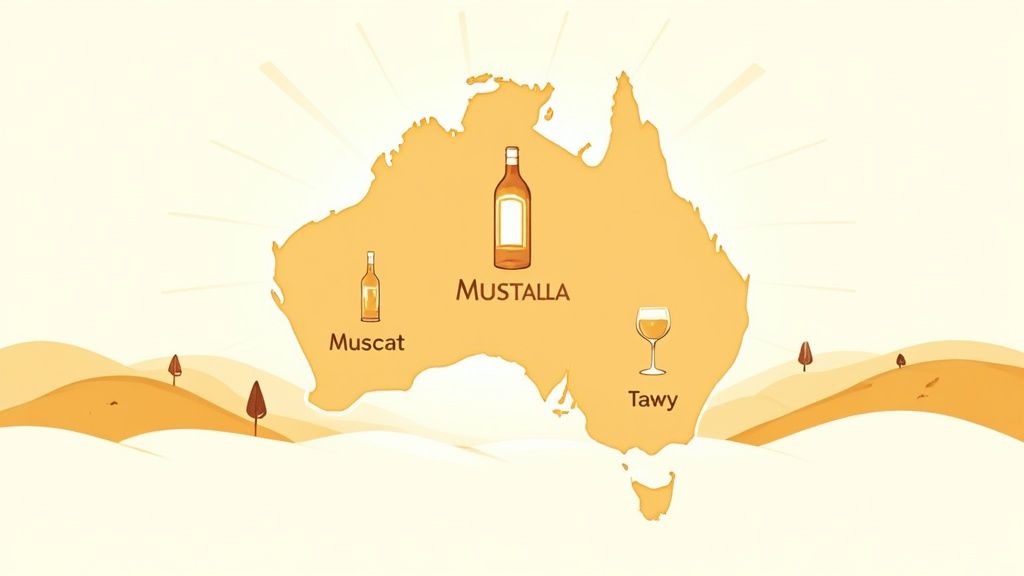
When you think of Australian wine, powerful Shiraz or zesty Chardonnay probably jump to mind first. Yet, the nation’s dessert wines represent some of its oldest traditions and most celebrated creations. These aren't just sugary afterthoughts; they are complex, historically significant wines shaped by unique climates and meticulous techniques passed down through generations.
Think of this guide not just as a tasting manual, but as a journey into the stories behind the bottle. We'll get past simple definitions to discover why these wines are such a cherished part of Australia's winemaking heritage. For those looking to deepen their appreciation of the country itself, you might even consider planning your own exciting Australia journey.
What You Will Discover
This guide is designed to give you a complete picture of the dessert wines Australia proudly produces. We'll cover everything from how they're made to the perfect food pairings. By the end, you'll feel confident choosing, serving, and savouring these exceptional bottles.
Here’s a taste of what we’ll explore:
- The Four Main Styles: We'll break down the core types—Fortified, Botrytised, Late-Harvest, and Icewine—explaining how each gets its distinct character.
- Australia’s Premier Regions: Discover iconic areas like Rutherglen and the Riverina that are synonymous with world-class dessert wines.
- Tasting and Pairing: Learn how to appreciate the nuances of these wines and match them with classic desserts and even surprising savoury dishes.
- Buying and Storing: Get practical tips on reading labels, finding great value, and keeping your wine in perfect condition.
Dessert wine is more than a category; it's a celebration of patience and precision. From sun-dried grapes to the magic of 'noble rot', each style tells a unique story of how sweetness is captured and concentrated, resulting in some of Australia’s most memorable and long-lasting wines.
This journey will equip you with the knowledge to appreciate the true depth and variety that Australian dessert wines have to offer, proving they deserve a place at every table.
How Australian Dessert Wines Get Their Sweetness
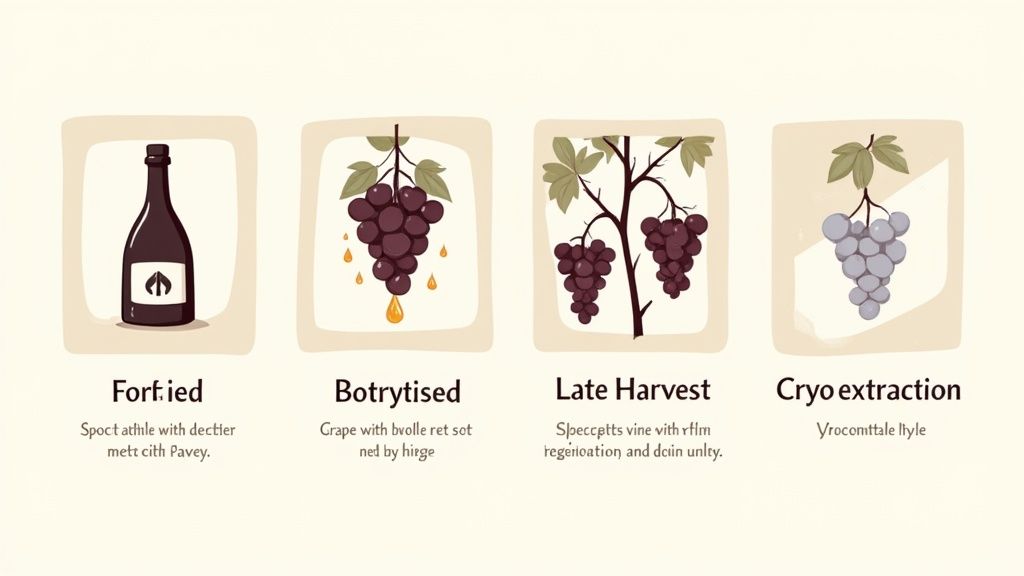
That incredible sweetness you find in a great dessert wine isn't just a case of adding a spoonful of sugar. It’s pure winemaking artistry, a set of clever techniques designed to concentrate the natural sugars already bursting inside the grapes. Australian winemakers are masters of this, using a few distinct methods that each lead to a completely different style and flavour in the bottle.
Think of it this way: a chef can intensify a sauce by slowly reducing it, adding a rich stock, or letting the ingredients caramelise. Winemakers have their own playbook for achieving that luscious, balanced sweetness that defines the very best dessert wines Australia has to offer. Let’s break down the four key methods they use to craft this liquid gold.
Fortification: Pressing Pause on Fermentation
Fortification is one of the oldest and most celebrated tricks in the Australian winemaking book. At its heart, the process is simple: the winemaker adds a neutral grape spirit (think of it as a clean, high-proof brandy) to the wine while it's still fermenting. This one move changes everything.
Picture the yeast in the grape juice as a busy crew, working hard to turn sugar into alcohol. The sudden addition of high-alcohol spirit is like a boss walking in and yelling "everyone stop!" The yeast immediately gives up, leaving a whole lot of the grapes' natural sweetness behind in the wine.
This not only creates a deliciously sweet profile but also ramps up the alcohol content, usually to between 15% and 22% ABV. The extra booze acts as a preservative, allowing these wines to age gracefully for decades, and adds a wonderful body and warming texture. It's the secret behind some of our most iconic, cellar-worthy wines. To get the full story, check out our complete guide to fortified wines for a deeper dive into their history and character.
Botrytis: The Magic of Noble Rot
This might be the most magical—and strangest—way to make a dessert wine. It all comes down to a special kind of fungus called Botrytis cinerea, known more poetically as "noble rot." Now, rot doesn't sound very appealing, but when conditions are just right, this fungus is the winemaker’s greatest ally.
Think of noble rot as a tiny artist that carefully pierces the grape's skin with thousands of microscopic holes. This allows water to slowly evaporate out of the grape, concentrating everything left inside—the sugars, acids, and flavours. It’s nature’s own dehydration process, turning plump grapes into shrivelled little flavour bombs packed with an intense, honeyed nectar.
Getting this to happen is a real balancing act. It needs a very specific climate: misty, damp mornings to help the fungus grow, followed by dry, sunny afternoons to stop it from turning into a destructive grey rot that would ruin the fruit.
The Riverina region in New South Wales is world-famous for its botrytised wines. Its unique climate is perfect for letting noble rot work its magic on Sémillon grapes, creating dessert wines that give the legendary Sauternes from France a run for their money. De Bortoli's Noble One, first made in 1982, is the wine that put Australian botrytised styles on the global map.
The wines that result are golden, intensely complex, and brimming with notes of apricot, honeycomb, and ginger. They are a true testament to the partnership between nature and the patient winemaker.
Late Harvest: Patience in the Vineyard
The late harvest method is probably the most intuitive, and it relies on one simple virtue: patience. Just as the name implies, winemakers deliberately leave the grapes hanging on the vine long after the normal harvest time has passed.
It's just like the fruit in your kitchen bowl. A banana left for an extra day or two gets sweeter and its flavour becomes more intense. The same thing happens in the vineyard. As the grapes overripen, they accumulate more sugar and begin to dehydrate a little, concentrating the juice within.
This extra hang-time develops wonderfully rich and ripe fruit characters. The final wines are often bright and luscious, tasting of pure, sun-drenched fruit. There are a couple of ways to do it:
- Standard Late Harvest: Grapes are simply left on the vine for a few extra weeks to build up sugar.
- Cane Cut: A more hands-on approach where the winemaker snips the cane that supplies water to the grape bunches. This starves the grapes of water, forcing them to shrivel and concentrate their flavours right there on the vine.
This technique works beautifully with aromatic grapes like Riesling, creating wines with a perfect tug-of-war between sweetness and zingy acidity.
Cryoextraction: Australia's Answer to Icewine
True Eiswein, or Icewine, comes from grapes that have literally frozen solid on the vine in icy climates like Canada or Germany. When these frozen grapes are pressed, the ice crystals stay behind, and only a tiny drop of super-concentrated, sugary juice is squeezed out.
Of course, most of Australia is far too warm for that to happen naturally. But our clever winemakers have found a way to recreate the magic using a technique called cryoextraction. They let the grapes get as ripe as possible, then pick them and pop them into a commercial freezer at the winery.
This man-made deep freeze achieves the exact same result. The frozen grapes are pressed while they're still solid, separating the intensely sweet juice from the water ice. The method produces wines of incredible purity and flavour intensity, with crystal-clear fruit notes and a sharp acidity that balances the sweetness. It may not be traditional Icewine, but it’s Australia’s brilliant and delicious take on the style.
Discovering Australia's Premier Sweet Wine Regions
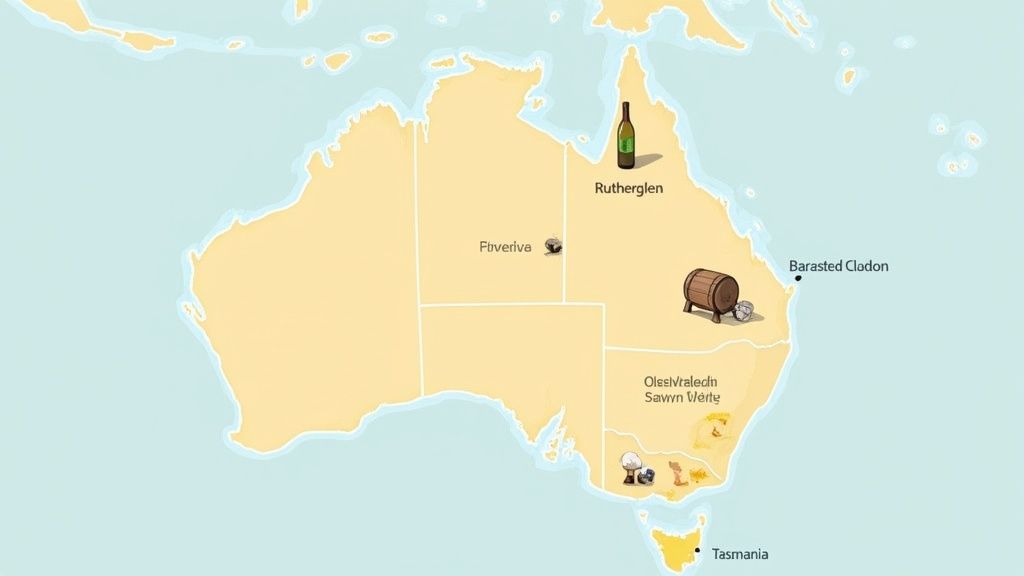
To really get Australian dessert wine, you have to understand the places it comes from. Just like a salty sea breeze shapes coastal plants, the unique climate, soil, and geography of each wine region—its terroir—imprints a distinct personality onto every bottle. The final taste in your glass is a story about the sun, the rain, and the land itself.
Australia is home to several world-renowned regions that have absolutely mastered the art of sweet wine. Each area has its own specialty, dictated by its unique corner of the continent. Let's take a quick tour through the heartlands of these exceptional winemaking spots.
Rutherglen, Victoria: The Home of Fortified Legends
When you talk about Australian dessert wine, all roads eventually lead to Rutherglen. This historic region in northeastern Victoria is the undisputed king of fortified wines, specifically Muscat and Topaque (which you might remember as Tokay).
The climate here is just perfect for this style. Long, warm, and dry autumns allow the grapes to hang on the vine, achieving an incredible level of ripeness and concentration. This sun-baked intensity is the foundation for the deep, complex flavours that make Rutherglen fortifieds famous.
For generations, winemaking families in Rutherglen have perfected their craft, passing down knowledge and ancient stocks of wine. Their unique classification system—Rutherglen, Classic, Grand, and Rare—is a testament to the dedication required to age these wines for decades, creating liquid history.
These aren't just wines; they're heirlooms. The resulting Muscats and Topaques are rich and luscious, with flavours of raisins, dried figs, toffee, and dark spices that just seem to linger forever.
Riverina, New South Wales: Australia's Noble Rot Capital
While Rutherglen basks in dry heat, the Riverina region in New South Wales thrives on humidity. It has become the epicentre for Australia's world-class Botrytised wines, especially those made from the Sémillon grape.
The secret to the Riverina's success is its specific microclimate. Nestled near the Murrumbidgee River, the area gets cool, misty autumn mornings followed by warm, dry afternoons. This is the perfect recipe for the Botrytis cinerea fungus, or 'noble rot', to flourish.
The morning fog encourages the fungus to grow on the grapes, while the afternoon sun stops it from turning destructive. It’s a magical process that dehydrates the grapes, concentrating their sugars and acids to create intensely flavoured, honeyed wines with notes of apricot, marmalade, and candied peel. It’s a delicate dance with nature that producers here have mastered.
South Australia: A Fortified Powerhouse
South Australia is an absolute titan in the Australian wine industry, and its contribution to dessert wine is immense. With over 60 distinct wine areas, the state produces the lion's share of the nation's wine, exporting around 800 million litres annually. Its historical prowess shines in fortified styles from iconic regions like the Barossa Valley and McLaren Vale.
The Barossa, in particular, has a long and storied history of producing rich, Tawny-style fortifieds. These wines, often aged in old barrels for years, develop complex nutty and caramelised characters. Labels like Seppelt's Para Vintage Tawny are legendary, with solera systems blending vintages that stretch back to the 1800s. It’s an incredible showcase of the state's deep expertise.
To get a better sense of the landscape, you can explore more about South Australia's premier wine regions and their diverse offerings in our detailed guide.
Cool-Climate Elegance in Tasmania and Beyond
While warm regions are famous for fortifieds, Australia’s cooler climates produce a completely different style of sweet wine—one defined by elegance and zesty acidity. Tasmania is a shining example, where conditions are ideal for crafting exquisite Late-Harvest Riesling.
The island's long, cool, and sunny growing season lets the grapes ripen slowly, developing intense fruit flavours while holding onto their crucial natural acidity. This acidity is key; it provides a beautiful counterbalance to the sweetness, preventing the wine from ever feeling cloying or heavy.
The result is a dessert wine that is vibrant, fresh, and aromatic, bursting with notes of lemon, lime, and honey. These wines prove that the world of dessert wines Australia produces is incredibly diverse, offering a style for every palate and occasion.
Tasting and Pairing Your Dessert Wine
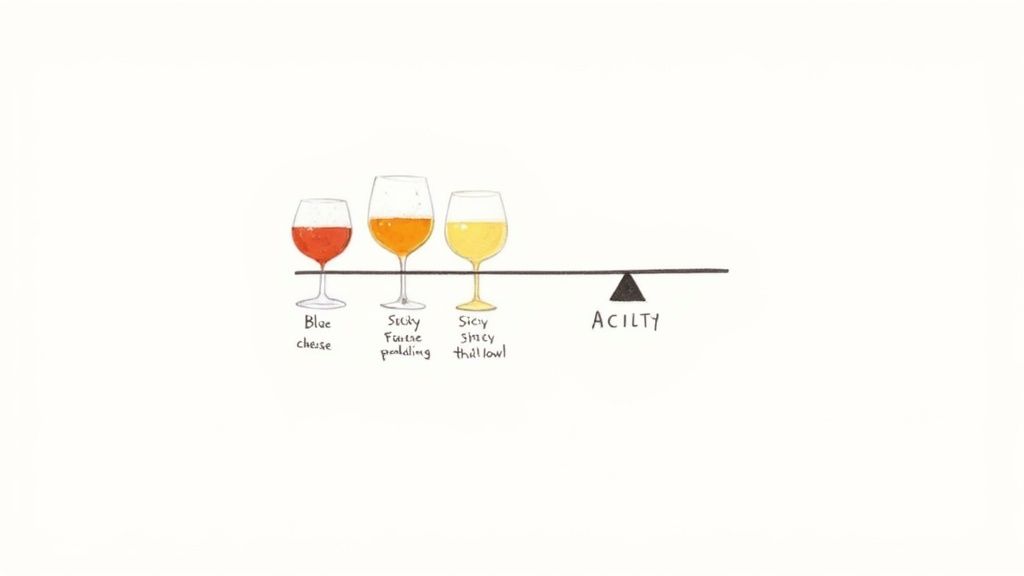
Knowing the difference between a Botrytis and a Late-Harvest wine is one thing, but the real joy comes when you actually pour a glass. The magic truly happens in that first sip, when you discover the incredible balance of flavour and texture. This is your practical guide to getting the most out of every drop.
Tasting a great dessert wine is about so much more than just sweetness. It’s an exploration of how all the components play together. The best examples are never just sugary; they have a zinging acidity that slices through the richness, a luscious texture that coats your palate, and a finish that seems to go on forever.
What to Look for in the Glass
Before you even take a sip, give the wine a moment. The whole experience starts with your eyes and nose, which will give you plenty of clues about its age, style, and complexity.
First, just look at the colour. Is it a pale, straw-like yellow, suggesting a young Late-Harvest Riesling? Or is it a deep, brooding amber that hints at a Rutherglen Muscat that's been sleeping in a barrel for decades? As these wines age, their colours deepen, shifting from light gold to rich mahogany.
Next, give the glass a gentle swirl and take a good sniff. The aromas can be incredibly layered and complex. You might pick up fresh apricot and honey in a Botrytis Semillon, or a much richer bouquet of toasted nuts, sticky toffee, and dried figs in an aged Tawny. Think of these scents as a preview of the deliciousness to come.
A key principle when tasting dessert wine is to look for balance. The sweetness needs a partner in crime: a refreshing acidity that cleanses the palate and makes you want another sip. Without that crucial acid backbone, a sweet wine can feel heavy and cloying. With it, the wine feels vibrant, alive, and harmonious.
Moving Beyond Dessert Pairings
The most obvious partner for a sweet wine is, of course, a sweet dish. But the world of pairing is far more exciting than just matching sweet with sweet. In fact, some of the most memorable pairings come from creating contrast, turning the wine into a versatile player that can shine throughout a meal.
A golden rule to remember is that your wine should always be at least as sweet as the dessert, if not sweeter. If the food is sweeter, it can make the wine taste flat, even a little bitter. But don’t stop there. Be brave and try these wines with savoury dishes—the results can be absolutely spectacular. For more classic ideas, check out our guide to desserts and wine matches made in heaven.
Perfect Pairings for Australian Dessert Wines
To get you started, here's a quick-reference table exploring some timeless and unexpected pairings for popular Australian dessert wine styles. These combinations work by either complementing similar flavours or creating a delicious, surprising contrast.
| Wine Style | Classic Sweet Pairing | Adventurous Savoury Pairing | Why the Pairing Works |
|---|---|---|---|
| Botrytis Semillon | Apricot and almond tart | Roquefort or Stilton blue cheese | The wine's honeyed sweetness brilliantly cuts through the salty, pungent kick of the cheese. |
| Rutherglen Muscat | Sticky toffee pudding | Aged cheddar or chicken liver pâté | The wine's raisined, nutty notes echo the savoury complexity of the cheese and enrich the pâté. |
| Late-Harvest Riesling | Passionfruit pavlova | Spicy Thai green curry | The wine's zippy acidity and touch of sweetness masterfully tame the chilli heat, creating a refreshing balance. |
| Fortified Tawny | Rich chocolate mud cake | Salted almonds and olives | The nutty, savoury notes of the food bring out the complex dried fruit and spice in the wine. |
This little table just scratches the surface. It shows just how versatile Australian dessert wines can be, earning them a rightful place from the cheese course right through to the final sweet treat of the evening. Don't be afraid to experiment
How to Buy and Store Australian Dessert Wine
So, you’re ready to dive into the wonderful world of Australian dessert wines. Fantastic choice. Stepping into a bottle shop can feel a bit overwhelming, but choosing the right bottle is far easier than you might think. With a few key pointers, you'll be able to confidently pick a style that hits the mark for your taste and budget.
Think of the wine label as your guide. It holds all the critical clues: the grape (like Muscat or Semillon), the region it came from, and of course, the producer. For dessert wines, the region is a massive hint. Rutherglen, for instance, is the spiritual home of fortifieds, while the Riverina is the undisputed king of botrytised styles.
Decoding Rutherglen Classifications
If you're looking at a fortified wine from the legendary Rutherglen region, you'll notice a special classification system on the label. This unique tiering isn't just marketing—it's a promise of quality and age, guiding you straight to the style you'll enjoy most.
This system is a legacy of the region's deep history. While Australia's dessert wine story began way back in the late 18th century, it truly found its feet after WWII in places like Rutherglen. The area became famous for its oxidative sweet wines, which are sorted by maturity into four distinct tiers. The oldest and rarest of these can fetch a pretty penny after spending decades being carefully blended. You can find more detail on this rich history and its classifications if you want to go deeper.
The classifications break down like this:
- Rutherglen: This is the foundational style, with an average age of 3-5 years. It’s fresh, vibrant, and a brilliant starting point.
- Classic: A real step up in complexity, with an average age of 6-10 years. You'll notice richer flavours and a more luscious texture.
- Grand: Now we're getting serious. These wines are aged for an average of 11-19 years and show deep, layered notes of spice and dried fruit.
- Rare: The absolute pinnacle of Rutherglen fortifieds. With a minimum average age of 20+ years, these are intensely concentrated, powerful, and truly unforgettable.
Storing and Serving Your Wine Perfectly
Once you've got your bottle home, a little care in storage and serving will make sure every glass is as good as the winemaker intended. The good news is that the dessert wines Australia is famous for are often quite forgiving, but different styles have different needs.
Fortified wines like Muscat and Tawny are incredibly tough. Thanks to their higher alcohol content and the oxidative way they're made, they're built to last. An opened bottle, sealed up tight and kept in a cool, dark spot (a cupboard is fine, the fridge is great too), can last for several weeks, or even months, without losing its magic.
On the other hand, non-fortified styles like Botrytis Semillon and Late-Harvest Riesling are more delicate. Just treat them like you would any other premium white wine. Once you pop the cork, they should be refrigerated and enjoyed within 3 to 5 days to keep their fresh, vibrant aromas intact.
Serving Temperature Matters: The right temperature can make or break a wine. Too cold, and the aromas get muted; too warm, and the alcohol can feel a bit harsh. Nailing the serving temperature is the secret to unlocking a wine's full potential.
For the best experience, aim for these temperatures:
- Light-Bodied Wines (Botrytis, Late-Harvest): Serve these well-chilled, around 6-10°C. This keeps them refreshing and helps the sweetness feel balanced and bright.
- Full-Bodied Fortifieds (Muscat, Tawny): These are best at a cool room or cellar temperature, around 12-16°C. A slight chill is all you need to stop the alcohol from overpowering those gorgeous nutty and caramel notes.
Your Top Questions About Australian Dessert Wines
As we get to the end of our journey through Australia's sweet wine scene, a few questions always seem to pop up. This is where we tackle those common queries, clear up any lingering confusion, and give you a handy cheat sheet for your next bottle shop visit. Let's dive in.
What’s the Difference Between a Fortified Wine and a Dessert Wine?
This is a really common point of confusion, but it's simpler than you think. "Dessert wine" is the big, broad umbrella for any wine that’s noticeably sweet. A "fortified wine" is just one specific style that sits under that umbrella.
The real difference is in the winemaking. Fortification is the process of adding a grape spirit (think brandy) to the wine while it’s still fermenting. This spirit stops the yeast in its tracks, preventing it from eating all the sugar. The result? You get leftover natural sweetness and a higher alcohol kick.
So, while all fortified wines are dessert wines, not all dessert wines are fortified. A Botrytis Semillon or a Late-Harvest Riesling gets its sweetness from naturally concentrated grapes, with no spirits added.
How Long Does Dessert Wine Last After Opening?
This one really depends on the style. When it comes to staying power, fortified wines are the undisputed champions.
Wines like Rutherglen Muscat or a classic Tawny are made in an oxidative style, meaning they’ve already been exposed to oxygen during their long ageing process. Combined with their higher alcohol content, this makes them incredibly stable. You can pop the cork back in, store it somewhere cool and dark, and enjoy a glass over several weeks—or even months.
On the other hand, you’ll want to treat the non-fortified styles just like a regular bottle of white wine.
- Botrytis Semillon & Late-Harvest Riesling: These are far more delicate. Plan to finish the bottle within 3 to 5 days of opening.
- Storage: Always keep them sealed tightly in the fridge to hold onto those fresh, vibrant aromas and stop them from oxidising.
Are Australian Dessert Wines Always Expensive?
Absolutely not! This is probably the biggest myth out there. Sure, you can find some stunning, old dessert wines that fetch a high price—especially the 'Rare' Rutherglen Muscats that have been ageing for decades. But the category as a whole offers incredible value.
You can easily find world-class sweet wines that are surprisingly affordable. A brilliant Botrytis Semillon from the Riverina or a foundational-level Rutherglen Muscat can often be found for under $30 for a half-bottle (375ml), which is the standard size.
These bottles are a fantastic, accessible way to start exploring Australian sweet wines. They're proof you don’t need to break the bank to taste something truly special.
Should Dessert Wine Be Served Chilled?
Generally, yes, but the "how chilled" depends entirely on the style. Getting the temperature right is key, as it helps balance the sweetness and lets all those complex aromas really sing.
Lighter, more aromatic wines are best served quite cold. This lifts their bright fruit and floral notes and keeps the wine feeling fresh and zippy on the palate.
For the richer, more complex fortifieds, think cool but not ice-cold. If you serve them too warm, the alcohol can feel a bit aggressive. But serve them straight from the fridge, and you'll dull all those gorgeous nutty, raisined aromas. A good rule of thumb is to pull a fortified wine out of the fridge 20-30 minutes before pouring.
Here’s a quick guide:
- Botrytis Semillon & Late-Harvest Riesling: Serve well-chilled, around 6-10°C.
- Rutherglen Muscat & Tawny: Serve at a cool cellar temperature, around 12-16°C.
Ready to discover your next favourite bottle? At McLaren Vale Cellars, we specialise in the exceptional wines of South Australia, from rich fortifieds to crisp whites. Explore our curated sample packs and find the perfect wine for any occasion. Visit us at https://www.mclarenvalecellars.com to browse the collection.
Comments (0)
There are no comments for this article. Be the first one to leave a message!