
Welcome to the world of Australian dessert wine—a category far more complex and captivating than just a simple ‘sweet wine’ label might suggest. From the luscious, ancient fortifieds of Rutherglen to the honeyed 'stickies' of the Riverina, Australia's dessert wines are a testament to our country's incredible winemaking versatility.
Your Guide to Australian Dessert Wines
Often misunderstood or relegated to a dusty corner of the bottle shop, these wines are some of Australia’s most unique and historically significant creations. This guide is here to demystify these liquid treasures. Forget any preconceptions you might have; these are not just sugary afterthoughts but wines of immense character and history, capable of creating truly memorable food pairings.
Think of this as your roadmap to understanding how our winemakers craft liquid gold. We'll explore the key styles and regions that define the landscape of dessert wine in Australia, making the journey exciting whether you're a curious newcomer or a seasoned enthusiast.
What You Will Discover
We want to give you the confidence to select, serve, and savour these remarkable wines, which are a celebrated cornerstone of Australia's winemaking identity. You'll learn about:
- The Main Styles: We’ll break down the crucial differences between fortified wines, botrytis ‘stickies,’ and late-harvest styles.
- Iconic Wine Regions: Journey with us to the heartlands of sweet wine production, from Victoria's historic Rutherglen to South Australia's famed valleys.
- Perfect Pairings: Discover how to match these wines with everything from cheese boards to decadent chocolate desserts. It’s an unforgettable tasting experience.
- Buying and Cellaring: Get practical advice on reading labels, choosing the right bottle for the occasion, and storing it correctly for years to come.
At their best, Australian dessert wines offer a sensory experience unlike any other. They balance intense sweetness with refreshing acidity, delivering layers of flavour that can evolve for decades in the bottle.
Our exploration begins by decoding the fundamental styles. By understanding how each wine gets its signature sweetness—whether through adding a little spirit, the magic of ‘noble rot,’ or simply letting grapes hang longer on the vine—you'll gain a deeper appreciation for the artistry involved. Let’s dive in.
Decoding the Styles of Australian Sweet Wine
The world of Australian dessert wine is incredibly diverse, with each style telling a unique story of how it was made. Getting your head around these core methods is the key to appreciating what makes each bottle so special. Far from being one-dimensional, these wines get their sweetness through distinct and fascinating processes.
Let's explore the three main pathways winemakers take to create these liquid treasures: fortified wines, botrytised wines, and late-harvest wines. Each technique results in a completely different experience in the glass, from powerful and rich to delicate and aromatic.
Fortified Wines: The Powerhouses of Flavour
Fortified wines are arguably the most historically important style of dessert wine Australia produces. The process is straightforward but transformative: a neutral grape spirit (think brandy) is added to a wine while it's still fermenting. This move achieves two crucial things.
First, it abruptly stops the yeast from doing its job. The higher alcohol level halts fermentation in its tracks, leaving behind all the unfermented grape sugars. That’s where the sweetness comes from. Second, it bumps up the final alcohol content, which not only preserves the wine but also gives it a richer, fuller body.
Think of it like adding a shot of espresso to your coffee. It doesn't just make it stronger; it fundamentally changes the flavour and intensity, creating something new and powerful. This is the magic behind some of Australia's most legendary sweet wines.
- Rutherglen Muscat: Made from the Muscat à Petits Grains Rouge grape, this is Australia's gift to the wine world. Aged for years in old oak barrels using a fractional blending system, it develops incredible complexity with notes of raisin, fig, caramel, and nuts.
- Topaque: Once known as Tokay, this Rutherglen specialty is crafted from the Muscadelle grape. It offers a completely different profile of cold tea, toffee, and malt with a characteristically smooth and luscious texture.
Fortified wines are built to last. Their combination of high sugar and alcohol means a well-made Australian fortified can age gracefully for decades, even centuries, developing extraordinary complexity over time.
For anyone keen to explore this historic category further, our complete guide to fortified wines offers a deeper dive into their types and rich history.
Botrytised Wines: The Magic of Noble Rot
The term 'botrytised wine' might sound a bit clinical, but its story is one of nature's most incredible collaborations. These wines are made from grapes affected by a specific fungus, Botrytis cinerea, affectionately known as 'noble rot'.
Under the perfect conditions—misty mornings followed by sunny, dry afternoons—this fungus carefully pierces the grape skins without breaking them. This allows water to evaporate, concentrating the grape's sugars, acids, and flavours into a honeyed nectar.
Imagine dehydrating a piece of fruit. You're removing the water, but all the flavour and sweetness becomes incredibly intense. Noble rot does this naturally right on the vine, creating grapes that yield a wine of unparalleled complexity and sweetness, all kept in check by a backbone of vibrant acidity.
The Riverina region in New South Wales is Australia's epicentre for this style, particularly with the Semillon grape. These 'botrytis' or 'sticky' wines are famous for their notes of apricot, marmalade, and honeycomb, with a zesty finish that stops them from ever feeling cloying.
Late Harvest Wines: Ripened by Time
The most direct route to a sweet wine is the late harvest technique. Just as the name suggests, winemakers simply leave the grapes on the vine long past the normal picking date. This extended 'hang time' allows the grapes to build up more and more natural sugar.
During this period, the grapes also start to dehydrate slightly on the vine, a process called passerillage. This further concentrates the sugars and flavours inside each berry. The resulting wine is sweet but often retains a bright, fresh fruit character because it hasn't gone through the same transformation as fortified or botrytised styles.
This method is a favourite for aromatic white varieties, creating wines that are a pure expression of the grape itself.
- Late Harvest Riesling: A specialty of the Clare and Eden Valleys, these wines burst with luscious flavours of lime cordial, baked apple, and honey. Crucially, they hold onto Riesling's signature high acidity, which provides a beautiful, clean counterbalance to the sweetness.
- Other Varieties: Winemakers also use grapes like Gewürztraminer and Pinot Gris to craft late-harvest styles, each offering its own unique aromatic profile, from lychee and rose petal to pear and spice.
Understanding these three core styles—fortification, noble rot, and late harvest—unlocks the diverse and delicious landscape of dessert wine Australia has to offer. Each method provides a different lens through which to view sweetness, creating a whole spectrum of flavours for every palate.
Australia's Premier Dessert Wine Regions
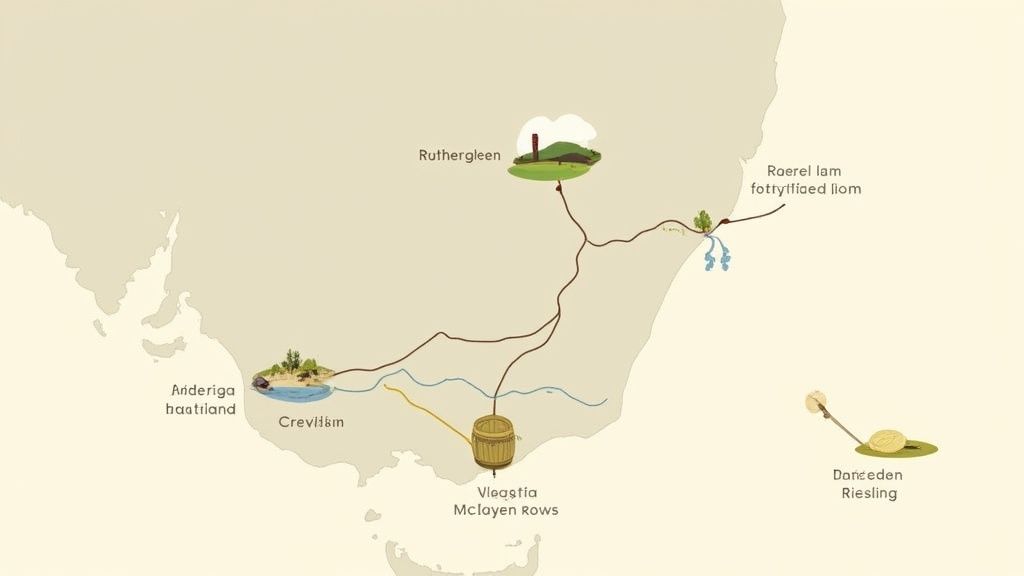
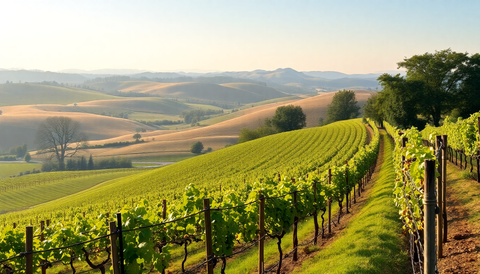
To really get to the heart of a great Australian dessert wine, you have to know where it comes from. The unique character of every style is deeply connected to its specific home, a concept the wine world calls terroir. It’s this beautiful relationship between the land, climate, and the winemaker's skill that turns humble grapes into liquid gold.
Our trip through Australia’s key dessert wine regions will show you exactly how geography shapes what’s in your glass. From the sun-baked plains of Victoria to the misty river valleys of New South Wales, each spot has its own distinct signature. To dig a bit deeper into this idea, you can explore the influence of terroir on alcoholic beverages in other contexts as well.
Let's kick things off in the heartland of Australian fortified wine, then journey to the home of world-class "stickies" before exploring the cooler climates that give us elegant, aromatic sweet wines.
Rutherglen, Victoria: The Fortified Heartland
If you say "Australian dessert wine," the first name that comes to mind for most experts is Rutherglen. This historic region in North-East Victoria is the undisputed king of fortified Muscat and Topaque, crafting some of the world's most complex and long-lived sweet wines.
What’s the secret? It’s all in the long, warm, and dry autumns. This climate lets the Muscat and Muscadelle grapes ripen to absolute perfection, building incredible concentrations of flavour and sugar. For generations, winemaking families here have mastered the solera system—a magical method of blending where younger wines are gradually mixed with older, ancient reserves.
This painstaking ageing process, which can span well over 100 years, is what gives Rutherglen Muscat its legendary character:
- Richness: A luscious, velvety texture bursting with deep flavours of raisin, fig, and dark treacle.
- Complexity: So many layers of aroma, from Turkish delight and cold tea to toasted almonds and spice.
- Longevity: These wines are almost indestructible. You can open a bottle and enjoy it for months, if not years.
Riverina, New South Wales: Home of Noble Rot
While Rutherglen has mastered fortification, the Riverina region in New South Wales has perfected the delicate art of botrytised wine. Centred around the town of Griffith, this area’s unique climate makes it a hotspot for creating world-class "stickies."
The magic ingredient here is the morning fog that rolls in from the Murrumbidgee River during autumn. These misty conditions are the perfect breeding ground for Botrytis cinerea, or 'noble rot.' When the fog lifts to reveal warm, sunny afternoons, the fungus gently pierces the grape skins. This allows water to evaporate, concentrating all the sugars and flavours inside.
The result is a luscious, golden nectar. Riverina Botrytis Semillon is famous for its vibrant notes of dried apricot, orange marmalade, and honeycomb, all cut through with a zesty acidity that keeps the wine feeling fresh and alive. It's a style that truly put Australian dessert wine on the global map.
South Australia: A Spectrum of Styles
South Australia is an absolute powerhouse of a wine state, and its contribution to the dessert wine scene is as varied as its landscape. From robust fortifieds to delicate, aromatic Rieslings, several key regions here produce their own distinct sweet styles.
This incredible diversity is a fantastic lesson in how different terroirs can shape the final wine. For a closer look at the state's various climates and soils, check out our guide to understanding Australian wine regions.
To help you get a quick overview, here’s a look at some of the key players:
Key Australian Dessert Wine Regions and Their Signature Styles
| Region | State | Primary Dessert Wine Style | Typical Flavour Profile |
|---|---|---|---|
| Rutherglen | Victoria | Fortified Muscat & Topaque | Raisin, fig, toffee, Turkish delight |
| Riverina | New South Wales | Botrytis Semillon (Sticky) | Apricot, marmalade, honeycomb, citrus peel |
| Barossa Valley | South Australia | Fortified Tawny | Caramel, roasted nuts, dried fruit, spice |
| McLaren Vale | South Australia | Fortified Tawny & Grenache | Chocolate, raspberry, spice, nutty notes |
| Clare Valley | South Australia | Late Harvest Riesling | Lime marmalade, baked apple, honey |
| Eden Valley | South Australia | Late Harvest Riesling | Lemon curd, ginger, honeysuckle |
This table just scratches the surface, but it shows the amazing variety on offer. Let’s take a closer look at a couple of these South Australian stars.
Barossa Valley and McLaren Vale
While they're famous for their powerful reds, these warm regions also produce some absolutely superb fortified wines. Often made in a 'Tawny' style from grapes like Grenache, Shiraz, and Mourvèdre, these wines are aged in old barrels to develop complex nutty, spicy, and caramelised flavours. They're a brilliant savoury-leaning alternative to the intensely sweet Muscats of Rutherglen.
Clare and Eden Valleys
These cooler, high-altitude regions are Riesling country, and they are responsible for some of Australia's finest white wines. By leaving the grapes on the vine a little longer, winemakers here craft exquisite Late Harvest Rieslings. These wines are a masterclass in balance, showing off luscious sweetness held in check by a signature backbone of piercing citrus acidity. Think lime marmalade, baked apple, and a drizzle of honey. Delicious.
How to Pair and Enjoy Australian Dessert Wines
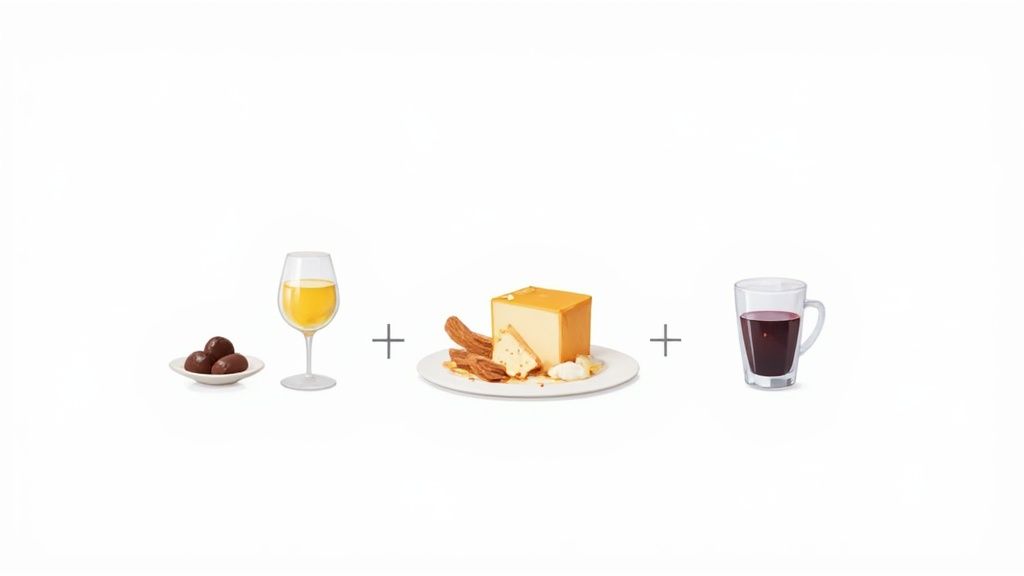
This is where the real magic happens. A great Australian dessert wine is more than just a sweet treat; it’s an experience waiting to unfold. It’s all about creating moments and flavour combinations that make you sit back and say, "Wow."
From the perfect serving temperature to a mind-blowing food match, a few simple tips can turn a good tasting into an unforgettable one.
The secret to a great pairing is balance. A top-notch dessert wine never feels heavy or cloying because its sweetness is always kept in check by a refreshing acidity. This is what cleanses your palate and keeps you coming back for another sip. When you bring food into the mix, you’re looking for harmonies and contrasts that make both the wine and the dish shine.
Mastering the Basics: Serving and Tasting
Before you even think about what’s on the plate, getting the serving right is essential. You want to appreciate all the complex flavours that make dessert wine Australia famous, and temperature plays a massive role in that.
Serve a wine too cold, and you’ll numb its beautiful aromas. Serve it too warm, and it can feel overly sweet and boozy. The sweet spot is where the wine’s full personality comes alive.
- Lighter Styles (Botrytis Semillon, Late Harvest Riesling): These beauties are best served well-chilled, around 6-10°C. This temperature lifts their delicate floral and fruit notes and puts their crisp acidity front and centre, keeping them vibrant and refreshing.
- Richer Styles (Rutherglen Muscat, Fortified Tawny): Pop these in the fridge for a bit, but serve them only slightly chilled, between 12-16°C—think cellar temperature. This allows those incredible nutty, caramel, and raisined aromas to open up fully without the cold holding them back.
When it's time to taste, reach for a smaller glass to concentrate those gorgeous aromas. Take small sips and let the wine coat your tongue. Notice its texture—is it light and zesty, or rich and velvety? Pay attention to how the flavours evolve from the first taste to the long, lingering finish.
Classic Food Pairings: A Match Made in Heaven
Here's the golden rule for pairing sweet wine with dessert: the wine should always be sweeter than the food. If the dessert wins the sweetness battle, it will make your beautiful wine taste flat, even a little bitter. Stick to this principle, and you'll unlock a world of incredible combinations.
- Rutherglen Muscat & Chocolate: The deep, raisiny, and nutty character of a Rutherglen Muscat is an absolute dream with dark chocolate. We’re talking flourless chocolate cake, decadent brownies, or even a simple square of high-quality dark chocolate.
- Botrytis Semillon & Fruit Tarts: Those glorious apricot, marmalade, and honeyed notes in a "sticky" Semillon are a perfect match for desserts featuring stone fruits. Think apricot frangipane tart, a classic crème brûlée, or even a simple baked cheesecake.
A truly exceptional pairing creates a third, new flavour that wasn't present in either the wine or the food alone. It's a culinary synergy where one plus one equals three.
Venturing Beyond Dessert: Savoury Companions
Now for one of the best-kept secrets in the wine world: dessert wines are absolutely brilliant with savoury foods. The dance between sweet, salty, and rich creates some of the most dynamic and memorable flavour experiences you can have.
Think beyond the final course. Try serving a chilled dessert wine as an aperitif or alongside a cheese platter. You can find more inspiration by exploring our detailed guide on sweet matches made in heaven for desserts and wine.
Here are a few adventurous yet foolproof savoury pairings to get you started:
- Fortified Wines & Pungent Cheeses: The intense sweetness of a Rutherglen Muscat or a Barossa Tawny is the perfect weapon to cut through the salty, creamy power of a strong blue cheese like Roquefort or Stilton. It’s a classic for a reason!
- Botrytis Semillon & Rich Pâté: The high acidity and stone-fruit sweetness of a botrytised wine beautifully slice through the rich, fatty texture of a duck liver pâté or foie gras.
- Late Harvest Riesling & Spicy Dishes: The off-dry sweetness and zesty acidity of a Clare Valley Late Harvest Riesling can tame the heat of moderately spicy Asian dishes. It's a fantastic partner for a Thai green curry or a fiery pork larb.
A Practical Guide to Buying and Storing Sweet Wines
Alright, you've got the rundown on styles, regions, and pairings. Now for the fun part: bringing a bottle home. Navigating the world of dessert wine Australia is a hugely rewarding experience, and a few practical tips will make sure you shop with confidence and walk away with a real winner.
From decoding labels to knowing which bottles to tuck away in the cellar, this is your guide to buying and storing these liquid treasures.
How to Read a Dessert Wine Label
The label is your first clue to what’s inside the bottle, and for Australian sweet wines, it’s packed with vital info. Pay attention to more than just the winery and region, as certain terms tell you a lot about the quality, age, and style you’re about to enjoy—especially when it comes to fortifieds.
If you’re looking at a Rutherglen Muscat or Topaque, the Muscat of Rutherglen Network’s four-tiered classification system is your best friend. Think of it as an invaluable guide to quality and flavour intensity.
- Rutherglen Muscat: The foundational style, with an average age of 3-5 years. It’s vibrant, fresh, and bursting with rich fruit characters.
- Classic Rutherglen Muscat: This is a serious step up in complexity, aged for 6-10 years on average. You’ll start to find more developed notes of toffee and nutty characters.
- Grand Rutherglen Muscat: Matured for an average of 11-19 years, these wines have a deep, complex character with immense depth and richness.
- Rare Rutherglen Muscat: The absolute pinnacle of the style, with a minimum average age of 20+ years. These are ancient, treasured wines offering an extraordinary sensory experience.
For botrytised and late-harvest wines, the grape variety (like Semillon or Riesling) and the region will give you a strong hint about its flavour profile. Also, take note of the bottle size—many dessert wines come in 375ml half-bottles, which is the perfect amount to share between two to four people after a meal.
Tips for Smart Shopping
When you’re ready to buy, think about the occasion and your budget. An entry-level Rutherglen Muscat offers fantastic value and serves as a brilliant introduction to the style. For a special celebration, stepping up to a 'Classic' or 'Grand' classification is an investment you won't regret.
If you're buying online, understanding the shipping process is key. A comprehensive guide to shipping wine by FedEx can be a huge help in making sure your precious bottles arrive safe and sound.
Don't be afraid to ask for a recommendation at your local bottle shop or from online specialists like us here at McLaren Vale Cellars. Our team's expertise can point you to a bottle that perfectly matches your taste and whatever you're planning to eat with it.
Storing and Cellaring Your Sweet Wines
Once your wine is home, storing it properly is the key to preserving its quality. The good news? Australian dessert wines, especially the fortified styles, are remarkably resilient.
Not every sweet wine is meant for a long sleep in the cellar. Here’s a simple breakdown of what to drink now and what to save for a special occasion down the track.
Wines to Enjoy Young
- Late-Harvest Riesling: These are at their best within 3-5 years of vintage. You want to catch them while their fresh, zesty fruit and vibrant acidity are at their peak.
- Botrytis Semillon: While the very best examples can age for decades, most are absolutely glorious within their first 5-10 years, full of bright apricot and marmalade notes.
Wines Built for the Long Haul
- Fortified Wines (Muscat, Topaque, Tawny): These are the marathon runners of the wine world. Thanks to the fortification process, they are incredibly stable and can last for decades unopened, becoming even more complex as the years roll by.
Simple Storage Rules
You don’t need a fancy cellar to keep your dessert wines happy. Just follow a few basic rules: find a cool, dark place with a stable temperature, away from direct sunlight and vibrations. For any bottles sealed with a cork, lay them on their side to keep the cork moist and prevent it from drying out.
And here’s the best part about fortified wines: once opened, they can last for weeks, or even months, if you reseal them and pop them in the fridge. This means you can savour a single bottle over multiple occasions, making them a fantastic and versatile addition to any wine lover’s collection.
Got Questions About Aussie Dessert Wines?
Even after diving into the incredible world of Australian dessert wines, a few questions always seem to pop up. We get it. It’s a category filled with unique terms and styles. To make sure you’re pouring, pairing, and enjoying these beauties with complete confidence, we’ve tackled some of the most common queries right here.
Think of this as your go-to guide for clearing up any lingering confusion. From serving temps to local lingo, these tips will lock in what you've learned and add a few practical tricks to your wine know-how.
What's the Difference Between Dessert Wine and Fortified Wine?
This is easily the most common question we hear, but the answer is pretty straightforward once you break it down.
Think of ‘dessert wine’ as a category based on when you drink it—it’s a wine that’s sweet enough to be enjoyed with or as dessert. ‘Fortified wine’, on the other hand, describes how the wine is made—by adding a neutral grape spirit (like brandy) to stop fermentation. One term is about its purpose, the other is about its production.
So, a classic Rutherglen Muscat is absolutely a fortified wine and a dessert wine. But a delicate Late Harvest Riesling is a dessert wine that isn't fortified. It’s the old "all squares are rectangles, but not all rectangles are squares" scenario.
Should I Serve Dessert Wine Chilled?
Yes, you absolutely should—but getting the temperature right is key, and it changes depending on the style. Chilling helps balance the sweetness and lifts the wine’s aromas, but go too cold and you’ll numb all those delicious flavours you’re meant to be enjoying.
Here’s a simple rule of thumb:
- Lighter, aromatic styles like Botrytis Semillon and Late Harvest Riesling are at their best when served properly chilled, around 6-10°C. This keeps them crisp and refreshing, making their vibrant fruit notes sing.
- Richer, complex styles like a Rutherglen Muscat or a Barossa Tawny just need a slight chill, somewhere between 12-16°C. This stops them from feeling too heavy or boozy while letting all those deep, nutty, and caramelised aromas open up in the glass.
How Long Does Dessert Wine Last After I've Opened It?
How long an open bottle of dessert wine lasts comes down to one simple factor: is it fortified? This is where the style makes a massive difference.
Fortified wines are the marathon runners of the wine world. All that extra alcohol and sugar act as natural preservatives. Once you pop the cork on a Muscat or Tawny, you can keep enjoying it for weeks, even months, as long as you seal it tightly and pop it in a cool, dark place (the fridge is perfect).
A non-fortified sweet wine, like a Late Harvest Riesling, is more of a sprinter. Treat it like any other bottle of white wine. Once it's open, you’ll want to finish it within 3-5 days before its fresh, delicate aromas start to fade.
What Does 'Stickie' Mean in Australia?
Spend any time around Aussie wine lovers, and you’re bound to hear the word ‘stickie’. It’s our affectionate, catch-all slang for any sweet dessert wine.
The name comes from the rich, viscous, and wonderfully sticky texture that so many of these luscious wines have. It's a friendly, casual term you’ll hear for everything from a golden Botrytis Semillon from the Riverina to a late-harvest style from the Clare Valley. Dropping the word ‘stickie’ into conversation is a surefire way to sound like you know your way around the sweeter side of Australian wine.
Ready to explore the rich and diverse world of Australian dessert wines? At McLaren Vale Cellars, we've curated a stunning selection of fortifieds, stickies, and sweet wines from some of the region's most celebrated producers. Discover your next favourite bottle today. https://www.mclarenvalecellars.com

Comments (0)
There are no comments for this article. Be the first one to leave a message!