
Forget the price tag for a moment. A genuinely decent sparkling wine isn't about how much you paid, but about the balance, the complexity, and the simple joy it brings to the table. It’s a wine where the bubbles feel fine and lively, the acidity is crisp and refreshing, and all the fruit and yeasty flavours play together perfectly.
What Makes a Sparkling Wine Decent?

Let’s cut through the jargon. Finding a great bottle of bubbles is really about spotting a few key quality markers you can see, smell, and taste for yourself. It’s less about a fancy label and more about what’s actually happening inside the glass. Once you know what to look for, you can confidently pick a bottle that hits the mark every single time.
It all starts the moment you pour. The first thing to notice is the bubbles, or the mousse. You want to see fine, delicate bubbles streaming consistently from the bottom of the glass. Big, aggressive bubbles that fizzle out quickly? That's often a sign of a cheaper, less refined wine. A persistent, delicate fizz, on the other hand, hints at a quality production method and leads to that creamy, elegant texture we all love.
The Core Elements of Quality
Next up is the wine's structure, and this is where things get interesting. Acidity is the absolute backbone of any good sparkling wine. It’s what gives it that crisp, mouth-watering quality that cleanses your palate and makes you reach for another sip. Without enough acidity, a wine just tastes flat or cloyingly sweet. Balance is the art of making sure that zingy acidity works in harmony with the fruit flavours and any richness from the winemaking process.
Finally, there’s complexity—the magic that separates a simple fizzy drink from a truly memorable wine. This is all about the layers of flavour. You might get primary notes of green apple, citrus, or pear, but a great sparkling will also have secondary notes that developed during its creation, like hints of brioche, toasted almonds, or freshly baked bread. A wine with layers has a story to tell.
A truly decent sparkling wine finds that perfect equilibrium. It's where vibrant acidity, a fine mousse, and layered flavours all come together to create an experience that is both refreshing and engaging from the first sip to the last.
This dedication to quality is something we're seeing more and more in the local scene. In 2020–21, for example, Australian sparkling wine production hit an estimated 59 million litres. This isn't just a random number; it shows a steady commitment to crafting high-quality bubbles, cementing Australia's place on the world stage. You can dive deeper into Australian wine production trends and insights to see the full picture.
To make it even easier, here's a quick cheat sheet for spotting quality next time you're choosing a bottle.
Quick Guide to Spotting Decent Sparkling Wine
| Quality Indicator | What to Look For | Why It Matters |
|---|---|---|
| The Mousse (Bubbles) | Fine, persistent bubbles that form a steady stream. | Indicates a quality secondary fermentation, leading to a creamier, more refined texture. |
| Acidity | A crisp, refreshing, mouth-watering sensation. | Provides structure, freshness, and balance, making the wine vibrant and food-friendly. |
| Balance | Harmony between acidity, fruitiness, and any sweetness. | Ensures no single element overpowers another, creating a smooth and enjoyable experience. |
| Complexity & Finish | Layers of flavour (fruit, yeast, minerals) and a pleasant, lingering aftertaste. | A complex wine is more engaging and memorable. A long finish is a classic sign of quality. |
Looking for these signs will steer you away from the duds and toward a bottle that truly delivers on its promise of celebration and enjoyment.
Understanding the Two Main Sparkling Styles
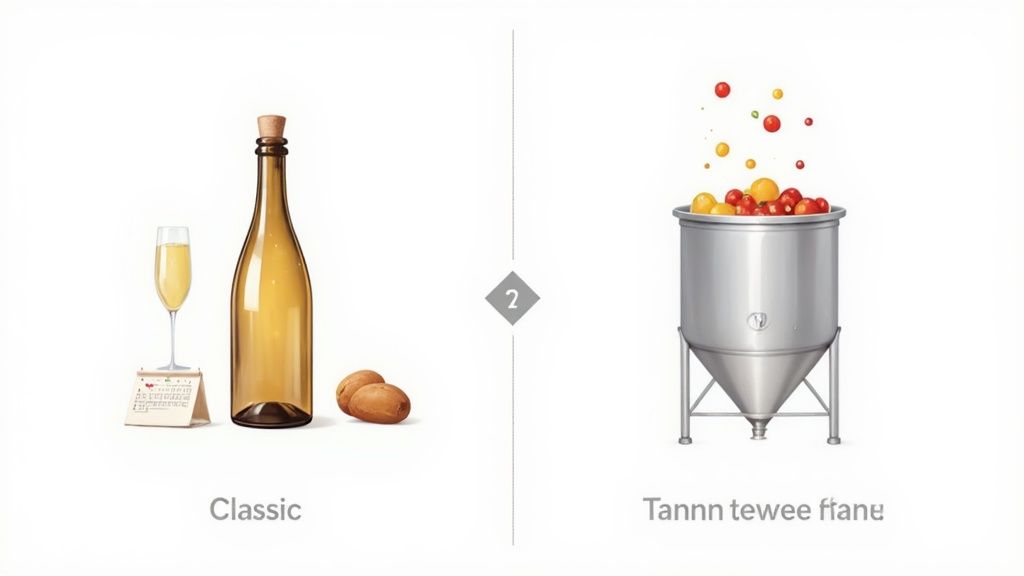
Have you ever wondered why some sparkling wines are crisp and fruity, while others have those gorgeous, toasty notes of freshly baked bread? That’s no accident. It all comes down to how the bubbles get into the bottle.
The personality of a decent sparkling wine is shaped by one of two main production methods. Getting your head around these two approaches is the secret to picking a bottle you’ll genuinely love, whether you’re after something complex and patient or something built for pure, vibrant freshness.
The Traditional Method: Toasty and Complex
Think of the Traditional Method (or Méthode Traditionnelle) as being like baking a slow-rise sourdough. This is the prestigious, time-honoured technique behind Champagne, Cava, and Australia’s best fizz. The real magic happens inside each individual bottle.
First, a base wine is made. Then, a little yeast and sugar are added before the wine is bottled and sealed with a crown cap. This kicks off a second fermentation inside the bottle, which is where those fine, delicate bubbles come from. The wine is then left to age on the spent yeast cells (what we call ‘lees’), which is what gives it those wonderful secondary flavours.
- Key Flavour Profile: You’ll find notes of brioche, toasted nuts, almond, and cream.
- Texture: This method creates a very fine, persistent stream of bubbles (the ‘mousse’), giving the wine an elegant, creamy mouthfeel.
- Result: A complex, layered wine with serious depth and a long, memorable finish.
This patient process is why Traditional Method wines often have a higher price tag, but that complexity is what makes them a brilliant choice for celebrations or pairing with richer foods. If you want to go deeper, our comprehensive guide to sparkling wine varieties has all the details on this classic style.
The Tank Method: Fruity and Fresh
Now, if the traditional method is like baking bread, the Tank Method (also known as Charmat-Martinotti) is like making a premium, vibrant fruit soda. This technique is all about capturing the pure, bright character of the grapes. It’s how the world’s beloved Prosecco is made.
Here, the second fermentation happens in a large, pressurised stainless steel tank, not in thousands of individual bottles. This approach is much quicker and more efficient, preserving the wine’s primary fruit aromas and crisp acidity without adding any of those yeasty, bready notes.
The goal of the Tank Method isn't complexity; it's immediacy. It’s designed to deliver a wine that is refreshingly straightforward, bursting with clean fruit flavours and zesty energy.
This makes it the perfect choice for an aperitif or for mixing into sparkling cocktails. The bubbles are typically a bit bigger and more lively than those from the Traditional Method, which just adds to its fun, approachable character. By simply knowing whether you’re in the mood for something complex or something zesty, you can confidently pick out a decent sparkling wine every single time.
Decoding Labels and What Your Money Buys
Walking into a wine shop can feel like trying to crack a secret code, especially when you’re faced with sparkling wine labels. Words like ‘Brut’ and ‘Extra Dry’ seem almost designed to trip you up. But here’s the good news: understanding them is your first step to finding a bottle you’ll genuinely love, and it's far simpler than it looks. It all boils down to sweetness.
These terms are just a scale for the wine’s final sugar level, known as the dosage. The most confusing part? 'Extra Dry' is actually a little sweeter than 'Brut', which is the classic, versatile dry style you'll see most often. If you want something bone-dry with zero added sugar, look for 'Brut Nature' or 'Zero Dosage'. Knowing this little bit of jargon helps you pick a wine that suits your taste and whatever food you're planning to serve. For a deeper dive, our guide to understanding Australian wine labels breaks it all down.
What to Expect at Different Price Points
Once you've got the sweetness scale sorted, the next big question is always price. What are you really paying for? The best part about sparkling wine is that you don't need a massive budget to find a brilliant bottle. It's all about knowing where the value is hiding.
- Sub-$20 Bottles: This is where you’ll find bright, fruity, and incredibly fun wines designed for immediate enjoyment. Most are made with the Tank Method, which is all about preserving that fresh, vibrant character. Think of these as your go-to for a casual afternoon drink or for mixing up a killer Aperol Spritz.
- $20-$40 Bottles: Now we're in the sweet spot for incredible value. This range is packed with excellent premium Prosecco and some truly fantastic Australian sparkling wines made in the Traditional Method. You'll get more complexity, a finer mousse, and those lovely toasty notes, all without the Champagne price tag.
- $40+ Bottles: When you step up to this level, you’re investing in time, craft, and complexity. These are typically serious, age-worthy wines made using the Traditional Method, often from a single, specific vintage. Expect layers of flavour, a rich texture, and a finish that goes on and on.
The real takeaway here is that value is everywhere. A truly decent sparkling wine isn’t defined by its price, but by smart selection. You can find exceptional quality and a whole lot of enjoyment at every single budget.
This focus on quality and value is fuelling some serious growth right here at home. Experts are forecasting that Aussies will be buying an extra 250,000 cases of local sparkling wine by 2028. That demand is being driven by a clear shift towards premium local bubbles, like the booming $205 million Australian Prosecco market. It's proof that we're all reaching for higher-quality, homegrown wines, and that means more fantastic choices for all of us.
How to Taste Sparkling Wine Like a Pro
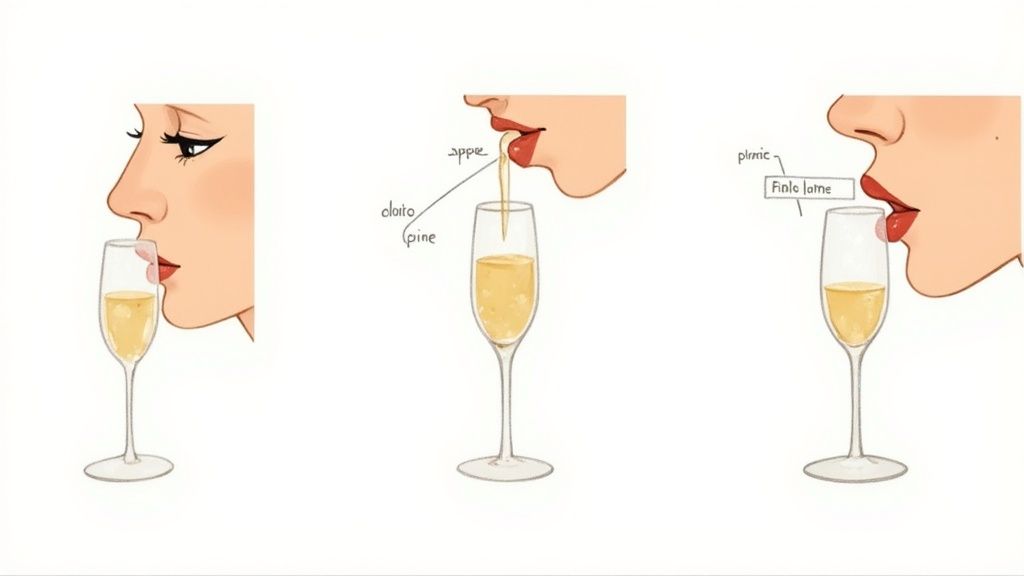
Ready to move beyond just sipping and start truly tasting? Don’t be intimidated; this is fun. It's all about connecting what’s in your glass to the stories of how it was made, and it’s a skill anyone can pick up. We’ll walk through the classic 'look, smell, sip' process, tweaked specifically for bubbles, so you can confidently spot a genuinely decent sparkling wine.
First up, use your eyes. Pour a small amount into a glass – and here's a pro tip: a standard white wine glass often works better than a narrow flute for really getting a sense of the aromas. Hold it up to the light. Notice the colour; it can tell you a lot, ranging from pale straw with green hints to a deep, rich gold.
Now, lean in and have a good look at the mousse. Are the bubbles fine and persistent, creating a delicate, steady stream up the glass? That’s a hallmark of quality.
From Aroma to Aftertaste
Next, bring the glass to your nose, but hold on – don't swirl it like you would a still wine. All that enthusiastic swirling will just make the carbonation fizzle out too quickly, taking those gorgeous aromas with it. Instead, just give the glass a gentle tilt and take a sniff.
So, what are you smelling? You might pick up:
- Primary Aromas: These come straight from the grapes. Think fresh green apple, zesty lemon, juicy pear, or even red berries in a rosé.
- Secondary Aromas: These develop during the winemaking magic. In Traditional Method wines, this is where you’ll find those delicious hints of brioche, toasted almond, or a creamy, yeasty character.
Now for the best part – the sip. Take a small amount and let it wash over your palate. What's the first thing you notice? The texture of the bubbles is key. Is the mousse creamy and smooth, or is it a bit sharp and aggressive? Then, pay attention to the acidity. It should feel bright and refreshing, that classic mouth-watering sensation that makes you want another sip.
A great sparkling wine just feels right on the palate. The fruit, acidity, and any yeasty complexity all work together in harmony. Nothing shouts too loudly. It all leads to a clean, memorable finish that lingers long after you’ve swallowed.
Putting It All Together
Tasting this way makes it an active, engaging experience. You start building a mental library of what you enjoy, which makes choosing your next bottle so much easier.
There's a reason for the growing buzz around high-quality Australian sparkling. The proof is in the numbers, with Aussie sparkling wine exports bouncing back to around $40 million in recent years. This isn't just any plonk; it's premium styles that are impressing discerning palates worldwide. You can read more about the rise of Australian wine production and demand if you want to dive deeper.
By looking, smelling, and sipping with a bit of purpose, you train your senses to recognise the balance, complexity, and sheer deliciousness that define a truly decent sparkling wine.
Serving and Pairing Your Sparkling Wine
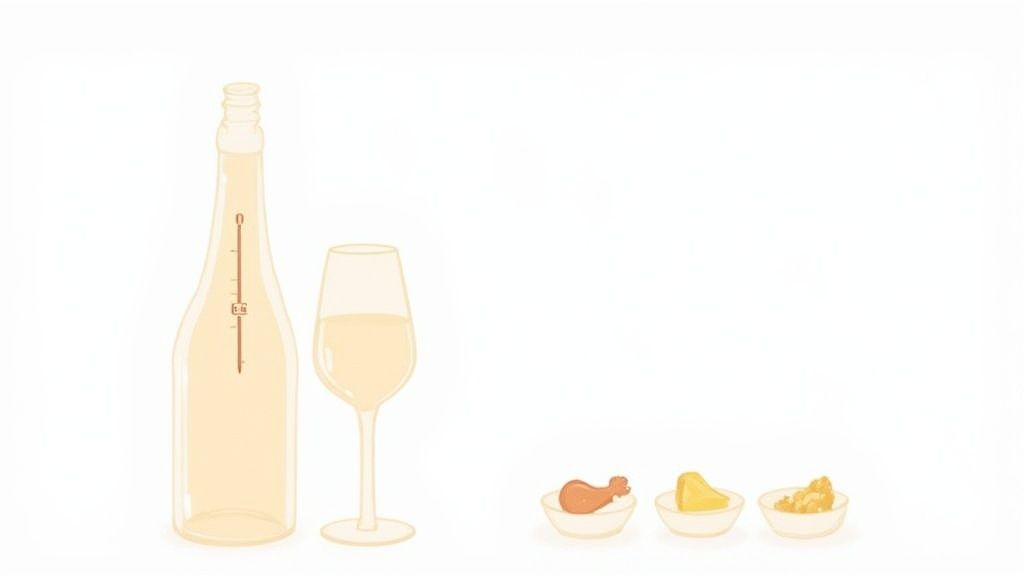
Getting the service right is the final, crucial step in turning a decent sparkling wine into a truly fantastic experience. It’s all about creating the perfect environment for those delicate bubbles and complex flavours to shine. Luckily, the essentials are wonderfully simple.
It all starts with temperature. The sweet spot for serving is a cool 6–8°C. Serve it too warm, and it'll foam up and taste flat; too cold, and you'll mute all those beautiful aromas you've just learned to pick out. A quick 20-30 minutes in the fridge or about 15 minutes in an ice-water bath should do the trick perfectly.
When it comes time to pour, the great glassware debate begins. While the classic tall flute is fantastic for preserving that beautiful stream of bubbles, many of us in the industry now prefer a standard white wine or tulip-shaped glass. Why? The wider bowl allows the wine's aromas to collect, giving you a much richer sensory experience.
How to Open a Bottle Like a Pro
Forget the loud pops and flying corks. A graceful opening not only looks elegant but, more importantly, it keeps those precious bubbles in your wine where they belong.
- Chill Thoroughly: A warm bottle is a pressure-filled disaster waiting to happen. Make sure it's properly cold.
- Remove Foil and Cage: Peel off the foil and untwist the wire cage (it always takes six turns!), but keep your thumb firmly on top of the cork at all times.
- Tilt and Twist: Angle the bottle at 45 degrees, pointing it away from yourself and others. Now for the secret: hold the cork still and gently twist the base of the bottle, not the cork itself.
- Listen for the Whisper: The cork should release with a gentle sigh, not a bang. This controlled release preserves the wine's delicate carbonation.
Finding the Perfect Food Match
Sparkling wine is one of the most versatile food-pairing wines on the planet. Its high acidity and cleansing bubbles are brilliant at cutting through richness and complementing an incredible range of flavours, moving far beyond the classic oyster pairing.
Don’t be afraid to experiment. The bright acidity and effervescence of a good sparkling wine make it a secret weapon at the dinner table, capable of matching everything from salty snacks to spicy dishes.
For instance, a crisp, zesty Prosecco or Blanc de Blancs is an unbeatable partner for anything salty and fried—think calamari, hot chips, or even a bucket of fried chicken. The bubbles scrub your palate clean, making each bite as delicious as the first. Meanwhile, a richer, more complex Traditional Method sparkling has the body to stand up to creamy cheeses, mushroom risotto, or even roasted poultry.
To get you started, here’s a quick guide to some classic and creative pairings for your next bottle.
Sparkling Wine Food Pairing Cheat Sheet
| Sparkling Style | Classic Pairings | Unexpected Pairings |
|---|---|---|
| Light & Crisp (Prosecco, Blanc de Blancs) | Oysters, Smoked Salmon, Fresh Cheeses | Fish and Chips, Salted Popcorn, Spicy Thai Green Curry |
| Rich & Toasty (Traditional Method, Vintage) | Scallops, Creamy Pasta, Roast Chicken | Truffle Fries, Aged Cheddar, Peking Duck Pancakes |
| Rosé Sparkling | Charcuterie, Grilled Prawns, Berry Desserts | Watermelon and Feta Salad, Spiced Lamb Koftas |
Your Guide to McLaren Vale Sparkling Wines
Now that you're armed with the theory behind what makes a great sparkling, it’s time for the fun part: putting your palate to the test. While McLaren Vale is celebrated for its powerful reds, the region also crafts some truly outstanding sparkling wines that are brimming with character and quality. This is where we can take everything you've just learned and see how it plays out in the real world with some stellar examples from our collection here at McLaren Vale Cellars.
Let’s kick things off with a style that’s all about vibrancy and celebration. A local Prosecco-style fizz is your perfect match for that fresh, crisp fruit profile we talked about. Because it’s made using the Tank Method, it absolutely bursts with notes of green apple, pear, and a touch of honeydew. Its zesty acidity and lively bubbles make it a brilliant aperitif or a fantastic partner for light canapés, perfectly showing how this production method is all about pure, immediate enjoyment.
Exploring Deeper Flavours
For those of you chasing a bit more complexity, a Traditional Method sparkling is where the magic really happens. Take our Blanc de Blancs, for example, made entirely from Chardonnay. This wine gets to spend a good while resting on its lees, a process that softens the acidity and builds those gorgeous secondary flavours. You'll find aromas of toasted brioche and a whisper of almond layered over crisp citrus. The fine, persistent stream of bubbles creates a creamy texture, proving the elegant results of this patient, time-honoured technique. A style like this sings alongside richer dishes, proving that the best McLaren Vale wines extend far beyond just Shiraz.
Exploring different styles side-by-side is the fastest way to discover what you truly love. It turns tasting from a guess into a confident choice.
To make this journey as easy and enjoyable as possible, our curated sample packs are the ideal place to start. They’re designed to let you directly compare a fresh, zippy Tank Method fizz against a more complex, layered Traditional Method bottle. Honestly, this hands-on approach is the best way to apply your new skills, pinpoint the characteristics you really enjoy, and find a decent sparkling wine that might just become your new go-to.
Common Questions About Sparkling Wine
As we wrap up our guide, let's tackle a few common questions that always seem to pop up when choosing a great bottle of sparkling. Nailing these final details will give you the confidence to select, store, and serve your bubbles like a pro.
One of the biggest queries is about aging. Can you cellar a bottle of sparkling wine like you would a big red? Well, it all depends on the style. Most non-vintage sparkling, especially Prosecco, is made to be enjoyed right now. Its whole charm is in its zesty, fresh character, so it's best to drink it within a year or two of buying it.
High-quality vintage sparkling made in the Traditional Method, however, is a completely different story. These wines are built for the long haul and can evolve beautifully in the cellar for years, developing incredible nutty, honeyed, and toasty flavours. No matter the style, always store your sparkling on its side in a cool, dark place, away from any wild temperature swings.
Understanding the Finer Details
Another point of confusion is often the sweetness scale you see on labels. Is 'Brut' the absolute driest style you can get? While it’s definitely dry, it’s not quite the end of the line. The scale looks a little something like this:
- Brut Nature (Zero Dosage): This is as dry as it gets, with virtually no added sugar. Bone dry and bracingly fresh.
- Extra Brut: The next step up, still incredibly dry with just a whisper of sweetness.
- Brut: The classic and most common style. It's dry, crisp, and wonderfully versatile.
- Extra-Dry: Now here's the curveball—it's actually a touch sweeter than Brut. A great choice if you like just a hint of softness.
One of the most rewarding parts of exploring sparkling wine is realising that amazing quality isn't confined to a single country. While France and Champagne set a high bar, incredible bubbles are made all over the globe.
Think of world-class Traditional Method sparkling from Australia’s cool-climate regions, crisp and refreshing Cava from Spain, or vibrant Prosecco from Italy. By looking beyond the familiar, you open yourself up to a world of fantastic value and diverse flavours, proving a truly decent sparkling wine can come from anywhere.
Ready to explore the best of McLaren Vale's sparkling collection? McLaren Vale Cellars has curated a range of premium fizz, from celebratory Prosecco styles to complex Traditional Method wines. Discover your next favourite and put your new tasting skills to the test with our sample packs. Find your perfect bottle at McLaren Vale Cellars.

Comments (0)
There are no comments for this article. Be the first one to leave a message!