
Cat Amongst the Pigeons Chardonnay is a South Australian Chardonnay from the producer's Eden Valley range, described as melon-led, lightly French-oaked and crisp at 13% alcohol. It suits drinkers who prefer a medium-bodied, gently oaked white served well chilled.
But what does a label promise like that mean when you're choosing dinner? A few words on a bottle can't tell you if the wine will feel fresh or creamy, lean or generous. This guide translates those words into flavour, serving temperature, food choices and bottle size, so you can decide before you open it.
What Cat Amongst the Pigeons Chardonnay Actually Tastes Like
You pick up a bottle you've never tried. The name's memorable, the region sounds promising, but the tasting note gives you only a handful of words. What you really want to know is simple. Will this taste like the Chardonnay you like?
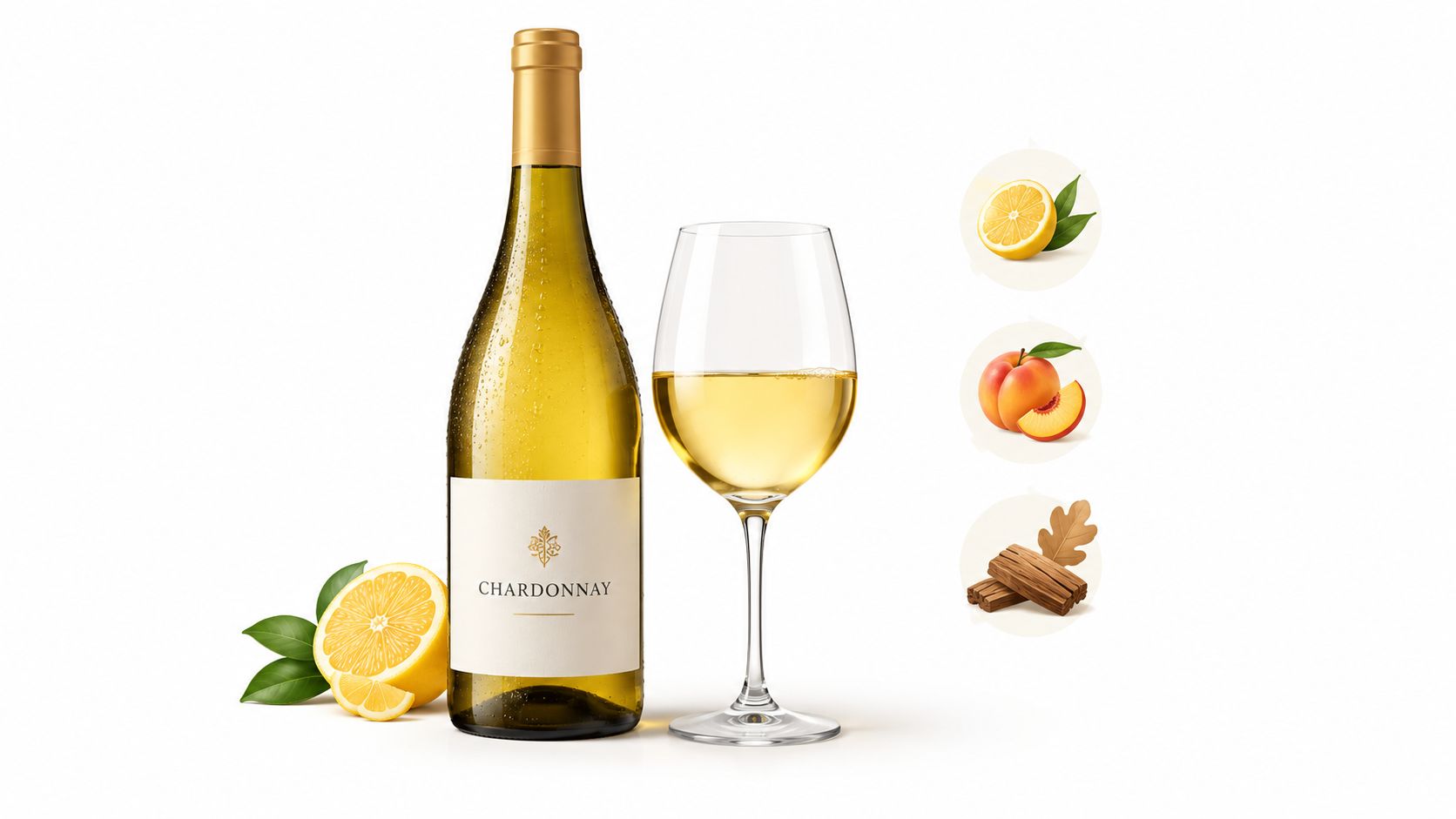
Start with what you can check on the shelf. Woolworths lists Fat Cat Chardonnay as melon-led, lightly French-oaked and crisp, with Eden Valley as the origin, 13% alcohol and 7.7 standard drinks in the 750 mL bottle. That same listing suggests creamy dishes, but it doesn't tell you whether to expect a fresh style or a rich, buttery one.
Reading the Flavour Clues
Melon-led points to soft, ripe fruit rather than sharp lemon or very green apple. Picture rockmelon and ripe stone fruit, rounded rather than tart. It's the centre of the wine, the first flavour most drinkers will notice.
Lightly French-oaked is the next clue. Light is the important word here. You're looking for a gentle warmth in the background, perhaps a hint of vanilla or spice, not heavy toast overwhelming the fruit. If you dislike Chardonnay that tastes mainly of butter and wood, that wording is reassuring.
Crisp describes the finish. Acidity is the mouth-watering quality that makes a white feel clean rather than flat. In this wine, it should lift the melon fruit and stop the oak from making the glass feel heavy.
Choose this if you like a white with ripe fruit and a little texture, but still want it to finish fresh.
Where It Sits Among Australian Styles
Australian Chardonnay covers a wide range. Some bottles are deliberately lean and citrus-driven. Others are richer, creamier and more obviously oaked. Cat Amongst the Pigeons Chardonnay sits between those poles based on its description, with medium body, melon fruit, gentle oak and a crisp edge.
That middle position matters because many shoppers aren't chasing extremes. They want enough body for roast chicken or pasta, but not so much richness that a second glass feels tiring. They also want flavour that a newcomer can recognise without needing a wine dictionary.
Check the vintage on the actual bottle before you buy. Woolworths warns that vintage can vary by store, so the year photographed online may not match the bottle in front of you. A different vintage won't make it a different wine, but you shouldn't assume a specific year until you've read the label.
The Producer and the Eden Valley Story Behind the Label
The illustration below shows Barossa Valley wine country, the producer's home region. This Chardonnay's fruit comes from neighbouring Eden Valley, so read it as scene-setting rather than a portrait of its own vines.
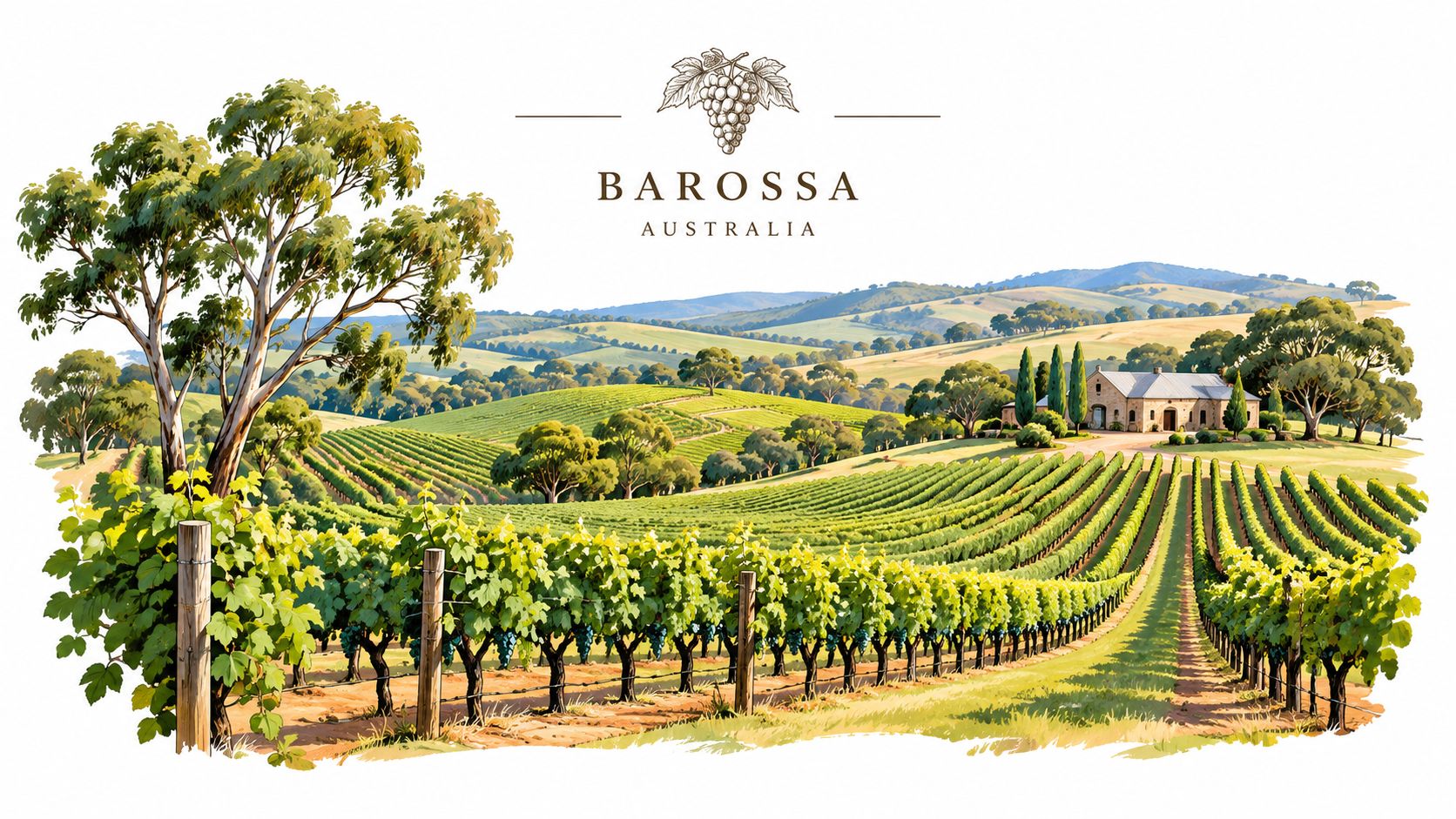
Two place names sit around this wine, and they can look contradictory on first read. The Cat Amongst the Pigeons portfolio comes from a producer with roots in the Barossa, while the label on this Chardonnay names Eden Valley. Those are different claims. A winery's address tells you who made the wine; the region on the label tells you where the grapes grew. A winery works like a bakery that buys its flour from a neighbouring farm: the shop is in one town, the wheat grew in another.
On its South Australian regional portfolio page, the producer separates the approachable Cat Amongst the Pigeons range from the Fat Cat wines, which include Eden Valley Chardonnay. The same page describes Adelaide Hills Chardonnay as benefiting from "ancient soils" and ties climate and terroir to ripeness, flavour, complexity and structure. Terroir is the combined influence of place, soil, climate and site on what ends up in the glass.
Why Eden Valley Is Named on the Bottle
A named district gives you more to work with than a broad "South Australian" label. Eden Valley sits cooler than the nearby Barossa floor, and for Chardonnay that cooler climate helps explain how ripe melon fruit can keep a fresh, crisp edge instead of turning soft.
You don't need to memorise a map to use that clue. This guide to Australian wine regions and local terroir places districts like Eden Valley side by side so you can see how one valley differs from the next. The short version: the label is doing real work here, tying the wine to a recognisable place rather than hiding the fruit's origin.
The short video below shows how place shapes a bottle.
Recognition You Can Verify
Awards cannot promise you will like a wine, but independent results help separate a regional claim from shelf talk. The International Wine Challenge listing for Fat Cat Eden Valley Chardonnay 2024 records 90 points, South Australian origin, Chardonnay as the variety and 13.0% alcohol.
The portfolio has wider form too. Fat Cat Eden Valley Riesling 2025 took the Best Riesling trophy at the Perth Royal Wine Awards in 2025, a field of more than 1,000 Australian wine entries. That trophy went to a Riesling rather than this Chardonnay, so read it as evidence the same Eden Valley portfolio competes well with regional whites, not as a score for the bottle in your hand.
How to Serve It and What to Pair With It
Serving temperature changes what you notice first. Too warm, and a gently oaked white can taste broad and soft. Too cold, and the melon fruit and texture can seem muted. A small adjustment gives you two slightly different glasses from the same bottle.
The freshness starts before harvest. Wine Australia explains that sugar increases while acidity decreases during ripening, so growers balance flavour maturity against acid structure. Earlier harvesting can preserve acidity, lower yields can increase flavour concentration, and oak maturation can add vanilla, spice, toast and almond characters.
A Simple Serving Routine
- Chill it fully first: Put the bottle in the fridge well before serving rather than relying on a brief ice bucket dunk.
- Pour a small first glass: Taste it cold, then let the glass warm slightly in your hand and notice whether fruit or texture becomes clearer.
- Give it a short breather: A few minutes after opening can help the aromas settle, and there's no need for a long decant.
- Reseal between pours: Return the bottle to the fridge so later glasses don't become warm and loose.
For a crisp, seafood-friendly impression, serve around the cooler end of the range. If you'd rather emphasise body, let it approach 10 to 12°C, where oak or lees-derived weight can feel more apparent. Lees are spent yeast left after fermentation, and contact with them can add texture.
Serving and Pairing Cheat Sheet
| Serving temperature | Style impression | Best with |
|---|---|---|
| Cooler end of 8 to 12°C | Fresher, tighter, fruit and acidity first | Prawns, salads, grilled fish |
| Middle of the range | Balanced melon fruit with gentle oak | Roast chicken, creamy pasta |
| 10 to 12°C | Rounder texture and more noticeable weight | Aged cheese, richer poultry dishes |
Food pairing works through balance. Acidity can cut through creamy pasta sauce, while the wine's body gives it enough presence for roast chicken. With prawns, keep the wine colder so it stays refreshing. With Thai food, choose dishes where chilli heat is moderate, because strong heat can make alcohol feel warmer.
For more ideas based on the same balance of fruit, acid and texture, see these McLaren Vale Chardonnay food pairing suggestions. You don't need an exact recipe match. Start with the sauce and richness of the dish, then choose the temperature that fits.
Practical rule: Serve it colder for seafood and a little warmer for creamy or roasted food.
Choosing Between the 375 mL and 750 mL Bottles
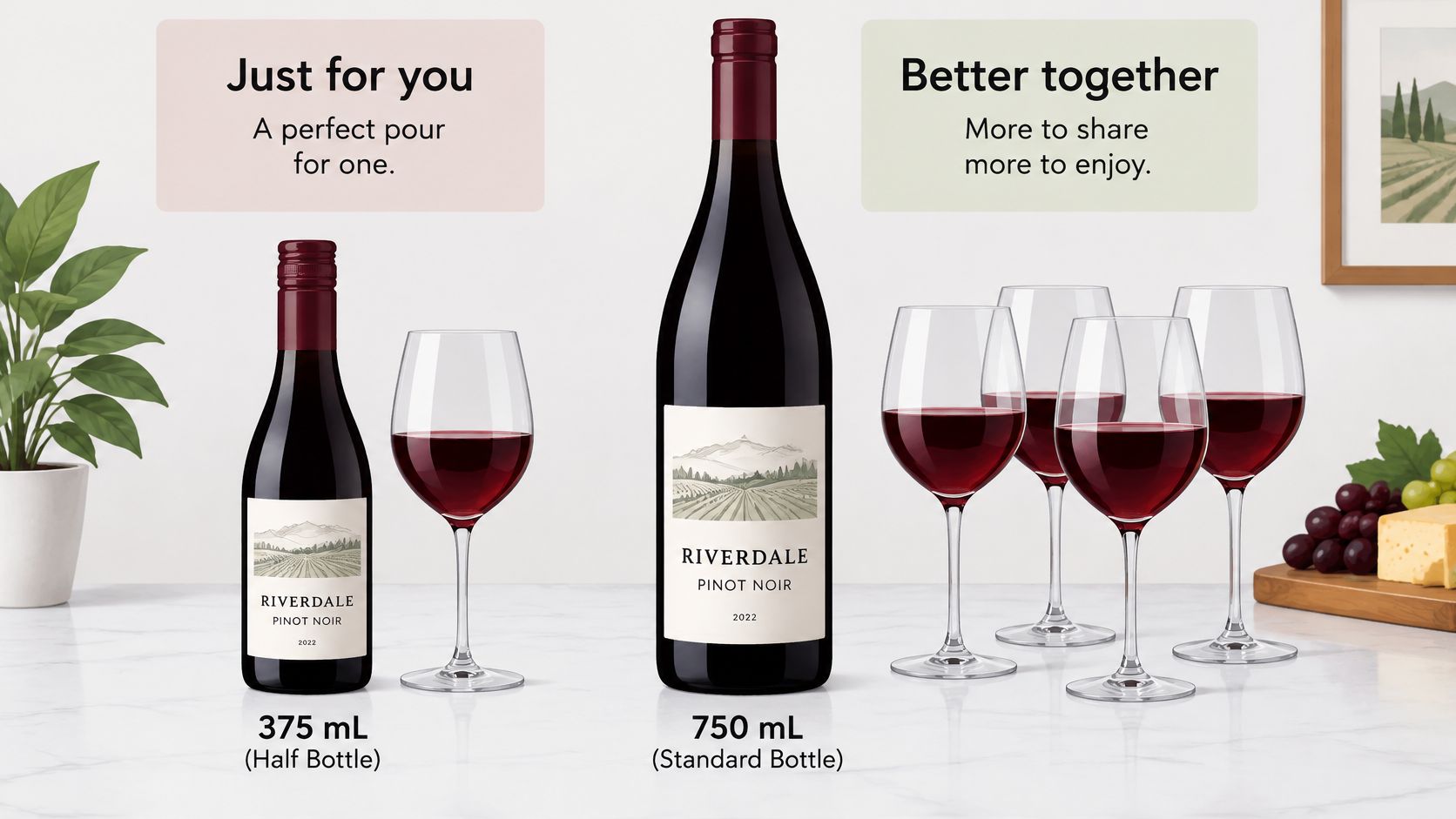
How much wine will get drunk? That question should steer your format choice more than the shelf price does. The two bottles below show the size gap clearly.
Listings describe both a 375 mL bottle and a 750 mL Fat Cat Chardonnay. The 375 mL product listing raises the format questions standard coverage often skips, including value per standard drink, freshness after opening and suitability for singles, gifting and mixed cases. That matters for households drinking wine less often and wanting smaller formats to suit varied occasions.
A half bottle works like a single-serve portion. It gives one drinker a couple of glasses across a meal, with nothing left going flat in the fridge overnight.
When the Half Bottle Makes Sense
Choose 375 mL when one person wants wine with dinner and nobody else is drinking white. It also suits a picnic, a midweek meal or a first taste before committing to the style. Freshness is the biggest benefit, because there's less opened wine left sitting in the fridge losing its bright melon character.
A smaller bottle can suit gifting too. You can give two different whites instead of one large bottle, or add it to a mixed pack for someone who enjoys variety. The trade-off is that smaller formats may cost more per 100 mL, so compare that figure rather than judging only by the lower shelf price.
When the Standard Bottle Wins
Choose 750 mL for two people sharing across a meal or for a small table of guests. It gives you enough wine to pour generously and to follow the bottle as it warms slightly in the glass, where the fruit and gentle oak sit broader. It's also the more practical format if you already know you enjoy medium-bodied, gently oaked Chardonnay.
- Cost per 100 mL: Divide the bottle price by its volume to compare formats fairly.
- Freshness after opening: A half bottle leaves almost nothing to lose, while a standard bottle needs resealing and a cold fridge to stay bright.
- Buying a dozen: Only commit if you'll drink it regularly.
- Mixed cases: Use them to compare Eden Valley with fresher Adelaide Hills and richer regional styles.
Value depends on waste as much as price. A cheaper large bottle poured down the sink is worse value than a smaller bottle that gets finished. Match the format to the occasion and the right choice prices itself correctly.
Cellaring and Drinking Window Guidance
Don't overthink this bottle. A medium-bodied, gently oaked Chardonnay is generally most rewarding while its fruit and acidity feel lively. It doesn't need years in a cellar to become ready.
That doesn't mean you must open it the day you buy it. Short-term holding is fine when storage is sensible. The aim is to protect freshness, not to chase dramatic transformation.
Store It for Freshness
- Keep it cool and steady: Avoid a hot garage, a sunny kitchen bench or a cupboard above an oven.
- Keep it dark: Light and heat are both enemies of a fresh white style.
- Avoid constant movement: A quiet cupboard is better than a rack that's regularly knocked or exposed to vibration.
- Store it sealed and undisturbed: Once opened, reseal it and keep it in the fridge.
Temperature stability matters more than creating a perfect cellar. Repeated swings between warm and cool conditions can tire a wine faster than a consistently cool room. If you don't have a wine fridge, choose the darkest, coolest interior cupboard you have.
Open for the Occasion Not a Date
Use the meal as your clock. Prawns on a warm evening, roast chicken with friends or creamy pasta at home are all good reasons to open it. Waiting for a theoretical peak can mean missing the bright fruit that makes the style appealing now.
If the food suits the wine and the bottle is properly chilled, that's usually the right drinking window.
Check the vintage before making storage plans. Retailers may carry different years, and the label on your bottle is the reliable starting point. If you're holding more than one bottle, open the older vintage first and note whether you prefer it fresher or with a little more time.
There's a small upside to patience if you enjoy softer edges, but there's also a cost. The longer a fresh, gently oaked white waits, the more you risk trading melon brightness for fatigue. For most buyers, near-term enjoyment is the safer and more satisfying plan.
How to Choose Where to Buy Australian Chardonnay
A good retailer should reduce guesswork before you pay. The screenshot below shows the kind of online storefront where you should be able to check range, format and buying options clearly.
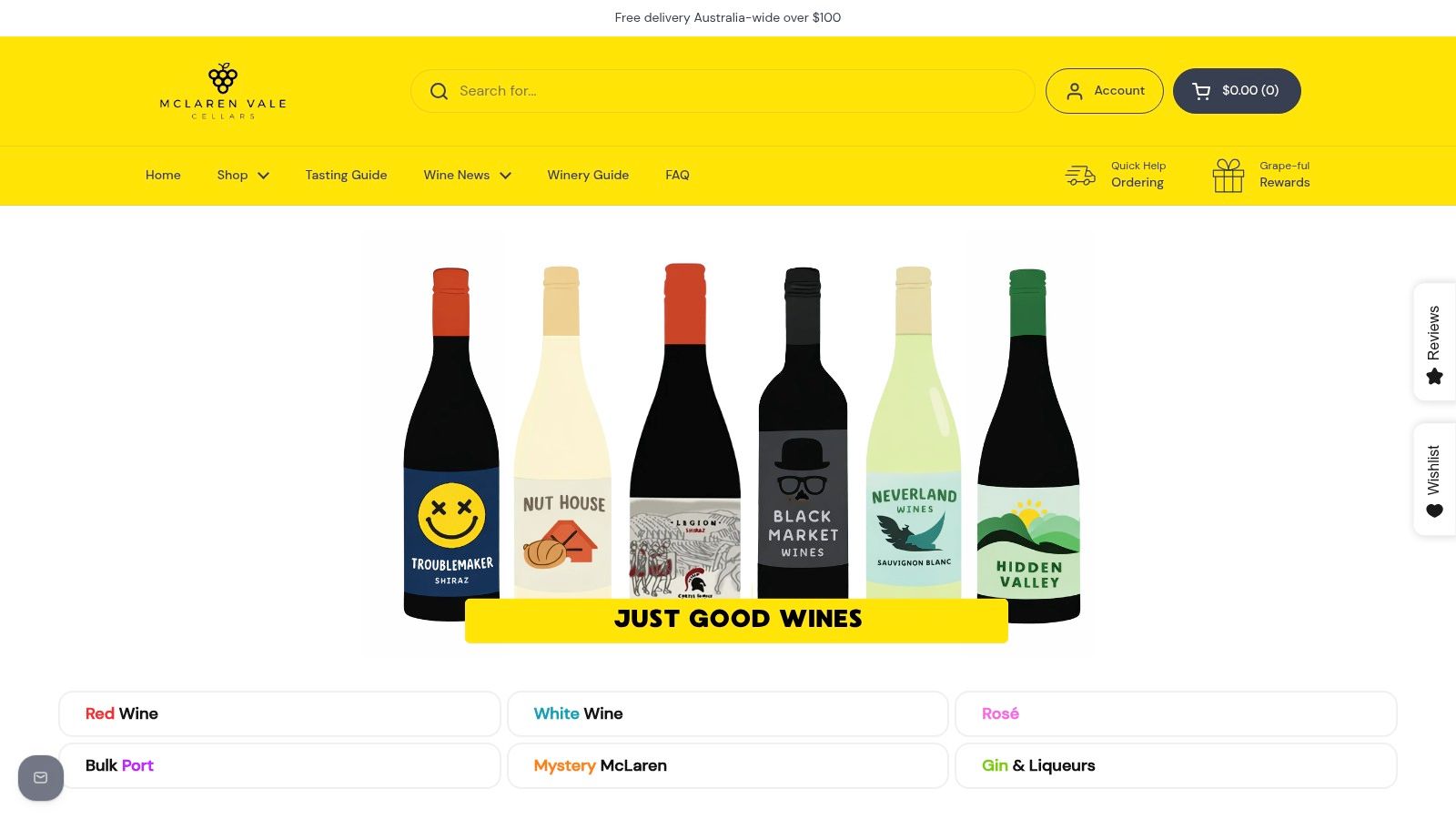
Start with information quality. Does the product page state the vintage, region, alcohol and bottle size without making you hunt for them? Are the tasting words specific enough to place the wine on the fresh-to-rich spectrum? If the answer is no, you're being asked to buy a label rather than a flavour.
Questions Worth Asking Any Retailer
- Can I try before committing: Sample packs and mixed cases let you compare styles without buying a dozen of one wine.
- Are half cases available: Smaller bundles suit households that drink white wine occasionally rather than weekly.
- What protection backs the purchase: Look for a clear returns policy or taste guarantee, plus secure checkout.
- Is delivery practical: Check delivery cost, minimum order terms and whether support is available by phone or email.
- Does the store teach as it sells: Tasting guides and beginner articles help you compare regions and serving styles.
Compare those answers with what a supermarket shelf can offer. A shelf ticket may give you price and a short flavour phrase, but it rarely explains how an Eden Valley bottle differs from a fresher Adelaide Hills wine. A specialist store earns its place when it helps you make that comparison confidently.
A useful shortlist approach is to read a curated overview such as the best Australian Chardonnays you can buy online, then narrow by region, body and oak level. Don't begin with a dozen just because the per-bottle price drops. Begin with a bottle or mixed pack, taste it at the right temperature, then reorder only if it fits your table.
The best retailer isn't the one shouting the lowest price. It's the one that helps you buy the right bottle first.
Your Next Step with Cat Amongst the Pigeons Chardonnay
You now have a clear expectation. Cat Amongst the Pigeons Chardonnay is a melon-led Eden Valley white with light French oak, crisp acidity and enough body for food. It isn't positioned as a heavy butter-driven wine, and it isn't a bare, sharply lean style either.
Your next step is to test that expectation with one bottle. Pick the 375 mL format if you're tasting solo or want a low-risk introduction. Pick 750 mL if you're sharing roast chicken, creamy pasta or seafood with at least one other person.
A First Bottle Checklist
- Read the label: Confirm the vintage and bottle size before you buy.
- Chill it properly: Start cold, then let one glass warm slightly so you can find your preferred temperature.
- Pair it deliberately: Try it with food that has some richness, not just as a standalone pour.
- Make one note: Write down whether you'd prefer more freshness, more oak or more body next time.
That single note is more useful than collecting scores. If you wanted something sharper, look toward a fresher Adelaide Hills style next. If you wanted more cream and weight, choose a richer regional Chardonnay. If the balance felt right, you've found a style you can reorder with confidence.
Buy one bottle from a retailer that states the details clearly and backs the purchase. Serve it well chilled, taste it with a suitable meal and trust your own palate. That's the simplest way to decide whether this is your kind of Chardonnay.
Browse curated South Australian whites, mixed packs and Chardonnay styles at McLaren Vale Cellars, where tasting guidance and flexible case options can help you compare this Eden Valley bottle with fresher and richer alternatives. Choose a single bottle or a mixed selection, serve it at the temperature you prefer, and let your first glass guide your next order.

Comments (0)
There are no comments for this article. Be the first one to leave a message!