
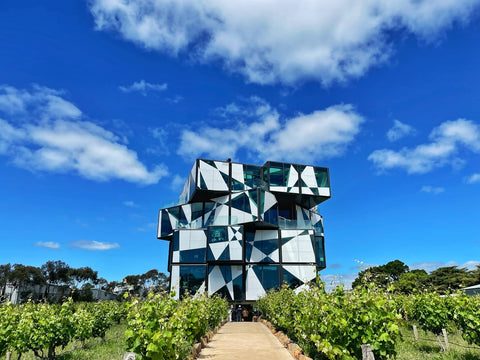
A gravel driveway, a weathered sign, and rows of vines opening into the Tynong Valley. That's the sort of first impression Cannibal Creek leaves on people, not flashy or oversized, but grounded, welcoming, and unmistakably personal.
Introducing Cannibal Creek A Gippsland Treasure
West Gippsland doesn't always dominate casual wine conversations in the way larger regions do. That's part of Cannibal Creek's charm. It feels discovered rather than advertised, and that matters when you care about wineries that still carry the fingerprints of the people who built them.

This is the kind of place that helps explain why small family estates remain so important in Australian wine. Cannibal Creek Winery is known for a hands-on, artisan identity and a strong sense of place. Rather than chasing volume, the estate has built its name around careful vineyard work, traditional methods, and the experience of tasting wine where it was grown.
Why this winery stands out
A lot of readers get confused by the phrase single-estate winery. In plain terms, it means the story is unusually connected from soil to glass. The same property shapes the fruit, the family shapes the decisions, and the finished wines carry a clearer regional signature.
At Cannibal Creek, that single-estate character isn't marketing language. It's the heart of the winery's appeal. Wine lovers are drawn to estates like this because they offer something increasingly rare: continuity between vineyard, winemaking, and hospitality.
Practical rule: When you visit a family-run estate, pay attention to how often the conversation returns to the vineyard itself. That usually tells you whether the wines are being built around place or around production targets.
More than a scenic stop
Cannibal Creek also works as a destination. People don't just go there to buy a bottle and leave. They go for a tasting, linger over lunch, and spend time in a setting that feels rural without feeling remote. That combination gives the winery an identity broader than its label range.
There's another reason the winery deserves close attention right now. Its future sits at an interesting point of uncertainty. For drinkers who love artisan Australian estates, that raises a bigger question than simple ownership: what happens to a winery's style, rhythm, and atmosphere when stewardship changes hands?
That question gives Cannibal Creek Winery unusual weight. You're not only looking at a respected Gippsland producer. You're looking at a working example of how legacy, craftsmanship, and succession intersect in the wine world.
The Story Behind The Vines
A family plants vines because they believe a patch of ground can become part of their life's work. That is the kind of beginning Cannibal Creek suggests. Long before collectors started asking about bottles or visitors booked lunch, there were practical questions in the rows: what will ripen well here, how quickly does the site warm after winter, and what style of wine can this place carry with honesty?
Those questions matter because a winery's character is rarely formed in one dramatic moment. It grows the way a vine grows, season by season, with each year adding a little more knowledge. Early vintages teach patience. They also teach humility. A site has its own voice, and good growers learn to hear it before they try to speak for it.
A family estate shaped by repetition
Cannibal Creek's story is compelling partly because it is a family story, but not in the sentimental sense alone. Family ownership usually means the same people live with the consequences of each decision. If a pruning choice affects yield, they see it. If a picking call changes the shape of a wine, they taste that result months later at the table and in the cellar door.
That kind of continuity gives a winery a steadier hand. In a larger operation, one team may grow the fruit, another may make the wine, and a third may sell the finished bottle. Here, the chain feels shorter and more personal. Cause and effect sit closer together.
For readers who are newer to wine, that matters more than it might seem. Wine quality is not only about talent at harvest. It is also about memory. A family that has watched the same vineyard over many years builds a mental map of the site, almost like knowing where the cool corners of an old house sit in winter and where the afternoon light lingers in summer.
Why an early Pinot Noir tells you so much
Pinot Noir is a revealing starting point for any estate. It tends to show site and handling with unusual clarity. If the fruit is rushed, the wine can feel thin or awkward. If extraction is too hard, finesse disappears. If the picking date is off, the balance can slip quickly.
That makes Pinot Noir a useful clue to Cannibal Creek's identity.
A winery that commits to this grape is often committing to detail as well. You can see that same logic if you follow the basics of how red wine is made step by step. Small choices during picking, fermentation, and maturation leave visible fingerprints on the finished wine. With Pinot, those fingerprints rarely stay hidden.
So the winery's early direction suggests more than preference. It suggests temperament. Careful estates often reveal themselves first through the varieties they choose to trust.
Legacy at a crossroads
Cannibal Creek carries another layer of meaning right now. Its reputation was built through years of repeated work, but its future has become part of the story too. For wine lovers, that changes the way the estate is viewed. A possible change in stewardship is never only a business detail. It raises questions about style, priorities, and whether the small habits that shaped the wines will be protected.
Collectors understand this instinctively. A beloved family winery is a little like a long-running kitchen with one cook's hand in the seasoning. The recipe can be written down, but the result still depends on judgment, rhythm, and restraint. If ownership changes, the label may remain while the feel of the wines slowly shifts.
That is why Cannibal Creek's history has weight beyond nostalgia. The place earned its standing through practical, repeated labour in the vineyard and winery, and that artisan legacy is exactly what drinkers hope will endure.
Vineyard and Winemaking An Artisan Philosophy
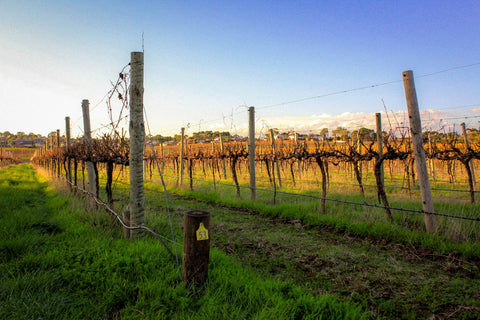
The best way to understand Cannibal Creek Winery is to start in the vineyard rather than the tasting room. The estate sits at 102m above sea level in the Black Snake Ranges of West Gippsland, with a northerly aspect and north-south vine orientation designed to optimise sunlight, as described on the Cannibal Creek vineyard page.

That might sound technical, so let's translate it. A northerly aspect in Australia generally helps vines receive strong, useful sunlight. North-south row orientation can help balance exposure across the day. For a reader new to viticulture, the key point is simple: these vineyard choices help fruit ripen with better balance rather than being pushed into uneven heat stress.
What terroir means here
People often hear the word terroir and switch off because it seems abstract. It isn't. Terroir is just the combined effect of site, climate, exposure, and human choices on flavour and structure.
At Cannibal Creek, site and method are tightly connected. The estate's setting influences how the fruit develops, and the winery's low-tech approach tries not to blur that message after harvest.
Here's where confusion often creeps in. “Low-tech” doesn't mean careless or outdated. It means using fewer heavy-handed interventions so the fruit can speak more clearly. If you'd like a broader primer on production stages, this guide to how red wine is made step by step gives useful background.
What 100 percent hand-picked changes
Cannibal Creek states that 100% of grapes are hand-picked and the wines are crafted onsite using traditional methods and French oak. Hand-picking gives a small producer more control over fruit selection. Pickers can leave compromised bunches behind and handle delicate varieties more gently than large-scale machine harvesting often allows.
That matters because grape condition at intake shapes everything that follows. Cleaner, carefully selected fruit usually gives the winemaker more confidence to work with restraint.
A simple way to think about it is this:
- In the vineyard: hand-picking protects fragile bunches and allows more selective harvesting.
- In the winery: onsite production reduces the need for extra transport and handling.
- During maturation: French oak can add texture, savoury detail, and structural polish rather than blunt sweetness.
Cellar note: French oak isn't only about flavour. In balanced wines, it also influences shape, tannin feel, and how the finish holds together.
Traditional methods in the glass
Traditional methods and minimal handling can sound vague, but the sensory effect is easier to grasp. Wines made this way often feel composed rather than overworked. Fruit can remain clear. Aromatics can stay more lifted. Tannin can feel finer. Oak, when judged well, supports rather than dominates.
That artisan philosophy is central to Cannibal Creek Winery's identity. If ownership, scale, or production priorities ever shift, this is the part collectors will watch most closely. For many drinkers, the question isn't just whether the label survives. It's whether the winemaking philosophy survives with it.
A Guide to Cannibal Creek Signature Wines
Cannibal Creek's range is appealing because it spans familiar classics and a few bottles that spark immediate curiosity. The estate grows Pinot Noir, Chardonnay, Sauvignon Blanc, Merlot, and Cabernet Sauvignon, and it also produces styles such as Blanc de Blancs sparkling, Vin de Liqueur, and premium reserve Chardonnay and Pinot Noir. That mix gives visitors several ways into the winery's style.

It also helps to know that the winery's reputation isn't based on atmosphere alone. The Real Review's winery profile notes that Cabernet Sauvignon 2010 ranked #51 globally in 2023, and the estate was named Best Large Cellar Door in Gippsland in 2022. Those details tell you the wines and the visitor experience both command respect.
Cannibal Creek Wine Selection at a Glance
| Wine | Style | Tasting Notes | Best Paired With |
|---|---|---|---|
| Pinot Noir | Light to medium-bodied red | Red cherry, spice, gentle earthiness, fine tannin | Duck, mushroom dishes, roast chicken |
| Chardonnay | Structured white | Citrus, stone fruit, texture, oak-derived complexity | Roast chicken, creamy seafood, hard cheeses |
| Sauvignon Blanc | Fresh aromatic white | Lifted citrus, green fruit, brisk acidity | Goats cheese, salads, grilled fish |
| Cabernet Sauvignon | Full-bodied red | Dark fruit, firm structure, savoury length | Lamb, grilled beef, aged cheddar |
| Merlot | Medium-bodied red | Plush fruit, softer tannin, rounded palate | Pasta, charcuterie, roast pork |
| Blanc de Blancs | Sparkling | Bright, crisp, fine mousse, citrus-driven refreshment | Oysters, canapés, light starters |
| Vin de Liqueur | Fortified style | Rich sweetness, warming finish, layered intensity | Blue cheese, chocolate desserts, after-dinner sipping |
| Reserve Chardonnay | Premium white | Greater concentration, oak complexity, longer finish | Lobster, richer poultry dishes |
| Reserve Pinot Noir | Premium red | More depth, finer detail, savoury complexity | Game birds, truffle dishes, earthy vegetable plates |
How to read the range
If you prefer delicacy and perfume, Pinot Noir is the natural place to begin. At a winery with a hand-worked identity, Pinot often acts like a truth-teller. It shows whether the producer values finesse, texture, and restraint.
Chardonnay offers a different kind of lesson. At Cannibal Creek, the mention of French oak and traditional methods suggests a style where fruit and oak are meant to work together rather than compete. Think shape, creaminess, and savoury detail, not just bright fruit alone.
Sauvignon Blanc likely appeals to visitors looking for immediate freshness. It's often the easiest bottle to understand on first tasting because aromatic whites communicate quickly. But don't confuse accessibility with simplicity. In a thoughtfully run estate, freshness still needs balance.
The bottles collectors ask about
Blanc de Blancs and Vin de Liqueur stand apart because they're not just everyday staples. They deepen the winery's personality. A Blanc de Blancs usually attracts drinkers who value acidity, tension, and celebration. A Vin de Liqueur speaks to a more old-world pleasure, something contemplative, richer, and slower.
That variety also explains why Cannibal Creek Winery can feel memorable after one visit. You're not dealing with a narrow lineup built around a single commercial style. You're seeing a broader expression of what a small estate chooses to make when it values character over sameness.
If you're tasting across the range, start with Sauvignon Blanc or Blanc de Blancs, move to Chardonnay, then Pinot Noir, Merlot, and Cabernet Sauvignon, and finish with Vin de Liqueur.
Visiting the Cellar Door and Restaurant
The first time you turn off the road toward Cannibal Creek, the visit starts to make sense before a glass is even poured. The pace changes. Gippsland opens up around you. By the time you reach the cellar door, you are already in the right frame of mind for a winery built on patience, craft, and family identity.

That matters more here than at a polished, high-volume wine venue. Cannibal Creek feels intimate. You are close to the source, close to the people behind the label, and close to the choices that shape the wines. For readers following the uncertainty around the estate's future, a visit carries extra weight. It is not only a pleasant day out. It is a chance to experience a long-built artisan legacy while its next chapter is still taking shape.
Planning the trip
Cannibal Creek Winery is at 260 Tynong North Road, Tynong North, Victoria 3813, about an hour east of Melbourne. As noted earlier in the article's sources, the cellar door and French-inspired restaurant typically welcome visitors on weekends, with Friday evening dining also part of the rhythm. Because hours can change, checking ahead before you drive out is the sensible move.
If cellar door culture is new to you, it helps to know what you are walking into. A cellar door is the winery's front room. It works like a studio open to the public, where tasting becomes part conversation, part education, and part buying opportunity. If you want broader context, this guide to the cellar door experience in Australian wine regions explains the format well.
A thoughtful visit usually works best like this:
- Give yourself time: Cannibal Creek suits an unhurried pace.
- Taste before a full meal if you can: Sparkling and whites show their shape more clearly with a fresh palate.
- Ask which wines define the estate: That question often leads to the most revealing tasting.
- Stay for lunch or dinner: Food shows structure, acidity, and texture in a way tasting pours alone cannot.
What the experience feels like
The cellar door and restaurant bring the winery's philosophy into physical form. If the vineyard is where fruit is grown and the winery is where technique does its work, hospitality is where those decisions become understandable to the visitor.
This short video gives a feel for the setting and atmosphere before you go.
A tasting here is less about rushing through a checklist of wines and more about seeing how the range hangs together. The countryside setting softens the mood. The French-inspired menu adds another layer, because dishes can act like a flashlight on a wine's structure. A crisp wine seems sharper beside rich food. A softer red can suddenly look more graceful with the right plate.
That is why Cannibal Creek's hospitality matters to collectors and serious drinkers as much as casual visitors. A good cellar door does more than sell bottles. It helps you understand what is worth taking home, what may reward cellaring, and what could become harder to revisit if ownership changes in the years ahead.
How to Buy Cannibal Creek Wines
Buying Cannibal Creek wines can be less straightforward than falling in love with them. That isn't a flaw. It's the natural result of boutique production.
According to Wine Companion's Cannibal Creek listing, the estate produces only 2500 dozens annually from its 5-hectare vineyard, and its stockists are concentrated in Gippsland with a Melbourne distributor. That helps explain why some bottles seem elusive outside those areas.
Why the wines can be hard to find
Readers often assume scarcity means hype. In this case, scarcity looks more like logistics. A small estate with limited production has only so much wine to divide between cellar door, local demand, hospitality, and outside stockists.
That matters even more for niche styles such as Blanc de Blancs and Vin de Liqueur. When a winery has a compact output, some wines won't circulate widely enough to become easy retail finds in every major city.
Availability tells you something about scale. If you can't find a boutique wine easily, that may reflect limited production rather than weak demand.
The smartest ways to buy
If you want the best chance of securing Cannibal Creek Winery bottles, use a practical approach instead of waiting to stumble across them.
- Buy at the cellar door: This is often the clearest route to the current range and any wines with narrower distribution.
- Check direct channels first: Winery websites and direct contact points usually provide the most accurate view of what's available right now.
- Ask stockists targeted questions: Don't just ask whether they carry Cannibal Creek. Ask which specific labels are currently in stock.
- Use online buying skills carefully: If you're purchasing wine more broadly across Australia, this guide on how to buy wine online in Australia can help you compare listings and buying options more effectively.
For collectors, the buying question now carries extra urgency. When a small winery enters a period of transition, bottle availability can feel less predictable. If there's a particular release you value, it makes sense to act with intention rather than assume it will remain easy to source later.
Frequently Asked Questions About Cannibal Creek
Is Cannibal Creek Winery currently operating?
Yes. The winery continues to operate onsite, and its cellar door experience remains part of what people seek out when they visit. For practical purposes, wine lovers can still approach it as a working estate and visitor destination.
Is the winery for sale?
Yes. A video listing about the Cannibal Creek sale process states that the winery is being offered for sale by Expression of Interest closing May 2025 as a Walk in Walk out business.
Does that mean the wines will change?
Not necessarily, but it's a fair question. The key concern isn't whether the name survives. It's whether a future owner would preserve the artisan model associated with hand-picked fruit and minimal handling, or move in a more scaled commercial direction.
Should collectors be concerned?
Concern might be too strong a word, but attention is justified. At a small, identity-driven estate, ownership can influence vineyard decisions, oak choices, release priorities, and the style of hospitality. Collectors who value continuity usually watch those transitions closely.
Should you visit or buy now?
If Cannibal Creek has been on your list, yes, it makes sense to prioritise it. Not because closure has been confirmed, but because periods of transition can alter the feel of a place even when operations continue.
The common assumption is that a winery sale only affects ownership paperwork. In reality, it can affect culture, style, and the small decisions that give a boutique estate its character.
What matters most in the next chapter?
The answer is simple. Whether the next custodian treats Cannibal Creek Winery as a brand to expand, or as a living estate to protect. For many wine lovers, that distinction is everything.
If you enjoy learning about distinctive Australian wineries and want help choosing bottles with confidence, McLaren Vale Cellars is a great next stop. Their range, tasting guides, and practical wine education make it easier to explore premium styles, compare regions, and buy well whether you're building a mixed case or chasing a new favourite.
Comments (0)
There are no comments for this article. Be the first one to leave a message!