
When you line up Cabernet Sauvignon vs Merlot, the fundamental difference comes down to personality. Cabernet Sauvignon is the bold, structured powerhouse with grippy tannins, while Merlot is its softer, fruitier, more approachable sibling. Think of Cabernet as the classic you cellar for a big occasion and Merlot as the plush, easy-drinking red you open on a Tuesday night.
Cabernet Sauvignon Vs Merlot At a Glance
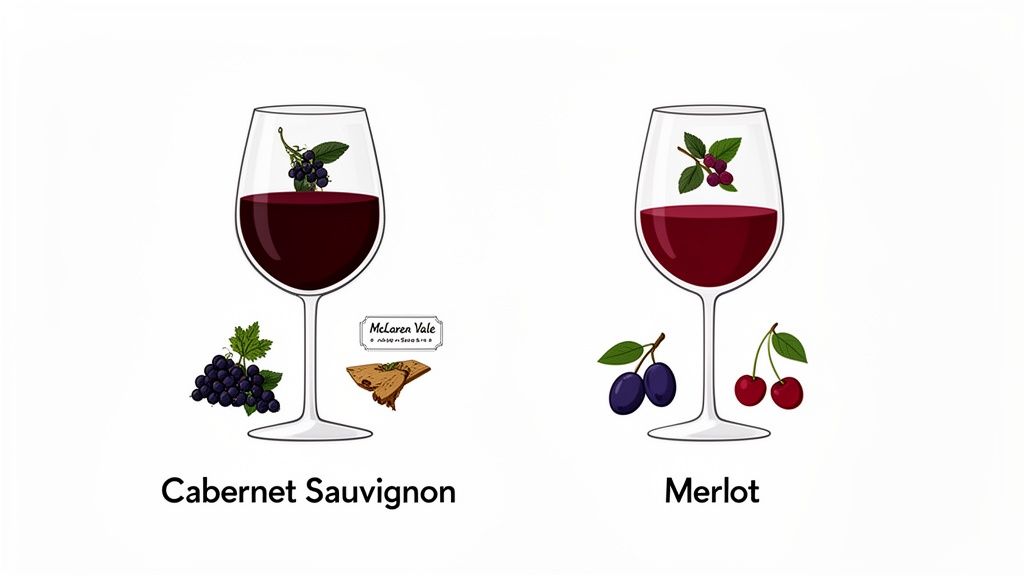
Choosing between these two iconic reds often boils down to the mood, the meal, or simply your personal taste. Both grapes famously hail from Bordeaux, France, and even share a parent (Cabernet Franc), yet they show up in the glass in completely different ways, especially in Australian wine regions like McLaren Vale.
Cabernet Sauvignon is celebrated for its serious structure, built on firm tannins and a backbone of acidity. This framework is what gives it such fantastic ageing potential, allowing its primary flavours of blackcurrant and mint to evolve into complex notes of cedar, leather, and tobacco over many years.
Merlot, on the other hand, is all about a rounder, more velvety texture. Its tannins are much softer, making it delicious and ready to drink right away. The flavours lean towards ripe red and blue fruits, think plum, cherry, and blueberry, often wrapped in hints of chocolate and vanilla from its time in oak.
For many wine lovers, the choice is purely situational. A bold McLaren Vale Cabernet Sauvignon is the perfect partner for a hearty steak dinner or a bottle to tuck away for a future celebration. A smooth, juicy Merlot is the ideal companion for a casual weeknight meal or for anyone just starting their journey into red wine.
Getting a handle on these key differences is the first step to knowing which bottle to reach for. While one offers power and longevity, the other brings immediate, fruity pleasure to the table. Let’s break down the nuances to help you confidently pick your next favourite.
Key Differences Between Cabernet Sauvignon and Merlot
To make it even clearer, here’s a quick side-by-side look at what sets these two grapes apart. This table summarises the core distinctions you'll find in the bottle, from taste to texture.
| Characteristic | Cabernet Sauvignon | Merlot |
|---|---|---|
| Primary Flavours | Blackcurrant, blackberry, mint, cedar, graphite | Plum, black cherry, raspberry, chocolate, vanilla |
| Body | Full-bodied | Medium to full-bodied |
| Tannin Level | High | Medium |
| Acidity Level | Medium-high | Medium |
| Alcohol Content | Generally higher | Generally moderate |
| Ideal Food Pairings | Grilled steak, lamb, aged cheddar, rich stews | Roast chicken, pork, pasta with tomato sauce |
| Best Served | Slightly below room temperature (16-18°C) | Slightly below room temperature (16-18°C) |
Ultimately, both wines offer something unique. Cabernet brings the structure and complexity, while Merlot delivers plush fruit and approachability. The best way to decide? Try them both
Exploring the Origins and Parentage
To really get to the heart of the Cabernet Sauvignon vs Merlot debate, you have to look at their family tree. Both of these noble grapes trace their lineage back to the hallowed vineyards of Bordeaux, France. Not only do they share a homeland, but they also share a parent.
The story starts with Cabernet Franc, an ancient red grape variety that is the proud father of both. This shared DNA is the reason you’ll sometimes find subtle hints of bell pepper or fresh herbs in both wines, especially when they’re grown in cooler spots. But it’s their other parent that sends them down two very different paths, defining their unique personalities in the bottle.
The Accidental Superstar
Cabernet Sauvignon was a happy accident. Sometime back in the 17th century, a spontaneous romance happened in a vineyard between Cabernet Franc and Sauvignon Blanc, a zesty, aromatic white grape. This unlikely pairing passed down some crucial traits. From Sauvignon Blanc, it inherited a lively acidity and those signature herbaceous notes. From Cabernet Franc, it got structure and deep, dark fruit character.
This genetic lottery resulted in a grape with thick skins, heaps of tannin, and a robust structure that screamed "age me!" Its journey from a random French field blend to a global icon is a story in itself. You can dive deeper into its fascinating history in our guide on the origins of the Cabernet Sauvignon wine grape.
The Approachable Sibling
Merlot also has Cabernet Franc as a parent, but its other half gives it a much softer, gentler profile. A key difference is that it ripens earlier than Cabernet Sauvignon, which made it a reliable workhorse for growers in Bordeaux’s cooler pockets, particularly on the famous Right Bank. This head start in the season leads to plusher fruit flavours, a rounder body, and silkier tannins, creating a wine that’s friendly and ready to drink almost straight away.
As these grapes travelled from France, they found a second home down under. McLaren Vale, with its Mediterranean climate of warm, dry summers cooled by coastal breezes, turned out to be the perfect place for both to shine. Our ancient, free-draining soils here allow the grapes to develop an incredible depth of flavour, expressing a character that is uniquely Australian.
While both grapes thrive here, their fortunes in the marketplace have been a bit of a rollercoaster. Recent data shows Cabernet Sauvignon has a much stronger grip on the premium Australian market, with sales for bottles over $15 far outpacing Merlot and Merlot blends.
This preference is clear when you look at what's planted in the vineyards. Cabernet Sauvignon still holds a significant share. Even as the market dipped recently, sales for Cabernet Sauvignon only fell by 5%, while Merlot saw a steeper drop of 7%. This just goes to show Cab's solid reputation as a premium drop, something McLaren Vale producers have championed for decades.
A Detailed Profile Comparison From Vine to Glass
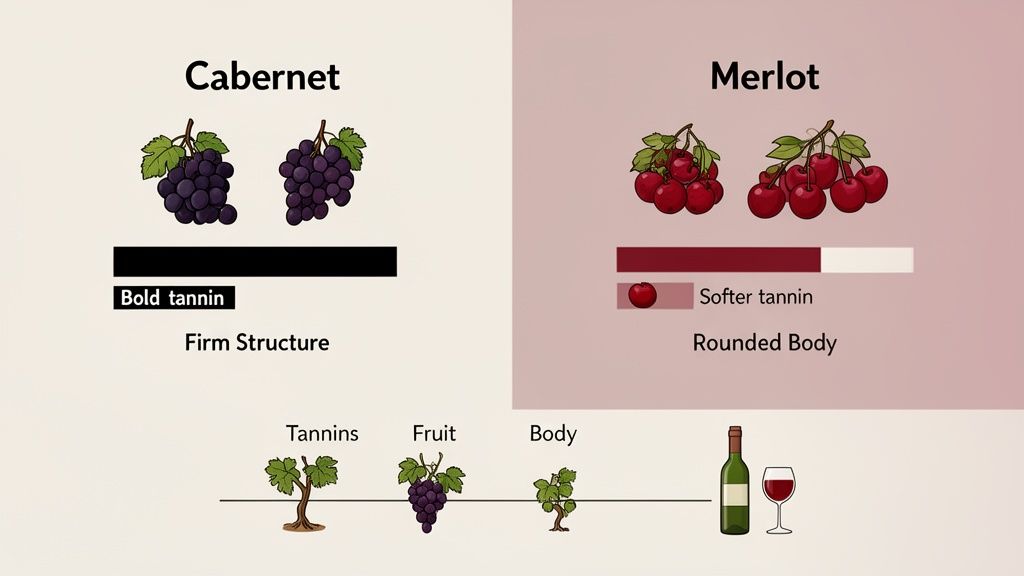
While they share a family tree rooted in Bordeaux, the real differences between Cabernet Sauvignon and Merlot come alive in the glass. It all comes down to their sensory profiles, what you smell, what you taste, and how the wine feels in your mouth. Getting a handle on these nuances is the key to knowing why one is your go-to for a rich steak dinner and the other is perfect for a casual Tuesday night.
Let's break them down side-by-side, from the first swirl to the last sip. This will shine a light on the unique character each grape brings to the table, especially when they’re shaped by the warm, coastal climate we have here in McLaren Vale.
Flavour and Aroma Deep Dive
The first thing you’ll notice is how different these two wines smell and taste. Cabernet Sauvignon makes its presence known with a more intense, complex bouquet. Merlot, on the other hand, usually greets you with a softer, more fruit-forward personality.
Cabernet Sauvignon is all about deep, dark fruit notes. We're talking blackcurrant (cassis), black cherry, and blackberry. But underneath that fruit, you’ll find layers of savoury, herbaceous, and earthy character. Common descriptors include:
- Mint or Eucalyptus: A classic signature of Australian Cabernet, especially from spots like McLaren Vale.
- Cedar or Tobacco: These sophisticated, cigar-box notes often come from time spent ageing in oak barrels.
- Graphite or Pencil Shavings: A subtle minerality that gives Cab its structured, serious personality.
- Green Bell Pepper: This comes from a compound called pyrazine, inherited from its parent grapes. You’ll notice it more in cooler climates or less ripe versions.
Merlot gives you a plusher, more rounded fruit experience. The flavours are often described as red and blue fruits, with a gentler, more inviting aroma. Look for notes of:
- Ripe Plum and Black Cherry: This is the heart and soul of Merlot’s fruit-driven appeal.
- Raspberry and Blueberry: These add layers of juicy, vibrant character.
- Chocolate or Mocha: A delicious note you'll often find in warmer climate Merlot that beautifully complements its soft texture.
- Vanilla or Clove: Sweet spice notes that integrate seamlessly from oak ageing.
The Key Differentiator: If Cabernet Sauvignon is a complex symphony of dark fruit, herbs, and earth, then Merlot is a smooth, velvety melody of ripe fruit and sweet spice. One challenges your palate with its layers, while the other comforts it with pure generosity.
Deconstructing the Structure
Beyond flavour, a wine's "structure", its tannins, acidity, and body, is what defines how it feels in your mouth. This is where the cabernet sauvignon vs merlot distinction becomes crystal clear, explaining why one feels bold and powerful while the other feels soft and smooth.
Tannins: The Grip vs. The Caress
Tannins are compounds from grape skins, seeds, and stems that create that drying sensation in your mouth, a bit like drinking strong black tea. They’re absolutely vital for a wine's structure and its ability to age.
-
Cabernet Sauvignon: Famous for its high levels of firm, grippy tannins. This is thanks to the grape’s thick skins. These tannins provide a powerful backbone, giving the wine a commanding presence and the framework it needs to age for decades. In a young McLaren Vale Cabernet, these tannins are assertive but should feel fine-grained, not rough.
-
Merlot: Has lower levels of softer, rounder tannins. Its thinner skins mean less tannin is extracted during winemaking, which results in that signature velvety, plush mouthfeel. This textural difference is a huge reason why Merlot is often seen as more approachable and "easier to drink" when it's young.
Acidity: The Backbone of Freshness
Acidity is what makes a wine taste refreshing and lively. It’s the component that makes your mouth water and helps the wine cut through rich, fatty foods.
Cabernet Sauvignon typically has medium-to-high acidity. This bright acidity is crucial for balancing its powerful fruit and firm tannins, stopping the wine from feeling heavy or clumsy. It’s a key part of what makes it so age-worthy.
Merlot, in contrast, generally has slightly lower, medium acidity. This adds to its rounder, softer profile, making the fruit feel more immediate and less buttoned-up.
Body: The Weight and Feel
Body is all about the perceived weight and richness of the wine on your palate, which is influenced by alcohol and the concentration of fruit.
Both grapes typically produce medium-to full-bodied wines, but Cabernet often feels like the bigger of the two.
-
Cabernet Sauvignon: Almost always full-bodied. The combination of high tannins, concentrated fruit, and robust alcohol creates a wine with serious weight and intensity that coats your whole mouth.
-
Merlot: Ranges from medium to full-bodied. While a warm-climate McLaren Vale Merlot can certainly be rich and full, it generally feels less dense than Cabernet because of its softer tannins and less aggressive structure.
How Terroir Shapes Each Wine's Character
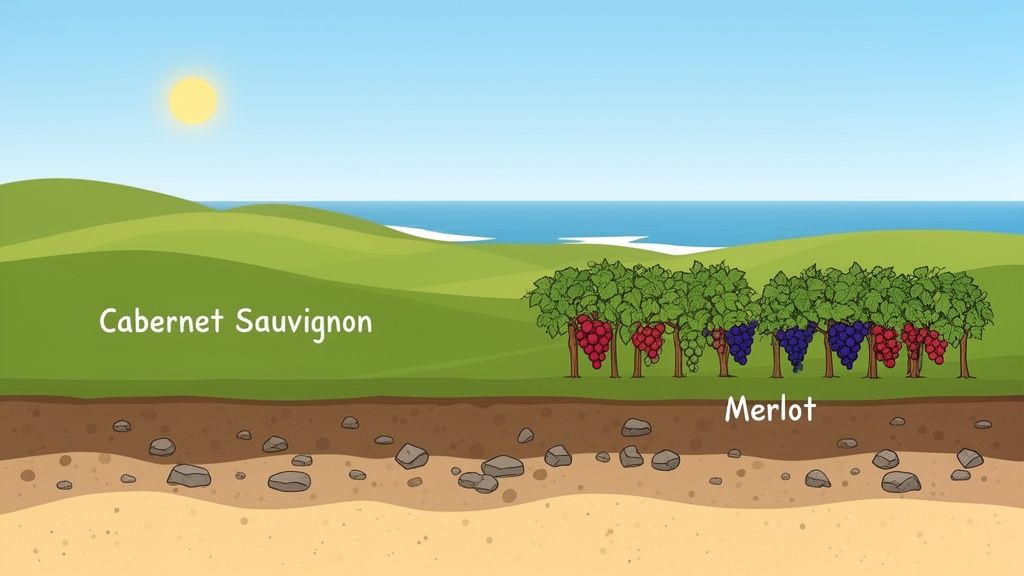
While the grape variety sets the blueprint, it’s the land where it grows, the soil, climate, and geography, known collectively as terroir, that truly sculpts a wine's final personality. This is the very reason a Cabernet Sauvignon from Bordeaux tastes worlds apart from one grown in McLaren Vale. Terroir acts like a filter, turning up the volume on certain characteristics while muting others.
The idea isn’t just limited to wine; understanding the impact of terroir is just as vital for appreciating how place shapes other fine beverages. This concept is the key to unlocking the regional nuances in both Cabernet Sauvignon and Merlot.
Old World Elegance Vs New World Power
The most classic style split is between the Old World regions like Bordeaux and New World spots like California's Napa Valley or our own McLaren Vale. This contrast perfectly illustrates how climate shapes these two famous grapes.
Old World (Bordeaux, France):
- Climate: Cooler and damper, which means a longer, often more challenging, growing season.
- Cabernet Sauvignon: Tends to be more reserved and savoury. Think notes of graphite, tobacco, and dried herbs alongside tart blackcurrant fruit, all held together by grippy, stern tannins.
- Merlot: In its Right Bank home, it leans into flavours of red plum and damp earth, with a focus on elegance and structure rather than pure fruit power.
New World (Napa Valley, McLaren Vale):
- Climate: Warmer, sunnier, and drier, allowing grapes to ripen fully and consistently year after year.
- Cabernet Sauvignon: Bolder and more fruit-forward is the name of the game. Flavours of ripe blackberry, cassis, and chocolate are common, with plusher, more polished tannins.
- Merlot: Becomes incredibly luscious and generous. It bursts with ripe black cherry, plum, and mocha notes, all supported by a soft, velvety texture.
The difference is stark: Old World styles are often about earthy subtlety and structure, while New World expressions celebrate vibrant, ripe fruit and a richer body. Neither is better—they are simply different voices of the same grape, sculpted by their environment.
The McLaren Vale Signature Style
Tucked away in South Australia, McLaren Vale offers a unique terroir that puts a distinctive stamp on both Cabernet and Merlot. Its Mediterranean climate, warm, dry summers and cool winters, gets a helping hand from the cooling influence of the nearby Gulf St Vincent.
That coastal breeze is the secret weapon. It allows the grapes to reach full flavour ripeness while hanging onto the natural acidity needed for balance and freshness. Add to that the region's incredibly complex geology, with over 40 distinct soil types, and you get another layer of personality. Digging into the science of wine and how climate and soil shape flavour really deepens your appreciation for this connection.
McLaren Vale Cabernet Sauvignon
In McLaren Vale, Cabernet Sauvignon strikes a brilliant balance between power and poise. The warm climate guarantees deep, concentrated flavours of rich blackcurrant, dark chocolate, and sometimes that classic Aussie hint of mint or eucalyptus.
But thanks to the coastal influence and varied soils, it never becomes over-the-top or jammy. Instead, the tannins are ripe and beautifully woven into the wine, providing a firm but fine-grained structure that promises it will age gracefully. It’s a style that captures New World generosity with an underlying elegance.
McLaren Vale Merlot
While you'll find less of it than Cabernet or Shiraz, Merlot from McLaren Vale is a real hidden gem. The plentiful sunshine helps it develop a wonderfully plush, ripe fruit character, showing off notes of juicy plum, black cherry, and cocoa.
Unlike hotter regions where Merlot can sometimes feel a bit soft or flat, our cooling breezes help it retain a surprising freshness and energy. The result is a wine that’s both luscious and balanced, offering a rich, velvety texture without giving up its structure. It’s an expressive and compelling take on the grape that's well worth seeking out.
Mastering Food Pairings and Serving
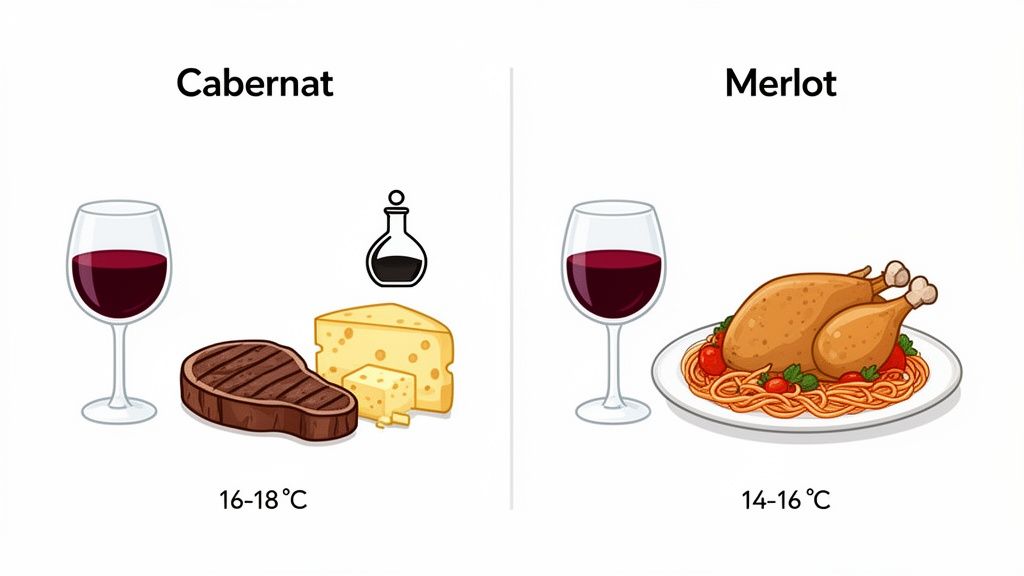
Understanding the structural differences in the cabernet sauvignon vs merlot showdown is the secret to unlocking incredible food pairings. A wine’s tannins and acidity aren't just for wine nerds; they're your tools for turning a good meal into a great one.
Successful food pairing is all about creating balance. A big, tannic Cabernet needs a dish with enough weight to stand up to it, while a softer, fruitier Merlot can happily mingle with a much wider range of flavours.
Perfect Pairings for Cabernet Sauvignon
Cabernet Sauvignon's formidable structure, that high tannin and full body, makes it the ultimate partner for rich, fatty, and savoury dishes. The magic happens when the tannins in the wine bind to the proteins and fats on your palate, creating a cleansing effect that makes every single bite as delicious as the first.
Think of it as a culinary tag team. The wine’s backbone cuts through the richness of the food, and in return, the food's fat softens the wine's powerful tannins. Both are better for it.
Here are some classic pairings that just always work:
- Grilled or Roasted Red Meats: A perfectly cooked steak, a rack of lamb, or a beautiful prime rib is the quintessential match. The protein and fat are exactly what those tannins are looking for.
- Rich Stews and Braises: Dishes like beef bourguignon or a slow-cooked lamb shank have the depth and richness to go toe-to-toe with a full-bodied Cab.
- Hard, Aged Cheeses: An old, sharp cheddar, aged Gouda, or a chunk of Parmesan has the fat and flavour intensity to match the wine's power.
- Mushroom-Based Dishes: The earthy, umami character of mushrooms, especially in a creamy polenta or a rich risotto, beautifully complements the savoury notes in Cabernet Sauvignon.
Pro Tip: Steer clear of pairing Cabernet Sauvignon with spicy foods. The high alcohol and tannins can crank up the heat to uncomfortable levels. Likewise, delicate fish or light salads will be completely steamrolled by the wine's intensity.
Versatile Pairings for Merlot
Merlot's softer tannins and plush, fruity nature make it one of the most food-friendly reds you can pour. It’s far less demanding than Cabernet, opening the door to a huge spectrum of pairings, from easy weeknight dinners to more special occasions. For a deeper dive, check out our complete guide to unlocking the versatility of Merlot food pairings.
Its gentle structure won’t clash with lighter meats, and that ripe fruit character is a fantastic friend to all sorts of sauces and herbs.
Give these options a go with your next bottle of Merlot:
- Roast Chicken or Pork: The wine’s soft fruit notes enhance the savoury flavours of roasted white meats without taking over the show.
- Pasta with Tomato-Based Sauces: Merlot’s friendly acidity and fruit-forward profile are a perfect match for the tang of a good tomato sauce, think lasagna or bolognese.
- Cheeseburgers or Meatloaf: For a casual meal, Merlot is an absolute winner. Its smooth texture is a wonderful companion to these comfort food classics.
- Mild to Medium Cheeses: Creamy cheeses like Camembert or a simple Havarti work beautifully, as they don't need the tannic grip of a Cabernet to find balance.
Serving Temperature and Decanting
Don't underestimate the power of temperature. Serve a red wine too warm, and the alcohol will feel hot and unbalanced. Serve it too cold, and you'll mute all those lovely flavours and aromas you paid for.
The sweet spot for both Cabernet Sauvignon and Merlot is just below room temperature, right around 16-18°C. The easiest trick? Just pop the bottle in the fridge for 15-20 minutes before you plan to open it.
Decanting can also make a huge difference, especially with a young, powerful Cabernet Sauvignon. Pouring the wine into a decanter introduces oxygen, which helps soften those assertive tannins and allows the complex aromas to open up and express themselves. A young Cab will thank you for 1-2 hours in a decanter, while most Merlot is good to go after a brief 30-minute decant to let it stretch its legs.
How to Choose the Right Wine for You
Choosing between Cabernet Sauvignon and Merlot shouldn't feel like a high-stakes exam. Now that you have a handle on their unique personalities, you can start picking a wine based on the situation, not just a simple taste preference. The right bottle is the one that fits the moment perfectly, whether that’s a quiet Tuesday night dinner or a massive celebration.
This is all about connecting what you’ve learned to real life, so you feel confident every time you grab a bottle. Instead of just asking, "Which one do I like more?", a better question is often, "Which wine is right for this?".
When to Reach for Cabernet Sauvignon
Cabernet Sauvignon is the wine you pull out when you want to make a statement. Its powerful structure, deep flavours, and incredible ability to age make it the perfect choice for specific, memorable moments.
Choose Cabernet Sauvignon for:
- A Celebratory Steak Dinner: When a special occasion calls for a perfectly cooked steak or a rich rack of lamb, Cabernet is the undisputed champion. Its high tannins and bold fruit slice right through the richness of the meat, making every bite better.
- Building Your Cellar: If you’re looking for a wine to lay down and enjoy in five, ten, or even twenty years, a quality McLaren Vale Cabernet Sauvignon is a brilliant investment. Its structure allows it to evolve in the bottle, developing fascinating new flavours over time.
- Impressing a Wine-Savvy Friend: Serving a well-made Cabernet shows you appreciate structure and complexity. It’s a classic choice that signals a real appreciation for fine wine.
For collectors and enthusiasts, Cabernet Sauvignon’s reliable performance in the Australian market makes it a smart choice. Data shows its strong position, particularly in the premium segment, reinforcing its status as a cellar-worthy classic.
The numbers don't lie. In Australia's domestic market, total Cabernet Sauvignon sales hit $540 million, a 4% increase year-on-year. Crucially, single-varietal Cabernet Sauvignon accounted for almost two-thirds of this value, with sales surging 5%. The premium appeal is clear, with 60% of these sales being for bottles priced above $15. You can discover more insights about wine market performance from Wine Australia.
When Merlot Is the Perfect Pick
Merlot shines when the moment calls for comfort, versatility, and easy-drinking pleasure. Its soft, fruity, and approachable nature makes it a wonderfully reliable go-to for all sorts of situations.
Choose Merlot when you are:
- Hosting a Casual Get-Together: Having friends over for pizza or pasta? Merlot is a total crowd-pleaser. It pairs beautifully with a huge range of foods without demanding all the attention.
- Introducing Someone to Red Wine: For that friend who claims they "don't like red wine," Merlot is the perfect ambassador. Its soft tannins and generous fruit provide a gentle, welcoming introduction.
- A Relaxing Weeknight Meal: After a long day, you don't always want a wine that challenges you. Merlot is like a comfortable chair—it's smooth, satisfying, and helps you unwind alongside dishes like roast chicken or a simple pork loin.
Connecting Knowledge to Your Next Purchase
Ultimately, the cabernet sauvignon vs merlot debate is settled by you, based on what you need from a bottle of wine. Here at McLaren Vale Cellars, we see customers confidently choose both, but for completely different reasons.
A collector might gravitate towards a premium, age-worthy Cabernet Sauvignon to add to their cellar, knowing it represents a fantastic regional expression. At the same time, someone looking for a delicious and dependable red for regular enjoyment will find their perfect match in a versatile, fruit-forward Merlot.
Consider grabbing a mixed Half & Half bundle to experience both side-by-side. It’s the best way to put your knowledge to the test and discover which moments call for the bold structure of Cabernet and which are made better by the plush generosity of Merlot.
Your Questions, Answered
When you're staring at a wall of wine, it's natural to have a few questions. Pitting two giants like Cabernet and Merlot against each other brings up some common queries. Let's clear up the confusion so you can choose your next bottle like a pro.
Which Wine Is Better for Ageing: Cabernet Sauvignon or Merlot?
For the long haul, Cabernet Sauvignon is your best bet. Its secret lies in its structure, high levels of tannins and acidity act like natural preservatives, allowing the wine to soften and evolve over many years. This is how those incredible secondary notes of leather, tobacco, and cedar develop. It’s built for the cellar.
While a few exceptional, powerfully structured Merlots can age beautifully for a decade or more, most are made to be enjoyed in their youth, celebrating that plush, generous fruit. If you're building a cellar with longevity in mind, a quality McLaren Vale Cabernet is the more dependable and ultimately rewarding choice.
Is Merlot Sweeter Than Cabernet Sauvignon?
This is a great question, and the answer is a little nuanced. Technically, neither wine is sweet. Both are fermented dry, which means all the grape sugar has been converted into alcohol.
However, Merlot often feels sweeter on the palate. This is because it’s loaded with ripe, forward fruit flavours like plum and cherry, and its tannins are much softer. That juicy, generous fruit character gives the impression of sweetness.
In contrast, Cabernet Sauvignon's powerful tannins and savoury notes of graphite, herbs, and bay leaf give it a drier, more structured feel. The perception of sweetness is all about the fruit style, not the sugar content.
The best way to get your head around this is to taste them side-by-side. You'll notice how Merlot's fruitiness explodes on the front of your palate, while Cabernet's structure builds to a longer, more savoury finish. That simple comparison makes the difference between fruit-forward and actually sweet crystal clear.
Which Wine Is More Beginner Friendly?
For anyone just dipping their toes into the world of red wine, Merlot is the perfect starting point. Its softer texture, lower tannins, and obvious fruity flavours make it incredibly approachable and easy to love. It’s a gentle, welcoming introduction to fuller-bodied reds.
The bold structure and assertive tannins of Cabernet Sauvignon can sometimes be a bit much for a novice drinker. Merlot offers a smoother ride, giving you all the rich flavour without the intense grip that can take some getting used to.
What Is the Best Way to Compare These Two Wines?
There's no substitute for a direct, side-by-side tasting. This is the quickest and most enjoyable way to train your palate and truly understand the differences.
We suggest grabbing a Cabernet Sauvignon and a Merlot from the same region, like McLaren Vale, and ideally from the same vintage. This creates a level playing field.
Pour a glass of each. Look at the colour, give them a swirl and smell the aromas, then take a sip. You'll immediately pick up on Cabernet's powerful structure versus Merlot's soft, rounded fruit. It's a fun and delicious way to lock in the knowledge.
Ready to put your new expertise into practice? At McLaren Vale Cellars, we’ve put together the perfect selections to help you explore the unique personalities of these incredible grapes. Discover your favourite with our expertly chosen sample packs or build your own showdown with a custom Half & Half bundle.
Explore the collection at McLaren Vale Cellars and find the perfect bottle for any occasion.


Comments (0)
There are no comments for this article. Be the first one to leave a message!