
When you think of iconic Australian red wine, your mind probably jumps straight to a bold Shiraz. Fair enough. But standing right there beside it is Cabernet Sauvignon, a grape that has found a truly special home across the varied landscapes of South Australia.
This isn't just a place where the classic Bordeaux variety grows; it's where it thrives, expressing itself in countless fascinating ways.
Why South Australia Is a Cabernet Sauvignon Powerhouse
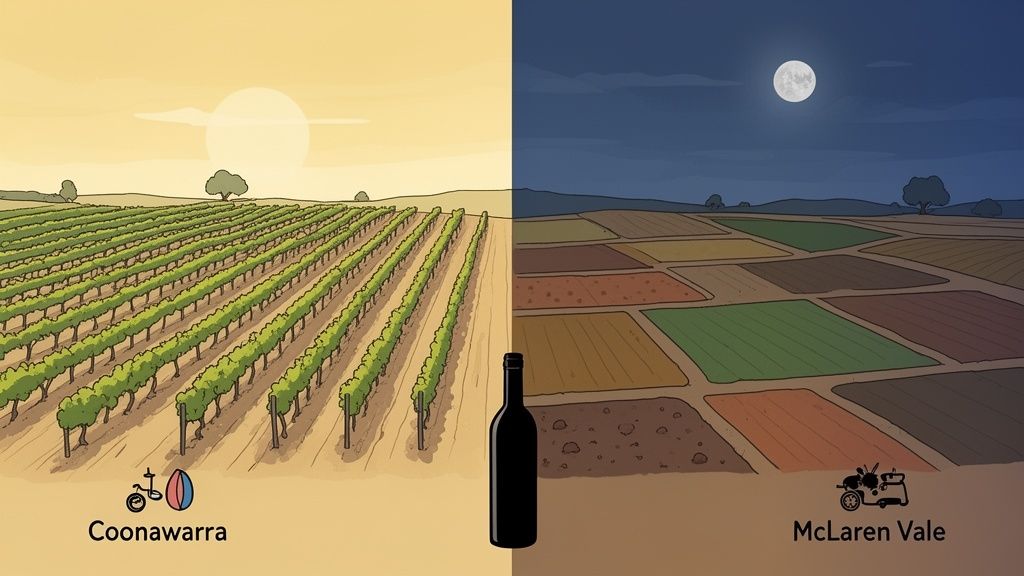
Think of South Australia as a giant, natural vineyard blessed with the perfect setup for growing world-class grapes. The secret sauce is a combination of abundant sunshine, which ripens the grapes to perfection, and cool nights that lock in their natural acidity and complex flavours.
This daily temperature swing is the key to creating balanced wines with real character and the backbone to age gracefully.
A Mosaic of Terroirs
But the real magic of South Australian Cabernet Sauvignon is its incredible geological diversity. The state isn't one uniform growing area. It’s a mosaic of distinct wine regions, each with its own unique soil, climate, and personality—what the French call terroir.
This variety is what makes exploring South Australian Cabernets so exciting. A wine from one valley can taste completely different from another grown just a short drive away, giving winemakers a stunning spectrum of styles to craft, from lean and herbal to opulent and fruit-driven.
The story of this grape is deeply woven into the fabric of Australian wine. The connection to the land, the sense of place, and the multi-generational family stories are what truly make each bottle special.
Superstar Regions and Unique Expressions
Throughout this guide, we'll take a tour through the regions that have put South Australian Cabernet on the global map. These are the places where specific environmental factors create signature wine styles you can learn to recognise and love.
We’ll be exploring key areas including:
- Coonawarra: Famous for its vibrant red 'terra rossa' soil, producing elegant, structured Cabernets with distinctive mint and cassis notes.
- McLaren Vale: Where a coastal climate shapes rich, powerful wines bursting with dark chocolate, plum, and savoury olive characters.
- Barossa Valley: Known for its bold, full-bodied expressions that are built to last, developing incredible layers of flavour over time.
Each region tells a different chapter of the Cabernet story. Getting to know these differences is the first step toward appreciating the incredible depth and quality this grape offers. To get a broader perspective, you can learn more about the enduring legacy of Cabernet Sauvignon in Australia and how it became a national icon.
A Guided Tour of South Australia's Top Cabernet Regions
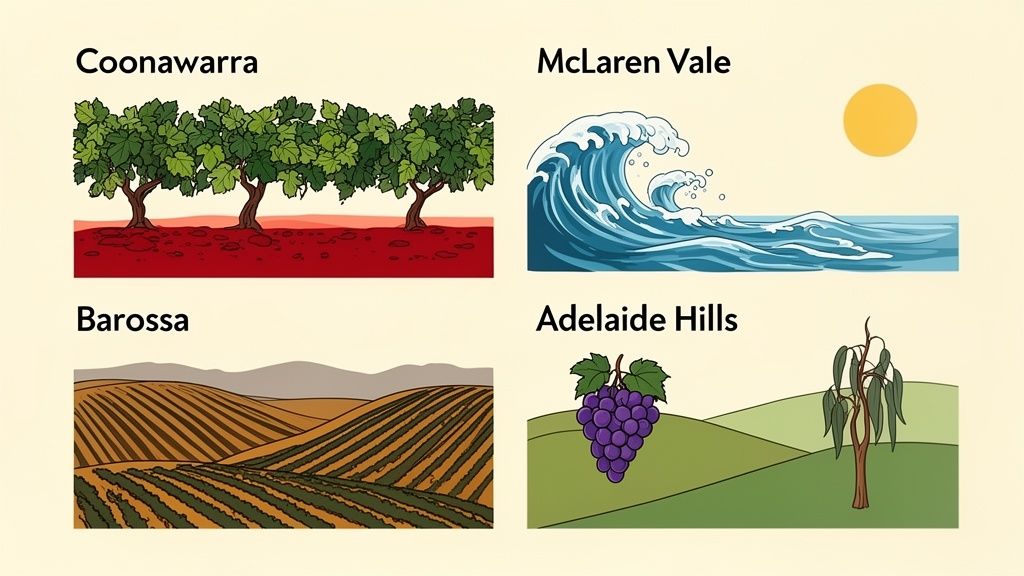
To really get to know South Australian Cabernet Sauvignon, we need to take a walk through the vineyards that shape it. The idea of terroir—that a wine is a direct reflection of its unique environment—is never clearer than when you compare a Cabernet from different corners of the state.
Think of each region as a different lens. They all start with the same grape, but the final picture is completely distinct. One might be structured and elegant, another rich and powerful, all thanks to subtle shifts in soil, climate, and elevation. Let’s take a virtual tour to see how the land shapes the wine in your glass.
Coonawarra: The Icon of Elegance
When wine lovers talk about Australian Cabernet, Coonawarra is almost always the first name that comes up. This small, cigar-shaped strip of land on the Limestone Coast is world-famous for one thing: its vibrant, iron-rich 'terra rossa' soil.
This bright red clay sits over a bed of ancient limestone, creating a perfect storm for Cabernet Sauvignon. It gives the vines incredible drainage while holding just enough water, forcing them to dig deep roots and produce grapes with stunning concentration and flavour.
The resulting wines are the very definition of elegance and structure. They’re known for fine, firm tannins, bright acidity, and a distinctive aroma profile you can spot a mile away. Expect classic notes of blackcurrant (cassis), mint, and eucalyptus, often layered with cedar and a subtle earthiness from smart oak ageing. Coonawarra Cabs are famous for their ability to age beautifully for decades, transforming from youthful vibrancy into complex, savoury masterpieces.
The secret of Coonawarra is in its unique geology. That 'terra rossa' soil is a winemaker's dream, consistently producing Cabernet with an unmistakable sense of place—a signature style that is both powerful and refined.
McLaren Vale: Richness Meets the Sea
Just a short drive south of Adelaide, McLaren Vale offers a completely different take on Cabernet Sauvignon. Here, the landscape is defined by its closeness to the Gulf St Vincent, whose cooling ocean breezes are a game-changer in the vineyard.
This maritime influence acts like a natural air conditioner, taking the edge off hot summer days and letting the grapes ripen slowly and evenly. This extended “hang time” on the vine helps develop deep, complex flavours while keeping the natural acidity in check, ensuring the wines are balanced and never over-the-top. Add in the region's diverse geology, with soils ranging from sandy loams to biscay clay, and you get even more layers of complexity.
McLaren Vale Cabernets are typically richer, rounder, and more fruit-forward than their Coonawarra cousins. They are known for their plush textures and generous flavours.
- Dominant Flavours: Ripe blackberry, dark plum, and black cherry often take centre stage.
- Signature Notes: Look for undertones of dark chocolate, Kalamata olive, and dried herbs.
- Structure: The tannins are often softer and more velvety, making the wines a pleasure to drink young, yet they still have everything they need to age well.
Barossa Valley: Boldness and Power
While legendary for its Shiraz, the Barossa Valley also produces some absolutely outstanding Cabernet Sauvignon. The region's warm, dry climate creates wines that are unmistakably bold, powerful, and built for the long haul.
The ancient, nutrient-poor soils of the Barossa make the vines work hard, resulting in smaller berries with incredibly concentrated flavours and tannins. Barossa Cabernet is the heavyweight champion of South Australian styles—full-bodied, intensely flavoured, and unapologetically rich.
These are wines that command your attention. They burst with aromas and flavours of blackcurrant, mocha, and liquorice, all supported by a robust tannic backbone. While powerful in their youth, the best examples have the framework to age for decades, softening and developing complex notes of leather, earth, and spice over time.
To help visualise these differences, here’s a quick snapshot of what sets each region’s Cabernet apart.
South Australian Cabernet Sauvignon Regional Snapshot
This table offers a comparative look at the distinct characteristics of Cabernet Sauvignon from South Australia's premier wine regions.
| Region | Key Soil Type | Typical Flavour Profile | Body & Tannin Structure |
|---|---|---|---|
| Coonawarra | Terra Rossa (red clay over limestone) | Blackcurrant, mint, eucalyptus, cedar | Medium to full-bodied, firm, fine-grained tannins |
| McLaren Vale | Diverse (sands, clays, loams) | Ripe blackberry, dark chocolate, olive | Full-bodied, plush, velvety tannins |
| Barossa Valley | Ancient, low-fertility clays & loams | Blackcurrant, mocha, liquorice, plum | Full-bodied, powerful, robust tannins |
| Adelaide Hills | Sandy loams over clay | Red cherry, raspberry, leafy herbs | Medium-bodied, elegant, high-acidity tannins |
Each region clearly has its own personality, offering a different but equally compelling expression of this classic grape.
Padthaway and Adelaide Hills: Emerging Stars
Beyond the big three, other regions add their own unique chapters to the South Australian Cabernet Sauvignon story. Padthaway, also on the Limestone Coast, shares some similarities with its famous neighbour, Coonawarra, including pockets of 'terra rossa' soil. It often produces wines that offer fantastic value, blending Coonawarra’s structure with a slightly softer, more generous fruit profile.
Meanwhile, the Adelaide Hills gives us a cooler-climate expression of Cabernet. Its higher altitude leads to a longer, milder growing season, producing wines that are more medium-bodied with higher acidity. Expect elegant styles with notes of red cherry, raspberry, and a distinct herbal or leafy character, showing off the grape's more restrained and savoury side.
Each of these regions offers a unique lens through which to view Cabernet Sauvignon. To better understand these distinctions, you can dive deeper in our guide to South Australia's premier wine regions. Of course, the best way to learn is to taste them side-by-side and discover the fascinating diversity for yourself.
How Quality Is Crafted From Vine to Bottle
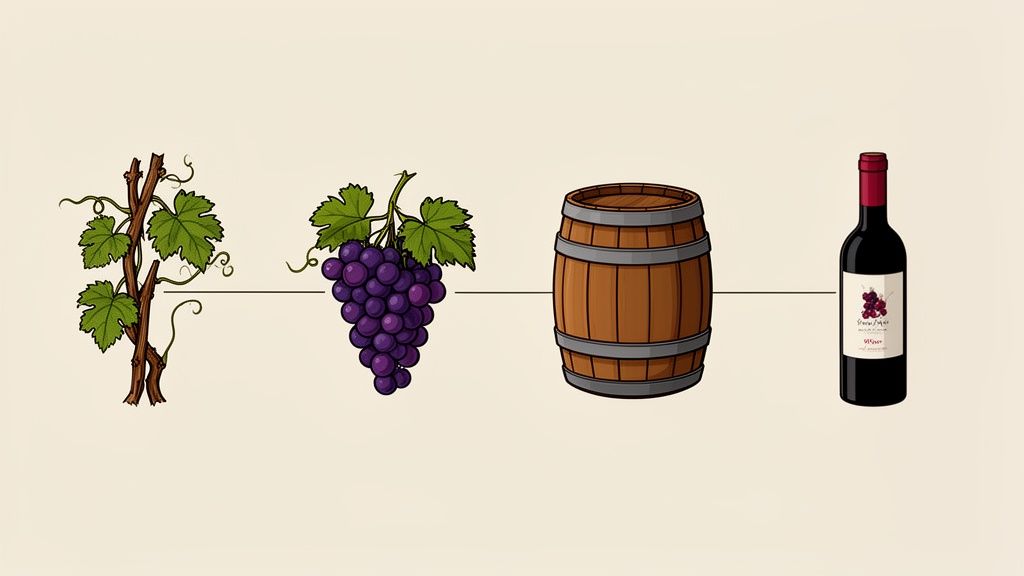
Crafting an exceptional bottle of South Australian Cabernet Sauvignon is a story that begins long before the grapes ever see the inside of a winery. It’s a tale of deliberate choices and meticulous work, starting with a core philosophy in the vineyard: intensity over sheer volume.
This approach marks a huge shift from the past. Where growers once aimed for massive yields, today’s top producers know that true quality comes from concentration.
The Art of Concentrating Flavour
So, how do you get that deep, concentrated flavour? Viticulturists intentionally manage their vineyards to produce fewer grape bunches per vine. Think of it like a tomato plant in your garden; if you prune some of the smaller, weaker fruit, the plant funnels all its energy into the remaining tomatoes. The result? They become richer, bigger, and packed with flavour.
That’s precisely the principle behind growing premium wine grapes. By reducing yields, each berry gets a bigger share of the vine’s resources. This leads to grapes with deeper colour, more complex aromas, and a powerful flavour profile that really sings in the glass. This commitment to quality over quantity is the hallmark of South Australia’s finest Cabernet producers.
The numbers back this up. Over the decades, Cabernet has solidified its dominance here, growing from 36% of the red grape crush in 1985 to a commanding 66% by 2023. In prime spots like Coonawarra and McLaren Vale, average yields have deliberately dropped from 10-12 tonnes per hectare in the early 2000s to much lower levels today, all in the name of elevating quality.
Listening to the Story of the Vintage
Every year, the weather writes a unique story in the vineyard, and a winemaker’s job is to read its script. This is what we call vintage variation. No two years are ever the same, and the specific conditions—the amount of sun, rain, and heat—profoundly shape the final wine.
A cooler, wetter year might give us a more elegant, restrained Cabernet with crisp acidity and herbal notes. A warm, dry year, on the other hand, will likely deliver a richer, bolder wine with ripe, jammy fruit and softer tannins.
A great winemaker doesn't try to force a vintage to be something it’s not. Instead, they work with what nature gives them, guiding the grapes to express the unique character of that specific year.
The Winemaker’s Spice Rack: Oak Barrels
Once the grapes are harvested and fermented, the winemaker’s artistry really takes centre stage. One of their most important tools is the oak barrel, which acts like a chef’s spice rack, adding layers of complexity, texture, and flavour.
The choice of oak is a critical decision that shapes the wine’s final personality:
- French Oak: This is the choice for elegance. It imparts subtle aromas of vanilla, clove, and cedar, with fine-grained tannins that contribute a silky, refined structure.
- American Oak: If you want boldness, this is the go-to. It's known for its sweeter character, adding notes of coconut, dill, and rich vanilla, giving the wine a powerful mouthfeel.
Many winemakers use a combination of both, along with barrels of different ages, to strike the perfect balance. This careful barrel ageing doesn't just add flavour; it allows the wine to soften and integrate, transforming a young, raw wine into a polished, harmonious final product.
The entire journey is a fascinating one. You can follow along with our guide on how red wine is made step-by-step to see the full picture.
Unlocking the Flavours of Your Cabernet
Once you've got a bottle of South Australian Cabernet Sauvignon in your hands, the real adventure begins. Knowing how to serve it and what classic flavours to look for can turn a simple glass of wine into a truly memorable experience. It's all about creating the perfect stage for the wine’s personality to shine.
South Australian Cabernet is celebrated for its incredible depth and complexity. While each region brings its own unique twist, a common thread of aromas and flavours runs through them. Think of these as the grape’s signature calling cards.
Decoding the Tasting Notes
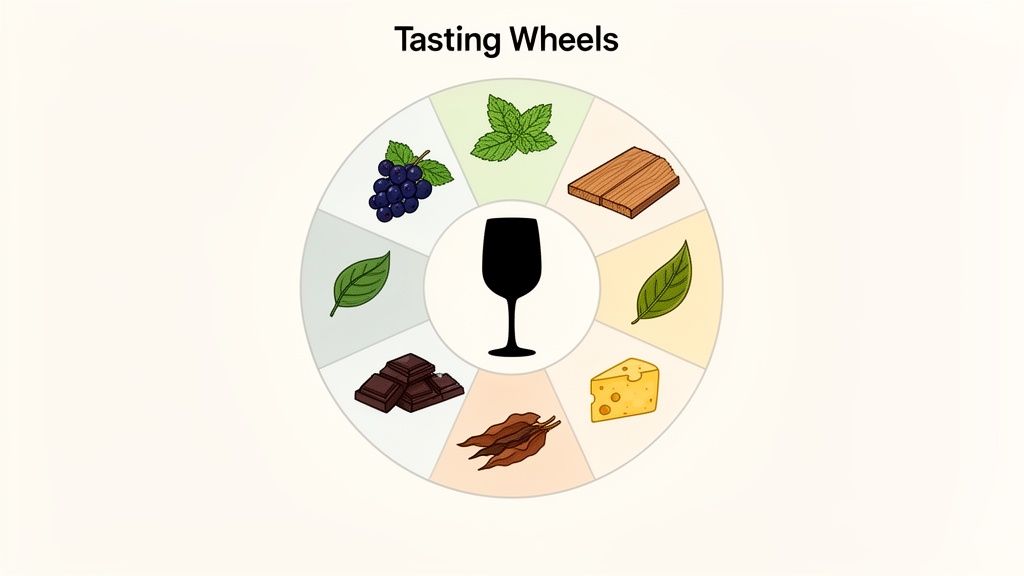
When you first pour a glass, you'll be hit with a vibrant array of primary fruit notes. These are the fresh, direct expressions of the grape itself, almost always led by dark, brooding fruits.
But beneath that, you’ll discover secondary and tertiary notes—the more complex layers that come from the winemaking process and patient ageing. These are what give the wine its sophisticated character.
Here are some of the classic notes to look for:
- Primary Fruit Flavours: Blackcurrant (often called cassis) is the hero here, usually joined by blackberry, dark cherry, and ripe plum.
- Herbal & Spice Notes: Keep an eye out for hints of mint or eucalyptus (a classic Coonawarra calling card), bay leaf, and black pepper.
- Oak-Influenced Aromas: Time spent in oak barrels adds layers of cedar, vanilla, dark chocolate, and even a touch of coffee or mocha.
- Aged Characters: With time, savoury notes of tobacco leaf, leather, and earthy forest floor emerge, adding wonderful complexity.
A young South Australian Cabernet might burst with bold blackcurrant and mint, while a ten-year-old bottle can evolve into a symphony of cedar, tobacco, and dried herbs. It's the same wine, just at a different, more mature stage of its life.
The Art of Serving
Getting the service right is simple but makes a massive difference. Two key factors—temperature and aeration—are your secret weapons for unlocking a wine’s full potential.
An incorrect serving temperature can completely mute a wine's aromas or make its alcohol feel harsh and unbalanced.
For most South Australian Cabernet Sauvignon, the sweet spot is between 16-18°C. This is slightly cooler than a typical room temperature. A wine served too warm can taste flat and boozy, while one that’s too cold will hide all its beautiful fruit behind a wall of tannin.
Why Decanting Is a Game-Changer
Decanting, or simply pouring the wine from its bottle into another container, serves two brilliant purposes. First, it allows the wine to breathe. This hit of oxygen helps soften the tannins and really opens up the aromas, making the wine more expressive and welcoming.
Second, for older wines, it’s a great way to separate the clear wine from any sediment that has formed over the years. A young, powerful Cab can benefit from a good splashy decant for an hour or so before serving. An older, more delicate wine might only need 20-30 minutes to gently awaken.
Beyond Steak: Perfect Food Pairings
While a rich cut of steak is the classic partner for Cabernet, its bold structure and complex flavours make it incredibly versatile. Its high tannins and acidity are brilliant at cutting through fat, making it a perfect match for rich, savoury dishes.
Think beyond the steakhouse with these creative pairings:
- Gourmet Burgers: The savoury meat and rich toppings are a perfect match for Cabernet’s bold fruit.
- Earthy Mushroom Risotto: The earthy, umami flavours of mushrooms mirror the savoury notes in an aged Cabernet.
- Slow-Cooked Lamb Shanks: The tender, flavourful meat is beautifully complemented by the wine's structure.
- Aged Cheddar or Gouda: The sharp, nutty flavours of a hard cheese stand up wonderfully to the wine’s tannins.
The magic of South Australian Cabernet Sauvignon is also its ability to evolve with age. A young, vibrant bottle might be perfect for a lively barbecue, while an older, more complex vintage is the ideal guest for a thoughtful dinner.
To ensure your chosen bottle truly unlocks its full potential over time, consider how proper storage can help. Cellaring transforms wine from a snapshot of a vintage into a time capsule, and things like specialized wine enclosures can aid in that preservation. This patient transformation, revealing new layers of flavour as the years go by, is one of the greatest rewards for any wine lover.
How to Choose the Perfect Bottle for Any Occasion
Walking into a bottle shop can feel like a pop quiz you didn't study for. A wall of labels, regions, and vintages can make finding the right cabernet sauvignon south australia feel like searching for a needle in a haystack. But it doesn't have to be that way.
With a little insider knowledge, you can learn to decode any bottle and shop with the confidence of a seasoned pro. Think of a wine label as the bottle’s biography. It tells you everything you need to know about what’s inside, from where the grapes grew to who crafted the final product. Nailing these details is the secret to picking a wine you’ll love, every single time.
How to Read a Wine Label Like a Pro
A wine label is packed with clues that hint at the style and quality in the bottle. Once you know what you’re looking for, it becomes your best friend in the wine aisle.
Here are the key things to zero in on:
- Producer: This is simply the winery or brand behind the wine. After a while, you’ll start to recognise producers whose style you enjoy, making them a reliable go-to.
- Region: As we've explored, the region is a massive signpost for style. A "Coonawarra" on the label screams elegance and mint, while "McLaren Vale" points towards richness and dark chocolate.
- Vintage: This is the year the grapes were picked. It tells you the story of that year's growing season and gives you an idea of the wine’s age and maturity.
- Variety: In this case, it’s Cabernet Sauvignon. Sometimes you might spot a blend like "Cabernet Merlot," which usually signals a slightly softer, more approachable style.
By piecing these four bits of information together, you can build a surprisingly accurate picture of the wine’s personality before you even pop the cork.
Navigating Different Price Points
While price isn’t always a perfect measure of quality, it does give you a pretty reliable map of what to expect from a South Australian Cabernet. Different price tiers generally reflect the quality of the grapes, the level of winemaking craftsmanship, and the wine’s potential to age gracefully.
A big part of this is the sheer scale of production. In 2023, Cabernet Sauvignon was a massive player in the state's industry, with a staggering 94,913 tonnes crushed. This volume allows for a huge range of styles and prices, from easy-drinking weeknight wines to iconic bottles worth tucking away in a cellar. For a deeper dive into these numbers, you can explore the full 2023 South Australian vintage report.
Let’s break down what you can generally expect at different levels.
Everyday Drinkers (Under $25)
In this range, you'll find bright, generous, fruit-forward Cabs that are made for immediate enjoyment. These wines are all about being delicious and approachable, right now.
- What to expect: Think juicy blackcurrant and plum flavours, soft tannins, and a smooth finish. They’re often made with little to no oak, letting all that vibrant fruit do the talking.
- Perfect for: Midweek dinners, casual barbecues, or any time you just want a reliable and tasty glass of red without any fuss.
Premium Quality ($25 - $50)
This is where things get interesting. You start to see real regional character and genuine winemaking artistry shine through. Wines in this bracket offer more complexity, structure, and depth.
- What to expect: More concentrated fruit, a noticeable touch of quality oak (think cedar and vanilla), firmer tannins, and a longer, more layered finish. You'll easily taste the difference between a Coonawarra and a McLaren Vale Cabernet here.
- Perfect for: A nice dinner with friends, a special occasion, or for gifting to someone who appreciates a good drop.
Investment & Cellar-Worthy ($50+)
Welcome to the top end of town. These are the iconic, age-worthy expressions of cabernet sauvignon south australia from the best vineyards and the most respected producers.
These bottles are crafted with the long-term in mind. They are made from the highest quality fruit, aged in the finest oak barrels, and have the structure to evolve and improve for decades in the cellar.
- What to expect: Incredible depth, power, and elegance all in one glass. You’ll find complex notes of dark fruit, earth, tobacco, and spice, all held together by a firm tannic backbone that promises a long life ahead.
- Perfect for: Milestone celebrations, building a wine cellar, or as a truly special gift for a serious wine lover.
Ultimately, choosing the right bottle is all about matching the wine's style to the occasion and your own taste. By understanding the label and knowing what different price points deliver, you can stop guessing and start choosing, ensuring every bottle you bring home is a winner.
Your Questions Answered: A South Australian Cabernet Cheat Sheet
Got a few lingering questions? Perfect. Let's tackle some of the most common queries people have when they're diving into the world of South Australian Cabernet. Think of this as a quick chat to clear up any final thoughts so you can feel totally confident next time you're browsing the wine aisle.
What Is a Good Vintage for South Australian Cabernet?
While South Australia's winemakers are incredibly skilled at crafting fantastic wines year in, year out, the truly legendary vintages are born from moderate, dry growing seasons. These 'Goldilocks' conditions allow the grapes to ripen slowly and evenly, developing deep flavours without getting stressed by scorching heat.
That said, a great producer can make magic happen even in tougher years, so don't write off a vintage just because it wasn't "perfect." For a safe bet, look for vintage charts for specific regions like Coonawarra, or even better, trust a curated selection from specialists who only stock wines that are drinking beautifully right now, regardless of the year on the bottle.
It's also worth noting how vintages can impact supply. In 2024, for instance, the South Australian Cabernet Sauvignon crush was around 89,000 tonnes—a 6% dip from 2023. It was part of a broader trend that made it the second-smallest total harvest since 2003, reflecting a particularly challenging season. You can dive into the nitty-gritty with the 2024 SA vintage summary.
How Long Should I Cellar South Australian Cabernet?
This really comes down to the style of the wine in your hands. Not every bottle of cabernet sauvignon south australia is built for a long stay in the cellar; some are made for immediate pleasure, while others are destined for greatness a decade or more down the track.
- Entry-level Cabernets: These are your bright, juicy, pop-and-pour styles. They’re all about fresh fruit and are best enjoyed within 3-5 years of the vintage.
- Premium Examples: Wines from the top dogs in Coonawarra, McLaren Vale, or the Barossa are the ones with serious ageing potential. If a wine has firm tannins and a backbone of bright acidity, it has the structure to evolve for a decade or more, developing incredible savoury complexity over time.
Is Coonawarra or McLaren Vale Cabernet Better?
That's like asking if a rock anthem is better than a symphony—neither is 'better,' they're just brilliant in completely different ways! Your favourite will come down to your personal taste and what you're in the mood for.
Coonawarra is the epitome of elegance and structure, famous for its classic mint and cedar notes that come from its iconic 'terra rossa' soil. McLaren Vale, on the other hand, delivers a richer, more powerful punch, bursting with dark chocolate, ripe plums, and a more generous, fruit-forward profile.
The only way to truly know which team you're on is to try them side-by-side. It’s the best (and most delicious) way to understand their unique personalities.
What Does Reserve Mean on an Australian Wine Label?
This is a great question because, in Australia, the term 'Reserve' has no legal definition. It's not a regulated classification like it is in some parts of Europe. Instead, wineries use it as a marketing term to signal that a particular wine is a cut above their standard offering.
Generally, you can assume a 'Reserve' wine is the winery's top-tier stuff. It usually means it was made from the best blocks of grapes on their property, spent more time ageing in high-quality oak barrels, and was made in smaller quantities. It signals a step up in both quality and price, but it's always a good idea to check the winery's website to see exactly what 'Reserve' means to them.
Here at McLaren Vale Cellars, we've put together a collection that celebrates the incredible diversity of South Australian Cabernet Sauvignon. Whether you’re chasing the refined elegance of a Coonawarra or the bold power of a McLaren Vale, we have a bottle that tells the unique story of its home. Explore our range and remember every bottle is backed by our Taste Guarantee, with free delivery on orders over $100.

Comments (0)
There are no comments for this article. Be the first one to leave a message!