
When you come across the term 'bone dry' in the wine world, it’s describing a wine where virtually all the grape sugar has been fermented into alcohol. The result? A wine with no perceptible sweetness on your tongue.
It's the complete opposite of a lush, sweet dessert wine. Its entire identity is built around this beautiful absence of sugar.
What Defines a Bone Dry Wine?
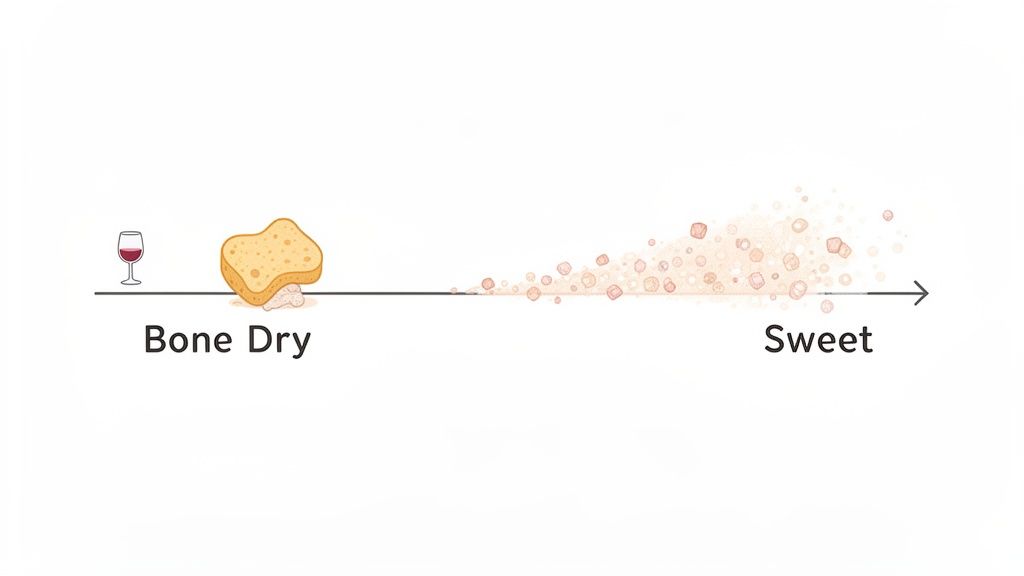
It’s easy to think ‘dry’ means a drying sensation in your mouth—that feeling you get from strong tannins. But in wine-speak, ‘dry’ has a very specific job: it tells you about the wine's sugar level. A bone dry wine simply sits at the absolute extreme end of that scale.
Think of a sponge. A sweet wine is like a sponge soaked to the brim, heavy with liquid. A standard dry wine is like that sponge after a good, firm squeeze.
A bone dry wine? That’s the sponge when you’ve wrung it out until the very last drop is gone, leaving it completely moisture-free.
The Role of Residual Sugar
The secret to understanding dryness lies in a little something called residual sugar (RS). This is simply the natural grape sugar left over after the yeast has finished its job of fermentation. We measure it in grams per litre (g/L).
Here’s a quick breakdown to put it in perspective.
Understanding Wine Dryness Levels
This little table is a handy guide to how residual sugar translates to what you taste in the glass.
| Dryness Level | Typical Residual Sugar (grams/litre) | Tasting Sensation |
|---|---|---|
| Bone Dry | Less than 1 g/L | Absolutely no sweetness is detectable. |
| Dry | Up to 10 g/L | Generally perceived as not sweet, though a hint can exist. |
| Off-Dry | 10–35 g/L | A noticeable touch of sweetness. |
| Sweet | 35–120 g/L | Clearly sweet and often luscious. |
| Very Sweet | Over 120 g/L | Rich, syrupy, and typical of dessert wines. |
As you can see, the gap between a bone dry wine and a sweet dessert wine is massive.
One of the biggest points of confusion for wine lovers is separating fruitiness from sweetness. A bone dry wine can burst with vibrant fruit flavours—think zesty lime, sharp grapefruit, or crisp green apple—without actually containing any sugar. The flavour is fruity, but the finish is clean and completely dry.
Nailing this distinction is the key to truly appreciating these beautifully crisp styles.
If you want to dig deeper into how this plays out in whites, you can explore the differences between dry and sweet white wine in our detailed guide. Coming up, we’ll get into exactly how winemakers work their magic to achieve this ultimate level of dryness.
The Winemaking Craft Behind Bone Dry Styles
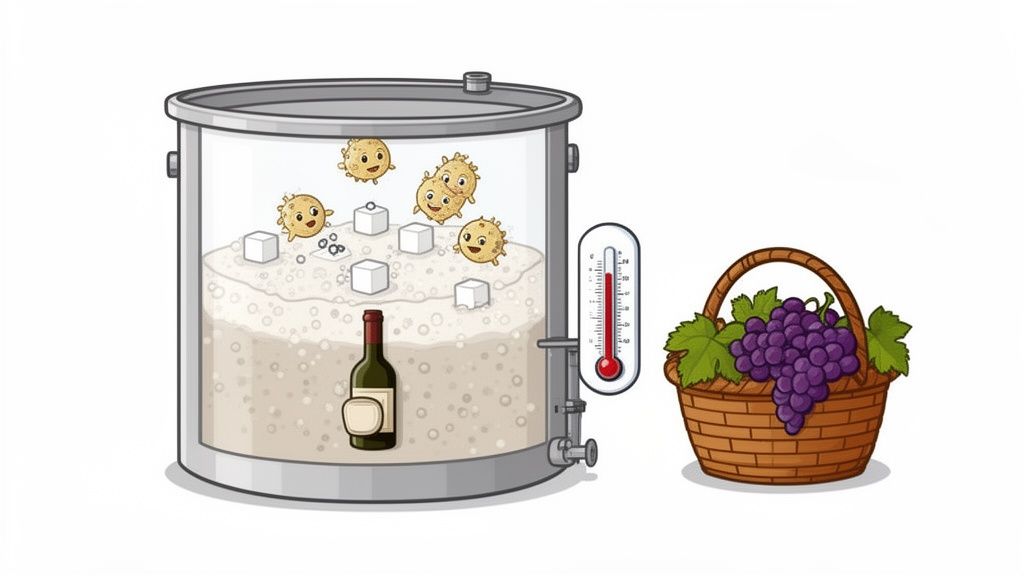
Creating a bone dry wine is all about precision. It’s where the winemaker takes a natural process and guides it right to the very end. The magic happens during fermentation, that incredible transformation where yeast gobbles up grape sugars and turns them into alcohol. To get that perfectly crisp, sugar-free finish, the winemaker's job is to make sure this process runs its full course.
Think of yeast as tiny, dedicated workers with a one-track mind: eat every last crumb of available sugar. In a sweet or off-dry wine, the winemaker deliberately hits the brakes early, leaving some natural sweetness behind. But for a bone dry wine, the mission is simple—let the yeast feast until the sugar bowl is completely empty.
The Winemaker’s Toolkit for Dryness
Getting this perfect conversion isn't a matter of luck. The winemaker is less of a passive observer and more of an active conductor, setting the stage for success with a few key tools.
-
Yeast Selection: Not all yeasts are created equal. Winemakers will often choose specific, super-efficient yeast strains known for their stamina. These robust strains can handle higher alcohol levels and will work relentlessly until the wine is completely dry, never giving up halfway.
-
Temperature Control: Fermentation creates its own heat. If things get too hot, the yeast can get stressed and decide to clock off early. Modern wineries use temperature-controlled tanks to keep the yeast in its happy place, ensuring a steady, complete fermentation from start to finish.
-
Nutrient Management: Just like any hard worker, yeast needs the right fuel to perform at its best. Winemakers keep a close eye on the grape juice (or ‘must’) and might add special yeast nutrients if needed. This prevents a "stuck fermentation," where the yeast runs out of steam before the job is done.
The entire process is a delicate balancing act. To get a better sense of the science involved, check out our deep dive on wine fermentation techniques.
The Crucial Role of Harvest Timing
The journey to a bone dry wine doesn't start in the winery; it begins weeks earlier in the vineyard. Deciding when to pick the grapes is probably the single most important decision a winemaker makes.
Grapes picked earlier in the season naturally have higher acidity and lower sugar levels. This is a huge advantage, as it gives the yeast a lower starting point of sugar to convert, making it much easier to achieve that crisp, dry, and refreshing style.
By contrast, leaving grapes on the vine longer allows them to build up more sugar. This can lead to wines that are either higher in alcohol or have some sweetness left over. For a bone dry wine, picking at that perfect moment—before sugar levels get too high—is absolutely essential. It lays the foundation for the clean, vibrant character that makes these wines so fantastic.
How to Actually Taste Dryness in Wine
Learning to taste dryness in wine is one of those skills that really separates casual sipping from confident tasting. The biggest hurdle, and one that trips up even seasoned drinkers, is confusing the drying sensation from tannins (astringency) with an actual lack of sugar. A big, gutsy red wine can make your mouth pucker and feel dry, but that doesn't necessarily mean it’s a bone dry wine in terms of sugar.
The real trick is learning to separate fruitiness from sweetness. A bone dry wine can burst with flavours of ripe grapefruit, zesty lemon, or crisp green apple, all without a hint of actual sugar. Your brain is wired to associate those fruit flavours with sweetness, but the wine itself should finish clean, crisp, and completely unsweetened.
Training Your Palate to Detect Dryness
Developing your palate is simply a matter of paying closer attention. The next time you open a bottle you suspect is dry, take a moment to actively search for a few key sensory clues. This kind of focused tasting is a cornerstone of learning how to taste wine like a sommelier.
Give these steps a go to sharpen your perception:
- Focus on the Tip of Your Tongue: Take a small sip and pay attention to that very first sensation on the tip of your tongue. This is where we detect sweetness most readily. If you get a tingling, sugary hit right away, the wine isn't bone dry.
- Assess the Texture: Swirl the wine around your mouth. A bone dry style should feel light, zippy, and refreshing—almost like water. It shouldn't have any syrupy or viscous texture. Any feeling of weight or oiliness can be a dead giveaway for residual sugar.
- Look for a Clean Finish: After you swallow, what's left behind? A truly dry wine finishes cleanly, leaving your palate feeling refreshed and almost wiped clean. It won't be sticky, cloying, or leave you with a lingering sugary coating.
The ultimate test for a bone dry wine is its acidity. A hallmark of this style is a mouth-watering quality that makes you immediately want to take another sip. This vibrant, zesty acidity is a natural palate cleanser and the total opposite of a heavy, sugary finish.
By isolating these sensations—that initial taste, the texture in your mouth, and the way it finishes—you can start to confidently identify a bone dry wine. It’s not about guessing; it’s about knowing which signals to look for on your palate and trusting what they tell you.
Popular Bone Dry Varietals Worth Exploring
Alright, now that you know how to spot a bone dry wine in the wild, let's talk about the bottles you'll actually find on the shelf. Certain grapes are just naturals at this style, consistently creating wines that are all about that refreshingly sharp and vibrant kick.
Getting to know these classic varietals is your shortcut to picking a bottle you’ll genuinely love. It's how you connect the dots between fermentation and residual sugar to the actual flavours and aromas swirling in your glass. Let's meet a few of the stars of the bone dry world.
Classic White Grapes
When you think of a classic bone dry wine, chances are your mind jumps to one of these iconic whites. Each has its own personality, but they all share that signature, mouth-watering crispness.
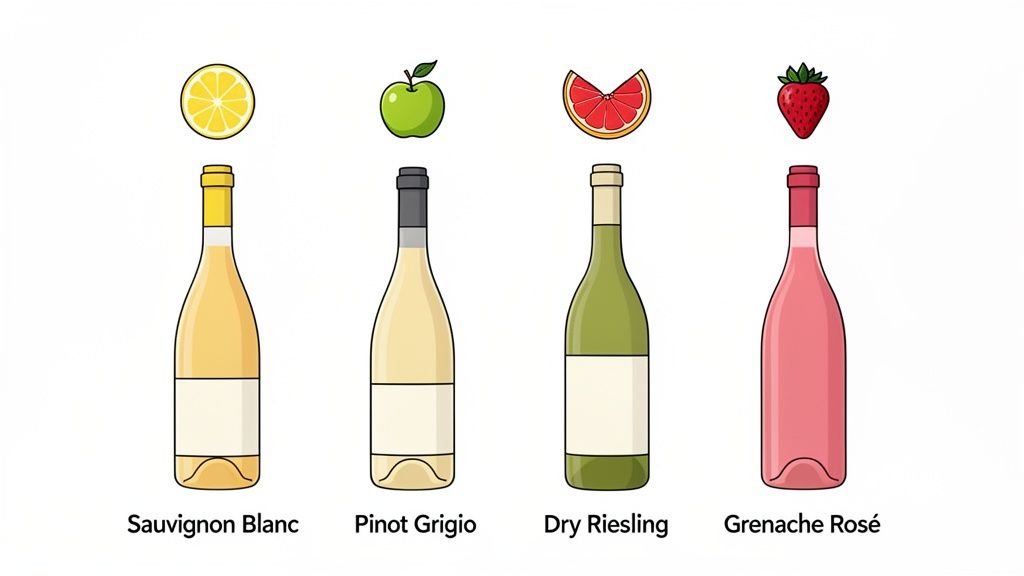
- Sauvignon Blanc: Famous for its zesty, high-acid personality, Sav Blanc often bursts with flavours of passionfruit, gooseberry, and that classic "freshly cut grass" note. It's the quintessential bone dry white, especially on a warm afternoon.
- Pinot Grigio: The Italian style of Pinot Grigio is loved for its light body and clean, subtle notes of green apple, pear, and citrus. It's straightforward, refreshing, and incredibly easy to pair with food.
- Dry Riesling: While Riesling has a reputation for sweetness, the dry versions from places like the Clare Valley are absolutely stunning. You can expect electrifying acidity with flavours of lime and jasmine, plus a distinctive flinty or slate-like minerality that’s impossible to forget.
Bone Dry Rosé
Rosé isn't a grape but a style of winemaking, and it truly shines when it's made bone dry. It gives you the refreshing hit of a white wine but with a little extra character from red fruit flavours.
Grenache: This is the hero grape behind many of the world's best dry rosés, from Provence to our own backyard here in McLaren Vale. A bone dry Grenache Rosé is elegant and lively, with delicate flavours of strawberry, red cherry, and a whisper of spice.
McLaren Vale Expressions of Dryness
Here in McLaren Vale, our Mediterranean climate is perfect for producing wines with exceptional character, including some spectacular bone dry styles. The region’s focus on expressing the quality of each vintage and vineyard really shines through in these wines.
McLaren Vale Sauvignon Blanc often shows a riper, more tropical fruit side than its cooler-climate cousins. It beautifully balances that zesty acidity with lush passionfruit and grapefruit notes for a vibrant and expressive take on a classic.
Similarly, McLaren Vale Grenache Rosé is a real standout. Our winemakers craft stunningly pale, crisp, and aromatic rosés that are packed with flavour yet finish completely dry—a perfect match for the local lifestyle. This commitment to quality is serious stuff, tracked in detailed reports covering everything from grape crush volumes to vineyard trends. To get a real sense of the region's dedication, you can dive into the latest McLaren Vale vintage report.
When you explore these varietals from a quality region like McLaren Vale, you start to taste how the land itself shapes a bone dry wine. You notice the subtle differences and begin to appreciate the winemaker's skill in nailing that perfect, refreshing balance.
Perfect Food Pairings for Your Bone Dry Wine
One of the best things about a bone dry wine is how brilliantly it behaves at the dinner table. Its secret weapon is simple but powerful: high acidity.
Think of the bright, zesty acidity in a bone dry wine as a squeeze of fresh lemon over your meal. It cuts straight through richness, lifts flavours, and cleanses your palate, making every single bite taste as fresh and exciting as the first. This is precisely why these wines are so incredibly food-friendly. They don’t fight with your meal; they elevate it.
Matching the Wine to the Meal
The real art of pairing is matching the wine's weight and personality to the food. A light-bodied Pinot Grigio will sing with delicate seafood, while a more aromatic Sauvignon Blanc can happily stand up to bolder flavours.
Here are some no-fail combinations to get you started:
-
Zesty Whites (Sauvignon Blanc, Dry Riesling): These are your go-to wines for anything you'd normally squeeze a lemon or lime over. Their sharp acidity and herbal notes are a fantastic match for salads with vinaigrette, especially those with goat cheese. The crispness of a McLaren Vale Sauvignon Blanc beautifully slices through the cheese's creamy texture.
-
Crisp, Light Whites (Pinot Grigio): Think light and fresh. These wines are perfect partners for delicate dishes like grilled fish, fresh oysters, chicken piccata, or a simple pasta tossed with herbs and olive oil. Their clean, understated profile enhances the food without ever stealing the show.
-
Bone Dry Rosé (Grenache): A dry rosé is the ultimate all-rounder. Its subtle red fruit notes and bright acidity make it a superb match for a huge range of foods. Try it with grilled prawns, Mediterranean dishes loaded with olives and feta, or even a classic salade niçoise.
A Special Note on Spicy Cuisine
It might seem a little counterintuitive, but a bone dry wine with high acidity can be a phenomenal partner for spicy food. While a wine with a touch of sweetness can cool the palate, a dry Riesling works in a completely different way.
Its searing acidity slices through the heat and rich sauces found in many Thai or Vietnamese dishes. It acts like a reset button for your palate between bites, allowing all the complex spices and flavours to really shine through.
The rule of thumb is simple: if the food is rich, fatty, salty, or spicy, a bone dry wine will almost always make it better. The wine’s job is to act as a counterpoint, resetting your taste buds so you can fully appreciate the next mouthful. This dynamic interplay is what makes food and wine pairing so exciting.
How to Buy and Serve Bone Dry Wine Like a Pro
Now that your palate is tuned in to what makes a wine truly dry, let’s talk about the final step: bringing that perfect bottle home and pouring it at its absolute best.
Choosing and serving a bone dry wine isn't some complicated ritual. It’s actually just about knowing a few simple tricks of the trade that make all the difference between a good glass and a great one.
What to Look For at the Bottle Shop
When you're standing in the wine aisle, the label is your best friend. Keep an eye out for a few key terms that are clear signals of a dry style.
- Dry: This is the most common and straightforward clue you'll find.
- Sec: That's French for "dry," and you'll often spot it on bottles from classic regions like Sancerre.
- Trocken: The German word for "dry." This is an essential one to know when you’re picking out a Riesling.
Seeing one of these words is your guarantee that the winemaker has intentionally crafted the wine to have minimal, if any, leftover sugar.
Getting the Serving Spot On
Once you’ve got your bottle, serving it correctly is what will really make it sing. Temperature is probably the single most critical factor for a bone dry wine, as it directly impacts how you perceive its acidity and aromas.
Serving Temperature Tip: Aim for 6–8°C for those light-bodied whites like Pinot Grigio and Sauvignon Blanc. Chilling the wine properly sharpens its acidity, making it feel even more crisp and brilliantly refreshing on the palate.
Glassware plays a vital role, too. A standard white wine glass with a smaller bowl is ideal here. This shape helps concentrate all those delicate aromatics and directs the wine right to the front of your palate, which really highlights its vibrant, zesty character.
And if you want to truly serve bone dry wine like a pro, think beyond just the temperature and glass. Proper storage makes a world of difference. Elegant custom glass wine enclosures not only protect your collection but also display it beautifully, ensuring every bottle is ready for its moment.
By paying attention to these small but crucial details—reading the label, chilling it just right, and using the proper glass— you're making sure that every sip of your bone dry wine is exactly as the winemaker intended: clean, crisp, and utterly delicious.
Your Bone Dry Wine Questions, Answered
We've covered the what, how, and why of bone dry wine, but there are always a few lingering questions. Let's tackle some of the most common ones that pop up in the tasting room.
Does Dry Mean More Alcohol?
Not always, but it's a great question because the two are definitely related. Think of it this way: during fermentation, yeast eats sugar and creates alcohol. To get a bone dry wine, the winemaker lets the yeast eat all the sugar. This process can naturally lead to a higher alcohol level compared to a sweeter wine where some sugar is left behind.
However, the final alcohol by volume (ABV) really comes down to how ripe the grapes were at harvest. Grapes picked with less sugar can result in a bone dry wine with a moderate alcohol level (say, 12.5%), while super-ripe grapes might push it higher (around 14%). At the end of the day, 'dry' is all about the sugar, not the booze.
Can Red Wines Be Bone Dry?
Absolutely! In fact, most of the red wines you'll ever drink are fermented to be completely bone dry. So why do some reds taste sweeter than others? It's a clever trick of the senses.
Your brain can interpret things other than sugar as sweetness. Rich, ripe fruit flavours (like jammy blackberry), the vanilla and coconut notes from new oak barrels, or a smooth, velvety texture can all create an impression of sweetness, even when there's zero residual sugar in the glass. McLaren Vale Shiraz is a perfect example—it's packed with bold fruit but is technically bone dry.
Is Brut Champagne a Bone Dry Wine?
Yes, for the most part. 'Brut' is the go-to term for dry Champagne and other sparkling wines. While there's an even drier style out there (called 'Brut Nature' or 'Zero Dosage'), Brut is crisp, zesty, and has very little sweetness you can actually taste.
The sparkling wine world has its own unique dryness scale:
- Brut Nature: The absolute driest you can get.
- Extra Brut: Still incredibly dry.
- Brut: The classic, popular dry style.
- Extra Dry: Confusingly, this is a touch sweeter than Brut.
So, if you already enjoy a glass of Brut, you're a fan of the dry style!
Ready to explore the crisp, refreshing world of bone dry wines for yourself? At McLaren Vale Cellars, we've curated a stunning collection of Sauvignon Blanc, dry Riesling, and elegant Rosé from our world-class region. Discover your next favourite bottle today at https://www.mclarenvalecellars.com.
Comments (0)
There are no comments for this article. Be the first one to leave a message!