
When you hear the term blanc de blanc champagne, you're hearing the French for 'white from whites'. It’s a simple, elegant name for a style of sparkling wine made exclusively from 100% Chardonnay grapes.
Demystifying Blanc de Blancs Champagne
To really get what makes Blanc de Blancs so special, picture it as a stunning solo performance. Most Champagnes are like a complex orchestra, blending the white Chardonnay grape with the red Pinot Noir and Pinot Meunier grapes. A Blanc de Blancs, however, lets Chardonnay take centre stage all by itself.
This singular focus creates a wine celebrated for its incredible precision, finesse, and bright, zesty character. It's not just a choice made in the winery; it's a deep expression of the land, or terroir, especially that of the famous Côte des Blancs sub-region in Champagne. The chalky soils there are perfect for Chardonnay, giving the wines a distinct minerality and crispness that’s almost impossible to find anywhere else.
The Significance of a Single Grape
Sticking to just Chardonnay has a massive impact on the wine in your glass. This approach typically results in a Champagne that is:
- Lighter in body: It feels more delicate on the palate compared to the richer, blended styles.
- Higher in acidity: This gives it a refreshing, mouth-watering quality that makes it a brilliant aperitif.
- Elegant with aging potential: Its tight structure allows it to age beautifully, developing complex new flavours over time.
A Blanc de Blancs is the purest expression of Chardonnay in sparkling form. It’s a showcase of elegance, highlighting citrus and floral notes in its youth, which evolve into rich, toasted brioche and nutty flavours with age.
Understanding this fundamental difference is the first step to appreciating the world of sparkling wine. While the word 'Champagne' tells you where it's from and how it was made, the style—like Blanc de Blancs—is what reveals its soul.
If you want to dive deeper into what sets these bubbly creations apart, you can explore the key differences between Champagne and sparkling wine in our detailed guide. This knowledge will set you up perfectly for exploring its signature flavours and ideal food pairings.
The Signature Taste of Chardonnay Champagne

So, what does a blanc de blanc actually taste like? This is where the Chardonnay grape really gets to sing, showing off its pure character without any backup from red grapes. The first thing you'll notice is a bright, zinging acidity that feels incredibly energetic and clean on the palate.
Younger bottles are all about those fresh, primary notes. Think of the crisp snap of a green apple, the zesty tang of lemon peel, and the delicate perfume of white flowers like acacia and honeysuckle. Beneath it all, there's often a distinct mineral streak—a chalky or flinty character that's like a direct line to the soil it came from.
It's All in the Soil
That minerality is no accident; it’s a pure expression of terroir. The most legendary Blanc de Blancs come from the Côte des Blancs sub-region in Champagne, where the vineyards are planted in almost pure chalk soil.
This unique geology is a perfect match for Chardonnay, giving the wines an unmatched elegance and a structural backbone. It’s this deep connection to the land that gives the wine its signature finesse.
The core profile of a young Blanc de Blancs is a masterclass in precision: crisp green apple, zesty citrus, delicate white florals, and a signature chalky minerality. It's a taste of pure, unadulterated Chardonnay from a very specific place.
Because it’s made only from white Chardonnay grapes, the style stands apart from Champagnes that blend in red grapes. It’s a style celebrated from France to Australia for its refinement and elegance, making it a favourite for those in the know.
The Magic of Aging
While a young blanc de blanc is a joy to drink, something truly magical happens when it's given time to age. The secondary fermentation process and the long time spent resting on its lees (the spent yeast cells) build incredible layers of depth and complexity.
Over years in the cellar, those bright, primary fruit notes begin to soften and evolve into a richer, more textural experience. You'll start to discover complex aromas and flavours that add layers of indulgence to the wine’s bright frame.
Look for these aged characteristics:
- Toasted brioche: A warm, bready note that comes from the yeast.
- Roasted almonds: A nutty complexity that adds incredible depth.
- Cream and butter: A textural smoothness that rounds out the sharp edges.
This evolution is what makes Blanc de Blancs so compelling. It can be a vibrant, energetic aperitif one moment, and a profound, complex wine worthy of serious contemplation the next. To get to know the grape behind this incredible transformation, check out our guide on the origins of the Chardonnay wine grape.
Blanc de Blancs vs Blanc de Noirs
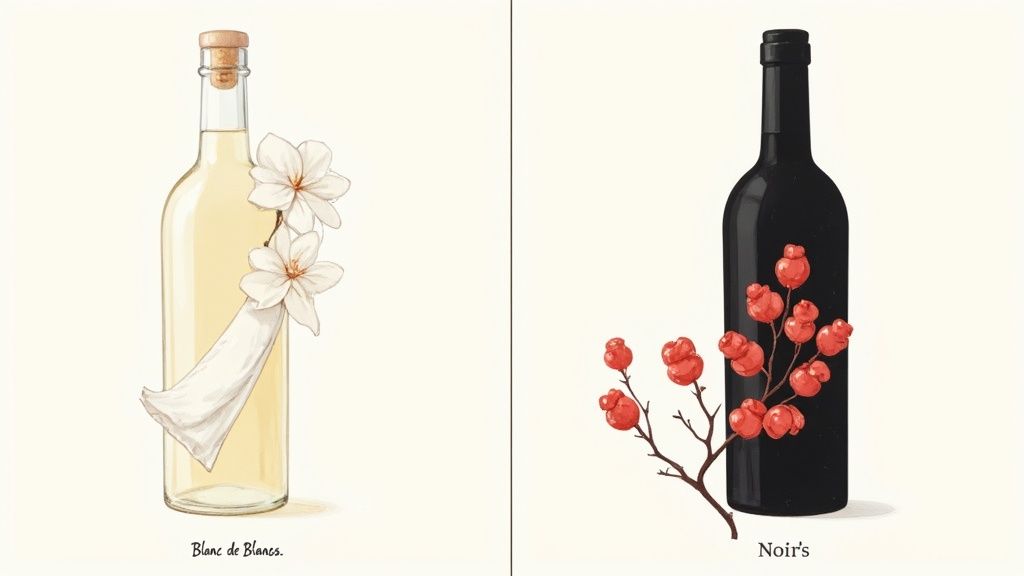
To really get a feel for what makes a Blanc de Blancs special, it helps to meet its complete opposite: Blanc de Noirs. The name translates to 'white from blacks', which is a perfect clue. This is a white Champagne made entirely from black-skinned grapes.
How is that possible? It’s all in the press. Winemakers gently press red grapes like Pinot Noir and Pinot Meunier to get the clear juice out before the dark skins have a chance to stain it. So, while a Blanc de Blancs is a pure Chardonnay solo act, a Blanc de Noirs is a powerful performance led by red grapes, creating a totally different experience in the glass.
If a Blanc de Blancs is a delicate watercolour painting—all sharp lines and bright, airy colours—then a Blanc de Noirs is a rich charcoal sketch, full of texture, depth, and bold strokes. One is about finesse and high-toned aromatics; the other brings structure and red-fruited intensity.
The Grape Divide
The most fundamental difference between these two styles comes down to one thing: the grapes.
A Blanc de Blancs must be 100% Chardonnay. It’s a celebration of the precision, acidity, and floral notes of this single white grape.
On the other hand, a Blanc de Noirs is made entirely from black-skinned grapes. It can be 100% Pinot Noir, 100% Pinot Meunier, or a blend of the two. This foundation gives the wine more body, structure, and a completely different flavour profile.
Choosing between these two styles is really a matter of personal taste. Do you prefer the crisp, mineral-driven elegance of pure Chardonnay, or the richer, fruit-forward power of Pinot Noir and Meunier? Each one offers a unique and delicious expression of Champagne.
You’ll notice the contrast on the palate immediately. A Blanc de Blancs champagne sings with notes of green apple, lemon zest, and chalky minerality. A Blanc de Noirs, however, offers a deeper, more robust profile with flavours of red berries, plum, and spice, often with a broader, more powerful mouthfeel.
Blanc de Blancs vs Blanc de Noirs: A Quick Comparison
Knowing the core differences is the key to finding the right style for your palate or the perfect bottle for an occasion. Here’s a simple breakdown of how they stack up against each other.
| Characteristic | Blanc de Blancs | Blanc de Noirs |
|---|---|---|
| Grapes | 100% Chardonnay | 100% Pinot Noir and/or Pinot Meunier |
| Flavour Profile | Green apple, citrus, white flowers, chalk | Red berries, stone fruit, spice, earth |
| Body & Texture | Lighter body, crisp, linear, high acidity | Fuller body, richer, broader texture |
| Aging Potential | Excellent, develops nutty and brioche notes | Strong, develops deeper, complex flavours |
Ultimately, neither style is better—they’re just different. Exploring both is one of the great joys of drinking Champagne. It allows you to appreciate the incredible versatility of the region and its grapes, with each style telling its own unique story.
How to Choose the Right Bottle
Navigating the world of blanc de blancs can feel a little overwhelming at first, but a few key pointers will have you picking the perfect bottle like a pro. Price is often the first thing people notice, and it can vary wildly. This usually comes down to the wine's origin and pedigree. For instance, bottles from the celebrated ‘Grand Cru’ villages in the Côte des Blancs will command higher prices simply because their terroir is considered world-class for Chardonnay.
When you pick up a bottle, the label is your treasure map. It’s full of clues about the wine's style and character. Look for the dosage, which tells you about its sweetness. ‘Brut Nature’ will be bone-dry, while ‘Brut’ is the most common style—dry, crisp, and beautifully balanced. You'll also spot whether it’s a non-vintage (NV) blend or a vintage expression from a single, standout year.
Look for Producer Pedigree
Certain Champagne houses are simply legendary when it comes to the Blanc de Blancs style. Iconic producers like Salon, Krug (with its Clos du Mesnil), and Pierre Péters are the benchmarks for quality, crafting wines of incredible precision, complexity, and longevity. These are often the investment-worthy bottles you pull out for a truly special occasion.
But here’s the good news: you don't need to spend a fortune to drink brilliant blanc de blancs. Many smaller ‘grower-producers’ (winemakers who grow their own grapes) offer outstanding value and a genuine sense of place. Keep an eye out for ‘Récoltant-Manipulant’ (RM) on the label for a taste of true artisanal Champagne.
Choosing a great bottle is all about matching the producer's style to your own palate. Whether it’s an iconic house known for its consistency or a small grower expressing a single plot of land, there's a perfect blanc de blanc out there for every taste and budget.
Discovering Australian Excellence
The excitement isn't confined to France. Australia has firmly cemented its place on the world stage, producing exceptional sparkling wines, including stunning Blanc de Blancs made with the same traditional methods. The secret is our cool-climate regions, which provide the perfect conditions for growing high-quality Chardonnay with that all-important acidity and elegance.
It’s no surprise, really. Australia's passion for fine fizz is clear, ranking as one of the largest Champagne markets globally by volume. This growing thirst for refined bubbles has encouraged a surge in fantastic local options. You can read more about Australia's place in the global Champagne market.
When you're searching for homegrown alternatives, these are the regions to watch:
- Tasmania: The island’s chilly climate is a dream for sparkling wine, producing Chardonnay with piercing acidity and intense citrus and floral notes. Truly world-class stuff.
- Adelaide Hills: This South Australian gem offers wines with beautiful finesse, striking a perfect balance between bright fruit flavours and crisp minerality.
Exploring Australian blanc de blancs from these areas—or even from regions like our own McLaren Vale—is a fantastic way to enjoy this elegant style while supporting incredible local talent.
Perfect Food Pairings for Your Champagne

Figuring out what to serve alongside a beautiful blanc de blancs is where the real magic happens. While oysters are the classic go-to, this wine’s versatility goes far beyond the raw bar. The secret is all in its signature high acidity and clean, chalky minerality.
Think of a good blanc de blancs as a squeeze of fresh lemon over a dish. Its bright, zesty character cuts straight through richness and cleanses the palate, making it a brilliant partner for a surprisingly wide range of foods. That acidity ensures every bite tastes as fresh and delicious as the first.
From Delicate Seafood to Salty Snacks
The refined, elegant nature of a blanc de blancs makes it a natural match for delicate flavours where its crispness can really shine without overwhelming the food. It strikes a perfect balance that elevates both the wine and the meal.
For an experience that’s truly sublime, give these pairings a go:
- Delicate Seafood: The wine’s citrus and mineral notes are a perfect match for sashimi, seared scallops, or a simple piece of grilled snapper.
- Creamy Cheeses: That zippy acidity cuts beautifully through the richness of soft, creamy cheeses like goat cheese, brie, or camembert.
- Salty and Fried Foods: This is where the fun really begins. The bubbles and crispness slice through the fat in fried chicken or salty potato chips, creating a high-low pairing that is simply irresistible.
The golden rule for pairing blanc de blancs is to use its acidity as a counterpoint. It can either complement delicate flavours or slice through rich ones, making it one of the most food-friendly wines you can pour.
Perfecting the Serve
Getting the most out of your bottle isn’t just about the food; the serving details matter just as much. Temperature and glassware play a huge role in showcasing the wine’s complex aromas and flavours.
For the ideal tasting experience, aim to serve it chilled to 8-10°C. Any colder and you risk muting its delicate notes; too warm, and the bubbles can feel a bit flat.
While the classic flute is great for watching the bubbles, many experts now prefer a tulip-shaped glass. This shape allows the intricate aromas of citrus, white flowers, and brioche to gather, giving you a much richer sensory experience. For more expert tips, explore the art of pairing Champagne with culinary delights.
Common Questions About Blanc de Blancs
Even after getting a feel for its elegant style and flavour, a few questions always seem to pop up when you're diving into the world of blanc de blancs. Nailing these down is the final step to becoming a confident enthusiast, ready to pick out, sip, and share this stunning wine.
This section tackles the most common queries, giving you direct, practical answers to round out your knowledge.
Is Blanc de Blancs Champagne Always Dry?
While this style is famous for its crisp, zesty personality, its sweetness isn't a given—that's all decided by a winemaking step called dosage. Just before the final cork goes in, a small amount of sugary liquid is added to balance out the wine’s naturally high acidity.
Most blanc de blancs you’ll come across are made in the Brut style, which is easily the most popular category for Champagne. This means it tastes dry but has just enough dosage to feel perfectly balanced, not sharp or tart.
But if you prefer an even drier, more piercing style, you’re in luck. You can also find:
- Extra Brut: This has very little dosage, making the wine noticeably drier and bringing out more of those flinty, mineral notes.
- Brut Nature (or Zero Dosage): This is as dry as it gets—no added sugar at all. It’s a pure, unvarnished expression of Chardonnay and the place it was grown.
You’ll rarely see blanc de blancs made in sweeter styles like 'Sec' or 'Demi-Sec'. Why? Because those delicate floral and citrus notes really sing when the acidity is high. The label will always tell you the sweetness level, so you know exactly what you're getting in the bottle.
How Long Can I Age a Bottle of Blanc de Blancs?
One of the most incredible things about a well-made blanc de blancs is its amazing potential to age. That same high acidity that makes it so refreshing when it's young also acts as a natural preservative, allowing it to evolve beautifully in the cellar for years, even decades.
How long you can age it really depends on whether you have a non-vintage (NV) or a vintage bottle.
A non-vintage (NV) blanc de blancs is a blend from different years, crafted to be delicious right off the shelf. That said, it can still gain some lovely complexity if you cellar it for 3-5 years. You'll notice those bright fruit notes soften as nutty, toasty characters start to come through.
A vintage blanc de blancs, made entirely from the grapes of one outstanding year, is a whole different ball game. These are powerhouse wines built for the long haul. A great vintage can age gracefully for 10-20 years or more, transforming from fresh and citrusy to something incredibly complex, with deep flavours of honey, dried fruit, hazelnut, and toasted brioche. Proper cellaring—a cool, dark place with a steady temperature—is the key to unlocking this magic.
What Is the Difference Between Blanc de Blancs and Prosecco?
This is a fantastic question, as it gets right to the heart of what makes sparkling wines so different from one another. While both are bubbly and delicious, the key differences boil down to three things: the grape, where it's from, and how the fizz is made.
Think of it like comparing a finely tailored suit to a stylish off-the-rack jacket. Both look great, but the craftsmanship, materials, and overall feel are fundamentally different.
Let's break it down:
- Grape & Origin: Blanc de Blancs is 100% Chardonnay from the Champagne region of France. Prosecco, on the other hand, is made primarily from the Glera grape in specific parts of northern Italy.
- Production Method: This is the biggest point of difference. Blanc de Blancs uses the painstaking méthode traditionelle, where the second fermentation—the one that creates the bubbles—happens inside each individual bottle. This process develops those complex, bready flavours and a fine, persistent stream of bubbles. Prosecco typically uses the tank method (or Charmat method), where that second fermentation happens in large, pressurised tanks. It's a quicker, more efficient process that’s all about preserving the fresh, fruity, and floral notes of the Glera grape, resulting in a lighter, frothier style of fizz.
Are Australian Blanc de Blancs Worth Trying?
Absolutely! In fact, exploring Australian-made blanc de blancs is one of the most exciting things happening in our local wine scene. Our winemakers aren't just copying Champagne; they're crafting world-class sparkling wines that express our unique cool-climate regions with incredible precision and elegance.
Australia's best cool-climate regions, especially Tasmania and the Adelaide Hills, produce Chardonnay grapes with the perfect balance of intense flavour and high natural acidity needed for exceptional sparkling wine. By using the same traditional methods as their French counterparts, local producers are creating blanc de blancs that can stand shoulder-to-shoulder with some of the best from France, often at a more approachable price.
Trying an Australian blanc de blancs is a brilliant way to experience this refined style while appreciating the incredible quality and talent we have right here in our own backyard.
Ready to explore the pinnacle of Australian sparkling wine? At McLaren Vale Cellars, we celebrate the finest expressions from our region and beyond. Discover your next favourite bottle and experience the elegance of a perfectly crafted Blanc de Blancs today. Shop our collection of premium sparkling wines now.
Comments (0)
There are no comments for this article. Be the first one to leave a message!