
So, you’re on the hunt for the best sav blanc? It’s a great question, but the answer isn’t a single bottle. The real "best" is the one that hits the spot for you—whether that’s a zesty, grassy drop from a cool corner of the world or a luscious, tropical-fruited wine from a sunnier spot.
Your Journey to Finding the Best Sav Blanc
Welcome to your personal guide to discovering the Sauvignon Blanc that truly speaks to you. Often called ‘Savvy B’ by its legions of fans, this superstar of Australian white wine is famous for its crisp, refreshing personality. But what makes one bottle sing while another just hums is a fascinating story of place, climate, and the winemaker's touch.
Think of it like choosing your morning coffee. Are you after a bright, acidic single-origin pour-over or a rich, creamy flat white? It’s the same with Savvy B. Your perfect match depends on whether you crave those sharp, herbaceous notes or prefer rounder, more fruit-forward flavours. This guide is here to demystify the world of Sauvignon Blanc and give you the confidence to explore its incredible diversity.
What You Will Discover
We're going to break down everything you need to know, from the vineyard right through to your glass. By the time you’re done here, you’ll have a solid handle on:
- Defining Styles: How cool and warm climates create two completely different wines from the same grape.
- Regional Influences: Why a Savvy B from McLaren Vale tastes nothing like one from across the ditch.
- Practical Tips: Simple, no-fuss advice for choosing, serving, and storing your wine like a pro.
- Value and Quality: How to spot exceptional bottles and fantastic deals without ever compromising on taste.
The real magic of Sauvignon Blanc is its honesty. It’s a grape that transparently reflects where it's grown. From the flinty soils of France's Loire Valley to the sun-drenched vineyards of Australia, each bottle tells a unique story of its home.
Whether you're a seasoned wine lover or just starting out, our goal is to help you navigate the options with ease. For a closer look at what our own backyard has to offer, our guide to the best Australian Sauvignon Blanc is a great place to start.
Right then, let's find your new favourite bottle.
Understanding the Sauvignon Blanc Flavour Spectrum
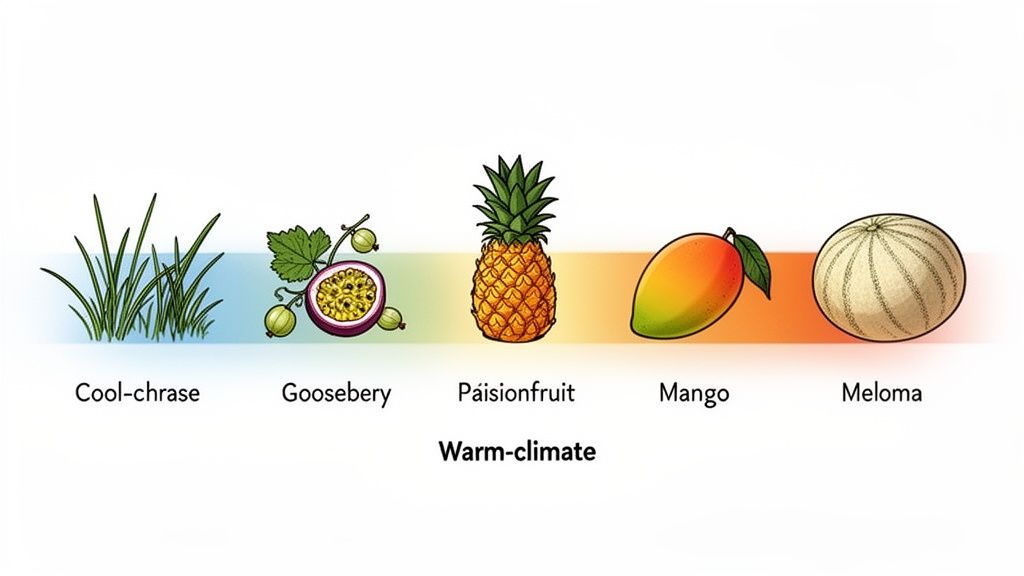
To find the best sav blanc for your taste, it helps to think of it not as one single flavour, but as a vibrant spectrum. This spectrum is your roadmap to figuring out what’s in the bottle before you even pop the cork, and the master artist behind it all is climate. The amount of sunshine and warmth a vineyard gets completely changes the final taste in your glass.
Think of a cool, crisp morning—that's the essence of a cool-climate Sauvignon Blanc. Grown in places like France's famous Loire Valley or closer to home in the Adelaide Hills, these wines are zesty, aromatic, and buzzing with high acidity. They practically jump out of the glass with sharp, refreshing notes.
The Zesty Cool-Climate Style
The flavours here are all bright greens and yellows. They’re sharp, herbaceous, and incredibly refreshing on a hot afternoon. Their calling cards are unmistakable:
- Grassy Notes: A signature scent, often described as freshly cut grass or even green capsicum.
- Citrus Punch: Lively lemon, lime, and grapefruit that gets your mouth watering instantly.
- Gooseberry and Passionfruit: Tart, tangy fruit notes that give the wine its classic zing.
These punchy characteristics come from a slower ripening process in cooler weather, which preserves the grape's natural acidity and develops those classic green, herbaceous compounds. You can learn more about how this grape's journey shaped these styles in our deep dive into the origins of the Sauvignon Blanc grape.
The Luscious Warm-Climate Profile
Now, picture a sun-drenched afternoon. This is the world of warm-climate Sauvignon Blanc. In sunnier spots like parts of the Barossa or Riverland, the grapes ripen more fully, transforming that zesty acidity into richer, rounder fruit flavours.
The extra sunshine allows the grapes to develop more sugar and shed some of their sharp, green character. This results in a wine that feels softer and more generous on the palate, with a focus on ripe, luscious fruit instead of herbaceous zest.
These wines offer a completely different, yet equally delicious, experience. You’ll find notes of ripe tropical fruits like pineapple, mango, and sweet melon, all wrapped up in a smoother, less acidic finish.
South Australia's climate is perfect for producing these premium whites, and its dominance is clear. The state remains Australia's top producer, and Sav Blanc was one of the few varieties to exceed its 10-year average crush volume in the 2025 vintage, showing just how popular it remains. You can explore the full 2025 vintage report for all the details.
How to Taste Sauvignon Blanc Like an Expert
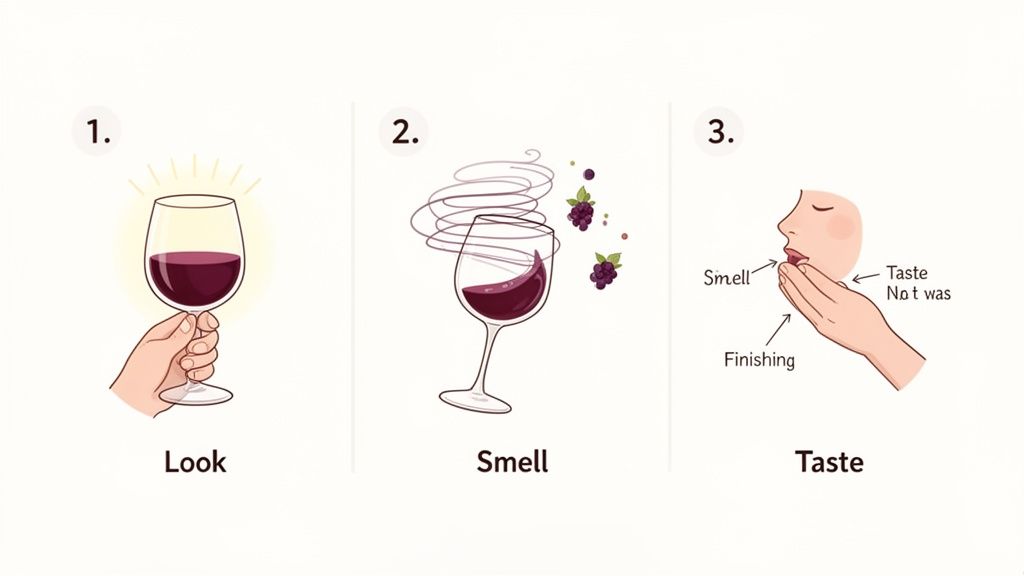
Finding the best sav blanc for your palate isn't about guesswork; it's about learning what you love by tasting with a bit of intention. You don't need to memorise a dictionary of wine terms. All it takes is a simple, three-step process to tune into your senses and figure out what clicks for you.
This little ritual turns sipping wine into a real experience. By simply paying attention to what you see, smell, and taste, you’ll start building a mental map of your preferences. Let's break down this powerful—and surprisingly easy—technique.
Step 1: Look for Clues in the Colour
Before that first sip, tilt your glass against a white background—a napkin or even a sheet of paper works perfectly. The wine's colour is the first hint about its personality.
Is it a pale, almost water-like straw colour with hints of green? That’s a good sign you’re looking at a young, zesty Savvy from a cool climate, likely packed with those classic grassy and lime notes. If it’s a deeper, more golden-yellow, it could mean the wine is from a warmer region where the grapes got extra ripe. It might also suggest a bit of age or that the winemaker used oak barrels to add some richness and texture.
Step 2: Smell the Aromatic Profile
Now for the fun part: the aroma. Give the wine a gentle swirl in your glass for about 10 seconds. This little motion lets oxygen wake up the wine, releasing all its beautiful scents. Don’t be shy—get your nose right in there and take a good sniff.
What do you smell? Is it a vibrant burst of tropical passionfruit and pineapple? Or is it more on the herbal side, like fresh-cut grass and zesty lime peel? These aromas are the wine talking, telling you exactly what it's all about.
Think of it like a flavour wheel. Try to pick out just one or two specific smells. Start broad (is it fruity or herbal?) and then get more specific (is that citrus more like lemon or grapefruit?). This simple exercise is the best way to sharpen your palate and pinpoint the styles you enjoy most.
Step 3: Taste the Structure and Finish
Finally, it’s time to taste. Take a sip and let the wine wash over your entire palate to get the full effect. As you do, think about a few key things beyond just the obvious flavours.
First, notice the acidity. That’s the mouth-watering, zesty quality that makes Savvy B so incredibly refreshing. Does it feel sharp and electric, or is it a bit softer and more rounded? Next, think about the wine's body. Does it feel light and crisp, almost like water, or does it have a slightly heavier, richer texture on your tongue?
And last, pay attention to the finish. After you swallow, how long do those lovely flavours hang around? A long, pleasant finish is almost always the sign of a well-made, quality wine. For a more detailed walkthrough, check out our guide on how to taste wine like a sommelier.
Perfect Food Pairings for Your Sav Blanc
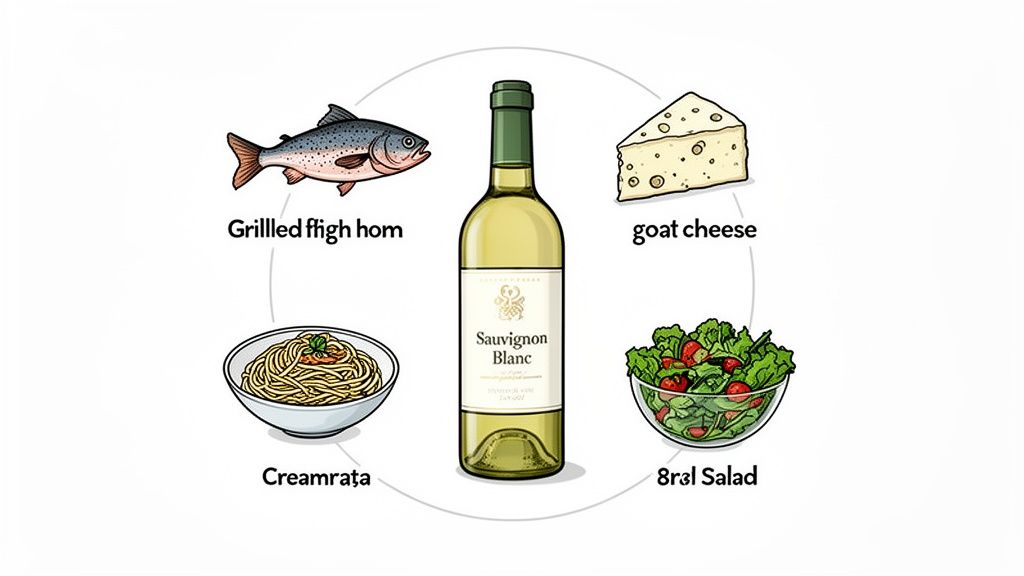
Finding the right dish to go with your wine can elevate a simple meal into something truly special. Sauvignon Blanc, with its bright acidity and aromatic personality, is one of the most food-friendly wines you can pour. Forget the old rule of just 'white wine with fish'—this vino is far more versatile.
Think of that zesty character as a secret weapon in the kitchen. The wine’s crispness acts like a squeeze of fresh lemon, cutting beautifully through rich, fatty foods and cleansing your palate with every sip. It's why Savvy B is such a brilliant match for anything from creamy pasta sauces to fried calamari. At the same time, those signature green, herbaceous notes are a natural companion for dishes loaded with fresh herbs and leafy greens.
Classic and Creative Pairings
To find the best sav blanc pairing, a good rule of thumb is to match the wine’s intensity with the dish’s flavour. A zesty, cool-climate style bursting with grassy notes is a classic partner for goat's cheese, where the wine's acidity perfectly mirrors the cheese's tangy bite. Grilled fish, oysters, and shellfish are also no-brainers, as the wine’s minerality enhances their fresh, briny character.
But don’t be afraid to think outside the box! A warmer-climate Savvy B, with its ripe tropical fruit notes, can hold its own against slightly spicier dishes. Think Thai green curry or Vietnamese summer rolls, where the wine’s fruitiness offers a refreshing counterpoint to the heat and aromatic herbs.
The goal here is harmony. The wine shouldn’t overpower the food, and the food shouldn’t dull the wine. A great pairing makes both elements shine, creating a flavour experience that’s far greater than the sum of its parts.
If you're exploring unique dining experiences, a private hibachi dinner can be an unexpected delight with a crisp Sav Blanc. The wine’s acidity cuts through the richness of grilled meats and sauces, creating a fantastic contrast.
Sauvignon Blanc Food Pairing Guide
To get you started, we’ve put together a handy guide. Whether you’re in the mood for a classic match or something a bit more adventurous, these ideas will point you in the right direction.
| Pairing Category | Cool-Climate Sav Blanc (Zesty & Herbaceous) | Warm-Climate Sav Blanc (Tropical & Ripe) |
|---|---|---|
| Classic | Goat's cheese salad with vinaigrette dressing. | Grilled chicken with a mango salsa. |
| Adventurous | Asparagus and pea risotto with fresh mint. | Mildly spiced coconut fish curry. |
| Local McLaren Vale | Freshly shucked Coffin Bay oysters with a squeeze of lime. | Barbecued King George whiting with a side of roasted capsicum. |
This table is just a starting point, of course. The best way to find your perfect pairing is to experiment. So go on, grab a bottle and get cooking—you might just discover your new favourite combination. Cheers
Discovering McLaren Vale Sauvignon Blanc
Now that you have a good sense of the style you're after, let's bring it home to our turf: McLaren Vale. While we’re famous for our rich, bold reds, our region also produces some truly stunning Sauvignon Blanc that perfectly captures the South Australian sun while staying beautifully crisp and refreshing.
What's the secret? It's all about our unique position. The cooling afternoon sea breezes that roll in from the Gulf St Vincent are a winemaker's best friend, helping the grapes hold onto their vibrant, zesty acidity as they ripen.
This perfect climate allows our winemakers to craft a best sav blanc that sits right in that sweet spot on the flavour spectrum. It’s not as aggressively grassy as some cool-climate styles, nor is it overtly tropical like those from much hotter inland areas. Instead, you get the best of both worlds—vibrant citrus and stone fruit with a sophisticated, savoury edge.
Explore Our Curated McLaren Vale Favourites
We’ve handpicked a couple of stellar examples that really showcase this regional character. These aren't just great wines; they're the perfect introduction to what makes McLaren Vale Sauvignon Blanc so special.
-
For the Classic Enthusiast: Go for a crisp, unoaked style. You'll find bright notes of lemon peel, passionfruit, and a hint of fresh-cut herbs. It’s the ideal drop for a sunny afternoon, pairing brilliantly with fresh seafood or a simple goat's cheese salad.
-
For the Adventurous Palate: Some local winemakers are getting creative, using techniques like barrel fermentation. This adds a wonderful layer of complexity—think subtle notes of cream, vanilla, and toasted nuts—that complements the fruit without overpowering it, creating a richer, more textural wine.
Unbeatable Value for Your Wine Discovery
Exploring new wines shouldn't break the bank. We've put together some fantastic value offers to help you find your next favourite, whether you want to grab a half-case bundle or mix things up with one of our popular mixed dozens.
Your wine journey should be exciting and risk-free. Every bottle we recommend is backed by our Taste Guarantee, so you can explore with complete confidence, knowing you'll love what you pour.
This commitment to quality is key, especially as the broader market shifts. In 2025, Australia's inland Sauvignon Blanc crush surged by 39% to 81,726 tonnes, thanks to ideal growing conditions. While this boom means plenty of wine to go around, it also highlights the value of seeking out carefully crafted wines from premium regions like ours. You can read more on Wine Australia's National Vintage Report to get the full picture on these industry trends.
Serving and Storing Your Wine for Peak Flavour
You’ve picked out a fantastic bottle, and now for the final, crucial step: making sure it tastes exactly as the winemaker intended. Getting the serving and storage right is the key to unlocking the best sav blanc experience, and thankfully, it’s incredibly simple.
Think of Sauvignon Blanc's vibrant aromas as being a little shy in the cold. If you serve it straight from a frosty fridge, those beautiful notes of passionfruit and gooseberry will be hiding. The goal is chilled, not frozen solid.
The Ideal Serving Temperature
For the best flavour explosion, you’ll want to serve your Sauvignon Blanc between 8-10°C. This is the sweet spot where the wine’s full aromatic personality can really shine without the alcohol becoming too noticeable.
An easy trick? Just pull the bottle out of the fridge about 20-30 minutes before you plan on pouring it. It’s a small bit of patience that makes a massive difference, letting all those gorgeous aromas wake up.
Choosing the right glass also plays a starring role. A wine glass with a narrower bowl helps to concentrate the delicate aromas, funnelling them straight to your nose and taking the tasting experience to a whole new level.
How to Store Your Sav Blanc
Proper storage is all about protecting your wine from its sworn enemies: heat, light, and wild temperature swings. Even if you plan on drinking your bottles within a few months, following these simple rules will keep them tasting fresh and vibrant.
- Keep It Cool and Consistent: Find a dark, quiet spot away from direct sunlight and heat sources like your oven or a sunny windowsill. A pantry or a cool cupboard is perfect.
- Store It Sideways: If your wine is sealed with a cork, laying the bottle on its side is a must. This keeps the cork moist, preventing it from drying out and letting pesky oxygen spoil the wine.
- Avoid the Kitchen Fridge for Long-Term: While it’s fine for a few days before you open a bottle, a standard kitchen fridge is too cold and dry for long-term storage. The vibrations from the motor can also disturb the wine over time.
These easy habits ensure that every glass you pour is as crisp, aromatic, and delicious as it was destined to be.
Your Sauvignon Blanc Questions, Answered
As you get closer to finding that perfect bottle of Sav Blanc, a few questions always seem to bubble up. To wrap things up, here are some straight-shooting answers to the most common queries we hear. Think of it as the final piece of the puzzle, giving you that extra bit of confidence on your wine journey.
These are the insights that will help you read a label like a pro, understand the different vibes each bottle offers, and ultimately, pour a glass you'll absolutely love.
What Is the Main Difference Between Australian and New Zealand Sauvignon Blanc?
The biggest difference comes down to the climate and how that shapes the flavour in your glass. New Zealand, especially the cool Marlborough region, is world-famous for its incredibly aromatic Sauvignon Blanc. We're talking punchy passionfruit, sharp gooseberry, and that classic fresh-cut grass note, all dialled up to eleven with sky-high acidity.
Australian styles, on the other hand, tend to be a bit more diverse. Our own cool-climate spots like the Adelaide Hills can produce wines with a similar zesty intensity. But many Aussie Savvy Bs from slightly warmer areas lean into a rounder, softer profile with more tropical fruit flavours—think melon and pineapple—and a finish that’s still crisp, but not quite as sharp.
Should I Age Sauvignon Blanc or Drink It Young?
The vast majority of Sauvignon Blanc is made to be enjoyed young, fresh, and full of life. Its whole appeal is that vibrant fruit, zingy acidity, and lively personality—qualities that are at their absolute peak within one to three years of the vintage date.
For almost every bottle you buy, the best advice is simple: get it in the fridge and drink it soon. Waiting too long just means those beautiful, fresh flavours will start to fade away. The only real exception is a tiny handful of high-end, often barrel-fermented styles, which can develop complex nutty and honeyed notes over time.
Is Sauvignon Blanc a Sweet or Dry Wine?
Sauvignon Blanc is almost always made as a dry white wine. In winemaking lingo, 'dry' simply means the yeast has done its job and converted pretty much all the grape sugars into alcohol, leaving very little sweetness behind.
Now, the wine's powerful fruit aromas—like passionfruit or mango—can sometimes trick your brain into thinking it's sweet. But that signature high acidity is what gives it a clean, crisp, and unmistakably dry finish. So, just remember: 'dry' is about the lack of sugar, not the lack of fruitiness.
What Does Herbaceous Mean in a Wine Tasting Note?
When you see 'herbaceous' on a tasting note, it’s describing aromas and flavours that remind you of fresh green plants and herbs. This is a classic hallmark of Sauvignon Blanc, adding a savoury, refreshing layer of complexity that many people love.
Common herbaceous notes you might come across include:
- Freshly cut grass
- Capsicum (bell pepper)
- Gooseberry
- Tomato leaf
- Fresh herbs like mint or basil
These aren't additives; they're unique characteristics that come from the grape's natural chemical makeup, and they're often more noticeable in wines from cooler climates.
Ready to explore the world of premium Australian wine? At McLaren Vale Cellars, we've curated a stunning selection of Sauvignon Blanc and other regional favourites, all backed by our Taste Guarantee. Discover your next favourite bottle today.


Comments (0)
There are no comments for this article. Be the first one to leave a message!