
So, what makes for the best sauv blanc? Honestly, it's not about finding one single perfect bottle. It's about discovering the right one for you, right now.
If you're after that classic, jump-out-of-the-glass experience, you can't go wrong with a Sauvignon Blanc from Marlborough, New Zealand. It’s famous for that zesty punch and big tropical fruit flavours. But if your taste leans more towards something refined and flinty, a French Sancerre is a beautiful, elegant choice.
Your Guide to Choosing the Best Sauv Blanc
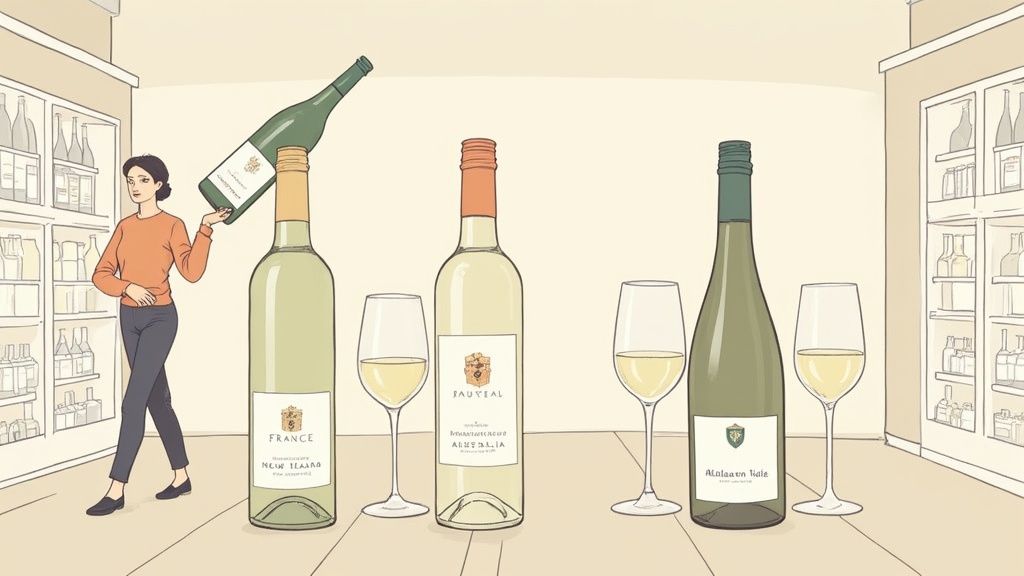
There's a good reason Sauvignon Blanc is one of the world's most-loved white wines. That signature zesty acidity and bright, aromatic personality make it incredibly refreshing and a brilliant partner for food. But what makes one bottle so different from the next? The secret is in the soil and the sun – it all comes down to where it’s grown.
Think of this guide as your roadmap to the exciting world of Sauvignon Blanc. We'll break down how its taste shifts with its postcode, from the stony, reserved styles of France to the passionfruit bombs of New Zealand, and of course, the distinctive character you’ll find right here in Australia.
Why Australian Sauvignon Blanc Shines
Australia has well and truly earned its place on the global Sauvignon Blanc stage. The grape is now one of the top five most produced varieties in the country, and its production has seen some serious double-digit growth.
Here, regions like our own McLaren Vale are making their mark by focusing on quality, with a high percentage of grapes coming straight from winery-owned vineyards. It’s all about control and crafting something special.
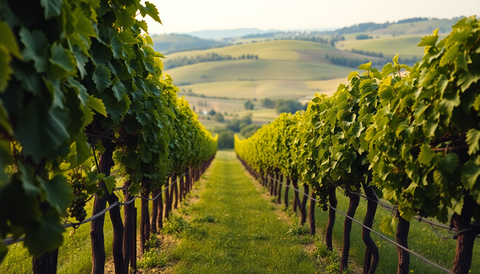
Think of terroir as a wine's accent. A cool-climate Adelaide Hills Sauv Blanc might speak with a crisp, sharp tone, while a warmer McLaren Vale version has a richer, rounder voice. Both are speaking the same language, just with a unique regional dialect.
This guide will give you the confidence to find a bottle you’ll genuinely love, whether you’re standing in a wine aisle or browsing online. For more tips on navigating your purchase, our complete 2025 guide on how to buy wine online in Australia is packed with practical advice.
Together, we will explore:
- The key flavours and aromas that define this amazing grape.
- How to pair it perfectly with your favourite meals.
- Finding outstanding value, whatever your budget.
By the end, you'll be ready to pick the perfect sauv blanc for any occasion.
Understanding the Flavours of Sauvignon Blanc
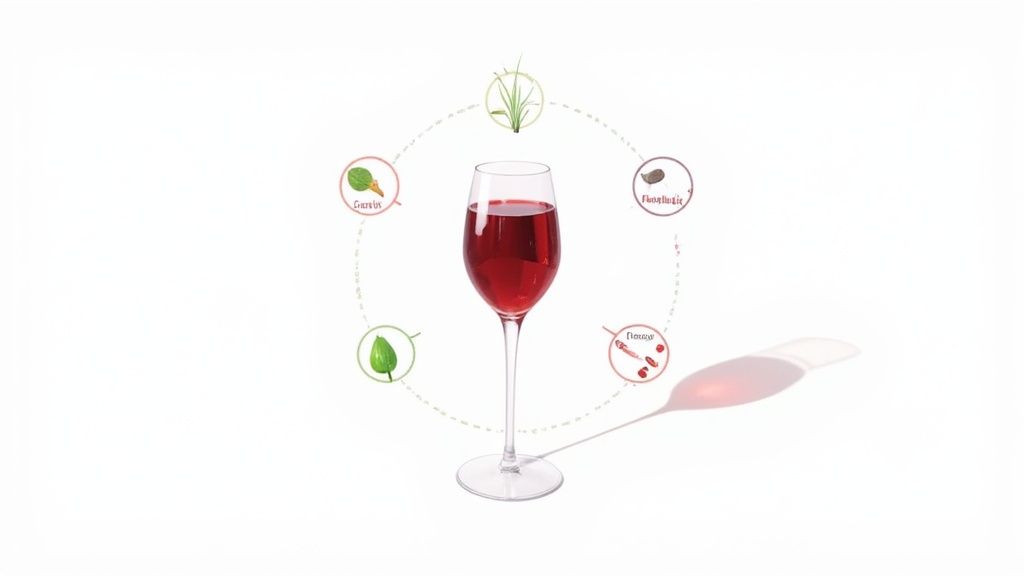
What is it that makes Sauvignon Blanc so instantly recognisable in a lineup? It all comes down to its signature aromatic profile, which can swing dramatically from zesty and green to lush and tropical. Think of these flavours as the wine's personality, shaped entirely by where and how the grapes were grown.
When you hear wine experts talk about "green" notes, it’s not some complex industry term. Just imagine the smell of a freshly mown lawn on a summer morning or the crisp snap of a green capsicum. These are classic markers, especially in wines from cooler climates. They come from natural compounds called pyrazines, which give the wine its distinctive herbaceous punch.
But the story definitely doesn't end there. As you start exploring different bottles, you'll uncover a whole world of scents and flavours.
The Aromatic Spectrum
The real magic of finding the best Sauvignon Blanc for you is learning to spot this incredible range. It’s like a painter’s palette, where each aroma adds a different colour to the final picture.
- Zesty & Citrusy: Think dominant notes of lime zest, grapefruit, and lemon that create that sharp, mouth-watering feeling.
- Green & Herbaceous: This is where you find flavours of gooseberry, fresh-cut grass, and sometimes even a hint of jalapeño, adding a savoury, fresh quality.
- Tropical & Fruity: In warmer regions, you'll be greeted with lush notes of passionfruit, guava, mango, and white peach.
The place where the grapes are grown plays the lead role in deciding which of these flavours will shine through. This concept is what we call terroir—a magical combination of soil, climate, and geography. You can dive deeper into how this grape's journey from its French origins has led to exciting Australian innovation in our detailed guide.
A cool-climate Sauvignon Blanc from France's Loire Valley is like biting into a crisp, green apple—tart, flinty, and sharp. In contrast, a warmer climate McLaren Vale expression is more like a ripe passionfruit—juicier, rounder, and more generous on the palate.
How Climate Shapes Your Wine
Cooler climates, like the Adelaide Hills or France's famous Sancerre region, really slow down the ripening process. This is great for preserving the grape's natural acidity and cranking up those classic green, citrusy notes. The resulting wines are often wonderfully lean, elegant, and have a distinct mineral-driven edge.
On the flip side, in sunnier, warmer spots like parts of McLaren Vale or California, the grapes ripen more fully and quickly. This process dials down the green pyrazine compounds and lets those riper, more tropical fruit flavours come out to play. These wines tend to feel rounder and fuller in your mouth.
Understanding this simple climate connection is a massive step toward predicting how a wine will taste before you even pop the cork.
Exploring Global Sauvignon Blanc Styles
https://www.youtube.com/embed/LFlkMeKSAlc
To really get a handle on what makes a great Sauvignon Blanc, it helps to understand the global benchmarks. Think of it like exploring different types of coffee; a bold espresso is worlds away from a smooth latte, even though they both start with the same bean. Sauvignon Blanc is just as versatile, with its flavour profile changing dramatically depending on where its roots are planted.
This grape is a master at reflecting its environment, a concept wine lovers call terroir. From the cool, stony soils of France to the sun-drenched vineyards of Australia, each region puts its own unique stamp on the final wine.
Let's take a quick trip around the world to discover the classic styles that define this incredibly popular grape.
France: The Classic Benchmark
When you think of classic, elegant Sauvignon Blanc, your mind immediately goes to France's Loire Valley. This is the grape's spiritual home, particularly in the famous appellations of Sancerre and Pouilly-Fumé. The cool climate and unique limestone and flint soils here create wines that are restrained, sophisticated, and ridiculously food-friendly.
French Savvy is less about in-your-face fruit and more about subtlety and structure. Expect a wine that is crisp and bone-dry with a distinct mineral character, often described as smelling like wet stones after rain or struck flint. It’s lean, clean, and precise.
- Key Flavours: You'll find delicate notes of green apple, gooseberry, freshly cut grass, and a zesty lime or lemon character.
- Defining Feature: Their hallmark is a razor-sharp acidity and a savoury, stony finish that is both refreshing and complex.
This is the style for those who appreciate a more savoury and less fruit-forward white wine. It's the benchmark against which all other Sauvignon Blancs are often measured.
New Zealand: The Aromatic Powerhouse
Next, we jump across the globe to New Zealand, specifically the Marlborough region. If the Loire Valley is all about quiet elegance, Marlborough is about turning the volume up to eleven. New Zealand Sauvignon Blanc exploded onto the world stage in the 1980s with a style that was simply impossible to ignore.
These wines are intensely aromatic, practically leaping out of the glass with vibrant, tropical fruit flavours. The region's long, sunny days and cool nights create the perfect conditions for developing powerful aromatics while retaining a brilliant, mouth-watering acidity. This is the style that introduced a whole new generation to the grape.
A sip of Marlborough Sauvignon Blanc is like a tropical fruit salad in a glass. It’s an explosion of passionfruit, guava, and grapefruit that immediately grabs your attention with its sheer energy and intensity.
Australia: The Vibrant Alternative
Finally, we land back home in Australia, where our winemakers are crafting their own distinctive takes on this global superstar. Regions like the Adelaide Hills in South Australia are known for producing wines with high-wire acidity and bright citrus notes, sharing some stylistic DNA with their French counterparts.
Over in Western Australia, Margaret River offers another spin, often with more herbal notes and a wonderful textural quality.
But for a truly unique Australian expression, McLaren Vale delivers a compelling balance. Here, the region's warm climate, tempered by cooling coastal breezes, creates a wine that marries the vibrant acidity of cooler regions with a richer, more generous palate. You’ll still find those lovely tropical fruit notes, but they come with a rounded texture that gives the wine more body and weight.
This makes McLaren Vale a fantastic choice for anyone seeking a fruit-forward wine with a bit more complexity. It’s a delicious middle ground between the lean French style and the intensely aromatic New Zealand profile.
To make it easier to see the differences at a glance, here’s a quick comparison of the major styles.
Comparing Sauvignon Blanc Styles by Region
| Region | Primary Aromas | Palate Profile | Acidity Level |
|---|---|---|---|
| Loire Valley, France | Gooseberry, cut grass, lime, wet stone (flint) | Lean, dry, savoury, with a distinct minerality | High / Razor-sharp |
| Marlborough, NZ | Passionfruit, guava, grapefruit, capsicum | Intense, vibrant, tropical fruit-driven | High / Mouth-watering |
| Adelaide Hills, AU | Lemon, grapefruit, fresh herbs, nectarine | Crisp, elegant, citrus-focused with good texture | High / Bright |
| McLaren Vale, AU | Tropical fruits (pineapple, passionfruit), citrus | Generous, rounded palate with more body and texture | Medium to High |
This table shows just how much a single grape can change based on its home. From the restrained elegance of France to the bold vibrancy of New Zealand, and the balanced richness of McLaren Vale, there’s a Sauvignon Blanc out there for every palate.
Pairing Sauvignon Blanc with Food
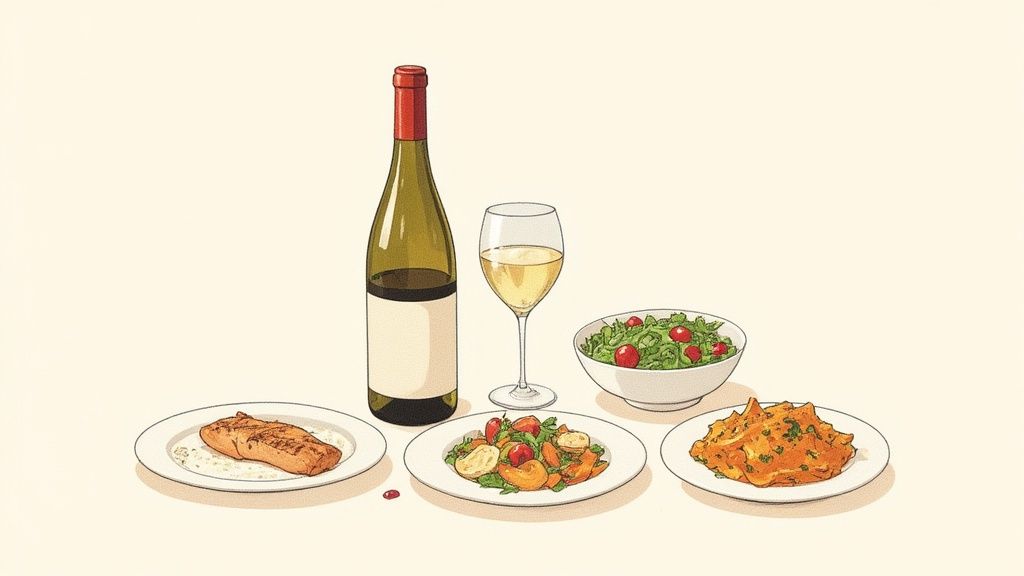
Finding a brilliant bottle of Sauv Blanc is only half the fun—the real magic happens when you see how it transforms a meal. The right pairing creates a dining experience that’s so much more than just the sum of its parts. Forget the old, rigid rules; the key is all about understanding one simple principle.
At its heart, Sauvignon Blanc’s defining feature is its bright, zesty acidity. The best way to think of this acidity is as a culinary tool. It acts just like a squeeze of fresh lemon over a dish, cutting through richness, cleansing your palate, and making every flavour on the plate pop.
This is exactly why Sauvignon Blanc and goat cheese are a match made in heaven. The wine’s sharp acidity slices straight through the creamy, tangy cheese, creating a perfect, mouth-watering balance that gets you ready for the next bite.
Classic and Creative Pairings
While some pairings are timeless for a reason, don’t be afraid to get creative. A good Sauv Blanc’s versatile flavour profile, from grassy and herbaceous to lush and tropical, opens up a whole world of possibilities—especially with modern Australian cooking.
- Seafood Sensations: The wine’s citrus notes and minerality are a natural fit for briny oysters, grilled barramundi, or prawns tossed in garlic and herbs.
- Vibrant Salads: A fresh summer salad with a vinaigrette dressing perfectly mirrors the wine’s acidity, making for a refreshing and harmonious combination.
- Spicy Dishes: The touch of sweetness you find in a fruit-forward Sauvignon Blanc can beautifully tame the heat of a Thai green curry or a zesty Vietnamese noodle salad.
- Vegetarian Delights: Think asparagus risotto or a pasta dish with a light, creamy pesto sauce. The wine’s green, herbaceous notes will complement the herbs perfectly.
A great pairing creates a conversation between the plate and the glass. The wine shouldn't overpower the food, nor should the food mute the wine. Instead, they should highlight the best in each other.
Pairing with Australian Wine in Mind
The popularity of Australian white wines just keeps growing on the world stage. It's telling that export sales recently accounted for 59% of total wine sales by volume, and Sauvignon Blanc plays a huge part in that success. This global appreciation really highlights its food-friendly nature, which is something we love to celebrate right here at home.
A McLaren Vale Sauvignon Blanc, with its beautiful balance of tropical fruit and zesty acidity, is a fantastic partner for local Aussie dishes. Try it with grilled chicken skewers or some fresh vegetarian spring rolls for a truly memorable meal.
For even more inspiration, check out our dedicated guide to pairing McLaren Vale Sauvignon Blanc with suggested foods.
Finding Great Value at Any Price Point
You don't need a huge budget to find a brilliant Sauv Blanc. Fantastic value exists right across the board, from easy-drinking weeknight wines to special occasion bottles that are dressed to impress. The trick is knowing what your money actually buys you at different levels.
Price in wine isn’t just a number plucked out of thin air; it reflects real factors like where the grapes were grown (terroir), the age of the vines, and the specific hands-on techniques the winemaker used. Think of it like this: an everyday wine is like a well-made cotton shirt—reliable, comfortable, and perfect for daily wear. A premium bottle is more like a tailored silk garment, crafted with far more intricate detail from superior materials.
And for savvy shoppers, the current market is creating some incredible opportunities. Australia's national wine inventory has recently swelled to 2.06 billion litres, and the stock-to-sales ratio for white wines has jumped by 19%. In simple terms, there’s an abundance of quality white wine out there, meaning you can find excellent value if you know where to look. You can read more about what these industry trends mean for wine lovers over at The Drinks Business.
What to Expect in Each Price Tier
Getting a handle on these price brackets helps you line up your budget with your expectations, making sure you always walk away with a great bottle for your money.
-
Under $20: This is the sweet spot for those reliable, everyday drinkers. Wines here are usually made in a clean, straightforward style that’s all about bright fruit flavours and crisp, refreshing acidity. They’re perfect for casual get-togethers or a cheeky glass after a long day at work.
-
$20 to $40: Stepping into this range unlocks a whole new level of complexity and regional personality. You'll find wines from specific premium sub-regions, like the Adelaide Hills or parts of McLaren Vale, where winemakers might use techniques like lees stirring to add a richer texture and more depth. These bottles offer a more thoughtful, nuanced tasting experience.
-
$40 and Over: Here, you’re entering the world of iconic and often age-worthy Sauvignon Blanc. These wines typically come from premier vineyards and may have been barrel-fermented or aged in oak, creating a much richer, more structured profile. Think of these as the fine-dining equivalent—they’re complex, layered, and built to last.
Remember, the 'best' value isn't just about finding the cheapest bottle. It's about the wine that delivers the most quality, character, and sheer enjoyment for its price. A standout $25 bottle that drinks like it's worth $40 is where you'll find the real bargain.
Getting the Best Out of Your Bottle: Serving and Storing
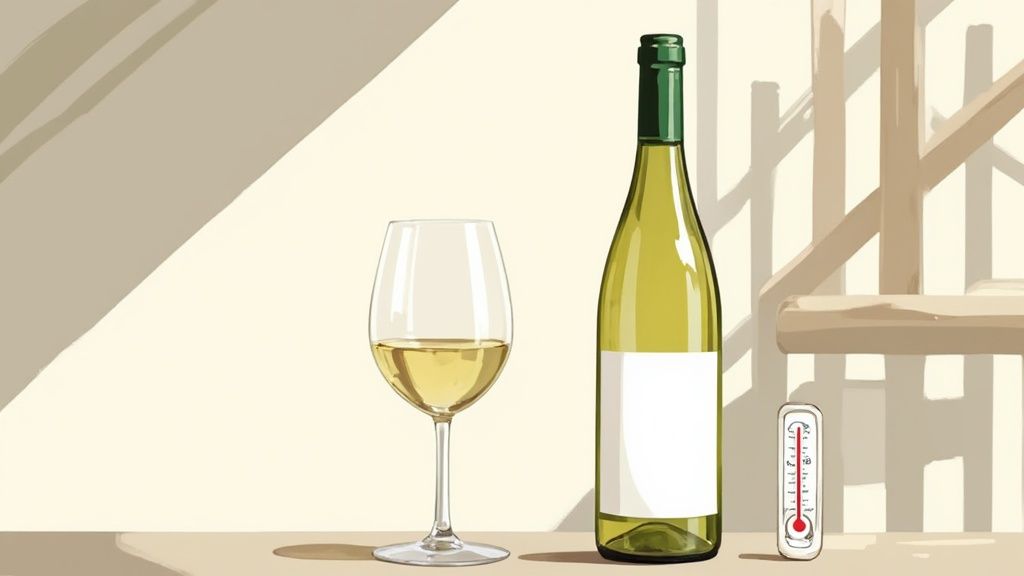
You’ve tracked down a fantastic bottle, and now it’s time to enjoy it exactly as the winemaker intended. A few simple tricks for serving and storing your wine will make a world of difference, ensuring every glass is bursting with vibrant flavour.
The single biggest mistake we see is serving Sauvignon Blanc straight from an ice-cold fridge. While it definitely needs a good chill, serving it too cold actually numbs all those beautiful, expressive aromas and flavours you paid for.
The sweet spot is a serving temperature between 8-10°C. The easiest way to hit this mark? Just pop the bottle in the fridge for about two hours before you plan on cracking it open. This keeps the wine perfectly crisp and refreshing while letting all its delicate citrus and tropical notes come alive in the glass.
The Right Gear and a Good Home
Believe it or not, the shape of your glass really does matter. A standard white wine glass with a gentle taper towards the rim is your best bet for Sauvignon Blanc. This design helps to concentrate the aromas, funnelling them straight to your nose and dialling up the whole tasting experience.
When it comes to storage—especially if you’re not drinking the bottle straight away—consistency is your friend.
- Find a Cool, Dark Spot: Keep your wine away from direct sunlight and heat sources like ovens or radiators. UV light is a wine’s enemy and can dull its flavours over time.
- Lay it Down: If the bottle has a real cork, storing it on its side is a must. This keeps the cork moist, preventing it from drying out and letting oxygen spoil the wine.
- Keep it Steady: Wild temperature swings are bad news. A pantry or a cool cupboard is a much better home for your wine than the kitchen bench.
It’s worth remembering that most Sauvignon Blanc is crafted to be enjoyed young and fresh. While a handful of high-end examples can age gracefully, the vast majority are at their absolute peak within 1-3 years of the vintage date. Drink them young to capture that signature zest.
Common Questions About Sauvignon Blanc
Alright, let's round this out by tackling a few of the most common questions we get asked about Sauvignon Blanc. Getting your head around these will give you a real leg up next time you're browsing the wine aisle.
We're constantly fielding questions about the difference between the big international styles, whether it's a wine you should cellar, and just how sweet it really is. Nailing these points is a massive step toward becoming a savvy wine buyer.
What Is the Main Difference Between French and Australian Sauvignon Blanc?
The biggest difference really comes down to climate and how that shapes the flavour in your glass. French Sauvignon Blanc, especially from the iconic Loire Valley, is all about elegant restraint. Think minerality, subtlety, and crisp notes of flint, gooseberry, and lime—it’s a more savoury, reserved style.
Australian Sauvignon Blanc, on the other hand, tends to be much more fruit-forward and vibrant. Here, wines from regions like the Adelaide Hills or our own McLaren Vale often burst with in-your-face tropical fruit notes like passionfruit and guava, all held together by a zesty citrus backbone. The Aussie style is generally bolder and way more expressive.
Should Sauvignon Blanc Be Aged?
For the vast majority of Sauvignon Blanc, the answer is a simple no. It's a wine made to be enjoyed young and fresh. All its charm is packed into that bright acidity and lively fruit, which is at its absolute peak within 1-3 years of the vintage date. Drinking it young is how you catch the wine at its most energetic and vibrant.
That said, there are a few exceptions to the rule. Some seriously high-quality bottles, particularly top-tier French Sancerre or oak-aged styles sometimes called 'Fumé Blanc', can develop incredible complexity with a few years in the cellar. These rare birds can evolve to show off rich, nutty, and honeyed notes, but for almost every bottle you pick up, fresh is definitely best.
Is Sauvignon Blanc a Sweet or Dry Wine?
Sauvignon Blanc is almost always made in a dry style. During fermentation, the yeast gobbles up nearly all the grape sugars, leaving very little sweetness in the finished wine. While those intense, punchy fruit flavours can sometimes trick your brain into thinking it's sweet, it is technically a dry white wine.
The only real exception you might stumble across would be a rare dessert wine, like some late-harvest styles from Bordeaux. But these are always clearly labelled and are a world away from the typical expression you'll find on the shelf. So, you can confidently pop a bottle expecting a crisp, dry, and refreshing experience every time.
Ready to explore the vibrant, balanced style of McLaren Vale? At McLaren Vale Cellars, we've curated a fantastic selection of Sauvignon Blanc that showcases the best of our region. Find your new favourite today!

Comments (0)
There are no comments for this article. Be the first one to leave a message!