
So you came looking for a simple Barossa wineries list, but you’re about to get something much more useful. Think of the Barossa not as a checklist, but as a world-class music festival. You've got the legendary headliners everyone knows and loves, alongside incredible up-and-coming artists you’ll be telling all your friends about. This guide is your backstage pass.
Your Guide to Australia’s Iconic Wine Region
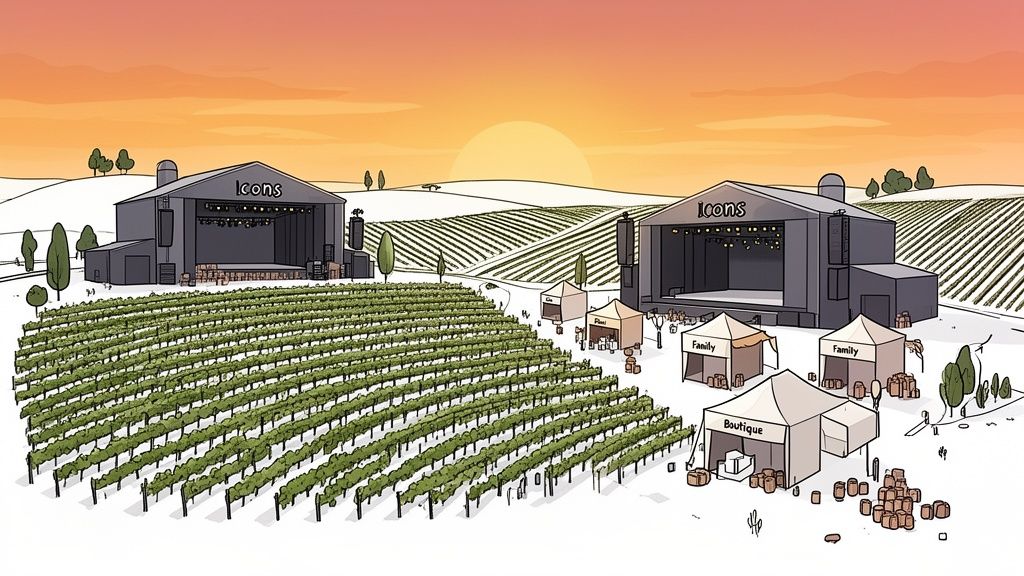
Welcome to the heart of Australian wine country. The Barossa Valley isn't just a dot on a map; it's a living, breathing testament to nearly two centuries of winemaking history, passion, and sheer grit. Its global reputation is built on powerful, unforgettable wines and a community that has carefully guarded some of the oldest grapevines on the planet.
This guide is designed to go beyond a basic list. I want to help you explore the iconic estates, uncover the hidden family-run gems, and really get a feel for the signature wines that make this region a benchmark for quality. It’s all about giving you the tools to plan a perfect visit or simply choose the right bottle online with complete confidence.
Understanding the Barossa Landscape
The sheer density of wineries here is unique, even by Australian standards. The Barossa is home to more than 150 wineries and around 80 cellar doors, a remarkable concentration that tells a story stretching back nearly 180 years. Grand old names like Penfolds, Yalumba, and Seppeltsfield have deep roots here, sharing the rolling hills with a vibrant new generation of smaller, innovative winemakers.
Think of it this way: The Barossa lets you experience the full spectrum. You can walk through the grand, historic cellars that put Australian wine on the world stage in the morning, then pull up a stool for an intimate tasting with a fifth-generation winemaker in the afternoon.
This incredible diversity is what makes any Barossa wineries list so exciting to build. Before you book anything, it helps to think about when to go. For a great local perspective, check out this guide on the best time to visit Australia.
A Framework for Exploration
To give you a clear place to start, let's break down the main types of wineries you'll find. This approach helps cut through the noise, letting you find the experiences that truly match what you’re looking for. By understanding the difference between a grand icon and a boutique gem, you can build an itinerary that’s both memorable and perfectly suited to you.
Of course, the Barossa’s unique terroir is what makes the wines so special in the first place. Getting your head around that concept is key to truly appreciating what's in your glass. You can dive deeper into this by understanding Australian wine regions and their unique terroir.
Decoding the Signature Tastes of the Barossa
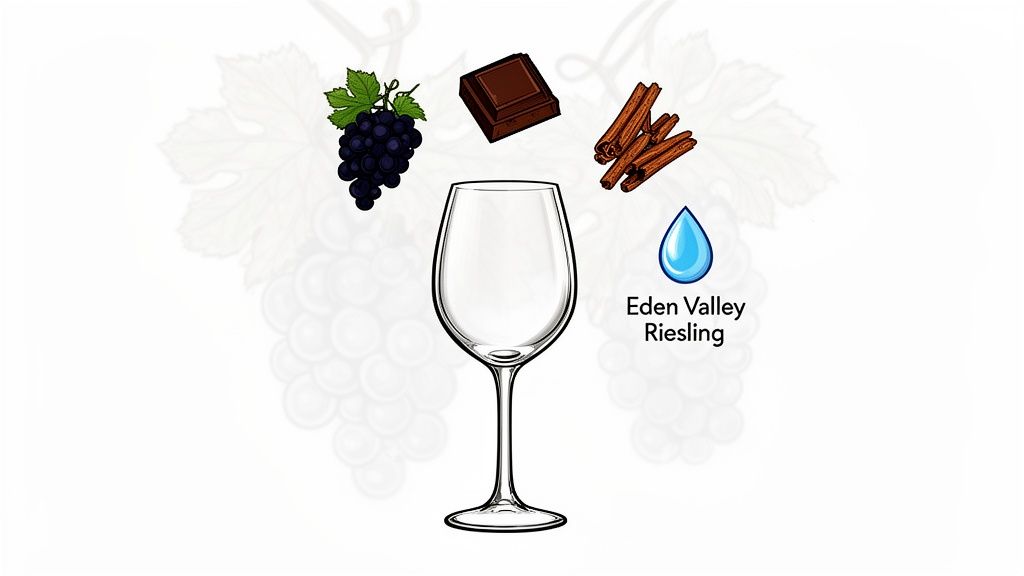
To really get why any Barossa wineries list is held in such high regard, you need to understand what’s in the glass. The region’s reputation is built on wines of immense power and personality, shaped by a warm, dry climate and some of the oldest dirt on the planet. It’s a magic combination that creates flavours you just can’t replicate anywhere else.
At the very heart of this story is Barossa Shiraz. Think of it as the region's undisputed heavyweight champion. This isn’t some light, delicate red; it’s a full-bodied beast, brimming with intense notes of blackberry, dark chocolate, and mocha, often with a generous dusting of spice.
The warm Barossa floor acts like a flavour incubator, ripening the grapes to perfection and creating that signature bold, plush profile. It’s this intensity that makes it a benchmark style, but if you're curious about how it stacks up against its neighbours, you can explore the showdown between McLaren Vale and Barossa Shiraz to see just how much terroir matters.
Beyond the Bold Reds
While Shiraz grabs all the headlines, the Barossa is far from a one-trick pony. The region’s diverse landscape allows a whole host of other grapes to thrive, each one telling a different part of the Barossa story.
A perfect example is the classic 'GSM' blend. This iconic trio brings together:
- Grenache: Lends vibrant red fruit flavours like raspberry and strawberry, along with a soft, juicy texture.
- Shiraz: Provides that dark fruit backbone, structure, and a peppery kick.
- Mataro (Mourvèdre): Adds earthy, savoury notes and firm tannins, giving the blend complexity and the legs to age.
Together, they create a wine that is both rich and beautifully balanced—a true taste of the region's heritage. This confidence in classic red varieties is still going strong. In a recent season, local growers planted 66 hectares of new vines, with Shiraz and Grenache each accounting for a hefty 24 hectares of that total.
The Cooler Side of Barossa
To fully grasp what the Barossa is all about, you have to head up into the hills of the Eden Valley. This cooler, higher-altitude sub-region is a world away from the valley floor, producing wines with elegance and laser-sharp focus. This is where Riesling truly sings.
Forget any idea you have of sweet, simple Riesling. Eden Valley Riesling is famously bone-dry, crackling with zesty citrus notes of lime and grapefruit, a slate-like minerality, and a piercing acidity that lets it age beautifully for decades.
This crisp, aromatic white offers a stunning contrast to the powerful reds down below. Exploring both styles gives you the complete picture of the Barossa's incredible range, arming you with the knowledge to pick out wines that show off the region’s full personality.
How To Curate Your Perfect Barossa Itinerary
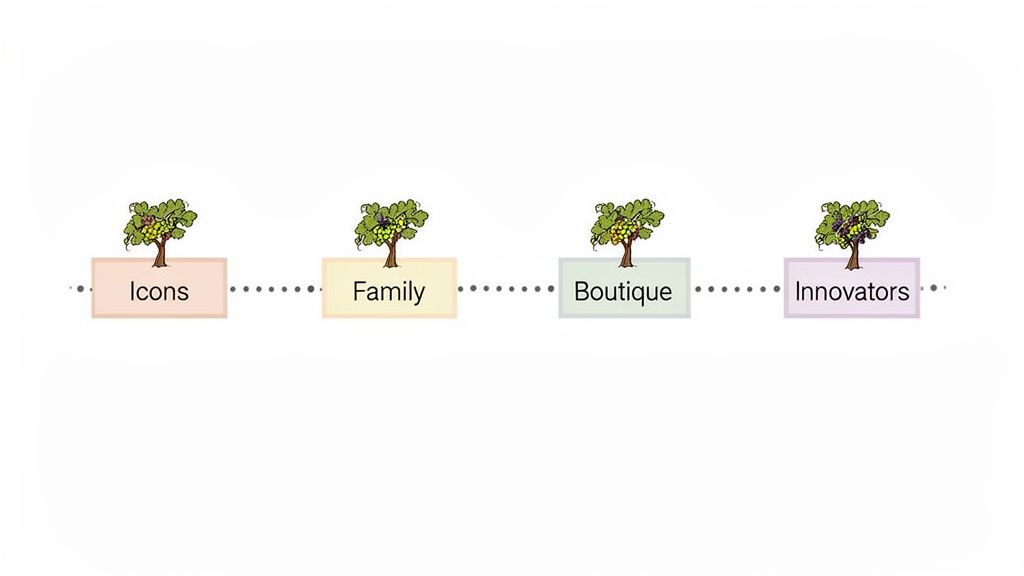
Staring at a long Barossa wineries list can feel more like a chore than the start of an adventure. It’s easy to get overwhelmed. But here’s the secret: the goal isn’t to tick off every name on the list. It’s about building a day that’s perfectly suited to you.
Think of it like putting together a great playlist. You need the big, iconic stadium anthems, the intimate acoustic sets, and a few experimental tracks to keep things interesting. By grouping wineries into four main styles, you can stop scrolling and start crafting an experience that tells a story.
The Icons: Historic Estates
These are the legends, the household names that put the Barossa—and Australia—on the wine world’s stage. Think of wineries like Penfolds, Seppeltsfield, or Yalumba. A visit here is often a grand, polished affair, steeped in history and heritage.
Expect impressive architecture, structured tours, and tastings of wines with global pedigrees. These experiences are almost always paid, but they offer a fascinating look at winemaking on a truly historic scale. They’re a brilliant starting point for first-time visitors or anyone wanting to grasp the region's foundational story.
Family-Owned Producers
There’s a special kind of warmth you only find at a family-run winery. Often operated by the fourth, fifth, or even sixth generation, these producers offer a genuine, personal connection to the land and the wine in your glass. Wineries like Henschke or Elderton embody this spirit perfectly.
The atmosphere is welcoming and down-to-earth. It’s not uncommon for the winemaker or a family member who grew up amongst the vines to pour your tasting. This is where you go for authentic stories and heartfelt hospitality, connecting you directly to the people behind the bottle.
Boutique Gems: Small-Batch Specialists
Boutique wineries are the hidden gems, the kind of places that reward the curious traveller. These are the small, often appointment-only cellars run by passionate, hands-on producers who are all about crafting unique, small-batch wines. They’re expressing a specific vision, a single patch of dirt.
Visiting a boutique gem is all about discovery. It’s where you’ll find unconventional grapes, experimental techniques, and wines you simply can’t find anywhere else. The experience is typically relaxed, educational, and deeply personal.
This is the spot for seasoned wine lovers or anyone looking to get off the beaten path and find their next favourite bottle before everyone else does. Remember, planning is key to any successful trip. For more general advice, you can check out this helpful wine travel guide on how to plan the ultimate vineyard tour.
Modern Innovators
Finally, you have the trailblazers. These are the winemakers pushing boundaries, challenging tradition, and redefining what Barossa wine can be. They might be working with alternative grape varieties like Fiano or Tempranillo, adopting low-intervention techniques, or fermenting in concrete eggs instead of old oak barrels.
The vibe here is often energetic, contemporary, and forward-thinking. A visit to an innovator gives you a thrilling glimpse into the future of the region. It’s the perfect stop for adventurous palates and anyone curious about the new wave of Australian winemaking.
To help you mix and match, here’s a quick breakdown of what to expect from each style.
Comparing Barossa Winery Experiences
| Winery Style | Typical Experience | Best For | Example Focus |
|---|---|---|---|
| Icons | Grand, historic settings with structured tours and formal, paid tastings. | First-time visitors, history buffs, and those wanting to taste famous wines. | Tasting internationally recognised flagship wines in an impressive setting. |
| Family-Owned | Warm, personal, and story-driven. Often hosted by a family member. | Travellers seeking authenticity, connection, and genuine hospitality. | Hearing multi-generational stories while tasting wines made with passion. |
| Boutique | Intimate, educational, and often by appointment only. Laid-back atmosphere. | Experienced wine drinkers and explorers looking for something unique and rare. | Discovering small-batch wines and unconventional varietals. |
| Innovators | Contemporary, energetic, and experimental. Focus on new techniques/grapes. | Adventurous palates and those curious about the future of winemaking. | Tasting cutting-edge styles like skin-contact whites or alternative reds. |
By mixing these categories, your Barossa wineries list transforms from a daunting checklist into a dynamic, personal itinerary. Start with an Icon to understand the history, find a Family producer for a heartfelt story, seek out a Boutique gem for a new discovery, and finish with an Innovator to see where the Barossa is headed next.
Insider Tips for Your Cellar Door Visit
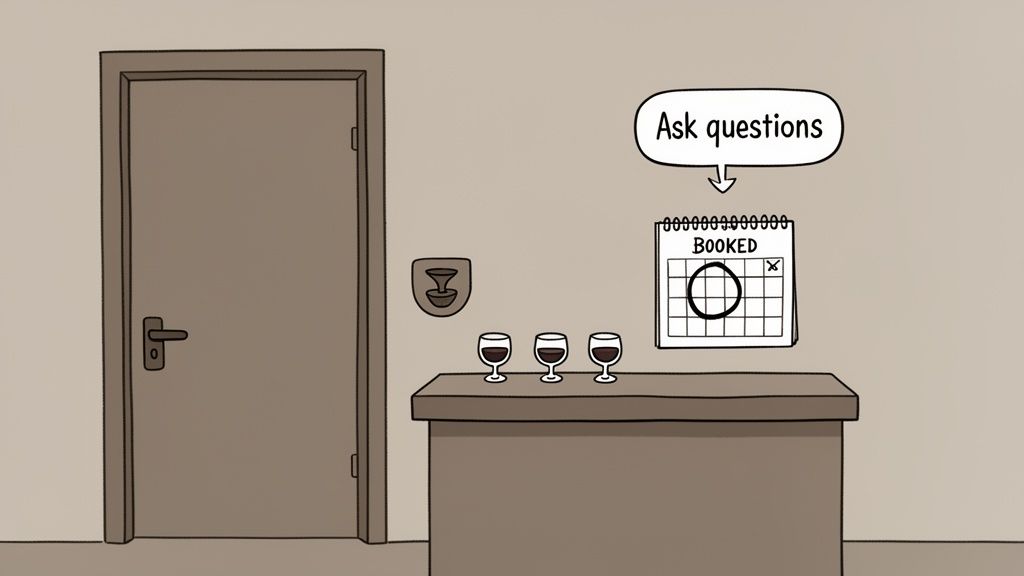
A bit of prep work can turn a good day in the Barossa into a truly unforgettable one. To really get the most out of any Barossa wineries list, it helps to have a loose game plan. These tips are straight from the playbook of seasoned visitors, designed to make sure your tour is seamless, so you can focus on the incredible wine and hospitality.
First things first: booking your tastings in advance is no longer optional—it's essential. While the romance of a spontaneous drop-in is appealing, showing up unannounced, especially over a weekend, will likely lead to disappointment. Most cellar doors, and particularly the smaller producers, now run by-appointment tastings to give every guest a more personal, in-depth experience.
This really comes down to the fabric of the region. The average vineyard size here is just 14.2 hectares, meaning the Barossa is a wonderful mosaic of family-owned and medium-sized wineries, not a landscape of huge corporate operations. Booking ahead is a simple courtesy that respects their time and guarantees you’ll have a seat waiting for you. You can dive deeper into the region’s vineyard statistics here.
Pacing and Etiquette for a Perfect Day
The secret to a great day of wine tasting is all in the pacing. It's so tempting to try and squeeze in as many wineries as you can, but that’s the quickest route to palate fatigue—that point where your taste buds just give up and can’t pick out the beautiful, subtle notes in the wine anymore.
Stick to three, or an absolute maximum of four, wineries in one day. This gives you plenty of time to really savour each tasting, chat with the staff, and travel between spots without feeling the frantic rush.
And don't worry, tasting room etiquette is far less intimidating than it sounds. It’s all about making your experience better.
- Don't be afraid to spit. Seriously. The spittoons are there for a reason. Spitting lets you taste a wider range of wines responsibly and keeps your palate sharp all day long.
- Ask questions! Cellar door staff live and breathe this stuff. They’re passionate and full of knowledge. Ask about the vineyard, what was unique about a particular vintage, or what food they'd pair with the wine. It's hands-down the best way to learn.
- Stay hydrated and eat. This is non-negotiable. Drink lots of water between your tastings and make time for a proper lunch. A decent meal will reset your palate and give you the stamina for a full afternoon of discovery.
Remember, the goal isn't just to taste wine; it's to connect with the place and the people who make it. Slow down, be curious, and you’ll have a far richer and more memorable experience.
Finally, have your transport sorted before you even think about that first tasting. Whether it's a designated driver, a private car, or a guided tour, make sure you have a safe plan. It means everyone in your group can relax and fully enjoy what the Barossa has to offer.
Bringing the Barossa Experience Home
Your incredible Barossa journey doesn’t have to end when you leave the rolling hills and historic cellars behind. Thanks to passionate online retailers, you can keep exploring the region’s signature flavours from your own home. The trick is knowing where to look to bring that authentic experience into your glass.
The best online wine stores act less like a massive, impersonal supermarket and more like a trusted local guide. Instead of just throwing an endless, overwhelming catalogue at you, they offer a hand-picked selection backed by genuine regional knowledge. They get the little details that make these wines so special.
It's this deep expertise that really sets a specialist retailer apart. They’re the ones who can confidently tell you that if you love the bold, structured Shiraz from McLaren Vale, you’ll probably find a kindred spirit in a classic Barossa Shiraz. Better yet, they can explain the subtle differences in their dark fruit profiles and textures. That's the kind of guidance that’s gold when you're trying to navigate an online Barossa wineries list.
Finding Quality and Confidence Online
When you’re browsing online, look for retailers who do more than just sell bottles. A great seller gives you the information you need to make choices you'll be happy with.
Here’s what to keep an eye out for:
- Detailed Tasting Notes: Vague descriptions are a bit of a red flag. You want notes that go beyond just "blackberry" or "plum" and talk about the wine's structure—its body, tannins, and acidity. This paints a much clearer picture of what you're actually getting.
- Curated Regional Packs: These are one of the best ways to get up to speed. Something like a "Barossa Reds Discovery" pack lets you sample different styles side-by-side, fast-tracking your understanding of just how diverse the region is.
- A Solid 'Taste Guarantee': This is a huge sign of confidence. A retailer who offers a taste guarantee truly believes in their selection and is willing to stand by it, which takes all the risk out of trying something new.
Choosing a retailer is about finding a partner for your wine journey. They should be as passionate about the regions they represent as the winemakers themselves, ensuring every bottle they recommend has a story and a reason for being on their list.
The value of these wines is rooted in the very soil they come from. In a recent year, the Barossa’s winegrape output was valued at around $127 million, with an average price per tonne of $1,803. This is crucial data that specialist retailers across South Australia keep a close eye on when sourcing their wines and celebrating Barossa's premium status. You can read more about the region’s economic viticulture data.
By finding retailers with this deep-seated knowledge and a real commitment to quality, you’re not just buying wine. You’re extending your Barossa adventure, bringing home bottles chosen with the same care and passion that went into making them in the first place.
Your Barossa Winery Questions Answered
So, you're finalising your trip to the Barossa? Excellent. To make things easier, I've put together some quick, straightforward answers to the questions we hear all the time. Think of this as your practical cheat sheet for a brilliant day out, covering everything from how many wineries to visit to local etiquette.
How Many Wineries Should I Visit in One Day?
For a truly rewarding day, my advice is to aim for no more than three or four wineries. This gives you enough breathing room at each cellar door to properly chat with the staff, ask questions, and soak in the atmosphere without feeling like you're on a timer.
Trying to cram in five or more is a classic rookie mistake. You'll just end up with "palate fatigue," where all the beautiful nuances in the wine start to blur together. A slower, more considered pace makes each stop memorable. And don't forget to factor in a proper lunch break and the travel time between places—it makes all the difference.
Do I Need to Book Wine Tastings in Advance?
Yes, absolutely. The days of just rocking up to a cellar door are pretty much gone, especially at the more popular spots. Booking your tastings in advance is now standard practice and highly recommended.
It's non-negotiable for weekends, public holidays, or if you're in a group of four or more. Many of the best places—particularly the smaller boutique wineries and iconic estates offering structured tastings—run exclusively on a booking system. Nailing down your spots beforehand guarantees you a place and lets the winery prepare, so you get the best possible experience.
Think of it this way: booking is a simple courtesy that respects the winery's time and your own. It transforms your visit from a hopeful "maybe" into a guaranteed highlight of your trip, allowing you to relax and fully immerse yourself in the experience.
What Is the Best Time of Year to Visit the Barossa?
Honestly, the Barossa is stunning year-round, but if you want the absolute best time, my pick is autumn (March to May). The weather is just perfect—mild and sunny—and the vineyards turn into this incredible patchwork of gold, crimson, and orange. It’s a photographer’s dream.
Spring (September to November) is a close second, with pleasant weather as the vines burst back to life with fresh green foliage. Summer gets pretty hot, which is great if you love the heat. Winter is cooler, of course, but there's a unique charm to cosying up by a crackling fireplace with a glass of one of the region's famous bold reds.
Can I Ship Wine Home from a Cellar Door?
You certainly can. Pretty much every winery in the Barossa offers shipping, both across Australia and, in many cases, internationally. It’s the perfect way to stock up on your favourite finds without worrying about excess luggage fees or broken bottles.
The cellar door team will have all the details on shipping costs, insurance, and delivery times. A lot of wineries also have wine clubs you can join, which often include regular shipments of new releases and member-only perks—it’s a fantastic way to keep that connection to the Barossa alive long after you've returned home.
Here at McLaren Vale Cellars, we share the Barossa's passion for premium South Australian wine. If the bold reds of the Barossa left an impression, why not explore our expertly curated selection of McLaren Vale Shiraz? Discover the unique character of another world-class region right here.


Comments (0)
There are no comments for this article. Be the first one to leave a message!