
When you think of South Australian wine, big, bold reds often come to mind. But nestled in the hills just east of Adelaide is a region that tells a different story. Adelaide Hills wine is all about elegance, vibrancy, and cool-climate character, offering a refreshing counterpoint to the state's warmer, heavier styles. Think crisp Sauvignon Blanc, sophisticated Chardonnay, and delicate Pinot Noir—all shaped by high altitude and a beautifully diverse landscape. The result? Wines with stunning acidity and intense aromatics.
A Guide to Adelaide Hills Wine
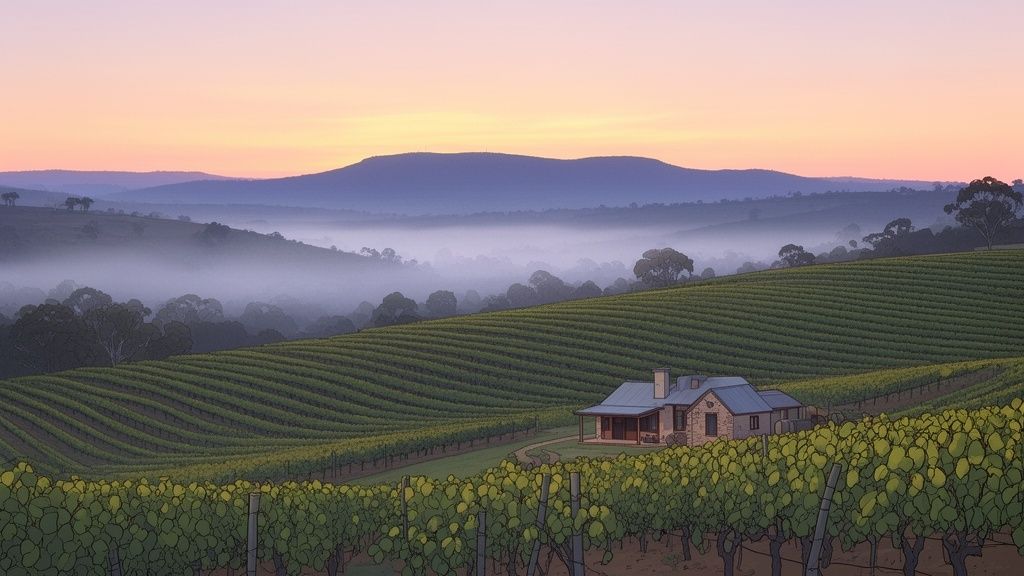
Welcome to the Adelaide Hills, one of Australia’s most exciting and dynamic cool-climate wine regions. It's only a short drive from Adelaide’s city centre, but as you climb the winding roads, you feel a world away from the sun-drenched plains below. This is a place defined by its lofty vineyards, picturesque villages, and a focus on elegance and precision in winemaking.
This guide is your roadmap to understanding what makes Adelaide Hills wine so special. We'll explore the unique climate that shapes these exceptional wines, introduce you to the star grape varieties, and give you practical advice on everything from food pairings to planning a memorable cellar door visit.
What You Will Discover
We're going to cover all the essential elements that define this remarkable region, giving you a real appreciation for its viticultural identity and what sets it apart.
- Terroir and Climate: Get to know how elevation and cool temperatures create the perfect conditions for growing premium grapes with bright acidity.
- Signature Grape Varieties: Meet the key players—Sauvignon Blanc, Chardonnay, and Pinot Noir—and learn what makes their Adelaide Hills expression unique.
- Tasting and Pairing: Pick up some expert tips on how to taste these wines and which foods make them truly sing.
- Visiting the Region: Find practical advice for planning an unforgettable trip to the cellar doors scattered throughout the hills.
The Adelaide Hills has truly blossomed into one of the best cool-climate wine regions in Australia. It might be a relatively young region in its modern form, but its impact on the Australian wine scene is undeniable, offering a sophisticated counterpoint to the state's warmer styles.
For those keen to dive deeper into the sensory journey of wine, this guide on unforgettable wine tasting experiences offers fantastic insights into appreciating the subtleties of different varietals. By the end of this, you'll have the knowledge to not just drink, but truly understand and savour every glass of Adelaide Hills wine.
Understanding the Cool Climate and Diverse Terroir
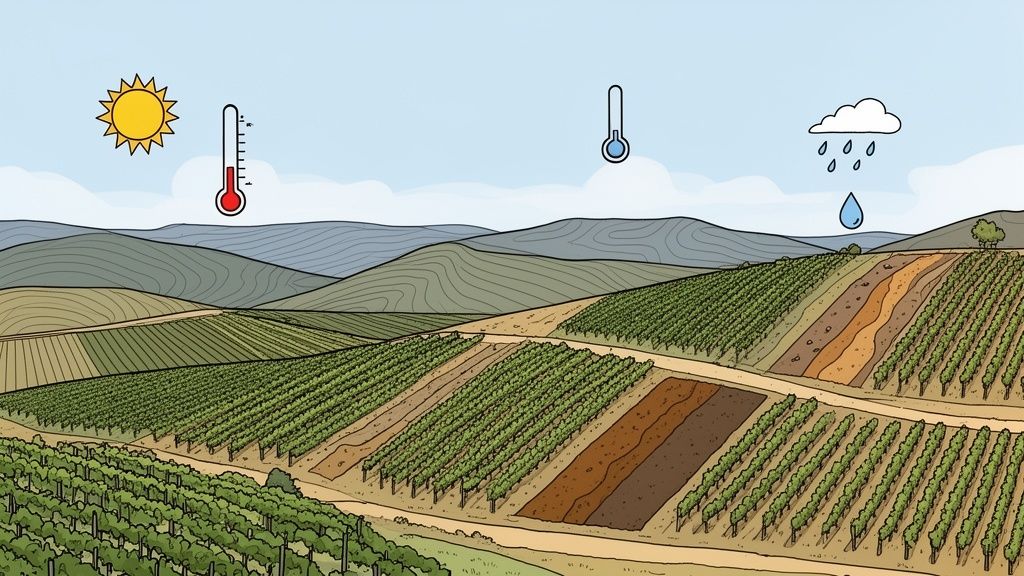
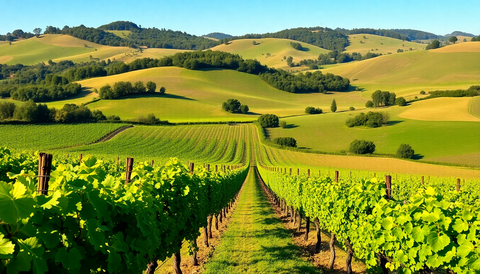
So, what gives Adelaide Hills wine its distinctive, elegant character? It all comes down to geography. Unlike the warmer valleys nearby, this entire region is defined by the high-altitude slopes of the Mount Lofty Ranges, creating a cool climate that’s just about perfect for growing premium grapes.
You can think of the region's terroir as a complex quilt. Each patch represents a unique vineyard with its own special combination of slope, soil, and sun exposure. This incredible diversity is the secret to how one region can produce such a stunning range of high-quality wines, from zippy Sauvignon Blanc to delicate Pinot Noir.
This patchwork of microclimates lets winemakers match grape varieties to the exact spots where they’ll thrive, a crucial element we cover in our guide to Australian wine regions and their local terroir. It's this careful, site-specific approach that forms the backbone of the consistent quality you find in Adelaide Hills wine.
The Magic of the Diurnal Range
One of the most important factors here is the diurnal range—that’s the significant temperature swing between warm, sunny days and cool, crisp nights. This daily cycle acts like a natural pause button for the grapes.
During the day, plenty of sunshine helps the grapes develop ripe, complex flavours. But as the temperature plummets overnight, the ripening process slows right down. This simple trick of nature allows the grapes to hang on to their natural acidity, which is the key to the fresh, vibrant, and mouth-watering character found in the region’s best wines.
This preservation of acidity is what gives Adelaide Hills wine its fantastic structure and potential to age gracefully. It keeps the wines feeling refreshing and lively, never flat or heavy.
Ancient Soils and Their Impact
Beneath the vines, you’ll find another critical piece of the terroir puzzle: ancient, varied soils. These soils are often lean and drain well, forcing the vines to work harder and dig their roots deep in search of water and nutrients. This struggle results in smaller grapes, but they're absolutely bursting with concentrated flavour.
The main soil types include:
- Sandy Loams: These soils really dial up the aromatic intensity, especially in white varieties like Sauvignon Blanc.
- Clay Subsoils: These are great for retaining moisture, giving the vines a lifeline during dry spells and adding to the wine's structure.
- Schist and Quartzite: In certain pockets, these rocky soils lend a distinct minerality and complexity to the finished wine.
This laser focus on cool-climate viticulture has led to a real shift in the region. There's been a clear move away from some red varieties and a stronger focus on premium whites and elegant reds like Pinot Noir, simply because the conditions are so perfect for them.
Ultimately, it's the combination of high altitude, a wide diurnal range, and diverse, ancient soils that creates this unique environment. This cool-climate terroir is what translates directly into the crisp, aromatic, and exceptionally elegant Adelaide Hills wine that has captured the attention of wine lovers all over the world.
Discovering the Signature Grape Varieties
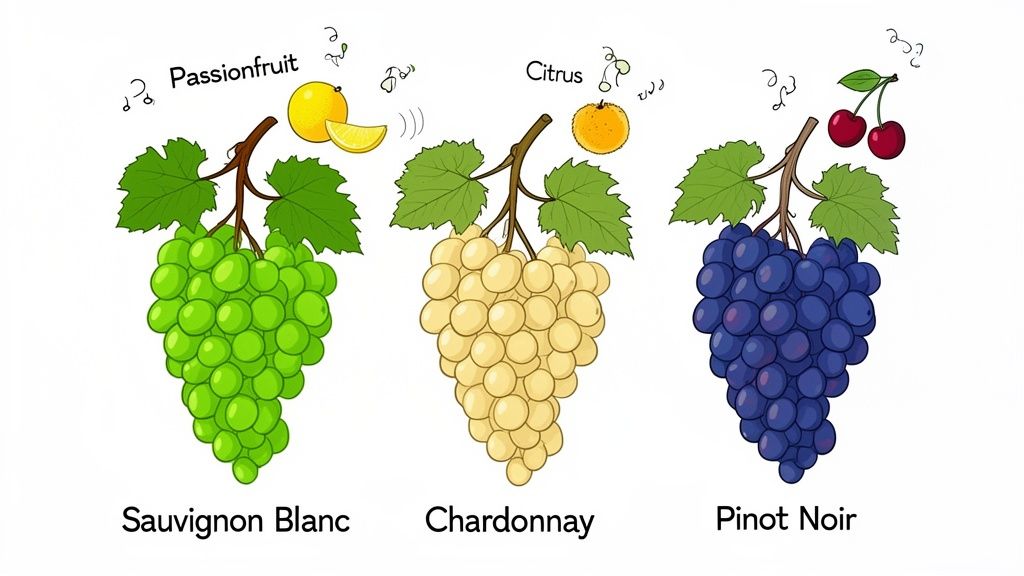
Alright, let's meet the stars of the show. While the Adelaide Hills' diverse terroir allows a whole host of different grapes to flourish, a few key varieties truly define the region's identity. These are the wines that have put the area on the global map, showcasing the unique personality that comes from this cool, elevated environment.
Getting to know these signature grapes is like meeting the local heroes. Each one tells a story about the climate, the elevation, and the soil, offering a distinct flavour profile that captures the very essence of an Adelaide Hills wine. The primary trio you’ll hear about everywhere is Sauvignon Blanc, Chardonnay, and Pinot Noir.
But the story doesn't end there. Other varieties like Pinot Gris and even cool-climate Shiraz are carving out their own impressive reputations, adding even more depth and excitement to the region's portfolio.
To get a quick overview, here’s a look at the key players and what you can expect in the glass.
Adelaide Hills Signature Wine Varieties
| Grape Variety | Typical Flavours and Aromas | Style Profile |
|---|---|---|
| Sauvignon Blanc | Passionfruit, gooseberry, fresh-cut herbs, grapefruit | Zesty, aromatic, and refreshingly crisp with a distinct citrus-driven acidity. |
| Chardonnay | White peach, nectarine, grapefruit, hints of cashew or flint | Elegant and complex with a bright, linear acidity. Ranges from unoaked and lean to gently oaked and textured. |
| Pinot Noir | Red cherry, raspberry, wild strawberry, earthy forest floor notes | Delicate, fragrant, and light- to medium-bodied with silky tannins and a savoury finish. |
This table gives you a snapshot, but the real magic is in understanding why these grapes taste the way they do in the Hills. Let’s dive deeper into each one.
Sauvignon Blanc: The Regional Benchmark
If there's one wine synonymous with the region, it's Adelaide Hills Sauvignon Blanc. It has become the benchmark for Australian Savvy, celebrated for its vibrant intensity and razor-sharp character. Forget the simple, grassy styles you might find elsewhere; this is a wine with personality and punch.
Expect an explosion of zesty, aromatic notes. It’s all about passionfruit, gooseberry, and a hint of fresh-cut herbs, all underpinned by a crisp, citrus-driven acidity that makes it incredibly food-friendly. This lively profile is a direct result of the cool nights that lock in freshness and stop the grapes from becoming overripe.
Adelaide Hills Sauvignon Blanc is widely considered the best in Australia. Its consistent quality and vibrant flavour profile have made it a household name and a top seller, proving just how perfectly suited the variety is to the region's cool climate.
Chardonnay: Elegance and Complexity
The Chardonnay from the Adelaide Hills is a masterclass in modern Australian winemaking. Winemakers here have moved on from the heavily oaked, buttery styles of the past, instead focusing on elegance, structure, and a true expression of the cool-climate fruit.
The result is a wine that is both refined and complex. You'll typically find notes of white peach, nectarine, and grapefruit, often with a subtle hint of cashew or flint from gentle oak handling. Its hallmark is a bright, linear acidity that gives the wine incredible length and a clean, refreshing finish. It’s Chardonnay at its most sophisticated.
- Unoaked Styles: These are crisp, lean, and driven by pure citrus and green apple flavours. Think Chablis-esque.
- Lightly Oaked Styles: These show more texture and complexity, with notes of toasted brioche and vanilla beautifully complementing the vibrant fruit without overpowering it.
Pinot Noir: The Heartbreak Grape, Perfected
Pinot Noir is notoriously difficult to grow—hence the "heartbreak grape" nickname—but the Adelaide Hills provides the perfect stage for it to shine. The region’s delicate and aromatic style of Pinot has earned it a devoted following. It’s all about subtlety and finesse rather than brute power.
An Adelaide Hills Pinot Noir typically offers fragrant aromas of red cherry, raspberry, and wild strawberry, often with earthy undertones of forest floor or dried herbs. On the palate, it is light- to medium-bodied with silky tannins and a persistent, savoury finish. It’s a sophisticated red that beautifully reflects its cool-climate origins.
How to Pair Food with Adelaide Hills Wine
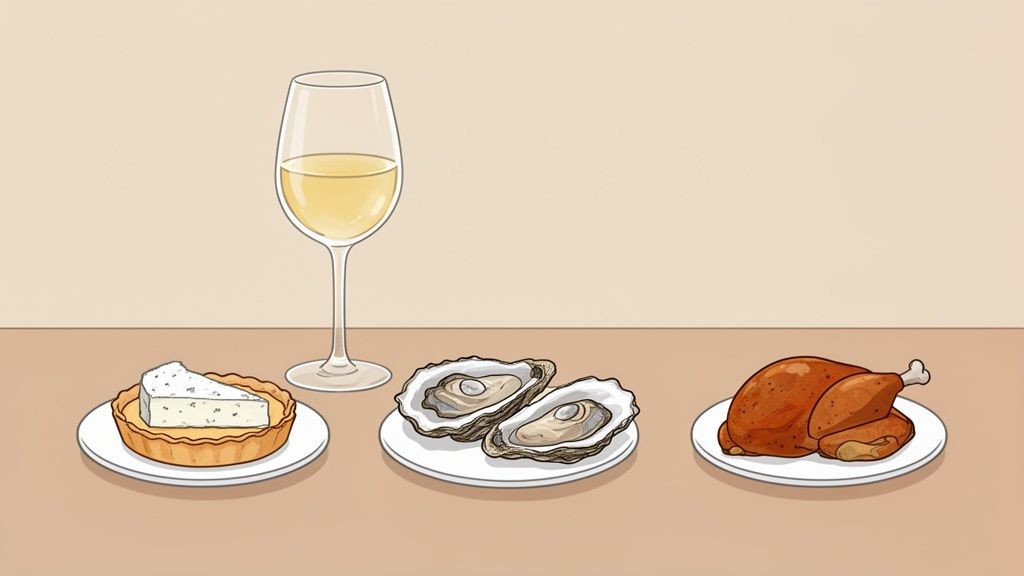
A good wine with the right food is more than just a meal; it’s an experience. The cool-climate character of Adelaide Hills wine—defined by its vibrant acidity and elegant flavours—makes it a dream to bring to the dinner table. The real trick is to match the wine's intensity and personality with your dish.
Take the region's signature Sauvignon Blanc. Its zesty, citrus-driven acidity acts just like a squeeze of fresh lemon, cutting through richness and cleansing your palate. This knack for refreshment makes it a fantastic partner for creamy or fatty foods. To get your head around the principles, our complete guide to perfect wine and food pairing is a great place to start.
Once you nail the fundamentals, you can go beyond the classic rules and start creating your own perfect matches with confidence.
Pairing with Adelaide Hills Whites
Adelaide Hills whites are all about freshness and aromatic punch, which is why they sing alongside a whole range of dishes, especially seafood and poultry.
-
Sauvignon Blanc: That brilliant crispness is a stunning match for the briny freshness of natural oysters or grilled king prawns. It also works beautifully with a classic goat's cheese tart, where its acidity slices straight through the cheese's rich, creamy texture.
-
Chardonnay: The elegant, often lightly oaked Chardonnay from the Hills pairs wonderfully with a simple roasted chicken or creamy pasta. The wine’s texture and subtle notes of stone fruit and cashew harmonise with the delicate flavours of the food, complementing rather than overpowering them.
Perfect Pairings for Pinot Noir
The delicate structure and earthy notes of Adelaide Hills Pinot Noir call for dishes that are flavourful but not heavy-handed. This is where its versatility as a food wine truly shines.
Its bright red fruit character and savoury undertones make it a natural fit for game birds like duck or quail. The wine’s acidity cuts through the richness of the meat, while its earthy, forest-floor notes echo the gamey flavours perfectly.
A knockout pairing for Adelaide Hills Pinot Noir is a wild mushroom risotto. The wine’s earthy aromas mirror the mushrooms, creating a seamless and sophisticated match that brings out the absolute best in both the food and the wine.
Another stellar option is pan-seared salmon. The light tannins and bright acidity of the Pinot Noir provide a beautiful contrast to the oily texture of the fish, lifting its flavour without dominating it. Don't be afraid to experiment—that's half the fun.
Adelaide Hills vs McLaren Vale Compared
When you start exploring South Australian wine, it’s tempting to lump all the regions together. But put a bottle from the Adelaide Hills next to one from McLaren Vale, and you'll quickly discover two dramatically different sides of what our state can do.
The difference isn't just about taste—it's a story of elevation versus the ocean.
Think of the Adelaide Hills as a cool, lofty sanctuary. Its vineyards are perched high up in the Mount Lofty Ranges, often climbing above 400 metres. Up here, the crisp air and chilly nights lock in the grapes' natural acidity, creating the perfect stage for elegant, aromatic wines with a vibrant, linear character.
McLaren Vale, on the other hand, is a coastal paradise soaking up a warm Mediterranean climate. The nearby Gulf St Vincent brings a welcome sea breeze, but the days are much warmer. This allows grapes to develop a rich, powerful ripeness, resulting in the bold, full-bodied reds the Vale is famous for.
The Defining Difference: Climate and Style
At its heart, the contrast boils down to temperature. The cool climate of the Adelaide Hills slows the ripening process right down, preserving acidity while developing delicate, nuanced flavours. The result is wine defined by finesse.
-
Adelaide Hills: This is where you find crisp Sauvignon Blanc, elegant Chardonnay, and delicate Pinot Noir. The focus is on aromatic intensity, zippy acidity, and subtle complexity.
-
McLaren Vale: Famed for its powerful Shiraz, rich Cabernet Sauvignon, and generous Grenache. The style is typically full-bodied, with plush, ripe fruit flavours and a warm, generous character.
This climatic split has completely shaped what growers plant. The Adelaide Hills has seen its share of red grapes fall from three-fifths to two-fifths of total plantings as winemakers fully embraced what the cool climate does best.
That’s a world away from McLaren Vale, where red varieties now make up a massive 90 percent of the region's vineyards.
Choosing the Right Wine for the Occasion
So, how do you choose? It’s not about which region is better, but which style suits your palate and the moment.
Think of it like this: Adelaide Hills is your go-to for a sophisticated dinner party or a refreshing afternoon drink—it brings elegance and brightness. McLaren Vale is your pick for a hearty barbecue or a cosy night in, delivering warmth, richness, and power.
Ultimately, appreciating both regions unlocks a deeper understanding of South Australia’s incredible diversity. To dig a little deeper, check out our full guide on exploring the terroir of McLaren Vale vs Adelaide Hills.
Each region tells a unique story through its wine, and both are essential chapters in Australia’s winemaking narrative.
Planning Your Visit to the Adelaide Hills
So, you're ready to experience this stunning region for yourself? Good call. A trip to the Adelaide Hills is an unforgettable adventure, packed with charming towns, incredible food, and, of course, world-class wine. A little planning goes a long way in making the most of your time among the vines.
The region is beautiful year-round, but each season offers something a little different. Autumn (March-May) is absolutely spectacular, with the vineyards turning brilliant shades of red and gold. Winter (June-August) brings a cosy, romantic vibe—perfect for savouring a bold red by a roaring cellar door fire. Spring and summer are all about lush green landscapes and warm, sunny days made for sipping crisp whites on a deck overlooking the vines.
Navigating the Cellar Doors
With over 50 cellar doors dotted throughout the hills, figuring out where to start can feel a bit overwhelming. My advice? Map out a loose route and focus on one specific area, like Balhannah or Lenswood. This cuts down on driving and leaves more time for tasting. The gorgeous towns of Hahndorf, Stirling, and Lobethal also make perfect home bases for exploring.
- Bookings are a Must: Many cellar doors here are boutique, family-run spots. They require bookings for tastings, especially on weekends, so always call or book online ahead of time to avoid being turned away.
- Mix It Up: For the best experience, plan a mix of visits. Head to a well-known name like Shaw + Smith for a polished, structured tasting, then pop into a smaller gem like Cobb’s Hill Estate for a more intimate chat with the people behind the wine.
- Make Time for Lunch: This is non-negotiable! Many wineries have phenomenal restaurants, like Gingko at Golding Wines. Booking a long, leisurely lunch is a quintessential Adelaide Hills experience.
This hands-on approach is really what the region is all about. The average vineyard size here is just 11.7 hectares—a fraction of the South Australian average. It speaks to the intimate, small-scale production that makes the wines so special. You can dig deeper into the region's viticulture stats in the 2024 crush survey.
A successful trip is all about balance. Don't try to cram too much into one day. Pick three or four wineries, take your time, and leave a little room for those spontaneous discoveries you'll inevitably make along the way.
If you're looking for more trip-planning inspiration, it can be really helpful to see how people approach other world-class regions. Guides that detail the best vineyard and winery tours in places like Napa and Sonoma can offer great tips for crafting your own unforgettable experience.
Your Adelaide Hills Wine Questions Answered
We’ve explored the cool-climate terroir and vibrant grapes that make this stunning region tick. Now, let's tackle some of the most common questions that pop up when people are diving into Adelaide Hills wine.
What Is the Best Wine From the Adelaide Hills?
While "best" is always in the eye of the beholder, if there’s one wine the Adelaide Hills is truly famous for, it's Sauvignon Blanc. It sets the Aussie benchmark for the style, celebrated for its intense aromatics and zesty citrus pop. It’s the region’s calling card for a reason.
But don't stop there. The region's Chardonnay and Pinot Noir are seriously impressive, too. These wines are all about elegance, complexity, and that unmistakable cool-climate character, making them top contenders depending on what you're in the mood for.
Is Adelaide Hills Wine Expensive?
You'd be surprised at the incredible value you can find. Adelaide Hills wine offers exceptional quality across a wide range of price points. It's easy to pick up an outstanding bottle, especially a classic Sauvignon Blanc, in the $20-$30 bracket.
Of course, the premium, single-vineyard Chardonnay and Pinot Noir can fetch higher prices, often from $40 to over $100. This reflects the tiny production and the meticulous, hands-on work that goes into them. But on the whole, the region delivers amazing bang for your buck compared to other famous cool-climate spots around the globe.
The real value in an Adelaide Hills wine lies in its consistent quality and regional distinction. Whether you're spending $25 or $85, you are getting a wine that genuinely reflects its unique, high-altitude origins.
How Should I Store Adelaide Hills White Wine?
Good storage is key to keeping your wine fresh and tasting its best. For anything you plan to drink within a few months, just keep your Adelaide Hills whites in a cool, dark spot away from wild temperature swings—a pantry works perfectly.
If you’ve got a special Chardonnay you want to age, long-term cellaring is the way to go. It's best to store bottles on their side in a dedicated wine fridge or cellar, holding at a steady 12-14°C. This gives the wine a chance to mature gracefully and develop even more complexity over time.
At McLaren Vale Cellars, we celebrate the incredible diversity of South Australian wine. While our heart is in the Vale, we have huge admiration for the elegance of our cool-climate neighbours. Explore our curated selection of premium wines today and discover the perfect bottle for any occasion at McLaren Vale Cellars.

Comments (0)
There are no comments for this article. Be the first one to leave a message!